Five Brickell Key condominiums offer a focused shortlist for buyers examining shared seawall obligations, shoreline assessments and waterside access. The decisive distinctions belong in current engineering, financial and access documents, not assumptions about a waterfront address.
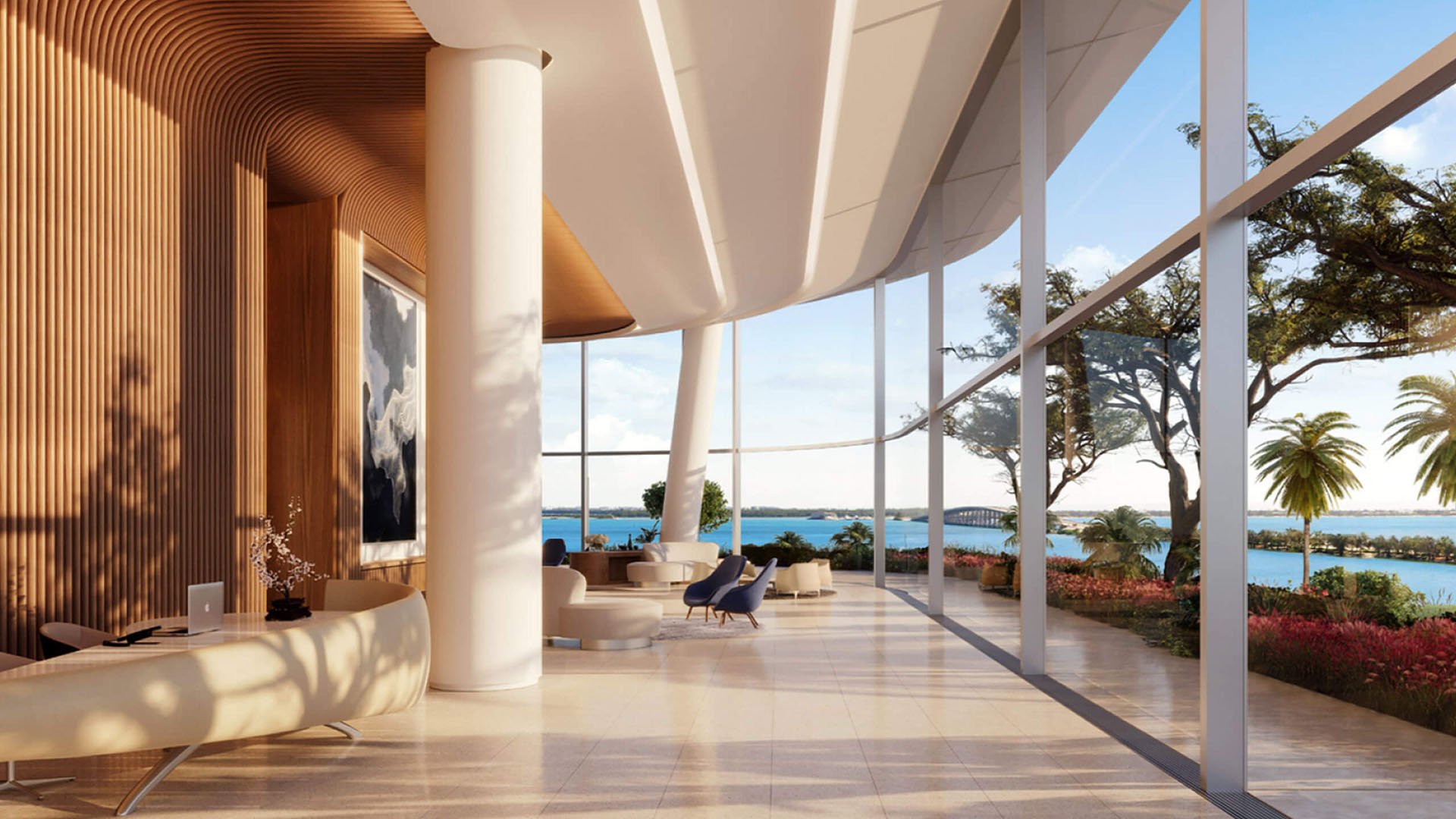
For a discerning Brickell buyer, the waterfront proposition extends beyond the terrace: who maintains the shoreline, how capital work is funded and whether everyday access remains practical when construction begins. A beautiful outlook and a well-documented maintenance plan are distinct assets. A sound purchase decision weighs both.
The five Brickell Key condominiums below form an editorial shortlist, not a hierarchy of flood safety. Their shared shoreline obligations warrant close examination. Inclusion does not certify current sale availability, uniform luxury specifications or superior building-level protection.
Buyers also considering The Residences at Mandarin Oriental, Miami should make the same distinction between residential appeal and documented shoreline responsibilities. Neither a name nor a setting substitutes for property-specific review.
1. Brickell Key One: shoreline costs and governance
Brickell Key One belongs on this shortlist because its association is among the five involved in the disputed $32.3 million seawall replacement assessment. That involvement places shoreline funding and decision-making squarely within the purchase analysis.
Begin with the association's allocation, the residence's outstanding balance and any obligations that could transfer at closing. Its first-place position reflects editorial order, not evidence of stronger flood protection than its neighbors.
2. Brickell Key Two: shared infrastructure obligations
Brickell Key Two is also among the associations affected by the shared seawall-and-baywalk initiative. Start with the relationship between condominium responsibilities and the island-level program, rather than assuming an independent resilience advantage.
Request current notices, approved funding arrangements and the documents defining maintenance responsibilities. Before evaluating the full ownership commitment, establish which decisions rest with the condominium and which with the master association.
3. Isola: assessment allocation and carrying costs
Isola's association is a participant in the shoreline assessment dispute. That makes the allocation of island-wide costs a concrete due-diligence issue, not a remote infrastructure question.
Review the unit's payment obligations alongside condominium reserves and other planned expenditures. The aim is to establish the total commitment attached to the purchase. Litigation is not evidence that an assessment will disappear or that any particular outcome is assured.
4. Courvoisier Courts: maintenance and access documentation
Courvoisier Courts is included because of its association's involvement in the shared shoreline initiative and assessment dispute. That involvement does not establish independently superior flood protection or a separate, completed seawall program.
Pair the financial review with an examination of current maintenance and access arrangements. Request applicable construction notices and pedestrian routing plans, if issued, rather than assuming the waterfront experience will remain unchanged throughout the work.
5. Carbonell: shared planning, property-specific diligence
Carbonell is among the same five associations involved in the seawall assessment dispute. Its inclusion rests on shared shoreline planning, not a verified building-specific resilience score.
Evaluate the residence through its own documents: assessment balances, relevant engineering findings, reserves and access arrangements. Carbonell warrants the same disciplined review as the other four; its position on the list implies neither better nor worse protection.
Brickell Key Master Association maintains common areas including the seawall, perimeter linear park, roadways, recreational areas and landscaping. It also provides security services for those areas. That remit establishes island-level maintenance and security responsibilities, but does not resolve every question about an individual condominium.
The shoreline initiative calls for replacing and raising the seawall approximately 1-3 feet, together with baywalk lighting, landscaping and hardscape improvements. Planned work is not completed protection.
The seawall is subject to a maintenance requirement addressing protection against a 100-year flood, along with annual inspections. A requirement is not proof of present performance. Request the latest inspection records, engineering scope, outstanding corrective items and evidence of acceptance for any completed work. The distinction between an obligation, a design and an accepted improvement matters more than reassuring language.
The $32.3 million seawall replacement assessment became the subject of litigation against Swire by five condominium associations in May 2026. Verify cost allocation and related claims through current legal and association documents. The dispute is not grounds for assuming misconduct, superior governance or a favorable resolution.
Payment options outlined in October 2025 included a lump sum, quarterly payments over 3.5 years and a seven-year loan. Those historical options are not confirmed current terms. Before closing, obtain written confirmation of the balance, applicable financing conditions and the buyer's obligations.
When comparing these residences with Una Residences Brickell, ask the same financial questions without assuming the properties share an assessment structure. Compare documented obligations, not simply headline purchase prices. Counsel should review how the purchase agreement allocates outstanding and potential future charges.
Common-area security is meaningful, but it does not establish a private baywalk, restricted shoreline entry, dock rights or uninterrupted access during construction. Each requires separate verification.
Request written clarification of pedestrian access rules, temporary closures, alternative routes and any construction-related restrictions. If boating access matters to the purchase, require specific documentation of any claimed rights rather than inferring them from proximity to water.
The same standard applies when considering St. Regis® Residences Brickell: examine the access arrangements applicable to that property. Evaluate security services, ownership rights and everyday convenience individually, rather than bundling them into a general promise of waterfront exclusivity.
Brickell Bay Drive has a separate municipal seawall resilience project intended to protect 787 residential properties. Its scope includes seawall work, roadway reconstruction, stormwater infrastructure and a waterfront greenway, alongside sidewalks, accessibility improvements and landscaping.
The design describes replacing an existing 4.2-foot seawall with an 8-foot seawall. Those figures should not be compared directly with Brickell Key's proposed 1-3-foot increase without matching elevation reference datums. Nor should buyers assume the mainland project protects every residence bearing a Brickell address.
The final test is straightforward: establish what infrastructure serves the property, who maintains it, what remains to be built and who pays. The most compelling waterfront purchase is one whose obligations are as clear as its outlook.
Explore your next waterfront residence with MILLION.
If branded residences are on your mind — as a home or as an allocation — we would be glad to share what we are seeing, privately.
Begin a quiet conversationBrickell Key One, Brickell Key Two, Isola, Courvoisier Courts and Carbonell are included. All five share the island-level shoreline planning context.
No. It is an editorial shortlist, not a verified ranking of building-level flood protection or resilience performance.
No. Current unit availability, pricing and property-specific features should be confirmed separately before arranging a purchase review.
Brickell Key Master Association maintains common areas including the seawall, perimeter linear park, roadways, recreational areas and landscaping. It also provides security services for those areas.
The initiative calls for replacing and raising the seawall approximately 1–3 feet, with baywalk lighting, landscaping and hardscape improvements. Planned improvements should not be treated as completed protection.
The seawall replacement assessment became the subject of litigation against Swire by five condominium associations in May 2026. Buyers should verify current allocations, outstanding balances and litigation status.
Current availability is not established. Options outlined in October 2025 included a lump sum, quarterly payments over 3.5 years and a seven-year loan.
No. Security services do not establish private baywalk access, dock rights, restricted shoreline entry or uninterrupted access during construction.
Request current inspection records, engineering scope, assessment balances, reserves, access arrangements and litigation updates. Seek acceptance documentation for any improvements represented as complete.
No. It is a separate municipal project intended to protect 787 residential properties, with seawall, drainage, roadway and waterfront public-realm improvements.