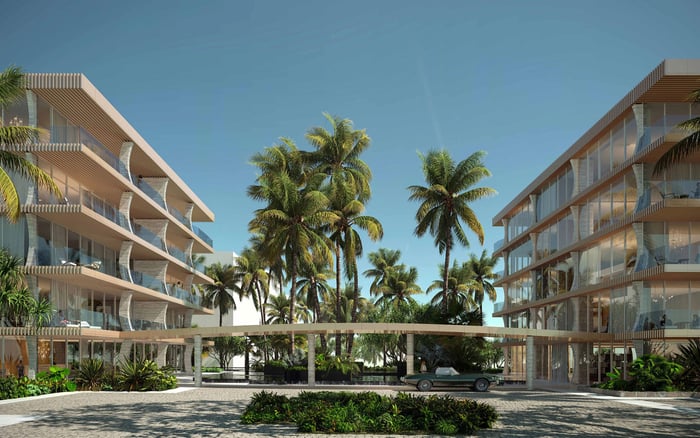
A family-office framework for evaluating advertised EV charging at The Ritz-Carlton Residences® Palm Beach Gardens, with a focus on electrical capacity, resident billing, enforceable rights, and future allocation.

For a family office, residential EV charging belongs in the acquisition file alongside parking rights and recurring expenses. The question is not simply whether a building offers chargers, but what the purchaser receives, how reliably the equipment can serve the household, and who controls costs and future access.
At The Ritz-Carlton Residences® Palm Beach Gardens, the advertised provision is specific: Level 2 charging with 220-volt service, available up to two chargers per residence. The 106-residence condominium at 2200 PGA Boulevard also advertises two garage parking spaces per residence, with self-parking or valet options.
Those provisions warrant separate review. Two parking spaces, two charging allocations, and two installed, operational chargers are not interchangeable promises. For a Palm Beach acquisition file, the objective is to connect each advertised benefit to an identifiable space, an enforceable right, and a documented operating arrangement.
The phrase “available; up to two per residence” does not settle whether equipment is included, purchased separately, or initially limited to prewiring. Nor does it establish installation costs or the precise hardware delivered with a particular residence.
Request a residence-specific parking schedule and exhibits identifying assigned spaces, charger locations, equipment ownership, and installation responsibility. The purchase agreement should distinguish included hardware from optional purchases and specify the condition in which charging will be delivered.
There are also 23 private parking garages advertised for purchase. Their availability does not establish associated charging rights. A buyer considering one should seek written confirmation of whether its electrical allocation supplements, replaces, or shares the residence's other allocation. A private enclosure alone is not evidence of independent electrical capacity.
Plans describe charging service for two vehicles in each of the 106 condominiums. That implies 212 resident vehicle charging allocations if delivered as described. This is arithmetic-not an electrical-load specification or a guarantee of simultaneous charging performance.
The broader infrastructure plan calls for approximately 280 stations, including provision for visitors and property employees. Planned supporting infrastructure includes a dedicated EV electrical room and coordination with Florida Power & Light on a street-side power-transmission upgrade.
These details indicate the scope of the planned provision. They do not establish that all stations can operate simultaneously at full rated output. The infrastructure should be treated as advertised or planned, not independently verified as installed, commissioned, or operating.
Engineering diligence should include requests for stamped electrical diagrams, load calculations, utility service documentation, and commissioning records. Ask for the maximum output at each port, total available EV capacity, and any load-management rules. The file should distinguish operational ports from rough-ins and document spare capacity rather than infer it from station counts.
Charger amperage, maximum kilowatts per port, connector model, network provider, load-management configuration, and charging-time guarantees remain unconfirmed. These are open questions, not evidence of inadequate design.
The billing arrangement needs its own written schedule. It remains unconfirmed whether residents pay the utility directly, a charging-network operator, the association, or a submetering or reimbursement provider. The final meter configuration is also unresolved.
Request a sample resident statement and the governing metering policy. Together, they should show how consumption is measured, which entity invoices the owner, and how charges can change. A complete schedule should address electricity pricing, session and idle fees, monthly access charges, demand-charge allocation, taxes, and administrative markups. It should also confirm when a category does not apply.
Separate energy consumption from network service, maintenance, and equipment replacement. Ask how visitor and employee charging is funded and whether those costs enter resident assessments. General descriptions of association-covered services and utilities do not establish that individual EV consumption is included.
For a family office also evaluating Alba West Palm Beach, this billing template offers a consistent comparison framework. Apply it independently, without assuming that either property's arrangement answers questions about the other.
The advertised provision does not define a future procedure for additional chargers, relinquished rights, waitlists, or expanded electrical capacity. Nor does it establish a right to install a third charger, upgrade charging power, or transfer charging rights with a residence or parking space.
Ask for association rules explaining who may request additional capacity, how requests are prioritized, and which approvals are required. The rules should address both physical charging locations and the electrical capacity serving them. An available space should not be assumed to carry an available power allocation.
Resale treatment warrants equal attention. Counsel should establish whether charging rights attach to the residence, a particular parking space, separately owned equipment, or another documented arrangement. Request provisions governing relinquished allocations, expansion assessments, and conflicts between parking rights and charger access.
An omission from marketing language does not mean a policy does not exist. It means the acquisition file needs the operative document, not an assumption.
A purchaser comparing The Ritz-Carlton Residences® West Palm Beach should carry the same questions into that separate review. Shared branding is no basis for assuming identical charging hardware, billing arrangements, or allocation rights.
The useful comparison is documentary: what is included, what capacity supports it, what the owner pays, and what survives a transfer. This approach keeps the residential experience central while clarifying the underlying obligations.
For an intermittently occupied residence, request written procedures for equipment faults, network interruptions, and loss of charging access. Confirm maintenance responsibility, vendor-change authority, insurance, and liability. The operating documents should identify who receives service requests and who pays for repairs.
Where valet use is contemplated, ask how charging access and vehicle handling are coordinated. Self-parking and valet options are advertised, but neither should be read as a charging-service guarantee.
Organize the final file into four groups: title and parking documents; engineering and commissioning records; metering and billing policies; and allocation and operating rules. Assign unresolved questions to the seller, association, engineer, or counsel as appropriate.
The acquisition standard is straightforward: document the right, substantiate the capacity, understand the charges, and establish how access can change. That is the difference between an appealing amenity description and a provision a household can confidently plan around.
For a discreet perspective on South Florida residential acquisitions, explore MILLION.
If branded residences are on your mind — as a home or as an allocation — we would be glad to share what we are seeing, privately.
Begin a quiet conversationLevel 2 EV charging with 220-volt service is advertised as available up to two chargers per residence. The wording does not establish precisely which hardware or installation costs are included.
Two garage parking spaces per residence are advertised, with self-parking or valet options. Parking rights should be documented separately from charging rights.
It is the arithmetic result of two vehicle charging allocations across 106 residences, if delivered as described. It is not a published electrical-load specification.
No. The planned station count includes resident, visitor, and employee provision, but does not establish simultaneous full-output performance.
The infrastructure is described here as advertised or planned, not independently verified as installed, commissioned, or operating. Commissioning records should identify operational ports.
Twenty-three private parking garages are advertised for purchase, but their associated EV charging rights are not established by the disclosed terms. Buyers should obtain garage-specific confirmation.
The disclosed information does not establish the billing entity or final meter configuration. Buyers should request the written metering policy and a sample resident statement.
That is not established. General descriptions of association-covered services and utilities do not confirm that individual charging electricity is included.
The advertised terms do not establish those rights. Association rules and transaction documents should address additional equipment, power upgrades, and resale transfers.
Request the declaration, purchase agreement, parking exhibits, engineering and commissioning records, billing policy, and allocation rules. The file should also address maintenance, outages, insurance, and liability.