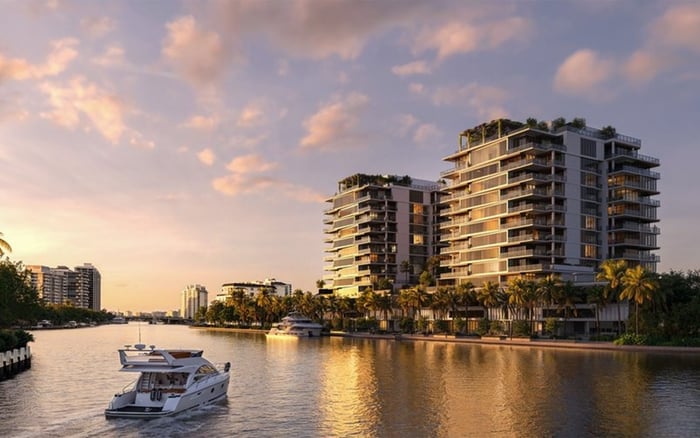
Continuum offers the clearest advertised storage match, while Rider and the Fort Lauderdale leads require further confirmation. The available information identifies four leads-not five verified active projects-and written battery permissions remain essential.

For a private-aviation user, a South Florida residence should feel composed on arrival and remain manageable through an extended absence. Bicycle and e-bike storage belongs in that conversation, alongside more visible amenities. A secure room is useful; one with clear permissions, suitable storage conditions and a written battery policy offers a more complete ownership proposition.
The distinction is simple: permission to store an e-bike is not permission to charge it. Nor does a private storage room automatically qualify as an approved battery space. Buyers should separate physical security, battery acceptance and charging authorization before incorporating an amenity into their daily routine.
This five-choice brief cannot yet support a complete ranking: the available information identifies four project leads, and it does not establish active-development status or secure e-bike storage for every entry. A fifth project should not be added without supporting documentation.
At Continuum Club & Residences North Bay Village, secured bicycle and e-bike storage is explicitly advertised. That makes it a relevant starting point for this brief, with charging permission still a separate question.
1. Continuum Club & Residences: North Bay Village
At 1755 79th Street Causeway, Continuum offers the clearest documented match among these leads: advertised secured bicycle and e-bike storage. It also advertises private temperature-controlled storage for purchase-a separate offering that should not be confused with the bicycle amenity.
The purchase decision should turn on the governing documents and charging policy. Neither advertised e-bike storage nor temperature-controlled private storage establishes authorization to charge batteries. Ask whether batteries must remain attached, whether removable packs are accepted and which spaces are expressly approved for each use.
2. Rider Residences: Miami
Rider's plans include a gated bike room, along with motorcycle and bicycle rentals. The gated room gives buyers a concrete security feature to investigate, rather than a general promise of bicycle convenience.
Dedicated e-bike storage, battery lockers and charging stations are not established. Request the room plan and written acceptance rules, including whether an e-bike may enter with its battery attached. Rental offerings do not resolve those ownership questions.
3. St. Regis Bahia Mar: Fort Lauderdale
St. Regis Bahia Mar remains a provisional luxury-development lead, not an established secure e-bike-storage match. Its relevance to this search depends on project-specific specifications for bicycle access, battery acceptance and any designated charging arrangement.
Request residence-specific pricing separately from the amenity package. Broader Fort Lauderdale pricing should not be treated as verified pricing for this project.
4. Ritz-Carlton development lead: Fort Lauderdale
The Fort Lauderdale Ritz-Carlton lead requires exact project identification before it can become a purchase recommendation. An address, confirmed active-development status and secured e-bike-storage specifications are not established for that lead.
Treat the name as a starting point for inquiry, not a substitute for a project file. Confirm the precise development, then request the same storage and battery documentation required of the stronger amenity matches above.
When considering St. Regis® Residences Bahia Mar Fort Lauderdale, keep the residential proposition separate from the bicycle-storage brief. A branded address can belong on a luxury shortlist without satisfying a specialized battery requirement.
Likewise, a buyer reviewing The Ritz-Carlton Residences® Fort Lauderdale should establish whether it is the precise development intended by the unresolved lead before applying any claims to it. Similar naming does not establish identity, active status or an amenity.
For private-aviation users, airport logistics require a parallel inquiry. No airport-specific advantage, FBO access arrangement or private-airport drive time is established here. Test the residence against your actual arrival and departure routine; bicycle storage is not evidence of aviation convenience.
Request the bicycle-room plan, governing restrictions and two distinct written permissions: one for storing the bicycle and battery, another for charging. Ask specifically whether the association restricts e-bikes or batteries in bicycle lockers or spaces without air conditioning. A general bicycle amenity does not establish e-bike acceptance.
Clarify how access is controlled, whether spaces are assigned and whether removable batteries must be stored elsewhere. These are questions for the project team, not features to assume. For a household with more than one device, establish any limits on the number of bicycles or battery packs accepted.
Apply the same discipline to temperature control. Private temperature-controlled storage may be useful for possessions, but it should not be treated as an approved charging space without written confirmation. Ask management to identify the permitted location, equipment and operating conditions rather than relying on the presence of an outlet.
Building permission, manufacturer instructions and applicable fire-safety requirements should be checked separately. This article does not establish the adoption or current enforceability of any proposed Florida charging provision; draft language should not be treated as current law.
Ask management and the local fire authority which device and charging-equipment standards apply. Confirm the permitted charger, electrical connection and charging location, including restrictions involving extension cords, power strips, exit routes and nearby combustible materials. These are verification questions, not a representation that a particular rule applies to every South Florida residence.
For a communal charging proposal, request confirmation of any permit or review requirements before relying on the installation. A room label or available outlet does not establish approval for battery charging.
For long-term storage, the practical guidance is a cool, dry location, approximately 40-80% charge and no stacked loose batteries. Before leaving the residence, confirm that those conditions align with the device manufacturer's instructions and the building's permitted storage arrangements; the charge range is not a universal requirement.
Damaged, malfunctioning, modified, counterfeit or substandard batteries can enter thermal runaway, potentially producing smoke, fire, toxic gases or explosion. Request a damaged-battery procedure and identify appropriate chemical-recycling centers or retailer drop-off locations for disposal.
The strongest ownership choice is a residence where security, permissions and battery handling align in writing, keeping the bicycle a convenience rather than an unresolved responsibility.
For a discreet assessment of South Florida residences against your ownership priorities, explore MILLION.
If branded residences are on your mind — as a home or as an allocation — we would be glad to share what we are seeing, privately.
Begin a quiet conversationNo. The available information identifies four leads and does not establish active-development status or secure e-bike storage for every entry.
Continuum Club & Residences in North Bay Village explicitly advertises secured bicycle and e-bike storage. Charging permission remains unconfirmed.
Its address is 1755 79th Street Causeway, North Bay Village.
That separate storage offering does not establish battery-charging permission. Obtain written approval for the specific space and use.
Rider's plans include a gated bike room. Dedicated e-bike storage, battery lockers and charging stations are not established.
No secured e-bike-storage specification is established for this provisional lead. Request project-specific storage and charging documents before relying on the amenity.
The precise project identity, active-development status and storage specifications remain unresolved. Similar project names do not establish that they refer to the same development.
No adoption or current enforceability of proposed charging provisions is established here. Confirm applicable requirements with management and the local fire authority.
The article's practical guidance is a cool, dry place, approximately 40–80% charge and no stacked loose batteries. Confirm the appropriate arrangement against manufacturer instructions and building permissions.
No project-specific private-airport drive times, FBO access or aviation services are established here. Evaluate airport logistics separately from residential storage amenities.