Five Miami-Dade residential choices frame a discreet approach to household-staff access and collection protection, with practical questions about cameras, credentials and incident-record preservation.
For an owner with household staff and a private collection, residential security is as much an operational question as an architectural one. A gracious arrival matters. So does the distinction between a housekeeper’s recurring credential, a conservator’s scheduled visit and a delivery team’s temporary authorization. The essential question is whether access can be controlled, reconstructed and, when necessary, investigated discreetly.
These five choices offer different settings for that assessment: an island perimeter, hospitality-oriented towers, a Miami Beach service environment and gated estates. Their order reflects security priorities, not verified superiority in installed systems or incident performance. Current sales status and project-specific policies require direct confirmation; established communities should not be mistaken for active development projects.
At The Residences at Six Fisher Island, begin by distinguishing island arrival controls from the building’s own procedures. That separation is central to a meaningful comparison across the shortlist.
1. Six Fisher Island - Island-level perimeter
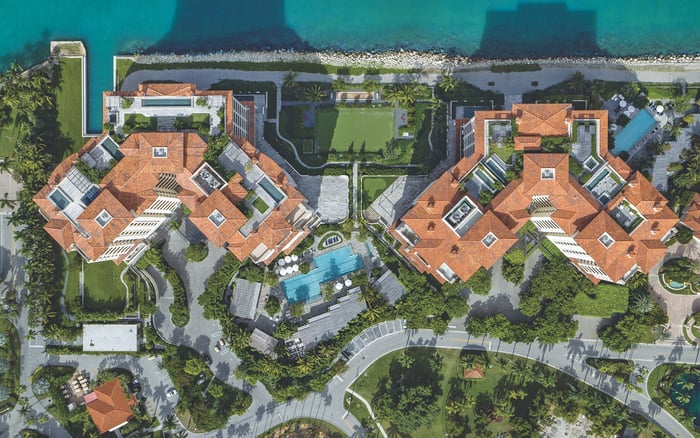
Fisher Island’s private-ferry access creates a physical checkpoint beyond the individual residential building. That additional layer makes Six Fisher Island a candidate for owners examining how household employees and visiting specialists reach the island before approaching the residence.
Do not treat that checkpoint as proof of building-level protection. Confirm individual staff credentials, dock camera coverage and ferry-record retention separately. Collection-room access, in-residence alarms and the connection between island and building records also require direct verification.
2. St. Regis Residences Miami - Hospitality-led staff handling
This Brickell choice merits consideration for its hospitality-led high-rise model and the possibility of centralized household-staff and visitor handling. For a household coordinating regular employees and occasional vendors, the decisive issue is whether service translates into clearly assigned permissions.
Ask for the proposed or operating elevator restrictions, valet authorization procedures and searchable entry records. A refined reception experience does not establish whether a staff member’s credential can be limited by floor, schedule or destination-or how quickly it can be disabled.
3. Baccarat Residences Miami - Controlled-entry tower candidate
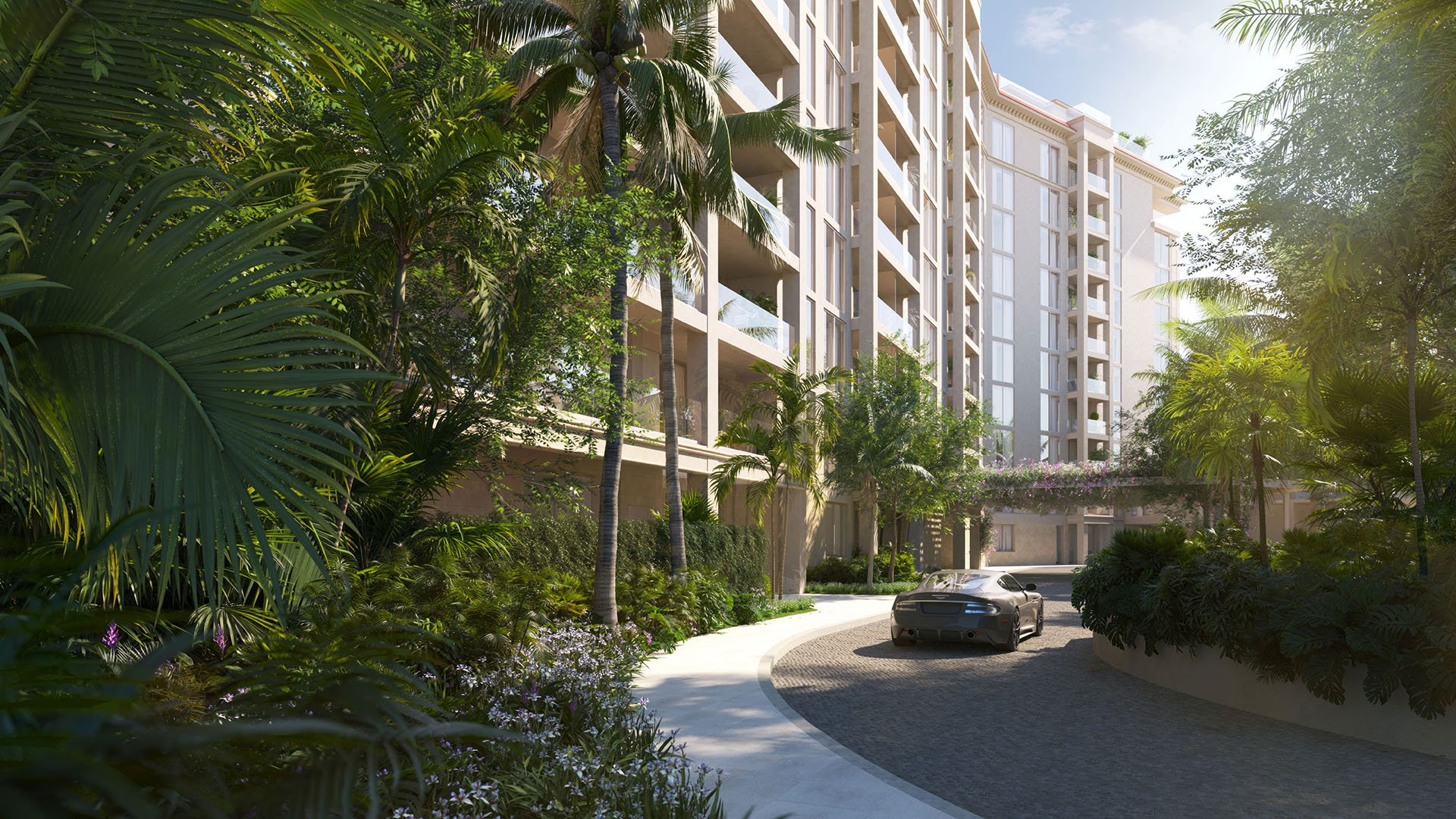
Baccarat is a candidate for buyers prioritizing staffed arrival and elevator privacy in a Brickell tower. Focus the comparison on how a visitor moves from vehicle arrival through reception to the residential floor, rather than on the presence of a lobby alone.
Its camera map, individual staff permissions and retention periods are not established here. Request written confirmation of each, including whether entry events can be matched to relevant video and who is authorized to conduct that review.
4. Faena House / Faena residential ecosystem - Service-boundary clarity
The appeal of this Miami Beach choice lies in its hospitality-service environment and potential for discreet household operations. The exact residence configuration matters: the condominium and the wider Faena environment should not be treated as one security organization.
Establish which entity controls each entrance, supervises personnel, holds recordings and receives incident notifications. For collection deliveries or specialist visits, ask where responsibility transfers between broader operations, condominium management and the owner’s household team.
5. Gables Estates and Cocoplum - Gated estate alternatives
These gated Coral Gables communities offer a single-family alternative to tower living. Coral Gables also operates its own municipal police department, a function separate from community gates, HOA arrangements or private security personnel.
Assess Gables Estates and Cocoplum individually rather than assuming common procedures. Gatehouse authorization, waterfront exposure and record retention each require separate review. A community checkpoint does not establish protection for the home’s collection spaces or control over movement once a visitor reaches the property.
Buyers comparing St. Regis® Residences Brickell with Baccarat Residences Brickell should walk through a normal working day, not merely a sales arrival. Ask how a recurring employee enters, how a substitute is approved and how an unscheduled vendor is handled when the owner is away.
Request named credentials rather than assuming shared household authorization will produce a useful record. Ask whether permissions can reflect working hours and required destinations, and whether credential cancellation reaches every relevant access point. The written procedure should identify who can approve changes and who confirms completion.
Valet and elevator controls belong in the same discussion. Treat permission to deliver a vehicle, enter the lobby or reach a residential floor as distinct decisions. Confirm what is actually recorded at each stage.
For Faena House Miami Beach, the buyer’s task is to establish the boundary between attentive service and documented security responsibility. Ask who authorizes a collection delivery, who escorts visiting specialists if required and where condominium oversight ends.
Collection protection requires a separate in-residence assessment. Common-area cameras do not establish artwork-storage protection, intrusion detection within the home or a collection-specific response procedure. Ask an appropriate specialist to examine entrances, camera sightlines, lighting, network coverage and equipment locations while respecting household privacy.
Frame that assessment around approved activity rather than indiscriminate observation. Identify which rooms require restricted access, which visits need owner authorization and how an alarm would reach the responsible person. Integrated cameras, locks, intercoms and alarms are available capabilities, not confirmed installations at these addresses.
Before committing, request a controlled review of camera coverage at relevant entrances, service routes and arrival points. Establish what each view can show, where coverage stops and whether the corresponding access event can be located. A camera’s presence alone does not answer those questions.
Ask for separate retention schedules for video, access logs and incident records. No property-specific retention period is established for this shortlist. Identify the record custodian, the normal deletion process and the written procedure for requesting preservation after an incident, including who acknowledges the request.
Preservation and disclosure are different questions. Staffed security, private elevators and CCTV do not automatically give an owner the right to obtain recordings or searchable logs. Confirm the review and release process before relying on those records.
The strongest purchase decision rests on clear responsibilities: who admits, who authorizes, who records and who responds. Compare written answers alongside the residence itself, with particular attention to staff departures and collection movements.
For a discreet residential search shaped around your household’s priorities, connect with MILLION.
If branded residences are on your mind — as a home or as an allocation — we would be glad to share what we are seeing, privately.
Begin a quiet conversationFisher Island’s private-ferry access adds a physical checkpoint beyond the residential building. Its placement reflects a perimeter-security focus, not verified superiority in installed systems.
The shortlist includes established residential settings as well as project candidates. Confirm current sales and development status for the specific property being considered.
Request named credential rules, available schedule and destination restrictions, and written deactivation procedures. Confirm who authorizes changes and verifies completion.
Examine the complete arrival sequence, including valet authorization, lobby entry and elevator access. Confirm what permissions and records apply at each stage.
No. Collection-room access, in-residence intrusion detection and collection-specific response procedures require separate verification.
Identify the boundaries between condominium security and broader Faena operations. Confirm who controls entrances, holds records and handles incident notifications.
Do not assume they do. Gatehouse rules, waterfront exposure and record retention should be assessed separately for each community.
No property-specific retention period is established here. Request separate written schedules for video, access logs and incident records.
No automatic entitlement is established by cameras or staffed security. Confirm who may review or release recordings and what approval process applies.
It should identify the record custodian, how to submit a preservation request and who acknowledges it. Clarify preservation separately from permission to receive copies.