A buyer’s guide to separating Cipriani’s advertised residential hospitality from the guest-accommodation rights, booking charges, seasonal access and purchase-contract protections that require written confirmation.
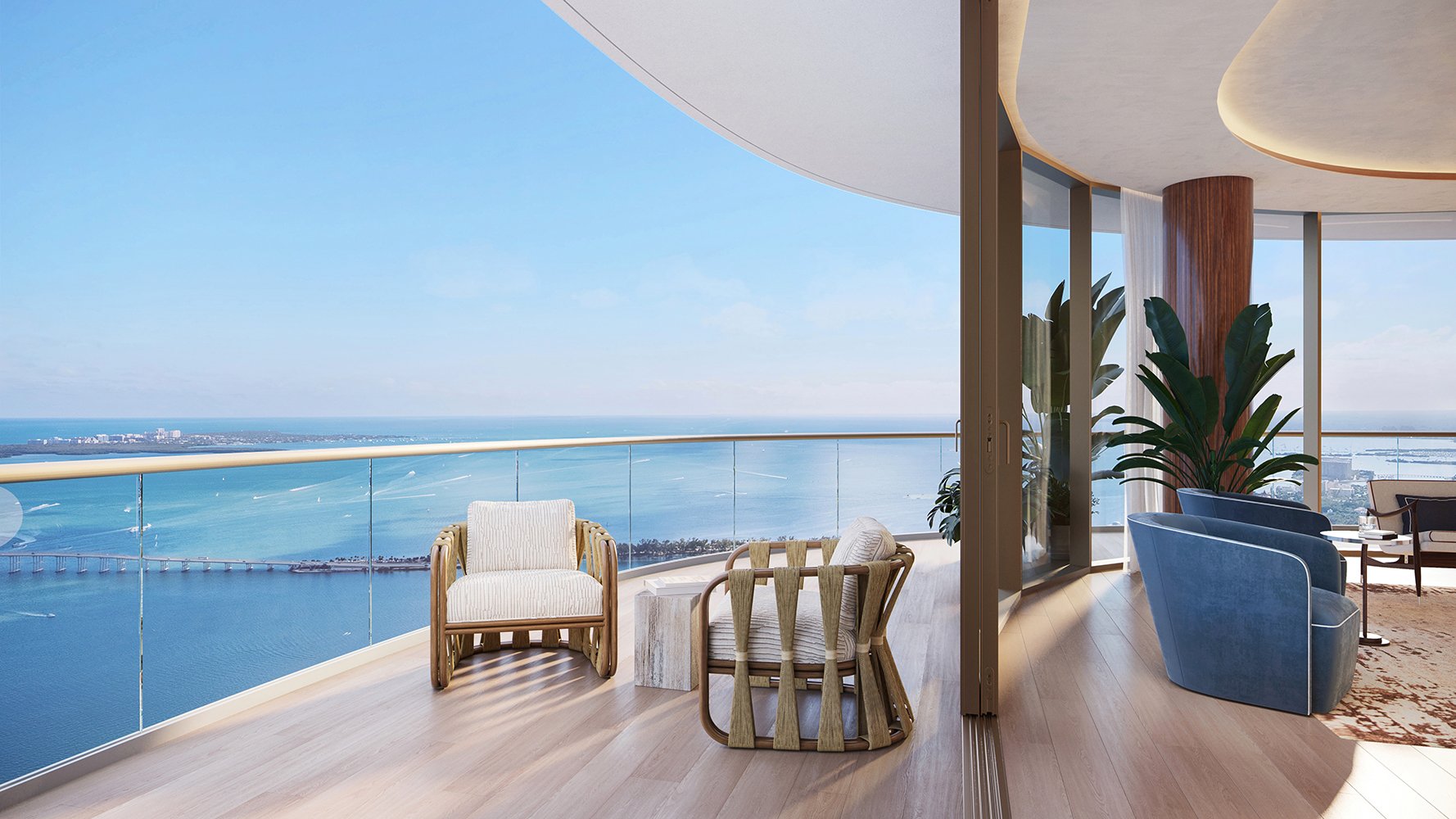
For a buyer considering Cipriani Residences Brickell, the appeal extends beyond the residence itself. Marketed as Cipriani Residences Miami at 1420 South Miami Avenue, the project offers one- to four-bedroom residences and a hospitality proposition centered on Cipriani-branded services.
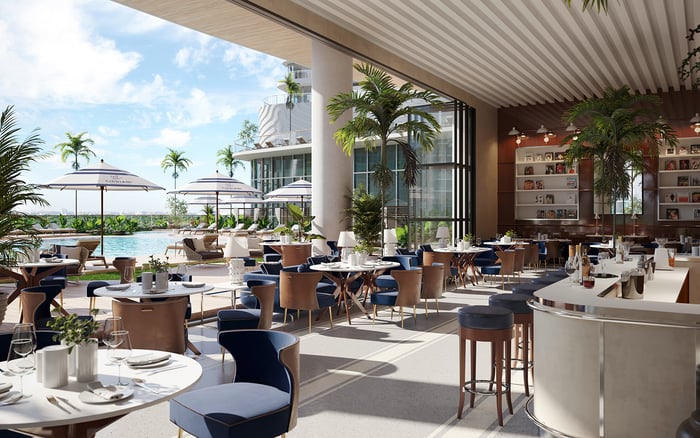
Advertised amenities include a private restaurant for residents and their guests, reservable private dining rooms catered by Cipriani, in-home dining and 24-hour catering exclusive to the building. Two pools, poolside cabanas and Cipriani poolside service extend that promise outdoors. A residents’ lounge, library, screening room, spa and fitness facilities complete the offering.
The purchase question is not simply whether these amenities are compelling, but whether their access rules support the way your household intends to live. A service offering is not a guaranteed reservation. Before assigning value to guest accommodation, seasonal entertaining or concierge assistance, distinguish advertised services from documented entitlements.
Neither a guest-suite inventory nor a formal guest-suite priority program has been publicly established. That leaves an unresolved question-not evidence that suites are unavailable. Begin by confirming whether an accommodation program exists at all.
If one is offered, ask where the suites are located, who owns or operates them and whether access belongs to every residence or depends on a separate arrangement. Establish whether ownership conveys a contractual entitlement, a preferential booking opportunity or merely assistance with arranging accommodation.
The same discipline applies beyond the building. Ownership-based priority for hotel rooms, partner properties or other Cipriani accommodations has not been publicly established. Brand affiliation alone should not be treated as a reservation benefit.
For any proposed program, request written terms covering booking windows, annual night limits, maximum stays, eligible guests, transferability, seasonal allocation and charges. Ask how competing resident requests are resolved. Priority has practical meaning only when the allocation method and its limits are clear.
A private restaurant for residents and their guests is an advertised amenity. The guest-access rules, however, are not publicly specified: whether a resident must accompany visitors, whether guests may dine independently and whether additional restrictions apply during high-demand periods.
These distinctions matter when hosting family while traveling or arranging dinner for visitors before you arrive in Miami. Ask who may make the reservation, who must be present and whose account bears the charges. Confirm whether a guest invitation extends only to dining or to other amenities as well.
Private dining rooms raise a separate set of questions. Although advertised as reservable, their advance-booking windows, resident-tier rules, quotas and blackout dates are not publicly specified. Request the applicable booking rules rather than assuming restaurant access and private-event access are interchangeable.
If your shortlist also includes Baccarat Residences Brickell, apply the same guest-access questions there. Compare each property’s documented terms without assuming equivalent privileges or restrictions.
Cancellation raises two distinct issues. One concerns a dinner, private room, cabana or accommodation reservation. The other concerns withdrawal from, or default under, the residence purchase agreement. An answer to one does not resolve the other.
For private dining rooms and cabanas, minimum spending, reservation deposits, service charges, cancellation notice requirements and no-show penalties are not publicly disclosed. Lack of disclosure should not be mistaken for the absence of a charge or requirement.
Ask for a written fee schedule and a worked example for your intended use. For a private dinner, identify the deposit, final guest-count deadline, any minimum commitment, modification charges and cancellation timetable. For a cabana, ask whether shortening a reservation or canceling because of weather changes the amount owed. These are questions to resolve, not established project policies.
A useful answer specifies amounts, deadlines, refund conditions and who has discretion to waive a charge. General assurances of flexibility do not provide the same budgeting clarity.
Advertised 24-hour concierge support is not a guarantee of reservation availability. Assistance and inventory are different things, particularly when your stay depends on a specific date.
No separate winter, holiday, Art Basel or Formula 1 booking policy is publicly specified, and guaranteed peak-season access has not been publicly established. Ask explicitly about Christmas and New Year’s, Art Basel and Miami Race Week rather than accepting an answer about ordinary availability.
Present a realistic scenario: visiting family, a private dinner and poolside arrangements during the same stay. Ask when each request can be submitted, whether reservations receive immediate confirmation, how waitlists operate and whether an owner’s existing bookings affect subsequent requests. If accommodation is offered, test its allocation separately.
Buyers also considering St. Regis® Residences Brickell can apply the same scenario to that property’s documentation. A consistent set of questions is more useful than assuming a hospitality name delivers a particular level of seasonal certainty.
A deposit payment schedule describes when money is due. It does not, by itself, establish what is refundable, what may be retained or what additional exposure could follow cancellation or default. No universal cancellation penalty or refundable amount has been publicly established for the project.
Before signing, have counsel identify the treatment of every deposit installment under the applicable purchase agreement. Request a written explanation of any applicable rescission rights, notice requirements and deadlines. Ask whether financing or delay provisions provide an exit in specified circumstances, without assuming either protection exists.
The review should also address potential additional damages and distinguish a permitted contractual termination from buyer default. A reassuring percentage quoted in conversation is no substitute for understanding the provision governing your transaction.
Bring the operational and contractual questions together before committing. Request the purchase agreement, relevant condominium documents and any applicable reservation policies or fee schedules. Ask which hospitality services and access rights are incorporated into binding documents, who may change them and what happens if a service is modified or discontinued.
Where a policy remains unsettled, treat the benefit as unresolved-not guaranteed or unavailable. That distinction preserves the lifestyle’s appeal without assigning certainty to an undocumented promise. The goal is a residence whose hospitality arrangements fit your household as thoughtfully as its floor plan.
For a discreet perspective on your South Florida residential shortlist, connect with MILLION.
If branded residences are on your mind — as a home or as an allocation — we would be glad to share what we are seeing, privately.
Begin a quiet conversationThe project is marketed at 1420 South Miami Avenue in Brickell, with one- to four-bedroom residences and Cipriani-branded services.
Public amenity descriptions do not establish a guest-suite inventory or formal priority program. Buyers should confirm whether an accommodation program exists before evaluating its benefits.
Public descriptions do not establish ownership-based priority for hotel rooms, partner properties or other Cipriani accommodations. Any proposed benefit requires written confirmation.
The restaurant is advertised for residents and their guests, but independent guest dining and resident-accompaniment requirements are not specified in the public descriptions.
The offering includes a private restaurant, reservable private dining rooms catered by Cipriani, in-home dining and 24-hour catering exclusive to the building.
Public amenity materials do not disclose cancellation notice requirements, no-show penalties, reservation deposits, minimum spending or service charges for those reservations.
No reservation guarantee should be inferred from the advertised concierge support. Buyers should separately confirm booking rights and availability rules.
Public amenity materials do not establish guaranteed peak-season access or publish separate booking policies for those periods. Ask for written terms addressing your intended dates.
A payment schedule establishes when payments are due, not what is refundable after cancellation. The applicable purchase agreement is needed to assess retention of deposits and any additional exposure.
Request the purchase agreement, relevant condominium documents and applicable booking rules and fee schedules. Have counsel review cancellation rights and which service commitments are incorporated into binding documents.