Five Edgewater developments merit a closer look for trust and entity purchasers planning extended absences. This editorial shortlist distinguishes development facts from the ownership permissions, monitoring systems, and emergency authority buyers should secure in writing.

An Edgewater residence deserves as much scrutiny for the months its owner is away as for a winter stay. For buyers purchasing through a trust or entity, the decisive questions extend beyond architecture and views: who receives an alert, who may enter, and who can authorize a repair when the principal is unavailable?
These five projects form an editorial due-diligence shortlist, not a verified ranking of protective systems or ownership eligibility. Project-specific leak detection, humidity monitoring, recurring inspections, emergency authority, and acceptance of particular trusts or entities remain unconfirmed. The distinction matters: an attractive development profile warrants investigation; it does not establish that an unattended residence will be managed to your standards.
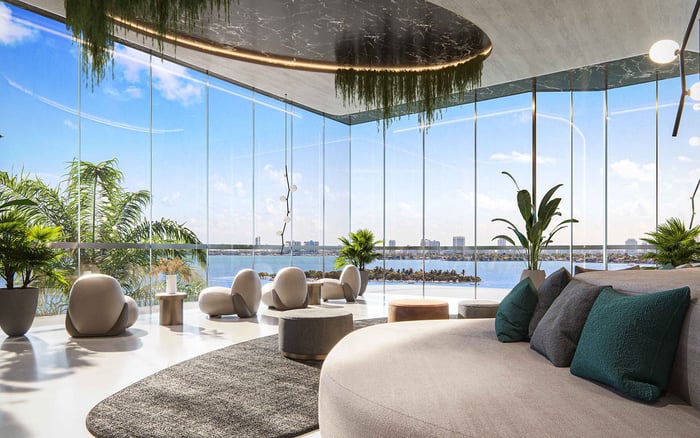
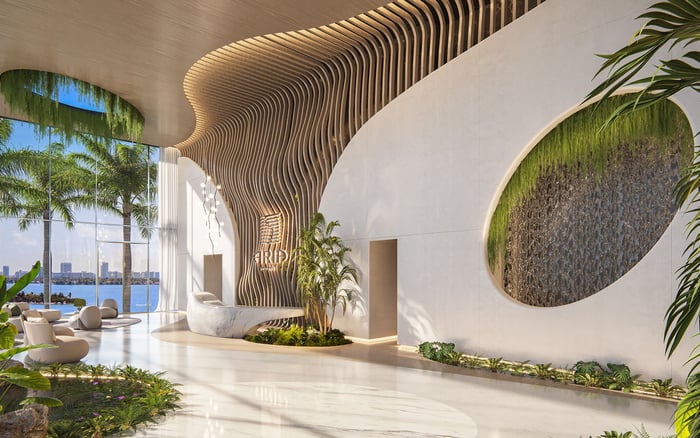
1. Aria Reserve North Tower: delivery-stage operational review
At 700 NE 24th Street, Aria Reserve is described as a 62-story twin-tower development. The North Tower's stated Q3 2026 delivery target places it first for buyers prioritizing delivery-stage operational verification. That target does not confirm completed delivery.
The buying question is whether proposed systems and services have become documented, functioning arrangements. Request the applicable management procedures, inspection options, and emergency-contact registration process. Do not assume development-wide descriptions establish the North Tower's readiness or the protections inside a particular residence.
2. EDITION Residences Miami: hospitality service under scrutiny
Located at 2121 N. Bayshore Drive, EDITION Residences Miami is listed with 185 residences and 55 floors. Its hospitality branding makes the residential service agreement especially important. Delivery estimates differ between 2026 and 2029; neither should be treated as a firm completion date.
For an absentee purchaser, the key distinction is between hospitality and property oversight. Ask whether recurring inspections, humidity checks, and emergency repairs are included, separately contracted, or outside the service scope. The brand alone establishes none of those commitments.
3. Villa Miami: construction progress with time to specify oversight
Villa Miami, at 700 NE 29th Street, is a 55-story bayfront condominium under construction. Following a December 2024 groundbreaking, its stated June 2026 construction milestone was the 37th floor, with completion projected for late 2027. Other delivery indications have differed, so timing requires fresh confirmation.
That construction progress supports its place on an active-project shortlist, not a conclusion about future management quality. Buyers should use the pre-completion period to request written specifications and establish which absence-management arrangements will depend on the building, the owner, or an outside provider.
4. The Cove Residences / Cove Miami: a smaller residence count
At 456 NE 29th Street, Cove Miami is listed with 134 residences across 40 floors and estimated completion in 2028. Its stated March 2026 groundbreaking adds a construction milestone to that profile.
The smaller residence count is a reason to investigate the service model, not evidence of more individualized attention. Ask about inspection responsibilities, vendor access, and escalation procedures. A smaller ownership base does not, by itself, establish who will respond to a leak or approve urgent work.
5. ELLE Residences Miami: the lower-rise candidate
ELLE Residences Miami is listed at 3618 NE 5th Avenue, with 180 residences across 25 floors and estimated completion in 2028. It is the lower-rise choice within this five-project shortlist.
Building height is no substitute for an operational assessment. Request the same ownership, monitoring, and emergency-entry documentation sought from the taller candidates. Neither fewer floors nor a different building scale establishes simpler management or stronger protection during a prolonged absence.
For a trust or entity purchaser considering Aria Reserve Miami, start with the proposed purchaser's exact structure. Request written confirmation of accepted ownership forms, required trustee or entity documentation, authorized-signatory requirements, and assignment restrictions. Have counsel review those requirements before relying on an ownership plan.
Then address daily operating authority as a separate question. Ask how management registers a local emergency representative and what documentation it requires before accepting that person's instructions. The purchasing signatory, alert recipient, and repair approver may be different people; the proposed arrangement should identify each role explicitly.
Test whether the written permissions still work when both the principal and primary representative are unavailable. Request a backup contact sequence rather than leaving that circumstance to improvisation.
At EDITION Edgewater, evaluate the residential agreement independently of the hospitality identity. Seek a defined inspection frequency, a checklist of what is examined, vendor-access rules, escalation deadlines, and dated photographs after each visit. Confirm who receives those records and how unresolved issues remain visible until addressed.
Apply the same standard to every candidate. Ask which responsibilities belong to building management and which require a separate owner-appointed provider. An absence-management proposal should define service boundaries, not merely offer reassurance that someone can check the residence.
Before an extended departure, request a written review of contacts, permissions, access arrangements, and outstanding maintenance. Treat that as a buyer requirement, not an assumed building service.
For Villa Miami, request the proposed unit-level specifications rather than inferring protection from construction progress. Ask about leak-sensor locations, automatic water shutoffs, HVAC condensate alarms, dedicated dehumidification, and access to remote readings. Confirm whether each feature is included, optional, or not offered.
Water detection and humidity oversight require separate questions. Specify an agreed humidity threshold with the relevant professional, then ask who receives an alert and what response follows. A sensor description is not a complete management plan.
Request a walkthrough of the intended response sequence: detection, notification, acknowledgment, entry, corrective action, and a record of resolution. Each step should have an identified responsible party, including a backup when the first contact does not respond.
Buyers evaluating The Cove Residences Edgewater should examine the same emergency-authority questions as buyers in larger towers. Request written entry permissions, repair-approval limits, urgent-damage exceptions, storm procedures, and confirmation of who may authorize contractors. Do not assume access permission also conveys spending authority.
Ask management and counsel to test the proposed documents against a practical scenario: a water alert arrives while the owner is unreachable. Who can enter, authorize containment, approve further work, and notify the trustee or entity representative?
The strongest choice will be the candidate whose written ownership and operating arrangements match your needs, not simply the one with the most compelling presentation. Keep delivery estimates separate from readiness, and promises separate from documented obligations.
For a discreet conversation about your Edgewater shortlist, connect with MILLION.
If branded residences are on your mind — as a home or as an allocation — we would be glad to share what we are seeing, privately.
Begin a quiet conversationNo project-specific acceptance is established here. Request written confirmation for the exact purchaser structure, documentation, and authorized signatories.
Its stated Q3 2026 delivery target makes delivery-stage operational verification the principal reason to investigate it. The target does not establish completed delivery or functioning absence-management services.
No. Buyers should review the residential service agreement to determine whether inspections, humidity checks, or emergency repairs are included or separately arranged.
Available estimates differ between 2026 and 2029. A firm completion date should not be assumed.
Its stated June 2026 milestone was the 37th floor, following a December 2024 groundbreaking. Late-2027 completion was projected, but timing remains subject to confirmation.
No. Its listed 134 residences across 40 floors provide a scale comparison, not proof of individualized service or faster emergency response.
With 25 floors and 180 residences, it is the shortlist's lower-rise candidate. Height alone does not establish simpler operations or stronger absence protection.
Ask about unit-level sensors, automatic shutoffs, HVAC condensate alarms, dedicated dehumidification, and remote readings. Also establish alert recipients and a response procedure for an agreed humidity threshold.
Request inspection frequency, the inspection checklist, vendor-access rules, escalation deadlines, and dated photographic records. Clarify which duties belong to management and which require a separate provider.
Obtain written entry permissions, repair-approval limits, urgent-damage exceptions, and contractor-authorization procedures. Confirm the local representative and backup contacts with management and counsel.