An aviation-oriented Edgewater comparison led by Villa Miami and Anantara, distinguishing advertised helipad amenities from unverified storm resilience, recovery access and coastal upkeep, with Bay Parc retained only as a cautionary comparison.
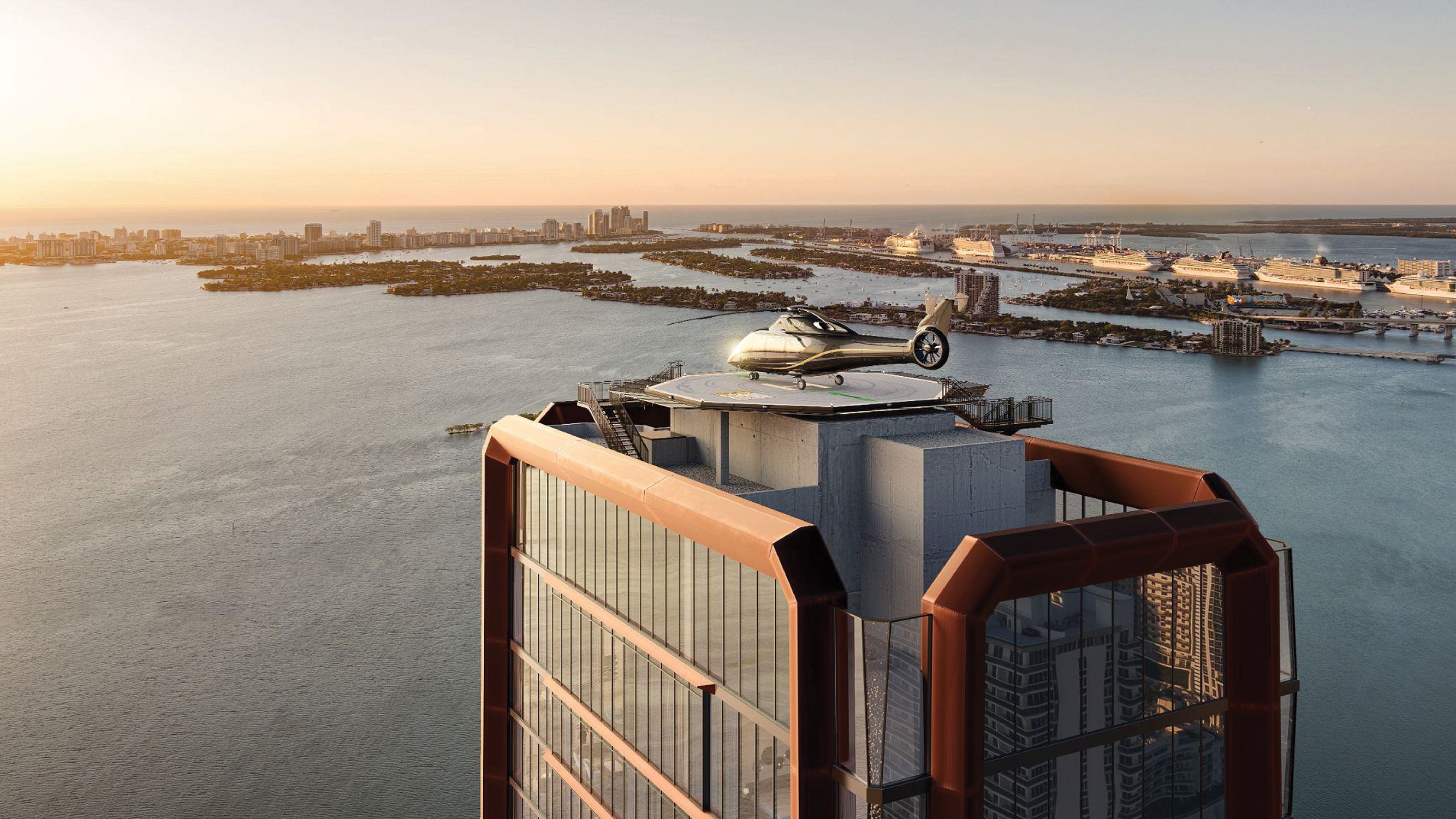
For a private-aviation household, an Edgewater residence must answer two distinct questions: how elegantly it supports arrival, and how reliably it supports return after a disruption. A rooftop helipad addresses the first. It does not, by itself, establish strong wind protection, post-storm building access or disciplined coastal maintenance.
The distinction matters along Biscayne Bay, where salt exposure affects balcony hardware, glazing and HVAC longevity. A beautifully appointed residence can still leave critical operational questions unanswered. For buyers whose schedules depend on discretion and flexibility, those questions belong alongside floor plans and service expectations-not at the end of negotiations.
This ranking prioritizes advertised aviation amenities and identifiable residential candidates. It is not a certification of hurricane performance or five validated condominium purchase recommendations. The features described here do not establish verified comparative wind ratings, generator endurance or post-storm reopening performance for any of the five.
1. Villa Miami: 710 N.E. 29th Street
Villa Miami is the strongest aviation-oriented candidate here because its advertised plans expressly include a rooftop helipad, rather than a general claim of location convenience. The development occupies a 0.88-acre Biscayne Bay site and is described as 56 stories with approximately 70 residences. Planned homes are exclusively half-floor and full-floor layouts, spanning approximately 3,000 to 6,000 square feet.
A private dock and five floors of amenities broaden the arrival options and lifestyle offering. Groundbreaking has been announced, but the helipad and dock remain advertised features-not evidence of approved, operational or dependable storm-recovery access. Its first-place position reflects aviation relevance, not proven resilience.
2. Anantara Miami Resort & Residences: planned waterfront development
Anantara's advertised plans include a private rooftop helipad intended for direct, discreet aerial access. Its planned Edgewater program combines private branded condominium residences, resort residences and hotel suites, with delivery targeted around 2030. The aviation feature makes it a meaningful second candidate for buyers considering a future residence rather than immediate occupancy.
The purchase question is whether the eventual operating arrangements will match the advertised experience. Buyers should request written clarification of access rights, operating restrictions and the relationship between residential and hospitality uses. No completed storm-performance history is established here, and the delivery target is not a guarantee.
3. EDITION Residences Edgewater: glass-forward residential candidate
EDITION Residences Edgewater's advertised features include floor-to-ceiling glass windows. For an aviation user, that architectural appeal is separate from the practical question of whether the home can support a reliable return after severe weather. The window description provides no specific wind-load or impact-resistance rating.
EDITION belongs in the residential comparison, but not as an established on-site aviation solution. Buyers should request glazing specifications and building recovery procedures rather than infer hurricane protection from the facade's appearance. No private helipad is substantiated for this candidate.
4. Aria on the Bay: 488 N.E. 18th Street
Aria on the Bay is an operating Edgewater condominium. Its existing status offers a different due-diligence opportunity: buyers can seek actual association records rather than rely exclusively on future specifications and operating commitments. That distinction can be valuable when evaluating maintenance discipline and the practical experience of ownership.
Operating status is not evidence of a favorable storm history. Neither a private helipad nor superior coastal-maintenance performance is established here. Aria earns its place as an existing condominium whose records may answer operational questions that planned developments cannot yet address retrospectively.
5. Bay Parc: unresolved purchase candidate
Bay Parc is identifiable through an Edgewater rental offering, but its suitability as a luxury-condominium purchase remains unresolved. It should not be treated as an equivalent acquisition recommendation alongside the better-defined residential candidates above.
The next step is to establish ownership structure and purchase eligibility before evaluating aviation relevance. No helipad, private dock or resilience advantage should be attributed to Bay Parc. Its fifth position is a cautionary comparison, not an endorsement for a private-aviation buyer.
For buyers considering Villa Miami, the planned helipad deserves its own diligence file. Ask whether approvals are complete, who may use it, which aircraft and operators would be eligible, and how bookings, closures and reopening decisions would work. Obtain written answers rather than equating an advertised amenity with unrestricted access.
Apply the same discipline to Anantara. A planned landing facility is not a promise of availability during recovery. Ask how its operating arrangements would connect to access through the rest of the building, including elevators and residential entry.
A private dock warrants a separate set of questions. Request operating rules, inspection requirements and closure procedures. Multiple advertised arrival options are attractive, but they do not establish independent, reliable routes home after a storm.
A useful comparison separates design language from technical evidence. At EDITION Edgewater, floor-to-ceiling glass is an advertised architectural feature, not a quantified protection standard. Ask for project-specific glazing and opening specifications, applicable approvals and supporting engineering documentation for professional review.
The same discipline should apply if the search expands to Aria Reserve Miami. Its inclusion in a wider shopping brief would not establish aviation access or a resilience advantage over this shortlist. Compare documents rather than assume equivalence between project names.
For an operating condominium, request relevant inspection findings, repair records and association minutes. For a planned residence, distinguish contractual specifications from future management intentions. Neither age nor newness alone answers the buyer's protection question.
Coastal maintenance is most useful when documented over time. Request inspection and service records for balcony hardware, glazing and HVAC, along with outstanding repair recommendations and evidence of completed work. For bayfront components, ask whether seawall or dock assessments are available. A polished presentation does not establish consistent upkeep.
Post-storm access deserves equally specific questions: which systems receive backup power, what runtime is documented, who authorizes reopening, and what inspections must precede resident re-entry? For existing buildings, seek actual closure and reopening records where available. For planned projects, request written protocols and identify what remains a future commitment.
The strongest purchase decision aligns three separate findings: a residence suited to the household, clearly defined aviation privileges, and credible building-level documentation. Villa Miami and Anantara lead on advertised aerial access. The resilience decision remains a document-led judgment, not a consequence of that ranking.
For a discreet conversation about your Edgewater residential priorities, connect with MILLION.
If branded residences are on your mind — as a home or as an allocation — we would be glad to share what we are seeing, privately.
Begin a quiet conversationVilla Miami ranks first for its planned rooftop helipad and private dock. That position does not establish verified storm resilience or dependable recovery access.
It is described as planned and advertised. Approval, operational status and availability should be confirmed separately.
Villa Miami is at 710 N.E. 29th Street in Edgewater, on a 0.88-acre Biscayne Bay site.
The planned residences use exclusively half-floor and full-floor layouts, with sizes of approximately 3,000 to 6,000 square feet.
Anantara markets a private rooftop helipad intended for direct, discreet aerial access. It remains a planned feature rather than an established operational service.
Delivery is targeted around 2030. That target is not a guaranteed completion date.
No; the advertised window description supplies no specific wind-load or impact-resistance rating.
As an operating condominium, it offers the opportunity to request actual association and maintenance records. Its existing status does not establish favorable storm performance.
No; its condominium purchase suitability remains unresolved, and no aviation or resilience advantage is established.
Request inspection, service and repair records for balcony hardware, glazing and HVAC, plus available assessments for waterfront components. These should be evaluated separately from aviation amenities.