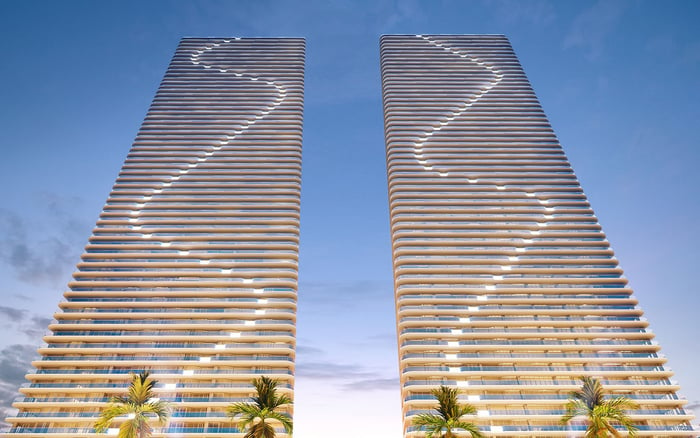
Five Edgewater candidates viewed through an art collector’s due-diligence lens: component-specific warranties, association turnover records, independent engineering, and a documented path for post-closing concerns.

For an art collector, a residence must offer more than a compelling setting. The less visible questions concern responsibility: who addresses a defect, which warranty applies, what the association has received, and how an unresolved issue moves beyond a service request. These questions deserve attention before a collection arrives.
These five Edgewater candidates form a due-diligence shortlist, not a verified ranking of warranty quality. Their order does not establish superior owner support, remaining coverage, current inventory, or active construction status. Confirm availability and project stage separately.
A buyer considering Aria Reserve Miami should apply the same documentary discipline used for an important acquisition: establish the record, identify qualifications, and distinguish assurances from enforceable obligations.
1. Aria Reserve: project-specific warranty diligence
Aria Reserve is the first candidate for new-development diligence. Its inclusion does not establish better warranty administration or post-closing support.
Begin with the project-specific written warranties and the completion date of the building containing the unit. Ask counsel to distinguish developer obligations from contractor-side protections and manufacturer coverage. The decisive question is whether each potential concern can be matched to a responsible party, an applicable period, and a written claim procedure.
2. Elysee Miami: turnover-document diligence
For Elysee Miami, prioritize the association’s turnover file: delivered warranties, engineering evaluations, and follow-up on missing records. Building completion and transfer of association control are separate events; one does not prove the other has occurred.
Request an inventory of documents received and identify outstanding requests. Examine any engineering evaluation alongside the underlying plans and warranties, not as their replacement. This is a diligence priority, not a conclusion about Elysee’s actual turnover package or claims outcomes.
3. Missoni Baia: statutory and manufacturer coverage
Missoni Baia belongs on the shortlist with a clear distinction in mind: the residence’s branding does not establish longer protection or better claim resolution. Ask counsel to review any applicable statutory implied warranties separately from manufacturer warranties.
For personal property transferred with a unit, examine the applicable manufacturer’s warranty period rather than assuming a universal term. Ask for written exclusions, maintenance conditions, and submission instructions. The objective is a component-by-component understanding, not a single reassuring warranty headline.
4. Gran Paraiso / Paraiso Bay complex: association-specific engineering
At Gran Paraiso / Paraiso Bay, focus on the specific condominium association governing the purchase. A complex-wide impression cannot substitute for that association’s engineering and turnover records.
Identify which documents concern the residence and its relevant building systems. Request independent engineering evaluations and evidence of follow-up on identified concerns. Do not extend a conclusion about one association’s documentation to the entire complex or assume another building’s completion or turnover dates determine this purchase’s coverage.
5. Biscayne Beach: written post-closing escalation
Biscayne Beach is the fifth candidate, with written claim procedures and construction-defect escalation records as the central diligence priorities. Do not presume any particular response time, resolved-claim history, or remaining warranty period.
Ask how a concern is acknowledged, who coordinates inspection, and what happens if the first response does not resolve it. Where available, review records tracing the progression from complaint to inspection, proposed work, and completion. A named contact is useful; a documented escalation path is more meaningful.
For an Edgewater purchase, avoid reducing warranty diligence to a single duration. Ask counsel to identify the protections applicable to the unit, common elements, improvements, and transferred equipment.
For each potential protection, record the responsible party, covered component, start date, duration, exclusions, and notice requirements. Ask whether building completion, completion of a particular improvement, closing, or another event determines the relevant date.
Review developer obligations, contractor-side protections, and manufacturer warranties separately. Do not assume that coverage for structural components also governs finishes, equipment, or other materials.
For a resale, ask counsel whether any statutory implied warranties or transferable written warranties benefit the purchaser and whether coverage remains. Do not assume that a purchase restarts a warranty period or infer coverage from a listing’s description.
Request the association’s turnover inventory, including applicable plans, permits, warranties, and engineering-related documentation. Ask counsel to assess required deliveries and distinguish records supplied by the developer from independent engineering evaluations commissioned to assess conditions.
Preserve the original documents, identify omissions, and maintain a record of requests and responses. For an association evaluating potential defects, independent engineering can help turn observations into a technically supported assessment.
If EDITION Edgewater enters the broader search, use the same document request without assuming equivalent project stage, turnover status, or coverage. This is a method of comparison, not an endorsement of any building’s records. The shortlist should become more selective as the evidence becomes more specific.
Start with the written warranty’s claim instructions, exclusions, and maintenance conditions. Keep dated observations, photographs, correspondence, inspection findings, and proposed corrective work together. Ask for written acknowledgment and retain evidence of receipt.
Report observed concerns promptly through the applicable written procedure. Ask counsel to confirm the required recipient, delivery method, and deadline rather than assuming an email or ordinary service request satisfies every legal requirement.
Have counsel assess any applicable pre-suit construction-defect notice requirements, including Chapter 558, and identify limitation and repose deadlines separately from warranty periods. Do not assume ongoing service discussions preserve a claim.
Apply the same distinction between promise and proof when comparing Villa Miami. Translate a collector’s requirements into written questions about humidity control, glazing, backup power, storage conditions, and freight-elevator capacity-not assumptions based on positioning or price.
Ask qualified advisers to assess suitability for the actual collection. Warranty documentation does not establish conservation performance, and neither branding nor luxury pricing proves superior enforcement. Keep the property review and the collection’s installation requirements connected, but distinct.
The strongest choice is the residence whose documents, engineering review, and escalation procedures withstand scrutiny for the specific purchase.
Explore an evidence-led Edgewater property search with MILLION.
If branded residences are on your mind — as a home or as an allocation — we would be glad to share what we are seeing, privately.
Begin a quiet conversationNo. They form a due-diligence shortlist, and the order does not establish superior warranty administration or owner support.
The shortlist does not establish current construction status or inventory. Confirm each candidate’s stage and availability separately.
No. Ask counsel to identify the start date for each applicable protection and the event that triggers it.
Ask counsel whether statutory implied warranties or transferable written warranties apply to the purchase. Do not assume the transaction restarts any coverage period.
No. Review the applicable manufacturer’s warranty, its conditions, and any other protections counsel identifies.
Request applicable plans, permits, warranties, and engineering-related documentation. Review independent engineering evaluations separately and identify unresolved document requests.
No. Building completion and transfer of association control are separate events, and completion does not establish that turnover records have been delivered.
Follow the applicable written claim procedure and retain dated observations, photographs, correspondence, and proof of receipt. Confirm the required recipient and delivery method.
No. Have counsel assess applicable pre-suit notice requirements and legal deadlines separately from the building’s service process.
The shortlist does not establish building-level humidity control, UV protection, backup power, storage conditions, or freight-elevator capacity. Evaluate those requirements separately for the actual collection.