A disciplined framework for comparing residence lines at Riva Residenze Fort Lauderdale, from orientation and floor-specific views to layouts, costs, documents, and waterfront resilience.

At Riva Residenze Fort Lauderdale, choosing a residence begins with understanding the condominium concept of a line: the vertical stack of homes sharing a floor-plan position and broadly similar exposure across multiple levels. Yet residences within the same stack are not interchangeable. Elevation can alter outlook, privacy, light, noise, and the potential for an obstruction to enter the view corridor.
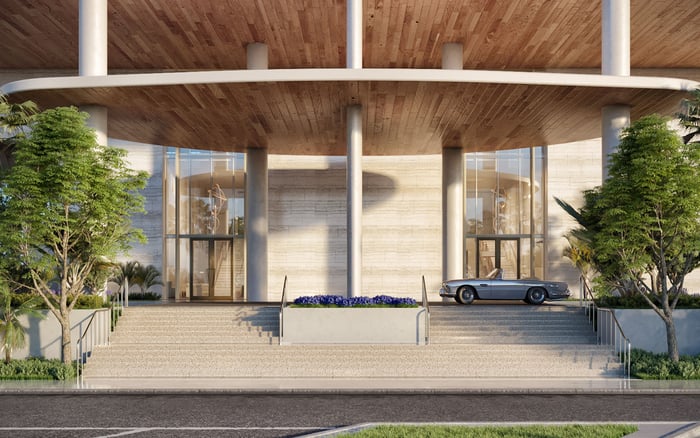
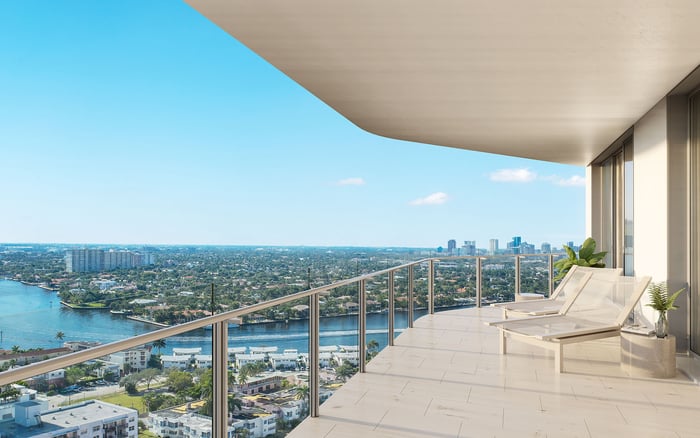
A polished rendering may convey architectural intent, but it is no substitute for a line-by-line review. Buyers should ask the sales team to identify every currently available line on the floor plate, then clarify which face the water directly and which offer secondary, oblique, or city-facing outlooks.
This level of scrutiny helps buyers evaluate waterfront, waterview, and balcony attributes separately rather than treating them as a single lifestyle proposition.
The first essential request is a floor-specific representation of the outlook. The same line may feel open at one elevation and more visually connected to neighboring structures, infrastructure, or activity at another. Ask what occupies the foreground, middle distance, and horizon from the principal living areas, primary bedroom, and terrace.
Buyers should also investigate whether nearby parcels, proposed buildings, or infrastructure projects could alter an advertised view corridor. Any representation material to the purchase decision should appear in the current offering documents or be obtained in writing, with the purchase agreement reviewed for limitations and developer-reserved rights.
Exposure is not only about beauty. Compare each line’s relationship to boat traffic, exterior lighting, roads, bridges, service areas, and amenity noise. A view that appears compelling in a still image may take on a different character at night, during active boating periods, or while shared spaces are in use.
The same discipline applies when evaluating other Fort Lauderdale options, including Four Seasons Hotel & Private Residences Fort Lauderdale and St. Regis® Residences Bahia Mar Fort Lauderdale. The objective is not a generalized project comparison, but a residence-specific understanding of exposure.
Total square footage is only the opening metric. Request usable interior dimensions, then examine the length and placement of furniture walls, circulation paths, columns, mechanical chases, and storage. A larger plan may function less elegantly if key rooms are interrupted or circulation consumes a disproportionate share of the interior.
Bring a furniture plan to the gallery discussion. Confirm that the living room can accommodate the intended seating composition without compromising terrace access, and that bedroom walls allow suitable placement of the bed, nightstands, and storage. Ask where mechanical elements sit in relation to quiet rooms and whether the dimensions shown are finished or approximate.
The same scrutiny belongs in any luxury purchase, whether the alternative is The Ritz-Carlton Residences® Fort Lauderdale and Sixth & Rio Fort Lauderdale. Brand, location, and architecture frame the decision; the plan determines how comfortably the residence lives.
Ask for the balcony depth, shape, and usable area of each line under consideration. Establish the positions of doors, railings, columns, and neighboring terraces, then assess whether the outdoor space supports dining, lounging, or both without constricting circulation.
Privacy should be studied in plan and section, not assumed. Confirm sightlines between adjacent terraces and the relationship between outdoor areas on the floors above and below. Orientation may also influence wind-driven rain and everyday exposure, so buyers should ask how the terrace is expected to perform in changing weather rather than assessing it only under ideal conditions.
Request a line-by-line price-per-square-foot comparison to identify how much of the asking price reflects water orientation, elevation, layout quality, or scarcity. A premium can be rational, but it should be visible and attributable.
Compare the incremental price between floors within the same line, then assess similarly sized residences across different lines. This reveals whether the market positioning rewards a superior outlook, a more functional plan, greater privacy, or simply limited availability.
Recurring economics demand equal precision. Ask whether association assessments, maintenance charges, parking rights, storage, or other continuing costs vary by residence size or line. Confirm what is included, what is assigned, and what may carry a separate charge. Do not assume that two similarly priced residences create the same long-term ownership profile.
Before contract execution, review the purchase agreement, condominium documents, disclosures, and developer-reserved rights with qualified counsel. Focus on provisions that may affect views, finishes, amenities, dimensions, or floor plans. Renderings and gallery presentations should be understood in relation to the controlling documents, never as replacements for them.
For a waterfront residence, the review should also address flood exposure, storm resilience, insurance assumptions, seawall and dock responsibilities, and backup-building systems. Legal, engineering, insurance, and financial professionals can help distinguish a persuasive presentation from a properly documented ownership decision.
As a final step, score each candidate line across six categories: view quality, privacy, interior functionality, terrace utility, total ownership cost, and resilience. Add separate notes on elevation, potential obstructions, noise sources, parking, and storage.
The strongest choice is not automatically the highest floor or the most direct water exposure. It is the residence whose premium aligns with the buyer’s priorities, whose physical characteristics have been tested carefully, and whose material representations withstand document review.
What does a condominium line mean? It is a vertical stack of residences sharing the same floor-plan position and broadly similar exposure across multiple floors.
Should buyers rely on the building renderings? No. Renderings should be supplemented with floor-specific views, plans, current offering documents, and written representations.
Can the view change within the same line? Yes. Elevation can affect outlook, privacy, and obstruction risk even when the floor-plan position remains consistent.
Which exposures should be compared? Ask which lines face the water directly and which offer oblique, secondary, or city-facing views.
What noise factors deserve attention? Consider boat traffic, roads, bridges, exterior lighting, service areas, and the location of building amenities.
How should buyers evaluate the floor plan? Review usable dimensions, furniture walls, circulation, columns, mechanical chases, and storage rather than relying on total area alone.
What should be checked about the terrace? Confirm depth, shape, privacy, neighboring sightlines, weather exposure, and practical furniture placement.
How can buyers assess a line premium? Request line-by-line and floor-by-floor price-per-square-foot comparisons tied to orientation, elevation, layout, and scarcity.
Can recurring costs differ between residences? They may vary by residence size or another allocation, so confirm assessments, maintenance charges, parking, storage, and additional fees.
Which waterfront risks require professional review? Examine flood exposure, storm resilience, insurance assumptions, seawall and dock responsibilities, and backup-building systems.
When you're ready to tour or underwrite the options, connect with MILLION.
If branded residences are on your mind — as a home or as an allocation — we would be glad to share what we are seeing, privately.
Begin a quiet conversation