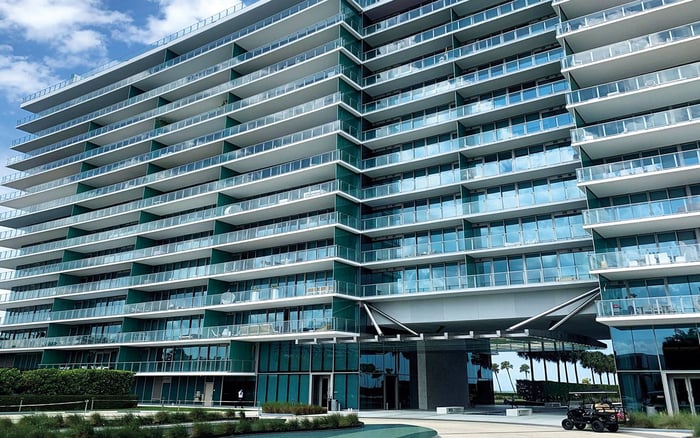
A disciplined framework for Spanish residents coordinating Modelo 720, U.S. bank onboarding, ownership records, closing documents, and FIRPTA when purchasing South Florida property.

For a Spanish tax resident, acquiring a home in Key Biscayne is more than a Florida conveyance. It sets in motion a sequence of connected decisions involving Spanish disclosure, U.S. bank onboarding, ownership structure, source-of-funds review, closing formalities, and eventual resale. Each workstream carries its own documents and deadlines, but the information provided across them should tell one consistent story.
The most efficient approach begins before any reservation, contract, or international wire. Spanish and U.S. tax advisers should first establish the buyer's tax residence, intended use of the home, proposed source of funds, and preferred form of ownership. Banking and closing teams can then confirm their respective requirements. This is especially important for a second-home or investment purchase, where personal-use, income, and ownership objectives may differ.
For readers comparing buyer's guides across South Florida, the central lesson is continuity. Passport spelling, Madrid address, taxpayer number, company name, and beneficial-owner profile should remain consistent throughout the file. Even small discrepancies can prompt further review when the underlying transaction is straightforward.
The strongest cross-border file tells one consistent story from Madrid to closing.
Modelo 720 is an electronic information return for Spanish tax residents with qualifying foreign assets. Its reporting categories include foreign bank accounts, securities, insurance, income rights, real estate, and rights over foreign real estate. The initial obligation generally arises when the aggregate value within an independently assessed category exceeds €50,000.
A directly held Key Biscayne residence may fall within the foreign-real-estate category when the applicable threshold is met. A U.S. bank account can require a separate analysis. For foreign accounts, the calculation generally considers both the December 31 balance and the average balance during the fourth quarter. Buyers should therefore retain year-end statements and records sufficient to establish the fourth-quarter average, rather than relying solely on a current online balance.
Modelo 720 is generally filed from January 1 through March 31 for the preceding calendar year. It is informational and does not replace an analysis of whether Spanish income, wealth, or other taxes apply. The practical task is to provide the Spanish adviser promptly after completion with the final closing statement, deed and ownership records, acquisition-value documentation, bank statements, and any entity materials.
Ownership through a company or trust should never be assumed to eliminate Spanish reporting. Instead, it may change how the interest is characterized. That question should be resolved before title is vested, particularly when comparing direct ownership of a waterfront home with an entity purchase.
A U.S. account can simplify deposits, recurring property expenses, and closing logistics, but nonresident onboarding varies by institution. Banks commonly request government-issued photo identification and proof of a U.S. address. Depending on policy, acceptable records may include a passport, consular identification, visa, utility bill, or lease.
The bank may also request immigration documentation and an ITIN or another taxpayer-identification number. An in-person branch visit may be necessary. Buyers should ask in advance whether the intended account type is available to a nonresident, which address evidence is acceptable, whether translated records are required, and how international wires will be authenticated.
Foreign individuals receiving relevant U.S.-source income generally provide the appropriate withholding agent with Form W-8BEN as a certificate of foreign status. Foreign entities use Form W-8BEN-E. These forms should reflect the ownership and tax profile adopted for the purchase. They are not interchangeable simply because the same family controls the funds.
FATCA adds another layer of financial-account documentation. It requires foreign financial institutions to identify U.S. persons and report specified information. If the buyer later becomes a U.S. person with foreign accounts, FBAR and Form 8938 may both require review; filing one does not automatically replace the other.
A polished closing file should be created once and updated centrally. At minimum, buyers should expect requests for an authenticated passport or government identification, international-wire verification, proof of funds, source-of-wealth explanations, and tax documentation. Translated records and company documents may also be required.
For a financed acquisition, underwriting commonly expands the file to include a valid passport, visa or entry evidence, foreign tax returns, foreign bank statements, income verification, and a traceable record of the down payment. The paper trail should show how funds moved from the disclosed source to the account sending the closing wire.
If an LLC or trust will acquire the home, compliance reviewers may request the entity's identifying information, along with each relevant beneficial owner's name, address, date of birth, and identification document. Organizing constitutional documents, ownership records, and signing authority early reduces the risk of a last-minute discrepancy.
The same discipline applies whether the buyer is considering Oceana Key Biscayne, looking across the bay toward Una Residences Brickell, or evaluating Vita at Grove Isle. Brickell may offer a different lifestyle setting, but the cross-border need for coherent identity, ownership, and funds documentation remains.
Florida requires a real-property buyer to provide an affidavit at purchase stating that the buyer is not a prohibited foreign principal or otherwise qualifies for an exception. The closing agent must obtain this foreign-principal affidavit. It is a state-law requirement, distinct from bank due diligence, Spanish reporting, federal withholding, and lender underwriting.
The buyer should review the affidavit with Florida counsel well before closing, especially when an entity or trust is involved. Signing through a company does not eliminate the need to reconcile the entity's information with that of its beneficial owners. The affidavit, purchase contract, title vesting, bank records, and wire instructions should align.
This separation of requirements matters in other coastal markets as well. A purchaser comparing Key Biscayne with The Ritz-Carlton Residences® Miami Beach should not treat successful bank onboarding as confirmation that every state closing requirement has been satisfied.
FIRPTA generally makes the buyer the withholding agent when acquiring U.S. real property from a foreign seller. The rule turns on the seller's foreign status, not the purchaser's nationality. A Spanish buyer may therefore have a withholding responsibility at the initial acquisition if the seller is foreign.
When the buyer acquires the property for use as a residence and the amount realized does not exceed $1 million, withholding is generally 10 percent. Before funds are released, the closing team should determine the seller's status, applicable rate, required documentation, and remittance process rather than treating FIRPTA as a post-closing issue.
The same framework can return when the Spanish owner sells. If the owner remains a foreign person, the future buyer or transferee generally becomes the withholding agent. Purchase records, capital-expenditure documentation, tax-identification materials, and prior filings should therefore be retained from the outset. Withholding is not necessarily the final tax result, but it directly affects sale proceeds and cash-flow planning.
Before signing or wiring, confirm five points: the intended ownership structure has been reviewed in both countries; the bank accepts the buyer's identity and address documents; the source and movement of funds are traceable; the Florida affidavit and closing package are ready; and the Spanish adviser has identified the records required for Modelo 720 and any separate tax analysis.
The objective is not more paperwork. It is a controlled transaction in which tax residence, account ownership, title, beneficial ownership, and cash movement remain consistent from the first compliance review through the final closing statement. This article is educational and does not replace individualized Spanish or U.S. legal, tax, banking, or lending advice.
For discreet guidance on a South Florida acquisition, connect with MILLION.
If branded residences are on your mind — as a home or as an allocation — we would be glad to share what we are seeing, privately.
Begin a quiet conversationA directly owned property may enter Modelo 720's foreign-real-estate category when the applicable threshold is met.
The initial obligation generally arises when aggregate value in an independently assessed reporting category exceeds €50,000.
It is generally filed electronically from January 1 through March 31 for the preceding calendar year.
Yes. Qualifying foreign accounts are a separate category, with calculations generally considering the December 31 balance and fourth-quarter average.
A bank may request a passport or other government ID, U.S. address evidence, immigration documents, and an ITIN or other taxpayer-identification number.
W-8BEN is the foreign-status certificate for an individual, while W-8BEN-E is designed for a foreign entity.
Common requests include passport and entry evidence, foreign tax returns, bank statements, income verification, and a documented down-payment trail.
No. Reviewers may request entity information plus the beneficial owner's name, address, birth date, and identification document.
It is a purchase affidavit stating that the buyer is not a prohibited foreign principal or otherwise qualifies under an exception.
Yes. A buyer may have withholding duties when the seller is foreign, and a future buyer may withhold when the Spanish owner later sells as a foreign person.