A discreet due-diligence framework for assessing valet control, garage circulation, guest screening and arrival privacy before selecting a South Florida residence for Formula 1 Miami.

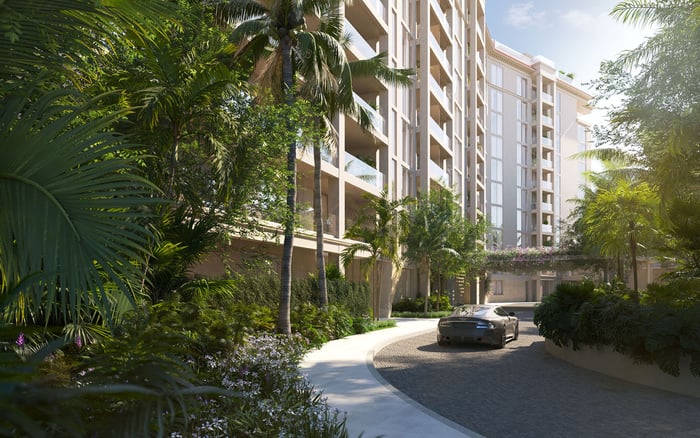
For a buyer planning around Formula 1 Miami, the most revealing tour may begin before the lobby. The approach road, porte cochere, valet handoff, garage threshold, elevator transfer and guest-screening sequence collectively define arrival privacy. A polished experience on a quiet afternoon does not necessarily reveal how the property functions when residents, visitors, vendors and vehicles converge.
This is not simply a question of convenience. It is a question of control. Who sees the resident arrive? Where does a driver wait? Can guests move from curb to elevator without crossing private circulation? Which decisions are governed by written policy, and which depend on the judgment of the team working that shift?
The most useful approach is to test the complete sequence rather than rely on a general promise of discretion. The objective is not an invisible lifestyle, but a residence with clear procedures, limited points of exposure and a credible plan for unusually busy periods.
Ask management or the seller's representative to walk you through every legitimate arrival path. Include resident self-parking, valet, chauffeured drop-off, ride service, pedestrian entry and guest arrival. Note where identities are checked, where keys change hands and where passengers may wait if the entrance is temporarily occupied.
The same exercise should cover departure. A resident may enter privately yet still be required to wait in a visible lobby while a car is retrieved. Ask whether vehicle requests can be made from the residence, how residents are notified and where a vehicle is staged. Do not assume arrival and departure offer equal discretion.
In Brickell, buyers comparing The Residences at 1428 Brickell with other urban options should make circulation a dedicated agenda item. In Miami Beach, the same discipline applies when considering Apogee South Beach. Project selection should prompt questions, not substitute for verified operational answers.
The central question is not whether valet exists, but how it operates under pressure. Request a clear explanation of event-period procedures. Will additional credentials be required? Are guest vehicles restricted? Is staffing adjusted? Can residents reserve a retrieval time? Who has the authority to redirect an unfamiliar driver or deny access?
Also ask how temporary instructions are communicated. An email, resident portal notice and direct confirmation may serve different owners differently. A second-home resident arriving shortly before an event needs to know who will brief household staff, family members and drivers. The protocol should remain intelligible even while the owner is traveling.
Avoid relying on estimated journey times or broad assurances about congestion. Instead, ask for the building's decision tree when access is disrupted: the approved alternate entrance, the safe passenger drop point, the contact responsible for coordination and the fallback if the garage cannot be reached as planned.
Valet privacy begins with custody. Buyers should ask where keys are stored, who can access them, how vehicles are identified and whether retrieval requests create a visible record. For frequently changing cars or visiting drivers, clarify how authorization is updated and how the building prevents a verbal request from replacing formal verification.
Garage circulation deserves equal scrutiny. Determine whether resident parking, valet staging, deliveries and guest parking intersect. Ask whether cameras cover transfer points and who may review the footage. The purpose is not to demand a particular system, but to understand the property's actual chain of responsibility.
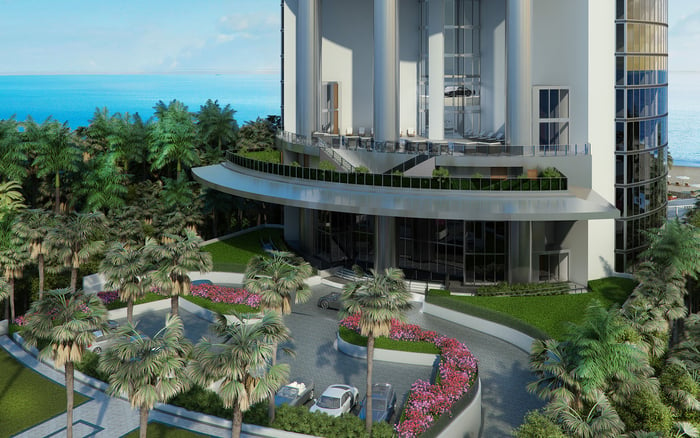
At Bentley Residences Sunny Isles, or elsewhere in Sunny Isles Beach, a buyer should still request property-specific confirmation of access and vehicle procedures. Brand identity, architecture and lifestyle positioning are distinct from the operating rules that protect a resident's arrival.
Privacy can be compromised by a casually managed guest list. Ask how names are submitted, whether identification is checked, how last-minute additions are handled and whether hosts receive confirmation before a visitor proceeds. Then test the exceptions: a stylist arriving early, catering staff using a service entrance, a replacement driver or luggage delivered ahead of the owner.
Household employees require a distinct review. Determine whether recurring access can be limited by date, time or entry point, and how permissions are revoked. Ask whether staff and vendors share elevators or waiting areas with residents. If they do, decide whether that arrangement aligns with your expectations rather than assuming it will change after closing.
A more secluded setting can still present operational questions. Buyers evaluating Vita at Grove Isle should examine the complete handoff from property approach to private threshold, just as they would in a dense city location. Geography may influence the experience, but procedure defines it.
Before signing, ask for the current rules governing valet, guests, parking, service access and security. Have the appropriate advisers review which provisions are binding, which can change and what authority the association or operator retains during special events. Sales language should not be treated as an operating covenant.
The most valuable questions are precise. Who can view arrival information? How long is it retained? Can an owner opt out of name displays? Are private events subject to advance approval? What happens when a resident's guest arrives before authorization is visible to the desk? Who resolves a dispute after hours?
Finally, revisit the answers close to each event. Staffing, access instructions and guest policies can evolve. A discreet ownership plan pairs the residence with a current contact sheet, driver instructions and a household protocol. For F1 week, preparation is best understood as part of ownership, not an improvised concierge request.
Should I test the valet before buying? Yes. Experience both vehicle drop-off and retrieval, then compare what occurs with the written procedure.
What is the most important privacy question? Ask who can observe, record or authorize each step between curb, garage, lobby and residence.
Should I ask about Formula 1 Miami specifically? Yes. Request the property's current event-period plan without assuming it will remain unchanged.
Is a private garage automatically more discreet? Not necessarily. Access control, staffing, camera coverage and elevator circulation still require review.
How should guest lists be handled? Seek a defined authorization process with clear identity checks, host confirmation and revocation rules.
What should my driver receive? Provide the approved approach, entry instructions, building contact and a fallback meeting point.
Can valet policies change after purchase? They may. Review the governing documents and ask who has authority to revise operating procedures.
Should household staff have standing access? Only if it suits your needs. Ask whether permissions can be limited by person, time and entry point.
Does location determine arrival privacy? Location shapes the context, but building design, management practice and resident behavior determine execution.
When should I reconfirm event-week procedures? Reconfirm shortly before arrival and circulate the current plan to guests, staff and drivers.
If you'd like a private walkthrough and a curated shortlist, connect with MILLION.
If branded residences are on your mind — as a home or as an allocation — we would be glad to share what we are seeing, privately.
Begin a quiet conversation