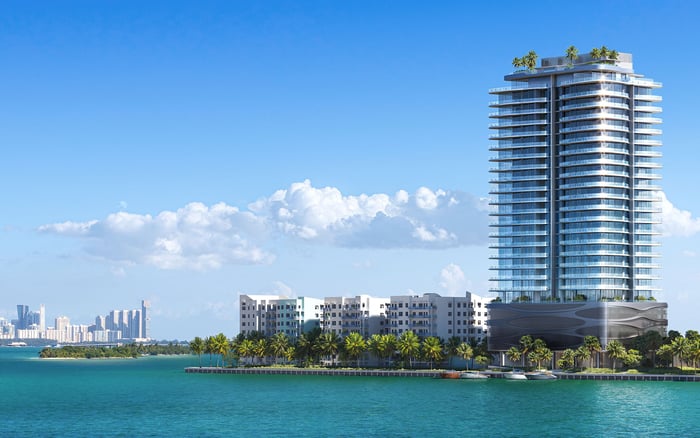
For Five Park buyers, waterfront infrastructure costs begin with a threshold question: who owns the asset and who must pay? A disciplined review separates seawall compliance, dredging permissions, and dock maintenance from obligations actually attached to the residence or a separate slip agreement.

A considered purchase at Five Park Miami Beach begins with a clear distinction between the appeal of living near the water and the obligations attached to waterfront infrastructure. Seawalls, navigational depth, and dock upkeep belong in the financial review only when ownership documents, permits, or contracts connect those assets to the buyer.
Do not assume a Five Park purchase includes a boat slip or responsibility for a seawall, marina basin, dock, or dredged channel. Identify the asset owner, the permit holder, and the party contractually responsible for payment before assigning any waterfront expense to the residence.
That sequence guards against two mistakes: overlooking a genuine obligation and pricing a liability that does not belong to the property. For a luxury buyer, the question is not simply what waterfront maintenance costs. It is which costs can reach the household budget, through what mechanism, and on what timetable.
Miami Beach requires owners to keep seawalls, bulkheads, living shorelines, and other shoreline-protection structures in good repair. The obligation concerns performance, not merely appearance. Upland erosion or material passing through a shoreline barrier can establish a presumption of disrepair. Seawalls must also prevent upland soil, sand, grass, and similar material from escaping into city waters.
The city's tidal-flooding standards address deficient structures that allow tidal water to affect neighboring properties or public rights-of-way. A wall's significance therefore extends beyond the edge it visibly protects.
If a shoreline asset is tied to the purchase, request an engineering assessment of its condition, elevation, erosion, and recommended scope of work. Review that assessment alongside surveys, permits, and any violation notices. A clean-looking cap or an informal maintenance assurance is no substitute for a documented evaluation.
For buyers also considering Apogee South Beach, the same ownership-first discipline provides a sound basis for comparison without assuming that the two residences carry identical shoreline responsibilities.
A seawall repair budget should distinguish restoration from work that may trigger additional compliance. Under Miami Beach's 2021 standards, new seawalls were specified at 5.7 feet NAVD, with a 4-foot NAVD alternative when engineered for later raising to 5.7 feet. Repairs meeting the applicable substantial-repair threshold can trigger minimum-elevation compliance, rather than simply restoring the existing wall.
Those figures are not a universal instruction to raise every existing seawall. Miami Beach amended its tidal-flood resiliency standards through Ordinance 2025-4754, so the 2021 provisions should not be read as the complete current framework. Ask the project engineer and counsel to identify the requirements that apply to the particular asset and proposed work.
Timing matters as well. The city's cited-deficiency framework includes demonstrating progress within 60 days and completing required work within 730 days, with permitting milestones between those deadlines. An existing notice warrants a review of its actual deadlines, work status, and funding plan-not an assumption that the entire completion period remains available.
Dredging requires a separate line of inquiry. Miami-Dade County's environmental permitting framework covers waterfront activities involving docks, boat lifts, moorings, and dredging, subject to applicable classifications and thresholds. It distinguishes maintenance dredging from non-maintenance dredging. Calling work routine maintenance does not make it permit-free.
A permitting requirement does not, by itself, create a recurring duty to dredge. Any actual obligation must be traced to permit conditions, contracts, or operating requirements. Before accepting a depth-maintenance expense, establish which basin or channel is involved, who controls it, and which document requires the work.
Disposal belongs in that review. County procedures specifically identify maintenance dredging that deposits material on a self-contained upland site. Ask how the proposed disposal method fits the permit and who bears the expense.
Request prior dredging records, relevant depth information, permit conditions, and maintenance agreements. These documents help distinguish an established responsibility from a hypothetical concern without inventing a dredging interval or annual allowance.
Evaluate a separately offered slip or marina arrangement independently of the residence. Establish whether it conveys ownership, a lease, or another contractual use right, then examine how repair and capital expenses are allocated.
The agreement should answer practical questions: who pays for dock repairs, who maintains navigational depth, who handles dredged-material disposal, and who funds major capital work? Ask, too, what happens to access while permitted work is underway. Clarify unresolved terms before commitment rather than filling the gaps with expectations about service.
Proximity is not a substitute for rights. Miami Beach restricts launching, docking, or removing vessels across public seawalls and other public infrastructure except at designated, equipped locations. A nearby public seawall does not establish dockage rights.
When comparing a residence at Continuum on South Beach with another Miami Beach option, separate the residential purchase from any independently arranged boating access. Compare the rights and payment terms actually offered, not the waterfront setting alone.
Once responsibility is established, organize the financial review around three categories: routine upkeep, specifically identified repair work, and potential major capital work. These are diligence categories, not evidence that Five Park has any particular charge or assessment.
For each applicable asset, assemble the engineering assessment, elevation survey, permits, violation notices, maintenance contracts, association budgets, reserves, and assessment history. Read them together. A proposed repair scope should have an identifiable responsible party and funding approach; a maintenance agreement should be checked against what the budget includes.
Seek written clarification where documents do not align. Does an allowance cover only ordinary upkeep, or also the identified work? Is a proposed project awaiting engineering or permitting decisions that could alter its scope? Are expenses shared across an association or allocated to particular users under a separate agreement?
Do not attach a generic seawall estimate or dredging allowance to a Five Park purchase. The relevant number is a documented expense that the governing arrangements actually allocate to the buyer.
Thorough waterfront diligence establishes a clear chain: asset ownership, legal responsibility, physical condition, required work, and funding. If no shoreline or boating obligation attaches to the residence, keep that exposure separate from its ownership budget. If one does attach, evaluate its scope and timing before closing.
This is not a reason to discount the pleasure of a Miami Beach address. It is a way to preserve that pleasure through a precise understanding of what is being purchased and what must be maintained.
For a considered approach to South Florida luxury property decisions, explore MILLION.
If branded residences are on your mind — as a home or as an allocation — we would be glad to share what we are seeing, privately.
Begin a quiet conversationDo not assume that it does. Establish whether ownership documents, permits, or contracts connect any shoreline or boating asset to the residence and allocate costs to the buyer.
No. Any slip or boating access should be confirmed through the specific purchase documents or a separate agreement.
Owners must maintain seawalls and other shoreline-protection structures in good repair. Seawalls must also prevent upland material from escaping into city waters.
Upland erosion or material passing through a shoreline barrier can establish a presumption of disrepair. It warrants an engineering evaluation rather than a purely visual assessment.
Repairs meeting the applicable substantial-repair threshold can trigger minimum-elevation compliance. The applicable scope should be evaluated under the current framework, including the 2025 amendments.
Miami Beach's framework includes demonstrating progress within 60 days and completing required work within 730 days, with intervening permitting milestones. Review the specific notice and its status.
No. County provisions distinguish maintenance from non-maintenance dredging, and applicable classifications and thresholds determine permitting treatment.
Not by themselves. An actual obligation must be traced to permit conditions, contracts, or operating requirements.
Responsibility must be established through the applicable ownership and contractual arrangements. A separate slip agreement should clarify ordinary maintenance, depth maintenance, disposal, and major capital costs.
Request engineering assessments, elevation surveys, violation notices, permits, dredging records, and maintenance contracts. Review them alongside association budgets, reserves, and assessment history.