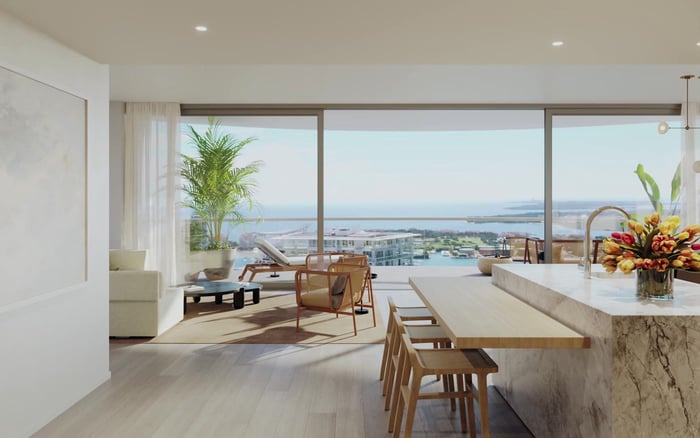
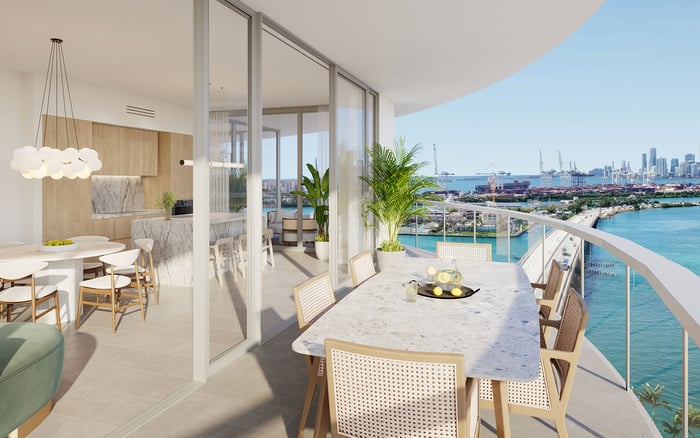
Five Park’s advertised guest suites and seasonal leasing possibilities require separate scrutiny. For buyers, the decisive questions concern association rules, visitor access and the position of a particular residence within the amenity program.
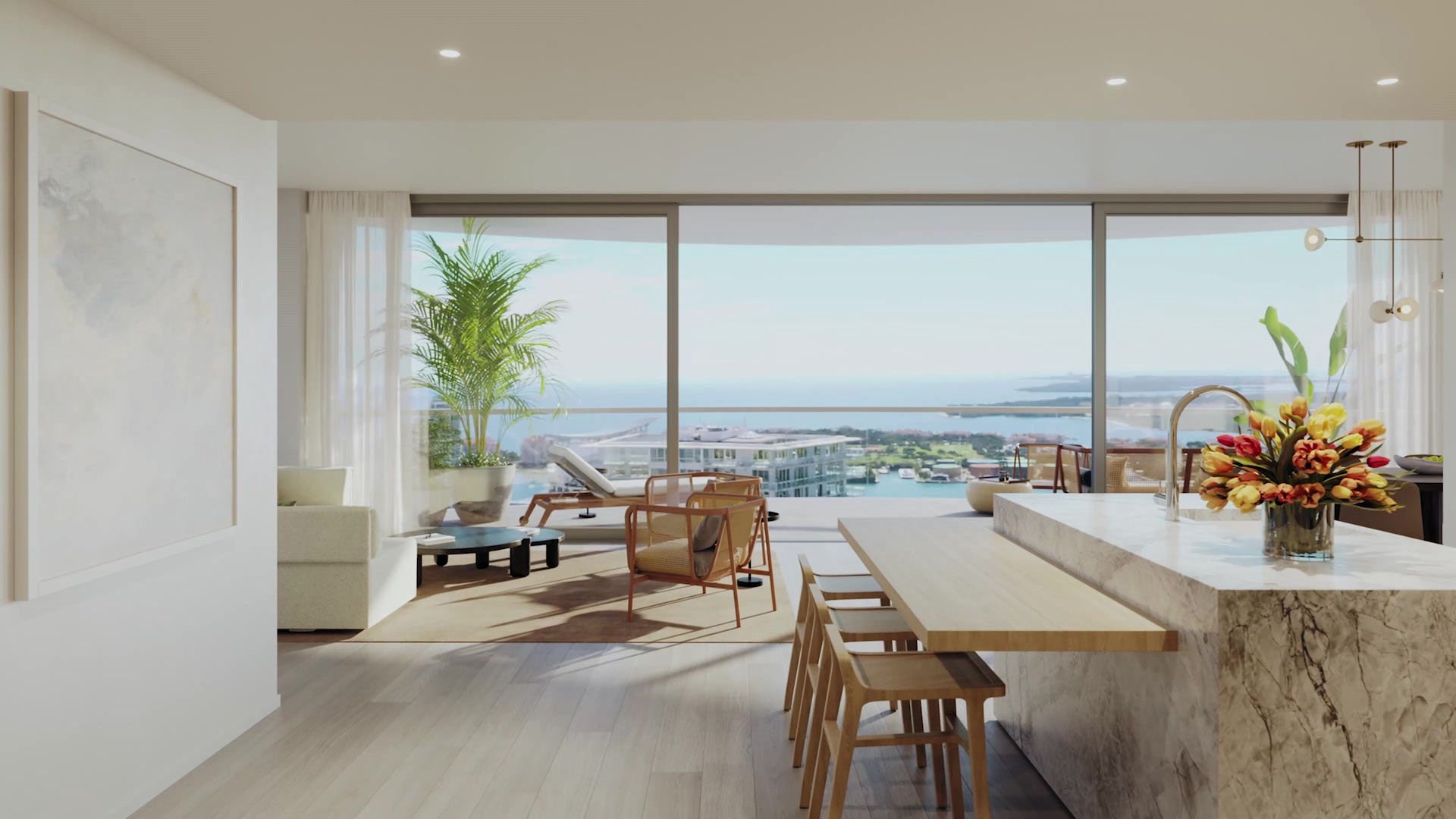
At Five Park Miami Beach, the purchase decision begins with a distinction that the phrase short-term rental can obscure. Leasing an individually owned condominium, accommodating visitors in designated guest suites and using a seasonal home are different arrangements. They are not interchangeable rights.
The stated leasing terms for the condominium at 500 Alton Road, Miami Beach, describe a six-month minimum and a maximum of two rentals annually. That summary is not the governing declaration. If confirmed by the association, those terms would exclude nightly and weekly rentals of standard residences while allowing longer seasonal occupancy.
For a buyer seeking both privacy and flexibility, the question is not simply whether short stays occur somewhere in the building. It is where they occur, who authorizes them and how occupants move through private residential areas. Guest-suite accommodation does not confer permission to rent a private residence nightly.
Before assigning value to rental income, obtain the current declaration, amendments and leasing rules, along with written association confirmation of the requirements applicable to the residence. Ask about minimum terms, annual rental limits, approval procedures and any separate rules for guest accommodation.
Unit 2205 illustrates why vocabulary deserves scrutiny. As of March 30, 2026, it was offered for seasonal occupancy from April through November under the label “Short Term Lease,” at an asking rent of $32,500 per month. Neither the label nor the asking rent establishes an exception to association restrictions. The asking amount is not evidence of achieved income.
A seasonal stay can be described as short relative to a year without implying nightly availability. Any proposed lease must still satisfy the applicable documents. For a second-home buyer, that distinction shapes the ownership calendar: a six-month commitment is materially different from renting around occasional personal visits.
If your search also includes Apogee South Beach, apply the same document-first comparison. Compare verified permissions and approval requirements, not the apparent flexibility of rental descriptions. Do not assume neighboring buildings share policies.
Five Park’s guest suites are described as short-term accommodations separated from private residences, with that separation intended as a privacy feature. Treat this as a starting point for understanding the layout, not proof that every circulation route is independent.
Ask who may book a suite, whether an owner must sponsor the reservation, what minimum stays apply and how occupancy limits are enforced. Then examine the physical experience: check-in location, luggage movement, elevator permissions and routes between suites and shared amenities.
The practical tradeoff is straightforward. More frequent arrivals could mean additional check-in activity or unfamiliar faces in shared spaces. Effective separation could reduce those encounters. Neither outcome follows merely from the existence of suites, and the available information does not establish building-specific complaint levels or security incident rates.
For an owner expecting visiting family, guest accommodation may be useful without expanding the rental rights attached to the home. Confirm booking eligibility and access privileges before treating it as an extension of the residence.
Five Park’s advertised amenities include pools, cabanas, lounges and outdoor terraces. Consider these spaces not only as lifestyle benefits but as neighboring uses. Locate them relative to the particular residence, especially its bedrooms and outdoor areas, rather than assuming a luxury specification guarantees acoustic isolation.
Floor 3 is described as containing a screening room, co-working studio, children’s learning lab and teen club. Proximity to these uses warrants questions about operating hours, event schedules, doors and circulation. Family amenities alone establish neither a noisy environment nor a quiet one.
The broader offering includes private offices and boardrooms, plus a gym, spa and treatment rooms. Ask how bookings, outside visitors and service-provider access are managed. The residents-only pool bar and café raises a specific question: does that designation include guest-suite occupants, and under what conditions?
Visit a shortlisted unit during a busier amenity period as well as a quieter appointment. Listen from bedrooms, the entry and the terrace, where applicable. Check the location of nearby elevators and mechanical equipment. Neither a higher floor nor a water view guarantees quiet.
Advertised services include 24-hour valet and security, alongside 24-hour concierge and butler service. These indicate a staffed environment, but they do not establish visitor-screening procedures, response times or enforcement quality.
A useful review follows a visitor from arrival to destination. Ask how identity and authorization are checked, whether access credentials expire, which floors guests can reach and how delivery personnel or contractors are handled. Establish whether guest-suite occupants share residential elevators and whether amenity permissions differ by occupant category.
Noise enforcement deserves equal specificity. Request the current quiet-hour rules, complaint channel and escalation procedure. Ask how management handles an after-hours concern and what remedies the governing documents permit. Distinguish written policy from demonstrated practice, without treating an absence of incident information as proof of either safety or risk.
The same questions belong in a comparison with Continuum on South Beach. A consistent checklist is more useful than assuming that price, service level or branding produces equivalent access controls.
Five Park adjoins three-acre Canopy Park, whose advertised features include a playground, outdoor gym, picnic areas, dog park, shaded gardens and art installations. The setting adds another dimension to a site visit: assess the relationship between the prospective home and adjacent outdoor activity, rather than judging the interior alone.
A dedicated beach club in South of Fifth is also advertised, with lounge chairs, umbrellas and towel service. Confirm current arrangements and guest eligibility. Some amenity descriptions date to December 2023, making written confirmation of present operations more useful than assuming every description remains unchanged.
Build the purchase case around the residence’s verified use rights, your preferred occupancy calendar and your tolerance for shared activity. If nightly rental income is essential, the stated six-month minimum is a threshold issue to resolve before proceeding. If privacy is paramount, guest circulation and unit placement deserve comparable weight.
The strongest decision aligns three things: association-approved leasing, clearly understood access rules and a residence whose surroundings suit your routine. Rental flexibility can be valuable, but only when its meaning is precise and its operational consequences are acceptable.
For a discreet assessment of how these priorities fit your South Florida purchase, connect with MILLION.
If branded residences are on your mind — as a home or as an allocation — we would be glad to share what we are seeing, privately.
Begin a quiet conversationPublished leasing information describes a six-month minimum and no more than two rentals annually. If confirmed by the association, those restrictions would exclude nightly and weekly rentals of standard residences.
Obtain the current declaration, amendments and leasing rules, plus written association confirmation of the requirements applicable to the residence.
No. The seasonal listing language for Unit 2205 does not establish an exception to association rules or permission for nightly rentals.
No. Guest suites are described as short-term accommodations separated from private residences, and their existence does not establish owners’ nightly rental rights.
Confirm booking eligibility, minimum stays, occupancy limits, check-in procedures, elevator permissions and amenity access. Ask whether guests share residential circulation routes.
No. Advertised 24-hour security and valet service do not establish specific screening protocols, response times or incident rates.
Review proximity to pools, terraces, lounges, elevators and mechanical equipment. Floor 3 is also described as containing a screening room, co-working studio, children’s learning lab and teen club.
No. Higher floors and water views do not guarantee quiet; evaluate the individual unit’s surroundings and visit during busier periods.
The advertised residents-only designation does not specify whether guest-suite occupants receive access. Obtain written confirmation of current eligibility rules.
The available information does not establish building-specific noise complaint statistics, security incident rates or verified enforcement outcomes. Noise and security should be assessed as potential tradeoffs, not documented problems.