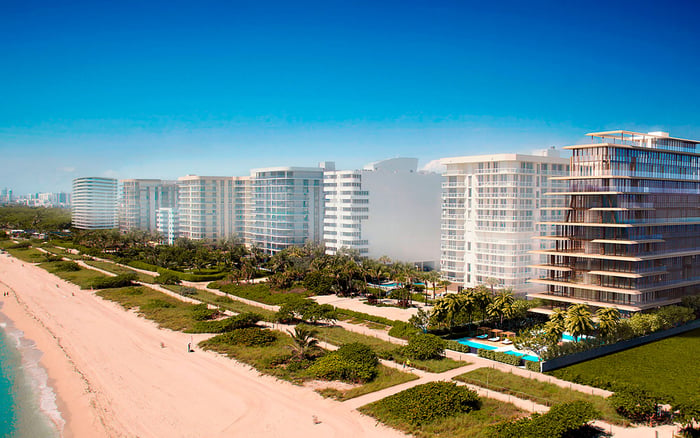
At Fendi Château Residences, the existence of cabanas and beach service does not by itself establish a buyer’s individual rights. The decisive details should be verified in governing documents, management policies, and, when material, the purchase contract.
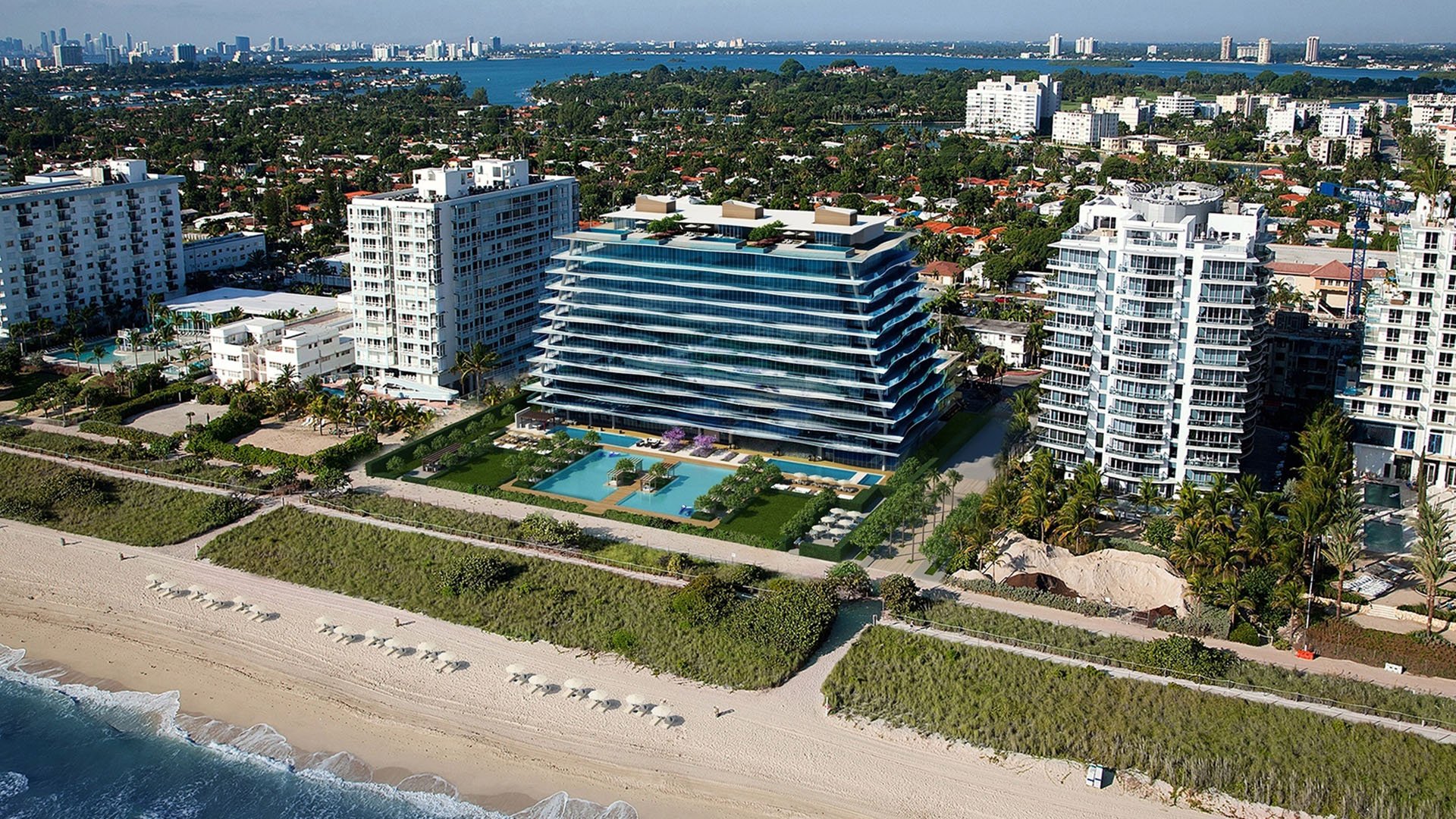
At 9349 Collins Avenue, Fendi Château Residences Surfside occupies an oceanfront setting with approximately 300 linear feet of private beachfront. Designed by Arquitectonica and developed by Château Group, the 58-residence building features two oceanfront pools, poolside cabanas, direct beach access, and pool and beachside service.
These features define the property’s full-service character. They do not, however, answer the narrower question that matters in a purchase: What, precisely, transfers with a particular residence?
A building may offer an amenity without granting every owner an exclusive, permanent, or transferable right to it. For MILLION readers exploring Buyer's Guides to Oceanfront Branded Residences, this distinction is fundamental. Marketing language describes the lifestyle; governing and transaction documents establish enforceable rights.
The building has 12 private cabanas beside the beachside pool-a materially smaller number than its 58 residences. Descriptions refer to private or poolside cabanas but do not define whether they are deeded, licensed, assigned, reservable, or available on a first-come basis.
A buyer should request a current cabana map identifying every numbered space and its status. The written response should explain whether a specific cabana belongs to the residence, whether the association may reassign or revoke it, whether a usage fee applies, and whether the right transfers automatically upon resale.
The same scrutiny applies when comparing established Surfside properties such as Arte Surfside or The Surf Club Four Seasons Surfside. Each condominium has its own documents and operating rules. Similar vocabulary across listings should never be taken as evidence of equivalent ownership or access rights.
Beach service can meaningfully shape daily life, but the phrase alone does not disclose its practical scope. Available descriptions do not specify operating hours, seasonal limitations, reservation procedures, weather closures, blackout periods, staffing levels, or separate charges.
Ask management to define, in writing, chair and umbrella setup, towel service, food-and-beverage availability, ordering procedures, service boundaries, gratuities, and any per-use or recurring fees. Confirm whether service is guaranteed during stated hours or remains subject to staffing and operational discretion.
The building’s broader program includes FENDI Attaché white-glove resident service, concierge functions, 24-hour security and valet, as well as a private restaurant, spa, fitness center, theater, children’s club, wine cellar, and Shabbat-friendly elevators. That polished service environment makes precision more important, not less. Beach-access expectations should be tested against current rules rather than inferred from the overall level of hospitality.
Amenity descriptions do not establish how many guests a residence may bring to the pools, cabanas, or beach-service areas. Nor do they clarify whether guests may use the amenities without the resident present or whether renters receive the same privileges as owners.
Request written rules covering guest registration, daily and holiday limits, resident accompaniment, children, private events, outside vendors, and renter access. If the residence will serve as a second home, ask how family members, household staff, and unaccompanied visitors are treated. Buyers also considering nearby Ocean House Surfside or The Delmore Surfside should apply the same document-led review rather than assume a uniform neighborhood standard.
Before the applicable contract deadline, obtain the declaration, bylaws, current rules and regulations, current budget, recent board minutes, and any cabana license or assignment agreement. Review them together: One document may create a right while another governs its use, cost, reservation priority, or transfer.
Ask the seller and management to reconcile any inconsistencies in writing. Confirm whether a cabana right appears in the deed, closing records, association files, or a separate agreement. Determine whether assessments, maintenance charges, deposits, food-and-beverage minimums, or reservation fees attach to its use.
If a particular cabana, guest allowance, or level of beach service is material to the decision, identify it expressly in the purchase contract or a signed rider. A general reference to building amenities is no substitute for a unit-specific representation. Counsel familiar with Florida condominium transactions can assess the documents and help frame conditions appropriate to the purchase.
Does every residence automatically receive a private cabana? Available descriptions do not establish that. The applicable documents and association records should identify any unit-specific cabana right.
What forms can a cabana right take? It may be deeded, licensed, assigned, reservable, open-use, or a revocable common-area privilege, depending on the controlling documents.
Why does the reported number of cabanas matter? The building has 12 private cabanas for 58 residences, so universal exclusive allocation should not be assumed.
Should a buyer request a cabana map? Yes. A current map can identify numbered spaces and show whether each is reserved, assigned, or open for shared use.
What should written beach-service terms cover? They should address hours, staffing, setup, towels, food and beverage, reservations, weather closures, blackout periods, and fees.
Are guest limits publicly defined? Available amenity materials do not state how many guests each residence may bring to the pools, cabanas, or beach areas.
Can guests use the amenities without an owner present? Available descriptions do not clarify unaccompanied guest privileges, so current rules and management’s written guidance should control.
Do renters receive the same access as owners? Available materials do not establish that. Buyers planning to lease should verify renter eligibility, registration, and restrictions in writing.
Which documents deserve priority during diligence? Review the declaration, bylaws, rules, budget, recent board minutes, purchase contract, and every cabana license or assignment agreement.
When should an amenity promise be added to the contract? If it is material to the purchase, specify the right, service level, fees, and transfer terms in the contract or a signed rider.
If you'd like a private walkthrough and a curated shortlist, connect with MILLION.
If branded residences are on your mind — as a home or as an allocation — we would be glad to share what we are seeing, privately.
Begin a quiet conversation