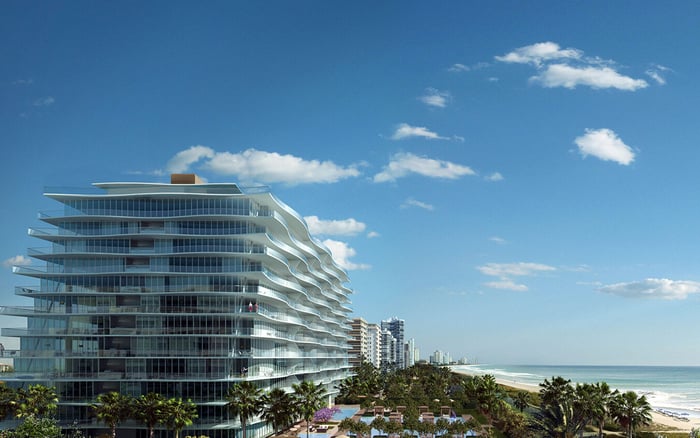
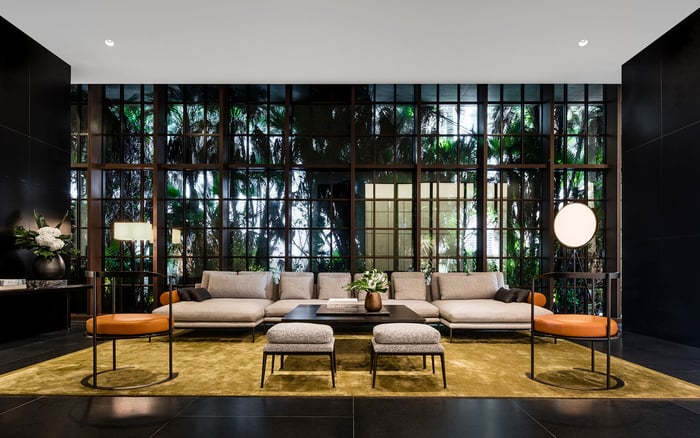
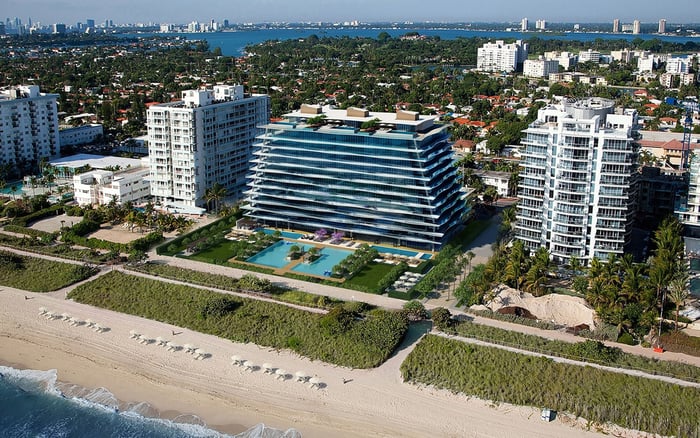
Eighty Seven Park offers a resident-centered oceanfront lifestyle, but its public materials do not identify a hotel-style guest suite or explain booking priority. Buyers planning multigenerational visits should treat guest access, amenity reservations, overnight stays and owner-absent entry as document-review priorities.
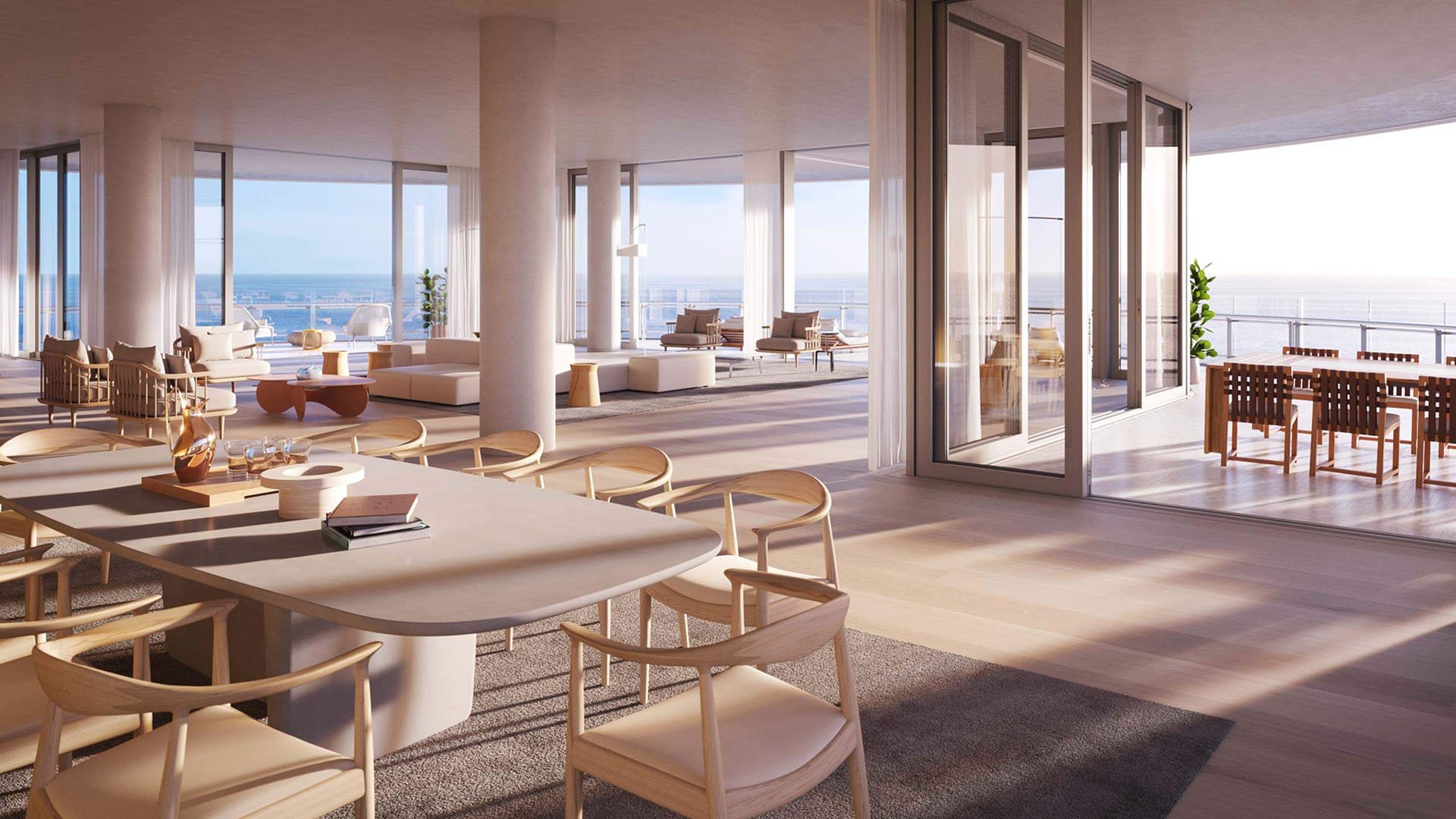
For families considering Eighty Seven Park Surfside, the essential distinction is structural: the property at 8701 Collins Avenue is presented as a residential condominium, not a hotel or condo-hotel. Its concierge, butler service and broader “At Your Service” program create a polished hospitality experience, but one organized around residents. It should not be mistaken for open hotel circulation or an automatic room-booking system for visiting family.
That distinction becomes decisive when grandparents, adult children, caregivers or grandchildren visit. Published building information states a six-month minimum lease term and a maximum of two leases annually, subject to association confirmation. Nightly, weekly and other short-term vacation rentals therefore fall outside the disclosed leasing framework. In most family scenarios, relatives would be treated as a resident’s guests rather than transient renters holding their own hotel reservation.
Resident-centered service does not automatically create hotel-style rights for visiting family.
The phrase “guest-suite booking priority” may imply that furnished accommodations are available within the building and that owners receive first access. Yet the publicly disclosed amenity plans do not identify a hotel-style guest suite or publish a reservation hierarchy among owners, tenants and visitors.
A prudent buyer should separate three questions. First, does a guest suite currently exist under an association policy not described in public materials? Second, if so, who may reserve it, and in what order? Third, must the resident occupy the condominium or remain on the property throughout the stay? Until management provides the current policy in writing, a purchaser should not underwrite the residence on the assumption that overflow sleeping accommodations will be available.
This is an important lens for any second-home purchase. A beautifully serviced condominium may support family life exceptionally well while still requiring every overnight visitor to sleep within the residence. Buyers comparing nearby options such as Arte Surfside or The Delmore Surfside should apply the same discipline: distinguish marketed hospitality from enforceable guest privileges.
Public materials do not specify overnight-guest limits, maximum visitor stays, blackout dates, booking lead times, cancellation terms, guest fees or holiday amenity caps. Those omissions do not prove that restrictions exist-or that they do not. They make the controlling documents and current management practices essential.
Before the contract’s document-review period expires, request the declaration, bylaws, current house rules, application forms and amenity reservation policies. Seek separate written guidance for accompanied guests, unaccompanied adult children, overnight visitors, caregivers, babysitters and visiting pets. A pet-friendly description of the property does not establish whether a relative’s animal is permitted, whether size or breed limits apply, or where a visiting animal may enter common areas.
The most incisive questions are practical. Is there a maximum number of overnight guests per residence? Can an adult child arrive before the owner? May a caregiver receive recurring credentials? Are guests permitted to use amenities without the resident present? Does owner status take priority over tenant status for any reservable space? Are deposits refundable, and what happens if a holiday reservation is cancelled?
For an oceanfront household, the answers affect far more than sleeping arrangements. They determine whether a family weekend feels seamless or demands constant resident accompaniment.
Eighty Seven Park advertises 24-hour concierge and security, gated parking and key-card-controlled elevators. This controlled-access setting supports privacy but also makes advance planning essential. Public amenity materials do not explain how adult children or other relatives receive independent entry credentials when the owner is absent.
Ask management to outline the full arrival sequence. Confirm advance registration, identification requirements, valet procedures, accessible entry, elevator credentials and after-hours access. For older relatives, determine whether assistance can be arranged from vehicle arrival through entry to the residence. For children arriving with a babysitter, clarify who must be registered and whether authorization must be renewed. For a caregiver, ask whether access can extend across multiple days without creating tenancy implications.
These details warrant the same scrutiny as floor plan and exposure. Among discreet residential choices in Surfside, including The Surf Club Four Seasons Surfside, service quality is only one component of the ownership experience. For a multigenerational household, the more consequential measure is whether access procedures align with the family’s actual pattern of use.
The amenity program includes an international salon, spa, Children’s Playbox and recreation room, private garden and pool, outdoor pavilion, event space, Fugo Bar, pool and cabanas. Beach-oriented offerings include lounge chairs, cabanas and towel service. Together, these spaces can accommodate several generations, provided current guest rules permit the intended access.
Build a sample itinerary before buying. If grandparents arrive Friday afternoon, can they enter while the owner is delayed? If grandchildren use the Children’s Playbox, must a resident accompany them? If the family wants pool chairs, a cabana or beach service on a busy weekend, how many guests may join, how early can arrangements be made, and do holiday limits apply?
Some wellness experiences are expressly described as available to residents and their guests, including massages arranged in private residences or garden areas. Because massage and spa experiences are private and by appointment, advance scheduling remains prudent. That guest-friendly detail should not be generalized to every amenity without confirmation.
The outdoor pavilion and event space add another layer. For a birthday or family reunion, obtain capacity limits, reservation fees, deposits, noise restrictions, cancellation penalties and required lead times. Also ask whether outside vendors are allowed and whether the resident must remain present throughout the event. These are operational essentials, not minor formalities.
For readers of MILLION Buyer’s Guides, the central lesson is simple: purchase documents should be tested against intended life, not reviewed solely for legal form. Prepare a one-page use plan detailing who visits, how often, whether the owner will be present, which amenities matter and whether any relatives travel with children, caregivers or animals.
Send that plan to management and request written answers. If a guest suite exists, ask for its precise eligibility rules, booking window, priority order, rates, taxes or fees, cancellation policy and blackout dates. If it does not exist, confirm that directly and assess whether the residence itself offers sufficient sleeping flexibility. Retain association answers with the transaction file, recognizing that rules may later change through proper condominium procedures.
A parallel review may be useful when considering Ocean House Surfside or another residential alternative, but comparisons should focus on current governing documents rather than amenity language alone. The right choice is not necessarily the building with the longest feature list. It is the residence whose access, privacy and reservation framework supports the family’s habits with the least friction.
For discreet guidance on aligning a South Florida residence with multigenerational use, connect with MILLION.
If branded residences are on your mind — as a home or as an allocation — we would be glad to share what we are seeing, privately.
Begin a quiet conversationNo. It is presented as a residential condominium, so family stays are governed by condominium policies rather than hotel booking rules.
No hotel-style guest suite is identified in the publicly disclosed amenity plans. Buyers should confirm the current position directly with the association.
No public hierarchy explains priority among owners, tenants and visitors. Any current reservation policy should be obtained in writing.
Published building information states a six-month minimum lease and no more than two leases per year, subject to association confirmation. That framework rules out ordinary weekend rentals.
Public materials do not explain independent guest-entry rights. Buyers should confirm registration, credentials, elevator access and any resident-presence requirement.
No public details specify guest caps or maximum visitor stays. The current house rules and management guidance should control the analysis.
These amenities are marketed for the building, but public materials do not state guest caps or access conditions. Confirm accompaniment and reservation rules.
Residents and their guests are described as able to arrange massages in private residences or garden areas. Such private, appointment-based experiences merit advance planning.
The property includes an outdoor pavilion and event space. Confirm capacity, fees, deposits, noise rules, lead times and resident-presence requirements.
No. Although the property is described as pet-friendly, visiting-pet permissions and any size, breed or common-area restrictions require association confirmation.