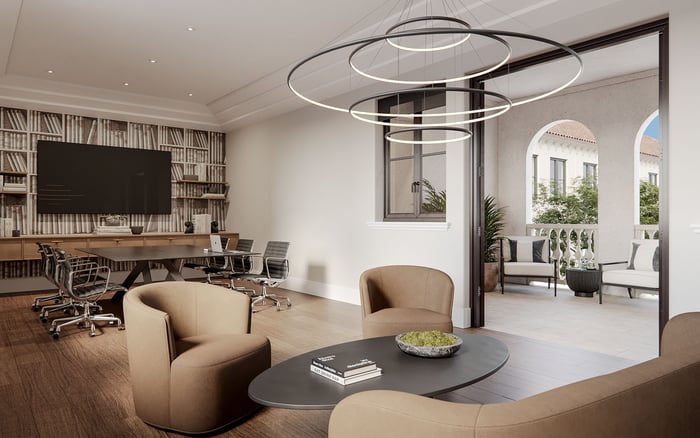
At Cora Merrick Park, ownership planning belongs alongside residence selection. Coordinating the prospective purchaser, intended title holder and financing structure before reservation can reduce avoidable changes without presuming that a trust or entity is the right choice for every buyer.

A considered purchase at Cora Merrick Park begins with more than a preferred floor plan. The 74-residence condominium at 4241 Aurora Street in Coral Gables, across from the Shops at Merrick Park, offers one- to three-bedroom residences with optional dens. Alongside those lifestyle decisions is a quieter question: whose name should appear on the reservation agreement?
For a buyer contemplating a trust or entity, that question deserves attention before signing. The aim is not to make ownership unnecessarily elaborate, but to align the prospective purchaser, intended title holder and financing arrangement-rather than begin with a structure the buyer already expects to replace.
The right ownership structure fits the buyer's circumstances; it is not necessarily the most elaborate. Individual ownership may be appropriate, while a trust or LLC may warrant consideration. None should be selected simply because it sounds customary for a luxury residence.
Reservation documents generally identify the prospective purchaser by individual or entity name. That makes the first document an ownership-planning decision, even when a buyer sees it primarily as the next step toward a preferred residence.
A later change may require a buyer substitution or assignment, depending on the agreement. Florida preconstruction agreements can contain assignment restrictions, developer-consent requirements or fees. These possibilities should inform the review, but they should not be treated as established Cora terms.
Before signing, have counsel determine how the actual documents address a proposed change from an individual purchaser to a trust or entity. Ask whether the change is permitted, which approvals would be needed and whether any charges would apply. Do not assume that retaining the same underlying family ownership makes the change administratively automatic.
The distinction matters: choosing an ownership structure and obtaining contractual permission to use it are separate tasks. Both deserve early attention.
Cora's development sponsors are Constellation Group and The Boschetti Group, with architecture by Arquitectonica and interiors by Urban Robot Associates. The legal developer is 4241 Aurora, LLC. Sponsor recognition and design authorship provide project context, but the legal entity warrants separate attention in the document review.
On the buyer's side, ask counsel to confirm the exact purchaser designation and who should sign in the relevant capacity. Discuss the intended title holder explicitly rather than leaving it as a closing-stage detail.
The addresses also serve different purposes: Cora's sales gallery is at 4200 Laguna Street, separate from the condominium address. A well-organized acquisition file should distinguish the property, sales location, legal developer and prospective purchaser. Project branding is no substitute for precise identification.
Start with intended use. A personal residence, seasonal home and rental investment can raise different questions about financing, liability, inheritance and tax objectives. Defining that purpose gives advisers a clear brief before they compare individual ownership, a trust or an LLC.
For a seasonal residence intended for family use, the discussion might prioritize inheritance arrangements and title privacy. For a contemplated investment, ask advisers to evaluate liability and tax objectives alongside financing. Check intended rental use against the applicable property documents rather than assuming it is permitted.
Florida land trusts may be considered for title privacy and estate planning. They should not be equated with LLC liability protection, and neither structure should be presented as a promise of anonymity, probate avoidance or tax savings.
If the search also includes Ponce Park Coral Gables, carry the same ownership objectives into that evaluation. The family's goals may remain consistent, but permissions and transaction terms require a separate review for each property.
Develop the preferred title arrangement and borrowing plan together. Financing requirements can differ for individuals, trusts and LLCs. A later ownership change may require lender approval or revised documentation, so selecting a structure without lender input can create avoidable work.
Where possible, ask the prospective lender to evaluate the proposed arrangement before reservation. Counsel and the lender should clarify whether the intended purchaser, borrower and title holder can be accommodated and what documentation would be required. Do not infer financing eligibility from another buyer's experience or the availability of a particular ownership vehicle.
For a cash purchase, financing approval may not be an immediate issue, but ownership and inheritance planning still merit attention. If later borrowing is part of the strategy, raise that possibility while evaluating the title arrangement-not after choosing it.
For foreign buyers, ownership planning can affect U.S. estate-tax exposure, inheritance arrangements and FIRPTA treatment on a future sale. These are reasons to obtain individualized advice, not to assume that every international purchaser needs the same entity.
A U.S. attorney should review the Florida reservation and purchase documents; expectations formed in another country should not guide the transaction. Tax advisers should evaluate the proposed structure alongside the buyer's cross-border circumstances and intended use.
The objective is a coordinated recommendation: a structure that advisers have evaluated and that the transaction documents and, where relevant, the lender can accommodate. Title privacy alone is not a sufficient basis for that decision.
Confirm the current reservation amount, refundability, escrow arrangements and any credit toward later deposits in the actual documents. Review the subsequent deposit schedule as well; do not treat an unverified reservation figure as a contractual requirement.
Before reservation, the acquisition team should have addressed four practical points:
The proposed purchaser name and intended title holder.
The ownership recommendation and any financing requirements.
The agreement's treatment of substitutions, assignments, consent and charges.
The deposit provisions and remaining questions requiring resolution before signing.
The same discipline applies when considering The Village at Coral Gables: evaluate each property's documents independently rather than carrying contractual assumptions from one opportunity to another.
At Cora, early coordination is about reducing avoidable revisions, not presuming that a trust or entity is mandatory. This is a planning framework, not individualized legal or tax advice. The strongest next step is to settle the ownership direction with qualified advisers, then confirm how the actual documents implement it.
For a considered perspective on Cora Merrick Park and South Florida residential opportunities, explore MILLION.
If branded residences are on your mind — as a home or as an allocation — we would be glad to share what we are seeing, privately.
Begin a quiet conversationReservation documents generally identify the prospective purchaser. Coordinating that name with the intended title holder and financing plan can reduce avoidable document changes.
Do not assume either structure is required. The appropriate arrangement depends on the buyer's circumstances and must be checked against the actual transaction documents.
A later change may require substitution or assignment procedures and developer consent. Cora's actual agreements must be reviewed before assuming permission or any applicable charges.
Confirm the current amount in the actual reservation documents. Do not treat an unverified figure as a contractual requirement.
Review refundability, escrow arrangements, credit toward later deposits and the subsequent deposit schedule. Confirm those provisions in the actual documents.
The legal developer is 4241 Aurora, LLC. Constellation Group and The Boschetti Group are the development sponsors.
The condominium is at 4241 Aurora Street, while the sales gallery is at 4200 Laguna Street in Coral Gables.
Financing requirements can differ for individuals, trusts and LLCs. A later ownership change may require lender approval or revised documentation.
No such guarantee should be assumed. A land trust can be evaluated for title privacy and estate planning, but should not be equated with LLC liability protection.
Ownership planning can affect U.S. estate-tax exposure, inheritance arrangements and FIRPTA treatment on a future sale. Coordinate individualized legal and tax advice before selecting a structure.