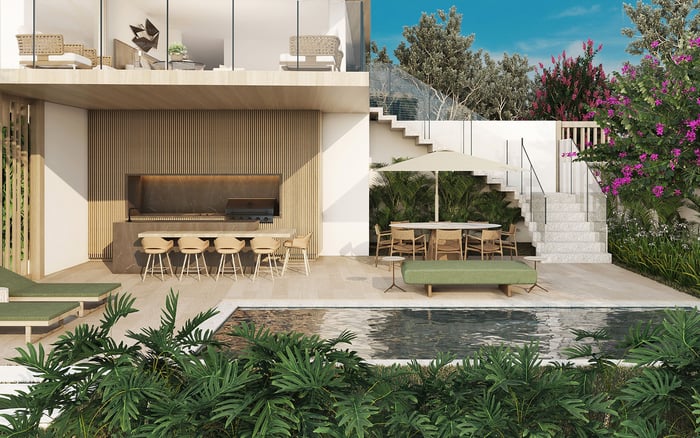
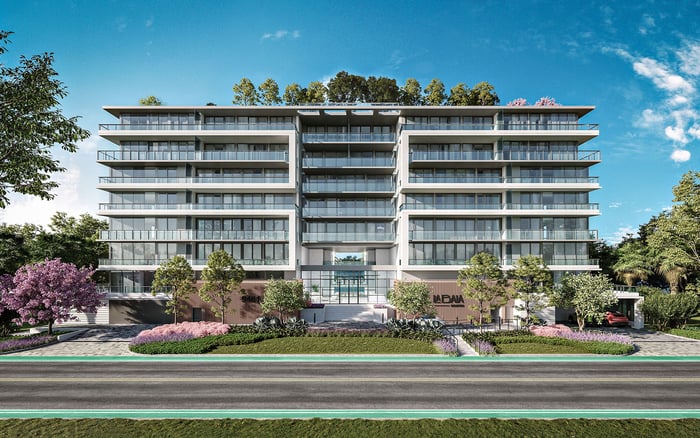
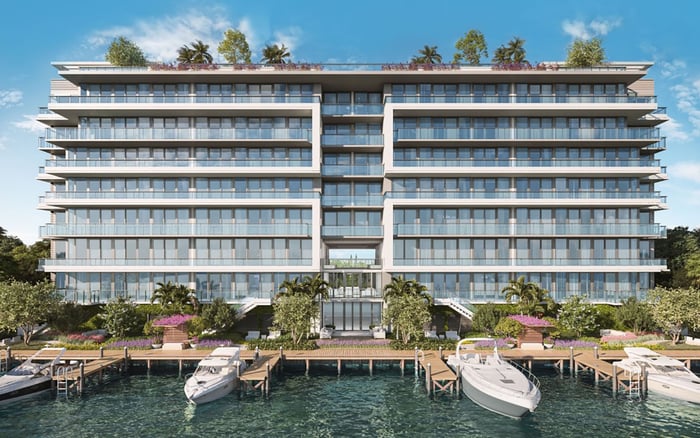
A discreet buyer framework for comparing Bay Harbor Towers and La Baia North through the full arrival experience, from street approach and lobby activity to porte-cochère privacy and valet flow.
For buyers leaving the acceleration of Brickell, the question is rarely whether South Florida can deliver polish. It can. The more refined question is whether a building can make daily life feel composed. Bay Harbor Towers and La Baia North Bay Harbor Islands sit within the Bay Harbor Islands conversation, where buyers often seek a more residential rhythm without stepping away from the broader Miami luxury orbit.
That makes this comparison less about declaring one property quieter than the other and more about inspecting the choreography of arrival. Lobby volume, porte-cochère privacy, and valet performance are not decorative details. They shape the first and last minutes of every day at home. In a true quiet-luxury purchase, those minutes matter.
Bay Harbor Towers and La Baia North should be reviewed as project-specific options within the Bay Harbor Islands inventory, but neither should be judged on assumptions. A calm rendering, a handsome lobby, or a waterfront mood does not automatically translate into a serene arrival sequence. Buyers who want relief from Brickell pace should watch how each building performs when residents, guests, deliveries, rideshare vehicles, and service teams converge.
The useful comparison begins before the lobby. Approach each property as you would on a regular weekday, not only during a curated showing. Notice the street approach, how visible the entrance feels from passing traffic, whether vehicles can pause without creating tension, and whether the drop-off feels ceremonial, exposed, or operational.
From there, follow the entire sequence: car arrival, door or valet handoff, lobby entry, front desk interaction, elevator transition, and eventual vehicle retrieval. A building can appear private at first glance yet feel active if several flows meet in one narrow threshold. Conversely, a compact building can feel calm if circulation is clear, service patterns are separated, and staff handoffs are smooth.
For Bay Harbor Towers, the buyer should treat the tour as an observation of lived rhythm. For La Baia North, the same standard applies. There are no useful shortcuts. The quietest choice is the one whose sequence feels controlled during real operating moments, not only during the stillness of an appointment window.
Lobby volume is often discussed as if it were a fixed metric, but for this comparison it should be treated as a buyer-tour observation. Walk the lobby at different moments if possible: late morning, school pickup hours, early evening, and weekend transition periods. Count not only people, but categories of movement. Residents, guests, brokers, delivery personnel, maintenance teams, and ride-hail pickups all create different kinds of energy.
At Bay Harbor Towers, ask whether the lobby feels like a residential salon, a transit point, or a shared operations room. At La Baia North Bay Harbor Islands, ask the same question with equal discipline. The goal is not to penalize activity. A functioning luxury building will have movement. The goal is to understand whether that movement is absorbed with grace.
Buyers who search under Bay-harbor, Boutique, and Waterview preferences are often responding to atmosphere as much as specifications. The best lobby for this profile is not necessarily the largest or most dramatic. It is the one where staff, residents, and visitors move with low friction and low visibility.
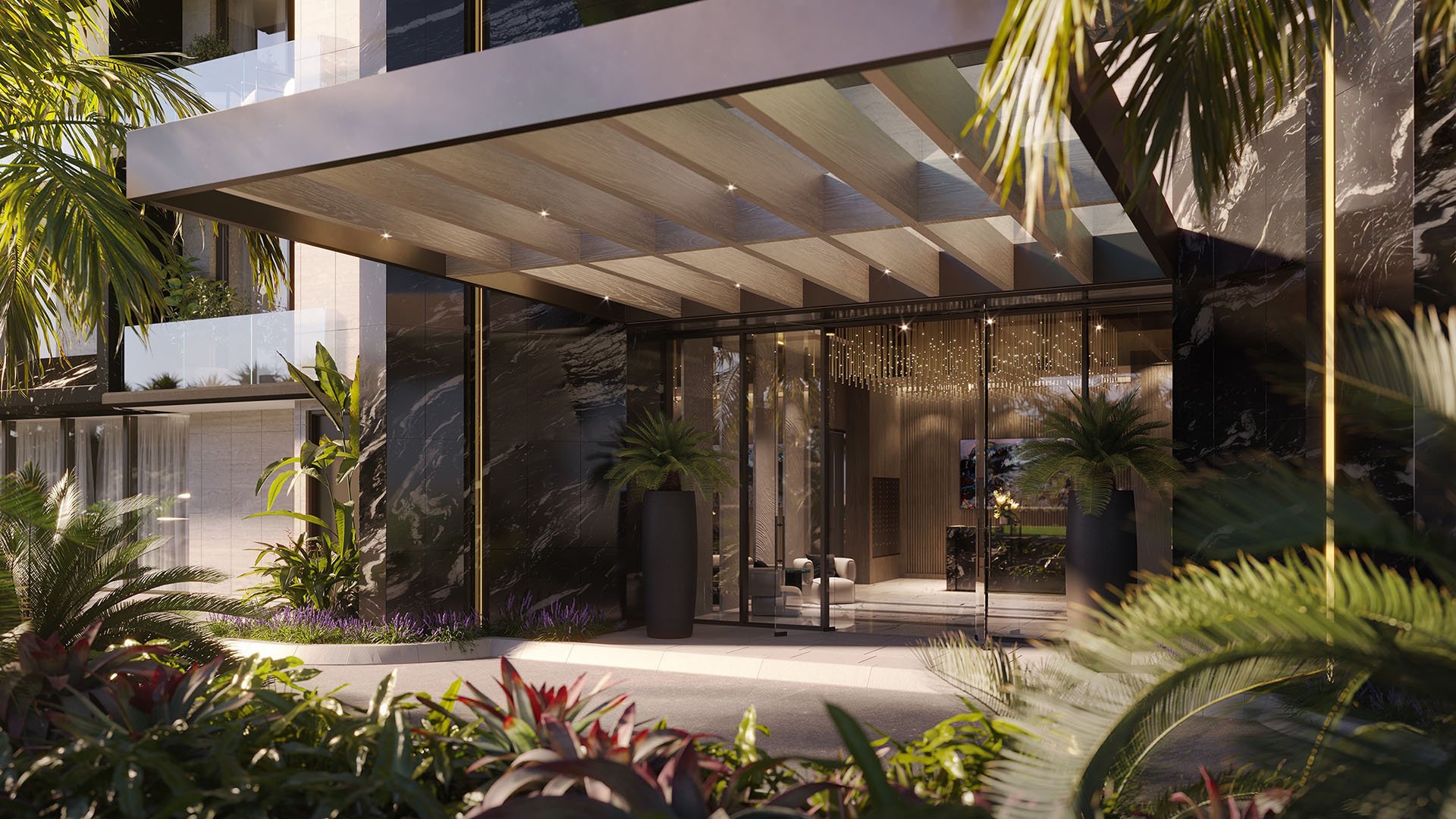
A porte-cochère can suggest privacy without delivering it. During a tour, stand where the car would stop and look outward. Can pedestrians see directly into the drop-off? Are arriving residents visible from the street? Does the entry sequence create a pause that feels protected, or does it feel like a public-facing moment?
The most important questions are practical. Is the drop-off shared with deliveries? Are ride-hail vehicles directed to the same point as owners? Are guests and residents handled in one line? Does the vehicle path require reversing, stacking, or visible waiting? None of these details should be assumed for Bay Harbor Towers or La Baia North without direct confirmation.
A genuinely private arrival does not need theatrical gates. It needs clean sightlines, intuitive staff positioning, and enough breathing room for one owner to arrive without becoming part of another owner’s delay. In a market where many buyers are comparing Bay Harbor Islands with Bal-harbour and Brickell alternatives, that sense of protected transition can be decisive.
Valet quality is often reduced to retrieval time, but the more revealing issue is choreography. How is the car requested? Where does the resident wait? What happens when two vehicles arrive and one is departing? Is there a clear hierarchy between owners, guests, vendors, and deliveries? Does the process feel discreet, or does it require residents to negotiate the scene?
For Bay Harbor Towers, do not assume valet speed or staffing levels without asking directly. For La Baia North, apply the same caution. Retrieval-time claims, staffing patterns, and queueing behavior should be verified through building documentation, management conversations, or repeated observation.
The most polished valet experience is not simply fast. It is legible. A resident should know where to stand, whom to address, and how the handoff unfolds. In quieter luxury buildings, service feels almost pre-arranged, even when it is not. The car appears, the door opens, and the resident leaves without drama.
Approach both properties with identical questions. How many arrivals pass through the lobby during peak windows? Is valet mandatory, optional, or situational? Are residents and guests separated in any meaningful way? Do deliveries share the residential entrance? Is the porte-cochère visible from public street traffic? How does the elevator transition feel after the lobby handoff?
Then compare the answers against your personal life pattern. A buyer who entertains frequently may tolerate more guest movement if arrival staffing is precise. A buyer using the residence as a second home may prioritize effortless lock-and-leave service. A full-time resident leaving during school or office hours may care most about morning congestion.
This is where the comparison becomes personal rather than generic. Bay Harbor Towers may appeal to one buyer’s sense of proportion and rhythm. La Baia North may better match another buyer’s desired flow. The right answer is the building whose everyday sequence feels least interruptive to the way you actually live.
For buyers seeking an alternative to Brickell speed, the luxury is not only in the residence. It is in the silence between movements. The best building is the one that lets you arrive without exposure, pass through the lobby without friction, reach the elevator without interruption, and retrieve your car without performance.
Bay Harbor Towers and La Baia North belong in the same careful conversation because both invite a closer look at Bay Harbor Islands as a calmer residential setting. The intelligent comparison does not require unsupported claims about which is definitively quieter. It requires disciplined touring, direct questions, and close attention to how the building behaves when it is actually in motion.
Is Bay Harbor Towers automatically quieter than La Baia North? No. Quietness should be judged through street exposure, lobby activity, service routing, and actual arrival patterns.
Is La Baia North Bay Harbor Islands automatically quieter than Bay Harbor Towers? No. Buyers should compare both buildings in person during similar time windows before forming a view.
What is the most important arrival detail to inspect? The full sequence matters: street approach, drop-off, lobby handoff, elevator transition, and valet retrieval.
Should lobby volume be treated as a published metric? Not for this comparison. Treat lobby volume as something to observe during tours at different times.
What should buyers ask about the porte-cochère? Ask whether residents, guests, deliveries, and ride-hail vehicles use the same arrival point or separate flows.
Can valet speed be assumed from the building’s luxury positioning? No. Ask about the retrieval process, staffing, peak-hour queues, and whether valet use is mandatory or optional.
Why compare Bay Harbor Islands with Brickell? Many buyers want Miami access with a calmer residential rhythm than Brickell’s higher-speed urban setting.
Do Boutique buildings always feel more private? Not always. Privacy depends on circulation, access control, staffing, and how many flows meet at the entry.
Does Waterview positioning guarantee a quiet arrival? No. Views and arrival privacy are separate considerations and should be evaluated independently.
What is the best way to choose between these two properties? Tour both during active periods and compare how each building manages the first and last minutes of daily life.
When you're ready to tour or underwrite the options, connect with MILLION.
If branded residences are on your mind — as a home or as an allocation — we would be glad to share what we are seeing, privately.
Begin a quiet conversation