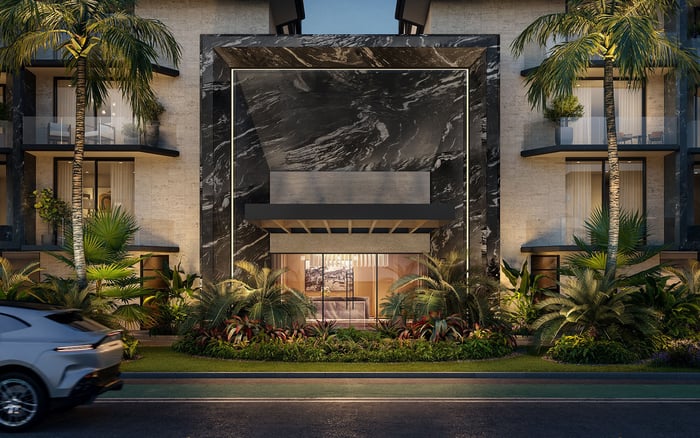
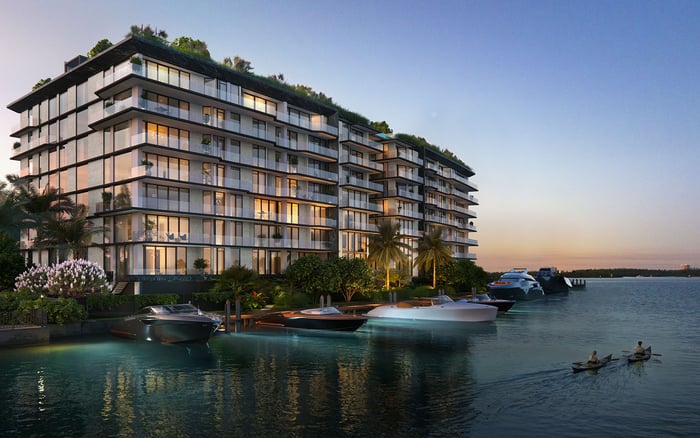
A buyer-focused look at how to judge floor plan efficiency in Bay Harbor Islands when verified comparative metrics are not publicly established for Bay Harbor Towers and Alana Bay Harbor Islands.
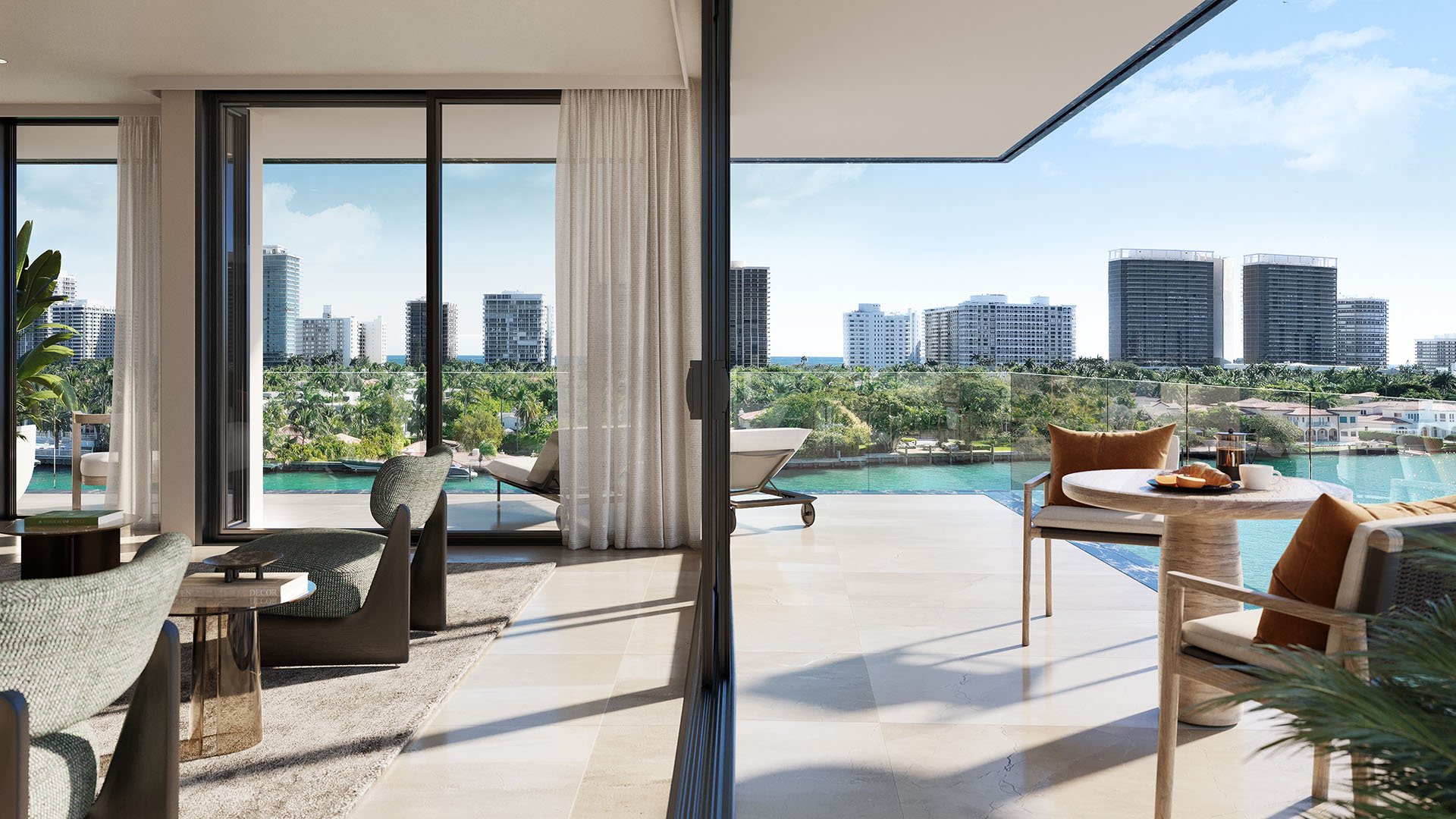
In Bay Harbor Islands, the conversation around floor plan efficiency is rarely about minimizing space. At the upper end of the market, efficiency is better understood as the relationship between square footage and experience: how much of a residence feels purposeful, how naturally rooms connect, how private the bedroom wings feel, and how effectively terraces extend daily living rather than simply decorate it.
For buyers comparing Bay Harbor Towers with Alana Bay Harbor Islands, the challenge is straightforward. A precise, verified comparison of floor plan efficiency is not publicly established in a way that supports exact conclusions. The metrics that would make such a judgment credible include usable interior ratios, common-area allocation, balcony-to-interior balance, and unit density measured against site and building form. Without those figures, the more intelligent path is to evaluate efficiency through planning logic rather than unsupported arithmetic.
That distinction matters in a boutique enclave like Bay Harbor Islands. In a market where design nuance often carries as much weight as headline size, the better residence is not always the larger one. It is the one that wastes the least space on hallways, awkward corners, secondary circulation, and oversized transitional zones.
For the South Florida buyer, efficiency should never be confused with compression. In refined waterfront product, an efficient plan must still feel generous. Ceiling height, natural light, arrival sequence, and indoor-outdoor continuity all matter. A superb layout can feel expansive without overbuilding the private living envelope.
In practical terms, the most meaningful indicators are simple. First, look at the percentage of the home that is truly livable on a daily basis. Second, evaluate whether entertaining spaces are cleanly separated from sleeping areas. Third, study whether terraces enhance the main rooms or interrupt them. Fourth, consider whether views are framed in a way that improves furniture placement rather than dictating it.
This is where Bay Harbor Islands buyers tend to become sophisticated very quickly. They recognize that two residences with similar stated square footage may perform very differently once kitchens, storage, powder rooms, laundry placement, and corridor lengths are taken into account. In that sense, efficiency is less an engineering term than a luxury-use standard.
Without verified development-level efficiency data, the most credible comparison between Bay Harbor Towers and Alana Bay Harbor Islands is qualitative. Buyers should begin with five questions.
First, how direct is the entry sequence? A residence that opens into the principal living space with clear sightlines often feels more composed than one that devotes too much square footage to transition.
Second, how legible is the public-private split? In strong layouts, living, dining, and kitchen areas read as one coherent entertaining suite, while bedrooms maintain separation and quiet.
Third, how useful are the terraces? In Bay Harbor Islands, outdoor space is valuable, but not all terrace square footage delivers the same lifestyle return. The finest plans make terraces feel like a continuation of the salon rather than an appendage.
Fourth, how well is storage integrated? True efficiency in luxury homes often appears in places buyers notice only after move-in: linen storage, discreet utility zones, pantry depth, wardrobe planning, and service circulation.
Fifth, how flexible is the floor plan over time? A den that can become a media room, office, or guest room may be more valuable than a larger but less adaptable layout.
These same filters also help frame newer Bay Harbor product such as Onda Bay Harbor and La Maré Bay Harbor Islands, where buyers often compare not just size, but how intelligently each residence uses waterfront frontage, privacy, and indoor-outdoor flow.
One reason Bay Harbor Islands attracts such loyal attention is that boutique development can reward planning discipline. In large towers, efficiency may be diluted by long double-loaded corridors, heavier shared amenity allocations, or floor plates designed to satisfy broad inventory mixes. In a boutique setting, every line on the plan is subject to greater scrutiny.
That does not automatically make one building more efficient than another. It does, however, make details more consequential. A slightly better foyer placement, a more resolved kitchen island, or a cleaner bedroom stack can materially change how a residence lives.
For this reason, the comparison between Bay Harbor Towers and Alana Bay Harbor Islands should be grounded in how each plan supports the rituals of ownership: morning light, hosting, privacy for extended stays, and the ease of moving between interior rooms and waterfront terraces. The right benchmark is not abstract density. It is lived refinement.
Any serious comparison should be made with current floor plans, developer disclosures, and verified square footage breakdowns in hand. Residences and specifications can evolve through redesign, inventory release, or repositioning, so buyers should insist on the most current plan set available for the exact line or residence type under consideration.
A proper review should separate gross stated size from practical usability. Buyers should ask for interior dimensions, terrace dimensions, ceiling-height information where available, and clarification on whether quoted square footage reflects enclosed living area alone or a combined indoor-outdoor total. These distinctions are especially important in waterfront and waterview product, where a dramatic terrace can elevate lifestyle value while also altering perceptions of usable interior scale.
For investment-oriented purchasers, efficiency also influences liquidity. Better plans tend to photograph more clearly, furnish more easily, and appeal to a wider buyer pool at resale. In South Florida, that can matter as much as finish level.
The most honest conclusion is also the most useful one: Bay Harbor Towers and Alana Bay Harbor Islands deserve comparison, but not guesswork. Until verified efficiency metrics are available at the residence level, buyers should avoid treating floor plan performance as a settled numerical contest.
Instead, compare the way each home lives. Walk the plan. Study the transitions. Test whether the terrace improves the room. Consider whether the bedroom count comes at the expense of graceful proportions. Ask whether the kitchen supports serious entertaining or merely occupies prominent square footage. In Bay Harbor Islands, elegance is often revealed through restraint.
For many buyers, the best residence will be the one that feels calmer, clearer, and more resolved the moment they step inside. That is efficiency at the luxury level: not less space, but less waste.
Can Bay Harbor Towers and Alana Bay Harbor Islands be compared with exact efficiency percentages? Not credibly without verified current plans and square footage breakdowns for both developments.
What is the most important indicator of floor plan efficiency in luxury condos? Usable daily living space is the clearest signal, especially when circulation and storage are well resolved.
Do larger terraces automatically make a residence more efficient? No. A terrace adds value only when it meaningfully extends how the interior rooms function.
Why does boutique development matter in Bay Harbor Islands? Smaller-scale buildings often make layout decisions more visible, which can sharpen differences in livability.
Should buyers focus on total square footage alone? No. Two homes with similar size can feel very different depending on hallways, room proportions, and flexibility.
How does privacy affect efficiency? A well-zoned plan reduces overlap between entertaining and sleeping areas, making the home feel more refined.
Is efficiency relevant for resale value? Yes. Clean, adaptable plans often present better and appeal to a broader pool of future buyers.
What documents should buyers request before comparing layouts? Ask for current floor plans, square footage schedules, disclosures, and any updated residence-specific plan revisions.
Does waterfront positioning change the analysis? Yes. Views and terraces can enhance value, but they should support rather than compromise interior usability.
What is the safest conclusion today? Treat any exact side-by-side efficiency claim cautiously until it is supported by verified residence-level information.
For a tailored shortlist and next-step guidance, connect with MILLION Luxury.
If branded residences are on your mind — as a home or as an allocation — we would be glad to share what we are seeing, privately.
Begin a quiet conversation