A buyer-focused comparison of Bay Harbor Towers and W Pompano Beach Hotel & Residences, framing wellness not as a single amenity category but as a choice between private residential calm and branded hospitality activation.
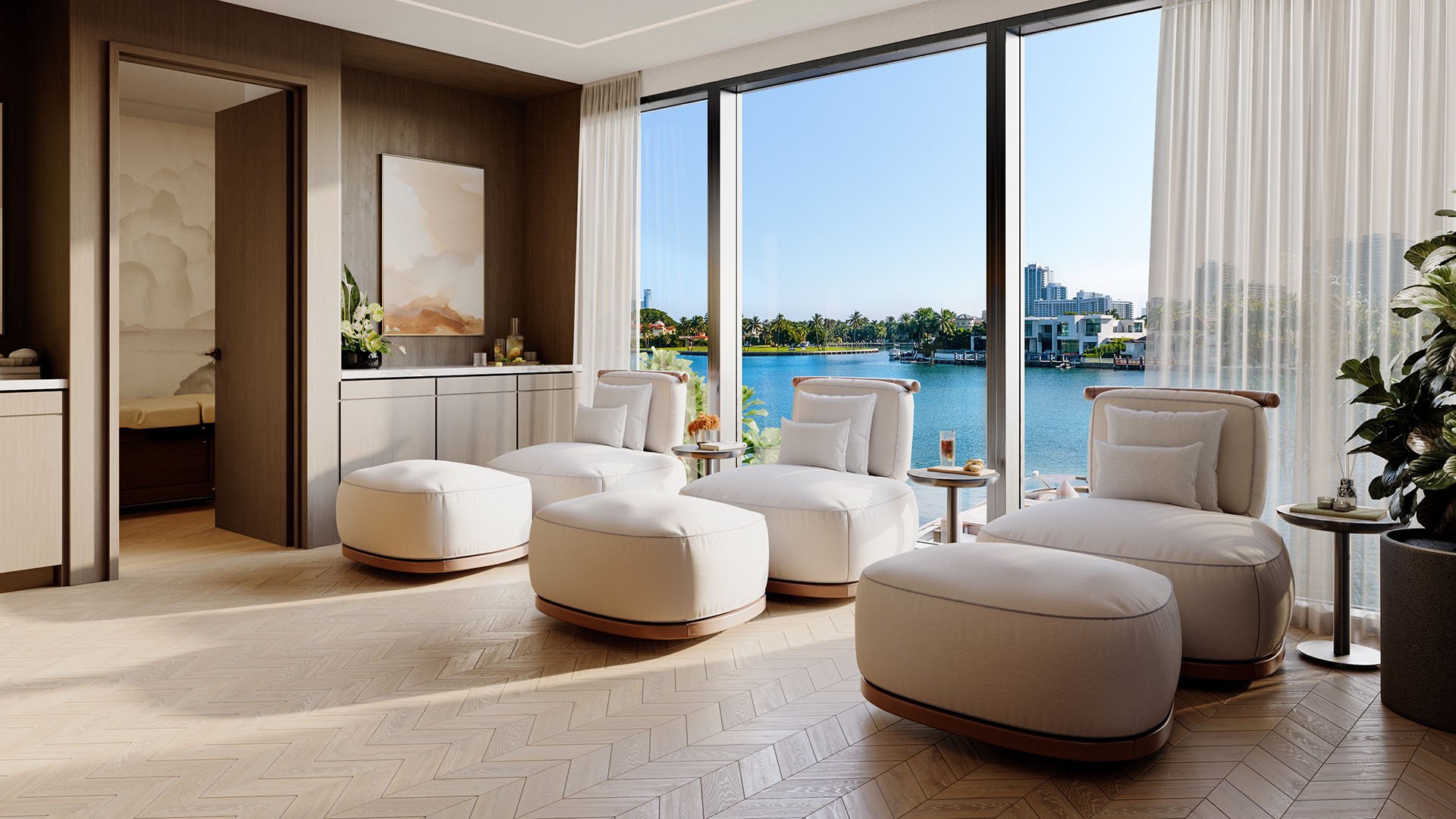
For South Florida buyers, wellness is no longer defined by a spa room, fitness center, or pool deck alone. At the high end of the market, the more revealing question is how a residence behaves day after day. Does the building feel private and residential, with a steady rhythm that supports long stays? Or does it carry the energy of a luxury hospitality setting, where service, programming, and social circulation are central to the appeal?
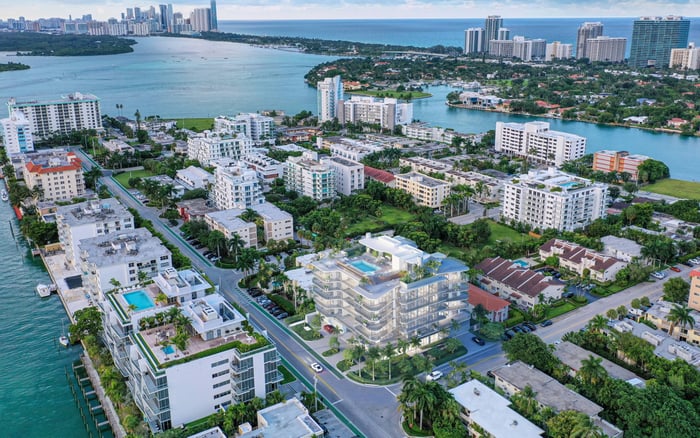
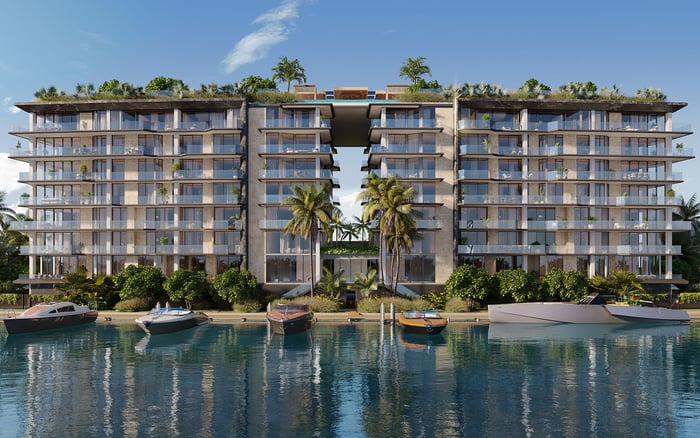
That distinction defines the comparison between Bay Harbor Towers and W Pompano Beach Hotel & Residences. Bay Harbor Towers is best understood as a boutique bayfront condominium in Bay Harbor Islands, shaped around privacy, waterfront living, and residential livability. W Pompano Beach Hotel & Residences sits in a different category: a W-branded hotel-and-residences concept in Pompano Beach, oriented toward hotel-style service, resort amenities, brand-driven lifestyle programming, and a more active amenity ecosystem.
Neither model is inherently superior. The more precise question is which environment matches the buyer’s intended use. A residence occupied for months at a time requires a different kind of comfort than a resort-style base designed around high-touch service and social momentum.
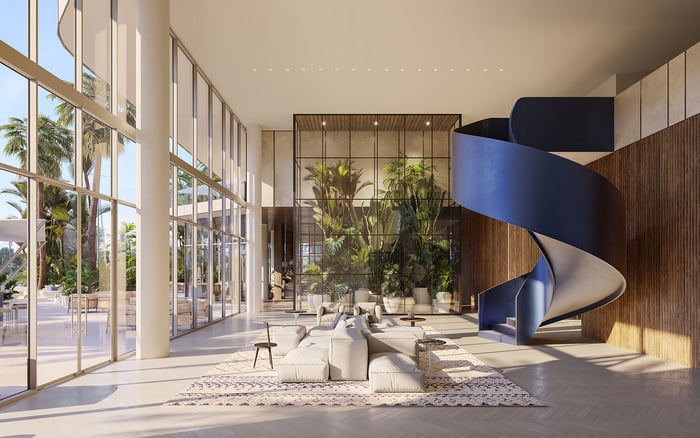
Bay Harbor Towers fits the boutique condominium archetype: lower perceived resort traffic, a stronger private-building feel, and a daily cadence that can feel more homelike than performative. For wellness-minded owners, that matters. The wellness benefit is not necessarily public-facing spa intensity; it is environmental control. Quieter common areas, fewer transient users, and a more residential rhythm can become wellness features in themselves.
This is especially relevant for buyers who define luxury as the ability to reset. A bayfront setting, privacy, and resident-oriented amenity use support a version of wellness rooted in calm rather than constant activation. The building’s appeal is less about being seen in a resort environment and more about returning to a controlled, familiar place.
W Pompano Beach Hotel & Residences operates from the opposite premise. Its hospitality-oriented model is designed for buyers who value service intensity, resort energy, social amenities, and brand-led programming. A W-branded environment naturally appeals to residents who want a home that can also function as a lifestyle platform, with the atmosphere of a hotel layered into the ownership experience.
Some buyers may casually place that model within the broader condo-hotel conversation, but the practical issue is not the label. It is whether the owner wants the pulse of hospitality woven into everyday use.
For spa-oriented buyers, the key distinction is traffic. W Pompano Beach Hotel & Residences is the stronger conceptual fit when the priority is active spa visibility, hotel-grade programming, and the amenity intensity associated with a luxury hospitality environment. The model is designed to feel alive. That can be highly attractive for an owner who wants energy, convenience, and the option to move between residence and resort-style services with minimal friction.
Bay Harbor Towers presents a quieter wellness proposition. Its strength is not high-volume public spa activation. It is privacy, tranquility, waterfront living, and resident-oriented amenity use. For some buyers, that is the more meaningful version of wellness: a building where daily life feels less interrupted, more personal, and more consistent.
This difference should guide expectations. A buyer who imagines wellness as appointments, programming, social facilities, and hotel-level activity may find the W model more aligned. A buyer who imagines wellness as silence, predictability, water views, and fewer outside users may find Bay Harbor Towers more compelling.
Long-stay livability changes the analysis. Bay Harbor Towers is best positioned for buyers who want a quieter, more homelike environment for stays measured in months rather than nights. That does not make the building less luxurious. It means the luxury is residential: control over one’s surroundings, a consistent neighborly rhythm, and a sense that the building exists primarily for its residents.
For Bay Harbor buyers, that can be the central advantage. The daily experience is less about resort theatre and more about living well over time. This model may be particularly appealing to owners who work remotely, spend an extended season in South Florida, or want a second residence that does not feel like a hotel lobby every time they return home.
For Pompano Beach buyers drawn to W Pompano Beach Hotel & Residences, the long-stay calculation is different. Service, programming, and amenity energy may be precisely the reason to own there. The residence can serve as a resort-style base, with hospitality features contributing to the lifestyle rather than distracting from it.
The tradeoff is clear: privacy and residential consistency at Bay Harbor Towers versus service intensity and resort activation at W Pompano Beach Hotel & Residences.
Bay Harbor Towers is likely to resonate with the buyer who prizes discretion. This buyer wants waterfront calm, a private-residence model, and the sense that wellness starts with quiet. They may care less about being surrounded by active programming and more about whether the building feels composed on a weekday morning, a Sunday evening, or during an extended stay.
W Pompano Beach Hotel & Residences fits the buyer who wants the brand experience to be part of ownership. This buyer values hotel-style service, social energy, and an amenity environment with more visible activation. Wellness here is not only restorative; it is also experiential. It may include the pleasure of movement, service, people, and programming within a hospitality framework.
The important point is to avoid comparing these residences as if they are trying to solve the same problem. Bay Harbor Towers is the more private residential option. W Pompano Beach Hotel & Residences is the more hospitality-oriented option. The better choice depends on how the owner expects to live.
Before choosing, buyers should examine the daily-use implications behind the marketing language. How private should the amenity areas feel? How much transient activity is acceptable? Is the desired atmosphere quiet and residential, or lively and resort-driven? How often will the residence be used, and for how long at a time?
The answers will usually point clearly toward one model. For an owner seeking calm, controlled daily wellness, Bay Harbor Towers has the stronger conceptual position. For an owner seeking spa visibility, brand energy, and hotel-style programming, W Pompano Beach Hotel & Residences is the more natural fit.
In South Florida’s luxury market, wellness is ultimately not one amenity. It is the sum of access, privacy, sound, service, circulation, and the emotional tempo of a building. The most successful purchase is the one where that tempo matches the owner’s life.
Is Bay Harbor Towers a hotel-residence model? No. Bay Harbor Towers is framed as a private-residence condominium model rather than a hotel-branded resort model.
Is W Pompano Beach Hotel & Residences more hospitality-oriented? Yes. It is positioned as a W-branded hotel-and-residences concept with hotel-style service, resort amenities, and lifestyle programming.
Which option is better for quiet daily wellness? Bay Harbor Towers is the stronger fit for buyers prioritizing privacy, tranquility, and a more controlled residential environment.
Which option is better for spa-oriented buyers? W Pompano Beach Hotel & Residences is the stronger fit when the priority is active spa traffic, visibility, and hotel-grade programming.
Which residence is better for long stays? Bay Harbor Towers is better positioned for stays measured in months because its model emphasizes homelike livability and residential consistency.
Does W Pompano Beach suit a second-home buyer? Yes, particularly if the buyer wants a resort-style base with service, social energy, and a more public-facing amenity ecosystem.
Does Bay Harbor Towers emphasize privacy? Yes. Its appeal is tied to a boutique bayfront setting, lower perceived resort traffic, and a stronger private-building feel.
Are these two projects competing on the same lifestyle promise? Not exactly. Bay Harbor Towers emphasizes private residential calm, while W Pompano Beach Hotel & Residences emphasizes hospitality activation.
Should buyers focus only on amenity lists? No. Buyers should also consider daily rhythm, traffic, privacy, service intensity, and how the building will feel during extended use.
What is the simplest way to choose between them? Choose Bay Harbor Towers for calm and control, or W Pompano Beach Hotel & Residences for service, programming, and resort energy.
For a discreet conversation and a curated building-by-building shortlist, connect with MILLION.
If branded residences are on your mind — as a home or as an allocation — we would be glad to share what we are seeing, privately.
Begin a quiet conversation