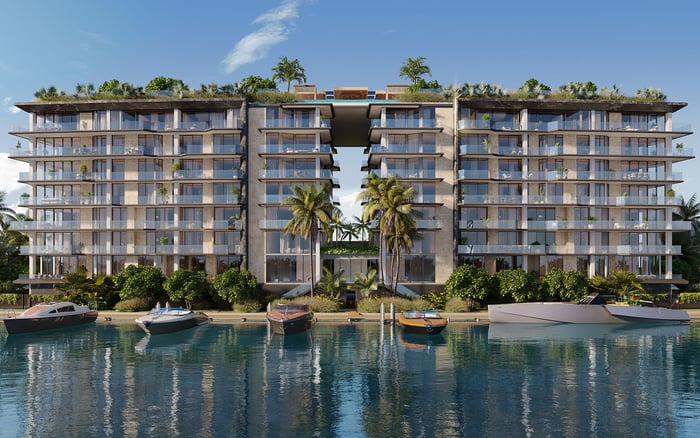
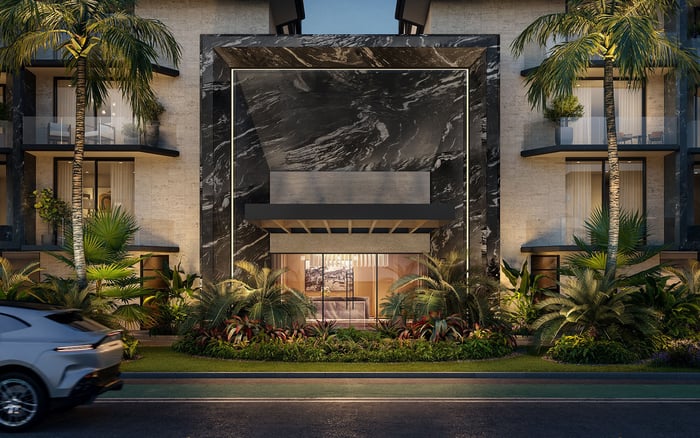
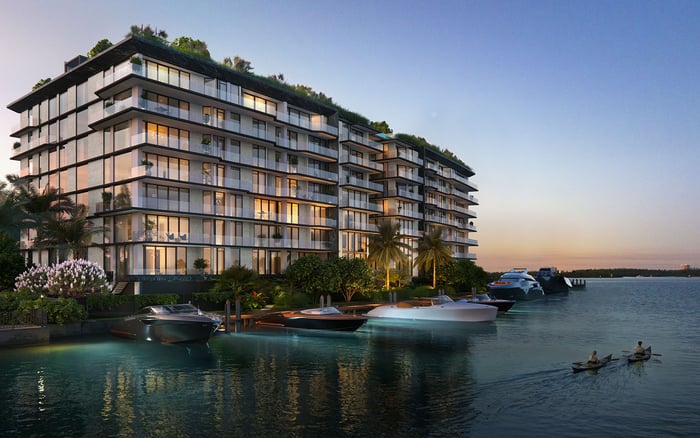
A buyer-focused comparison of Bay Harbor Towers and The Lincoln Coconut Grove, examining how legacy tower operations and newer boutique-condominium culture can affect art installation, freight access, storage expectations, and the quiet logistics behind high-value residential living.
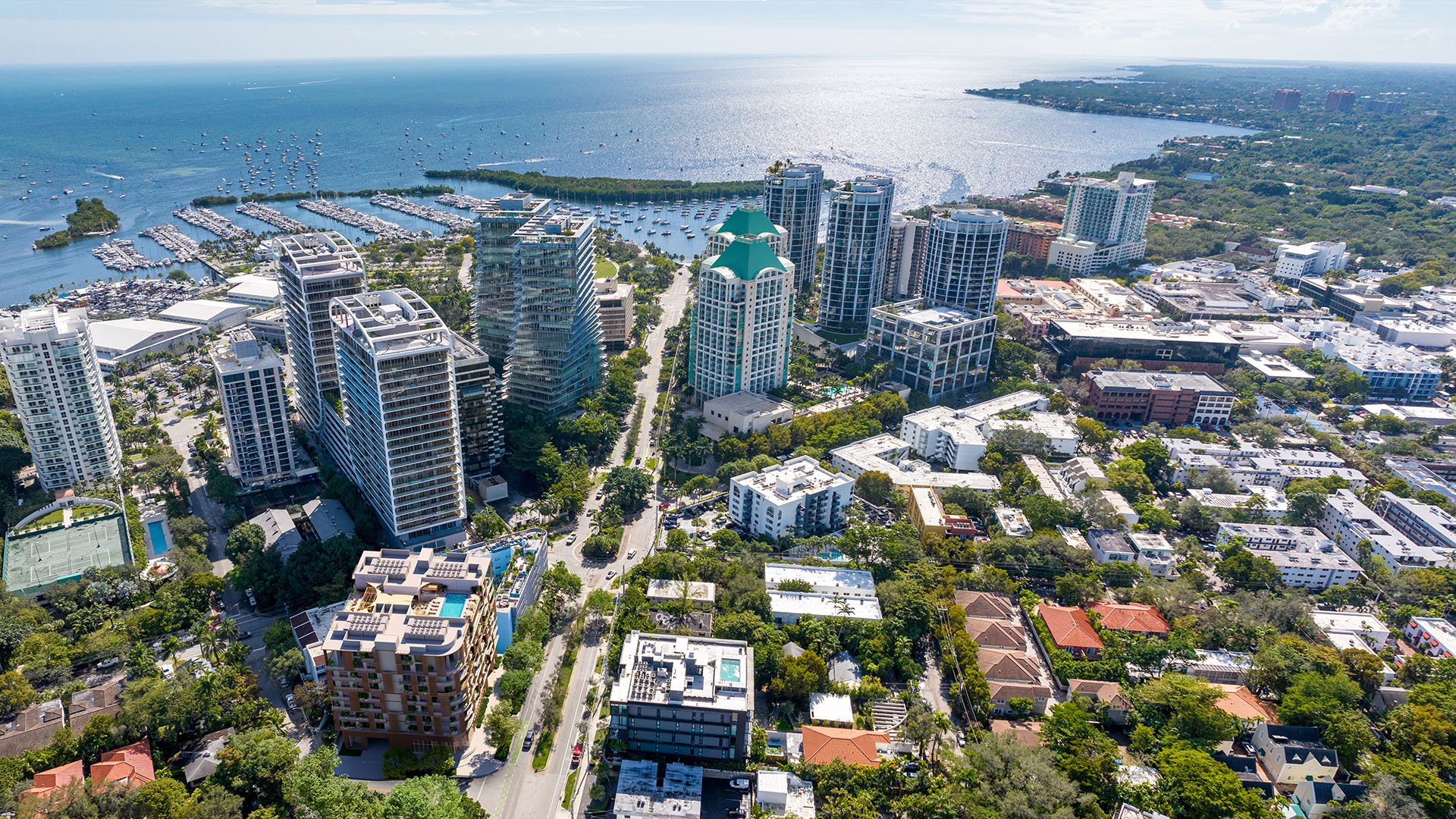
For South Florida buyers who live with important art, collectible design, rare books, sculptural lighting, or delicate vintage furnishings, the question is rarely limited to square footage and view lines. The more revealing question is operational: can the building receive, protect, move, install, and store high-value objects with discretion and competence?
That is where the comparison between Bay Harbor Towers and The Lincoln Coconut Grove becomes useful. Bay Harbor Towers serves as the legacy waterfront tower reference point: the kind of property where original elevator cores, corridors, loading patterns, and long-standing procedures may shape daily ownership. The Lincoln Coconut Grove represents a newer boutique-condominium model in a walkable, tree-canopied Coconut Grove setting, where contemporary luxury expectations may be more naturally reflected in planning and service culture.
This is not a contest of taste. It is a study in building culture. For collectors, decorators, and owners who rotate seasonal installations, the hidden infrastructure behind a residence can become as important as the terrace, kitchen, or primary suite.
Bay Harbor Towers belongs to a familiar South Florida category: the established waterfront condominium whose value often rests on location, views, proportions, and the enduring appeal of Bay Harbor Islands. For many buyers, that legacy is precisely the attraction. Yet legacy buildings also call for a different kind of due diligence.
The practical question is how easily a large canvas, framed mirror, stone console, or crated sculpture can travel from truck to residence. In older waterfront towers, art logistics may be shaped by elevator dimensions, service-elevator availability, loading access, corridor turns, floor-protection requirements, and management procedures. None of these details should be assumed. Each should be verified before a buyer with a significant collection commits to a residence.
This is where Bay Harbor Towers becomes instructive for Bay Harbor due diligence more broadly. A buyer should ask not only whether a delivery is allowed, but how it is choreographed. Are service elevators reserved in advance? Are loading hours restricted? Must installers provide certificates of insurance? Are protective pads, Masonite, elevator blankets, or security deposits required? Are there limits on drilling, wall anchoring, or after-hours work?
None of these questions diminishes the appeal of a legacy tower. They translate luxury into operations. A building that understands the needs of art-forward residents can often work around physical constraints through clear scheduling, experienced staff, flexible supervision, and board-level practicality. A beautiful residence becomes more livable when the building culture is responsive.
The Lincoln Coconut Grove offers a different lens. As a newer boutique condominium reference point in Coconut Grove, it sits within a luxury conversation shaped by walkability, greenery, design-conscious buyers, and the expectation that residences may function as refined private galleries. Boutique does not automatically mean flawless logistics, but it can suggest a more contemporary starting point.
In newer luxury infill, residents are more likely to expect curated interiors, oversized furnishings, and periodic white-glove deliveries. That may influence how sales teams, management, architects, and ownership groups think about vertical circulation, installation windows, staging areas, resident communication, and high-value-object handling. The Lincoln Coconut Grove should therefore be evaluated not through assumptions, but through specifics.
For Coconut Grove buyers, the essential phrase is actual execution. Ask for the real freight path. Walk the route from curb or loading area to elevator, from elevator to corridor, and from corridor to residence. Request details on service reservations, moving policies, climate-controlled storage if available, installation approvals, and insurance requirements. In a boutique building, the culture may feel more personal, but the documents still matter.
The Lincoln Coconut Grove is especially relevant for buyers who expect the residence to support art, design, and entertaining without friction. A newer building may be better positioned to anticipate those expectations, yet a collector should still verify dimensions, procedures, staff experience, and whether storage conditions are appropriate for sensitive objects.
Climate-controlled storage has become one of the quiet differentiators in the luxury market. For owners of works on paper, textiles, wine-related artifacts, design archives, photography, or humidity-sensitive objects, a storage room is not automatically adequate simply because it is indoors.
Buyers should ask whether storage areas are conditioned, whether humidity is monitored, whether access is secure, and whether the building has procedures for power interruptions or hurricane season. A storage cage in a warm, humid area may be useful for luggage or beach equipment, but not necessarily for valuable collections. Conversely, a well-managed conditioned space can meaningfully expand how a residence functions.
At Bay Harbor Towers, this is a legacy-building verification issue. At The Lincoln Coconut Grove, it is a specification and execution issue. In both cases, the correct posture is the same: do not rely on conversational assurances. Review building documents, speak with management, and have specialists inspect conditions before assigning valuable objects to shared or auxiliary storage.
The most elegant elevator cab is less useful if management culture is rigid, unclear, or unaccustomed to complex installations. Conversely, a building with physical limitations can perform beautifully when staff, board, and residents understand the value of planning.
Governance matters because art installation often touches common elements. Large pieces may require elevator padding, temporary wall protection, longer loading windows, additional personnel, or careful coordination with neighboring residents. Wall anchoring can raise questions about structural systems, sound transmission, waterproofing, and future repairs. Insurance requirements protect the building, but they also determine which vendors can work on site.
For resale buyers, minutes, rules, alteration agreements, move-in policies, and management interviews are part of the luxury review. This is especially true when comparing an established building such as Bay Harbor Towers with a newer property such as The Lincoln Coconut Grove. The first asks whether legacy systems can flex for modern collectors. The second asks whether contemporary promises are matched by operational discipline.
Before contract deadlines pass, a serious buyer should rehearse the life of a large object. Start at the street. Where does the truck stop? Is there a protected loading area? Can a crate be staged without blocking residents? Who receives the vendor? How far is the elevator? What are the cab height, width, depth, and door opening? Are there tight turns into the unit?
Inside the residence, ask where art can be anchored, how lighting can be adjusted, whether electrical work requires approvals, and how humidity is managed. For hurricane season, confirm whether the building has guidance for balcony furniture, storm preparation, temporary storage, and post-storm access. For high-value works, ask what insurance documents vendors must provide and whether the building requires advance approval for specialty rigging or crating.
The goal is not to turn a home search into a technical audit. It is to prevent a beautiful purchase from becoming operationally frustrating. Luxury in South Florida is increasingly defined by how gracefully a building handles the details no guest ever sees.
Why does building culture matter for art installation? Because management attitude, reservation rules, insurance standards, and staff experience often determine whether a complex installation feels seamless or difficult.
Is Bay Harbor Towers being described as having inadequate freight access? No. The point is that legacy-tower conditions should be verified rather than assumed, especially for oversized art or furnishings.
Does The Lincoln Coconut Grove guarantee better art logistics? No. A newer boutique setting may be better aligned with modern expectations, but buyers should confirm actual specifications and procedures.
What should collectors ask before buying? Ask about elevator dimensions, loading hours, service reservations, corridor turns, wall-anchoring rules, insurance requirements, and storage conditions.
Is climate-controlled storage always available in luxury condominiums? No. Availability and quality vary, and buyers should confirm whether storage is conditioned, secure, and appropriate for sensitive items.
Why are corridor turns important? A large artwork may fit in an elevator but fail to clear a tight turn between the elevator lobby and residence entry.
Should buyers rely on verbal assurances from sales or management? Verbal guidance is helpful, but important logistics should be confirmed through documents, measurements, and direct management review.
How does hurricane season affect art logistics? Owners should understand storage options, storm procedures, power continuity, access rules, and whether temporary protection plans are permitted.
Are these questions only for major collectors? No. Anyone buying large furniture, fragile design pieces, or custom interiors benefits from understanding freight and installation protocols.
What is the core difference between these two comparison points? Bay Harbor Towers highlights legacy-building due diligence, while The Lincoln Coconut Grove highlights the need to verify how newer boutique expectations are executed.
For a tailored shortlist and next-step guidance, connect with MILLION.
If branded residences are on your mind — as a home or as an allocation — we would be glad to share what we are seeing, privately.
Begin a quiet conversation