A discreet buyer’s guide to aligning ownership entities, privacy expectations, resort privileges, and closing records at two distinctive South Florida branded residences.

The appeal of South Florida’s branded residences often begins with design, service and a compelling sense of place. Yet for buyers managing family offices, trusts, operating businesses or multigenerational wealth, the more consequential work can begin with a deceptively simple question: whose name should appear on the contract and deed?
That question connects Banyan Tree Residences West Palm Beach and Shell Bay by Auberge Hallandale. Their lifestyle propositions differ, but both require purchasers to coordinate entity titling, identity verification, public-record exposure and a substantial closing file well before funds are due.
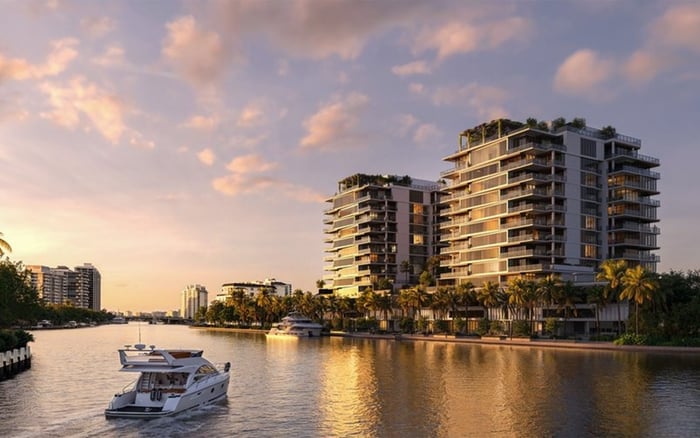
Banyan Tree is planned as a 25-story, 88-unit condominium at 400 Hibiscus Street, with one- to four-bedroom residences. Plans also include a private club spanning roughly 5,700 square feet and approximately 6,400 square feet of ground-floor retail. Shell Bay is conceived as a 20-story, 108-residence component within a broader Auberge-branded environment encompassing a private club, golf course, hotel, and 60 guest rooms and suites.
Privacy is not one promise but a chain of decisions across the contract, deed, financing and club files.
An LLC or trust may serve legitimate estate-planning, liability or administrative goals, but the entity name should not be treated as a closing-day substitution. Florida real-estate, tax and estate-planning counsel should reconcile the contract purchaser, intended deed grantee, financing applicant, source of funds and, where relevant, the individual club member.
At Banyan Tree, statements, disclosures and representations rest with the developer rather than the hospitality brand. The practical implication is precision: buyers should identify the exact developer entity in the purchase agreement and offering documents, then confirm which party can approve an assignment or change in purchaser identity.
The same discipline applies at Shell Bay, where The Witkoff Group and PPG Development are the developers. The residence is only one component of a more layered destination. The entity owning the condominium may not automatically be the person recognized for club, golf, hotel or resort privileges. Those relationships should be traced through their respective documents rather than inferred from the Auberge affiliation.
Banyan Tree’s privacy policy illustrates the distinction between data stewardship and anonymity. It permits the collection of names, contact details, search criteria and passport or driver’s-license numbers for purchase-related identity verification. Personal information is not sold, rented or commercially provided to unaffiliated third parties for promotional or advertising purposes, subject to stated advertising-service exceptions.
Those protections do not promise that a buyer will remain anonymous in a deed, financing record, association file or other transaction document. Entity ownership may change what appears in certain records, but it does not eliminate identification requirements or beneficial-owner scrutiny. Privacy requests and opt-out submissions can be directed to 400 Hibiscus Acquisitions, LLC, yet a marketing opt-out is distinct from altering a legally required closing record.
Communication habits matter as well. Transmitted communications and materials are treated as non-confidential and non-proprietary, and confidential information sent by email is at the user’s risk. A prudent buyer can therefore establish a controlled channel with counsel and the closing team for passports, entity documents, wire instructions and tax information rather than circulating sensitive files casually.
Public-record planning deserves equal attention. West Palm Beach maintains an online Development Services records portal for project, permitting and development requests. A purchaser seeking discretion should ask counsel which elements of the acquisition may become public, which remain within association or transactional files, and whether an entity meaningfully advances the buyer’s objectives without creating unnecessary administrative complexity.
Shell Bay’s residential proposition sits within an ecosystem of condominium ownership, hospitality, club and golf operations. That structure can be highly attractive, but elegant branding should not blur contractual boundaries. Buyers should determine what is appurtenant to the residence, what is licensed or separately contracted, who controls access, and whether privileges attach to the owner, occupants or named members.
The scale of the broader development reinforces the point. The project has been associated with a $273 million construction loan for the developers, while a separate $333 million financing package applies to the broader combination of club, hotel, golf course and residences. These figures describe different scopes and should not substitute for reviewing the condominium’s current offering materials, title commitment, budget and closing requirements.
Pricing information has also varied over time. Residences have been priced between approximately $1 million and $11 million, with HOA charges around $1.80 per square foot and an indicative deposit structure of 10 percent at contract, followed by another 10 percent after 60 days. The starting price was later approximately $2 million. Every amount and deadline should be confirmed in current developer documents.
For context within Hallandale Beach and Broward, a buyer comparing a club-led inland setting with direct coastal living might also examine 2000 Ocean Hallandale Beach or Auberge Beach Residences & Spa Fort Lauderdale. The comparison is not merely aesthetic. It can reveal how ownership documents differ when the lifestyle centers on a private club, an oceanfront condominium or a resort-service model.
The cleanest closing package is internally consistent. The purchaser named in the contract should align with approved amendments, the deed, loan documents if any, entity resolutions, funds-source records and required identity materials. If a trust or LLC is involved, counsel should confirm formation and authority documents early, along with signatory capacity and any lender requirements.
At Banyan Tree, residences were expected to begin at approximately $1.9 million. At Shell Bay, time-sensitive pricing, deposits and association costs require direct confirmation. In either case, buyers should request and review the current purchase agreement, condominium declaration, association bylaws, budget, title commitment, club agreement where applicable, and specimen closing statement before treating the ownership structure as final.
This rigor is especially relevant in pre-construction purchases, where contract execution and closing can be separated by a meaningful interval. An entity may be reorganized, financing plans may evolve, or estate-planning objectives may change. Any adjustment should be coordinated before it collides with assignment restrictions, verification procedures or closing deadlines.
West Palm Beach has its own expanding field of sophisticated residences, including Mandarin Oriental Residences, West Palm Beach. Shell Bay brings a private-club and golf orientation to Hallandale Beach. Geography and amenity style differ, but the buyer’s discipline remains constant.
The strongest approach treats entity titling as governance, privacy as layered risk management and closing documentation as the definitive record of the transaction. That framing belongs in serious buyer’s guides because it moves the conversation beyond the name on the deed. It asks who owns, who signs, who is verified, who receives privileges and which records may persist.
For an investment property, second home or family residence, the final structure should be deliberate, documentable and compatible with the project’s actual agreements. Buyers should rely on qualified legal, tax and estate-planning advisers for their circumstances, then verify every commercial term against current developer and closing documents.
For discreet guidance across South Florida’s most distinctive residences, connect with MILLION.
If branded residences are on your mind — as a home or as an allocation — we would be glad to share what we are seeing, privately.
Begin a quiet conversationThe available facts do not establish project-specific entity eligibility. Buyers should have counsel confirm the contract’s purchaser provisions and any approval requirements before signing.
No. Entity ownership may change what appears in certain records, but it does not promise anonymity across deeds, financing records, association files or verification documents.
Its privacy policy permits collection of names, contact details, search criteria, and passport or driver’s-license numbers for purchase-related identity verification.
It states that personal information is not sold, rented or commercially provided to unaffiliated third parties for promotional purposes, subject to stated advertising-service exceptions.
The project fact sheet places statements, disclosures and representations with the developer rather than the hospitality brand, so the precise developer entity in the documents matters.
That should not be assumed. Buyers should distinguish condominium ownership from separately documented hotel, club, golf and resort access.
Key materials include the current purchase agreement, condominium declaration, bylaws, budget, title commitment, closing statement and any separate club agreement.
Consistency can reduce friction among contract rights, entity authority, financing, funds-source verification and closing documentation.
No published figure should be treated as final. Pricing, HOA charges, deposit schedules and deadlines are time-sensitive and should be confirmed in current developer documents.
Buyers should use controlled channels established with counsel and the closing team, particularly for identification, entity records, tax forms and wire instructions.