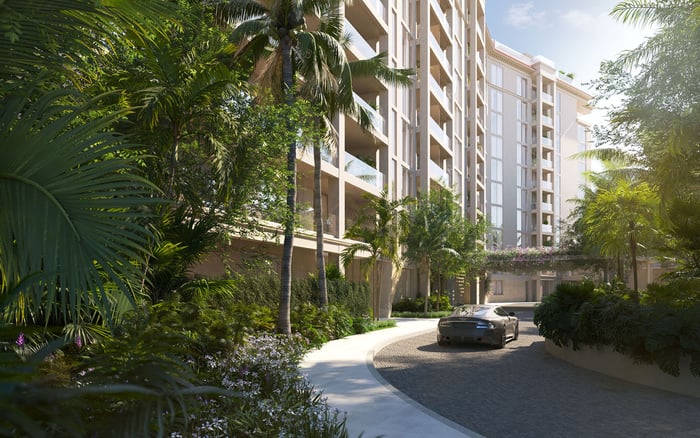
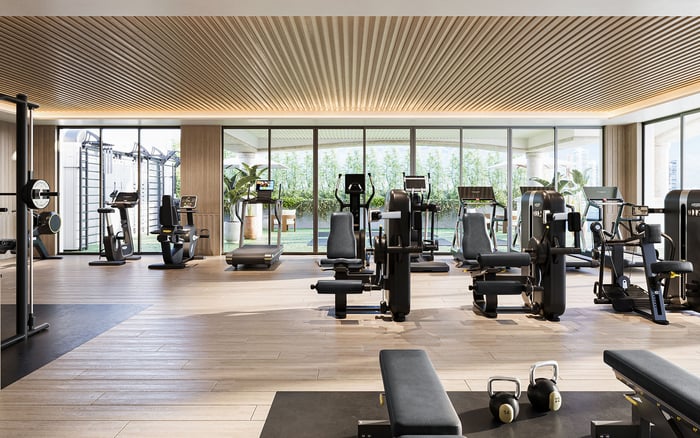
A buyer-focused comparison of Eighty Seven Park Surfside and The Links Estates at Fisher Island, centered on acoustic comfort, technology infrastructure, operational control, and remote-work privacy rather than brand language.

At the top of the South Florida market, branding can quickly become a distraction. The more useful question is not which name a buyer prefers, but which residential format best supports daily life: a high-rise multifamily environment or a low-density private-island estate environment. That distinction frames the comparison between Eighty Seven Park Surfside and The Links Estates at Fisher Island.
Eighty Seven Park Surfside belongs to the Surfside oceanfront condominium category. It is best understood as a tower residence with a turnkey, amenitized lifestyle and baseline building infrastructure already in place. The Links Estates at Fisher Island occupies a different category altogether: an estate offering where the buyer may place greater emphasis on control over the envelope, systems, staffing patterns, and day-to-day circulation.
That distinction is material. It affects sound, privacy, technology planning, service expectations, and the level of operational responsibility the owner is willing to assume. Oceanfront tower living can be highly appealing for buyers who value simplicity and service. Estate living can be more compelling for those who want greater separation and a more customized private domain.
For a noise-sensitive buyer, the first test is physical adjacency. In a condominium tower, even a highly refined residence remains part of a shared structural system with neighboring homes, common areas, elevators, staff routes, mechanical pathways, and building rules. Eighty Seven Park’s acoustic profile should therefore be evaluated through the realities of high-rise living, including the specific unit position, neighboring conditions, glazing, floor assembly, and any permissible interior upgrades.
The Links Estates has a structural advantage for the buyer who prioritizes acoustic control because a single-family estate setting generally allows more direct influence over separation, landscape buffering, envelope upgrades, private systems, and room placement. That does not guarantee silence. It means the buyer has a broader set of levers to inspect, specify, and improve, subject to the actual estate, design, and applicable requirements.
In Surfside, buyers who like the oceanfront tower proposition may also compare the broader feel of the neighborhood with The Delmore Surfside, but the same diligence principle applies: listen at different times of day, study elevator proximity, understand service circulation, and review what can and cannot be modified inside the residence.
Technology is another area where the two options diverge. Eighty Seven Park should be viewed as part of a shared luxury-condominium platform. The resident benefits from building-level systems and a managed residential environment, but does not usually control every layer of the property’s technology stack. That can be an advantage for a buyer who wants the building to handle much of the baseline infrastructure.
The Links Estates should be assessed as an owner-controlled estate system. A buyer may have more freedom to specify network redundancy, security design, workspace layout, low-voltage planning, backup solutions, and private technology protocols. This matters for owners who conduct sensitive calls, manage global teams, or want multiple layers of connectivity without depending entirely on building-wide decisions.
The right question is not simply which residence is more advanced. It is who controls the decisions. In a tower, some infrastructure decisions are collective or building-managed. In an estate, more responsibility can shift to the owner, which is empowering for some buyers and burdensome for others.
Remote-work privacy is no longer just a matter of having a desk with a view. For ultra-premium buyers, it includes who can approach the residence, how visible the household is, where staff moves, how deliveries are handled, how often shared spaces are used, and whether confidential work can occur without constant background awareness of neighbors or building activity.
By that measure, The Links Estates has an inherent advantage for buyers who prioritize controlled access, reduced visibility, and separation from neighboring units. The private-island estate format can support a more deliberate choreography of guests, household staff, family movement, and professional space. Buyers considering Fisher Island may also study The Residences at Six Fisher Island as part of a broader understanding of the island’s residential spectrum, but the essential question remains privacy versus operational simplicity.
Eighty Seven Park may still be the stronger fit for a remote worker who prefers a managed condominium lifestyle and does not want to operate a large private estate. For many buyers, the appeal is precisely that the residence does not require the same staffing, maintenance, and systems oversight associated with a larger compound.
Eighty Seven Park Surfside is the more natural match for the buyer who wants an architect-designed oceanfront tower residence, a service-oriented setting, and less direct responsibility for property operations. It is also well aligned with owners who travel frequently, prefer lock-and-leave convenience, and value an established building framework over maximum customization.
The Links Estates at Fisher Island is the more natural match for the buyer who prioritizes privacy, customization, acoustic control, and command over the residence as a personal operating environment. For buyers screening single-family homes at the very top of the market, the appeal is not just space. It is the ability to shape systems, circulation, privacy layers, and work environments around how the household actually lives.
The tradeoff is complexity. More control generally means more decisions, more oversight, and a greater need for trusted advisers, from acoustic consultants and technology integrators to security planners and estate managers. In practical search language, this is a Fisher Island privacy choice as much as a real estate choice.
Before choosing either path, a buyer should ask practical questions. How exposed is the primary bedroom to neighbor or corridor noise? Where are mechanical systems located? What technology upgrades are allowed? Can workspaces be acoustically isolated? How are visitors and staff routed? What happens during peak service periods? Who controls network redundancy, access protocols, and security changes?
The strongest decision will come from matching the property type to the buyer’s tolerance for shared systems, visibility, and responsibility. Branding may begin the conversation, but acoustic comfort, technology resilience, and remote-work privacy determine whether the home supports the owner’s real life.
Is Eighty Seven Park Surfside a single-family estate? No. It is considered here as a Surfside oceanfront condominium tower, not as an estate product.
Is The Links Estates at Fisher Island comparable to a condo tower? Not directly. It is an estate offering, which makes the ownership experience fundamentally different.
Which option has the stronger acoustic-control profile? The Links Estates has the structural advantage because an estate setting can offer more owner control over separation, systems, and envelope decisions.
Can Eighty Seven Park still work for a noise-sensitive buyer? Yes, but the buyer should scrutinize unit position, neighboring conditions, shared systems, and permissible interior improvements.
Which is better for remote-work privacy? The Links Estates is better aligned with buyers who want controlled access, reduced visibility, and separation from neighboring residences.
Why might a remote worker still prefer Eighty Seven Park? A buyer may prefer a managed condominium setting if simplicity, service, and lower operational responsibility are priorities.
Which property type offers more technology customization? The estate format generally allows more owner-directed planning for networking, security, redundancy, and workspace design.
Which option is simpler to own day to day? Eighty Seven Park is the simpler fit for buyers who prefer a turnkey tower lifestyle with building-level infrastructure.
What should buyers inspect before deciding? They should evaluate acoustic conditions, staff routes, access control, technology rights, building or estate systems, and upgrade flexibility.
Is branding the right way to choose between them? No. The more important decision is whether the buyer wants a serviced tower residence or a higher-control private estate environment.
For a confidential assessment and a building-by-building shortlist, connect with MILLION.
If branded residences are on your mind — as a home or as an allocation — we would be glad to share what we are seeing, privately.
Begin a quiet conversation