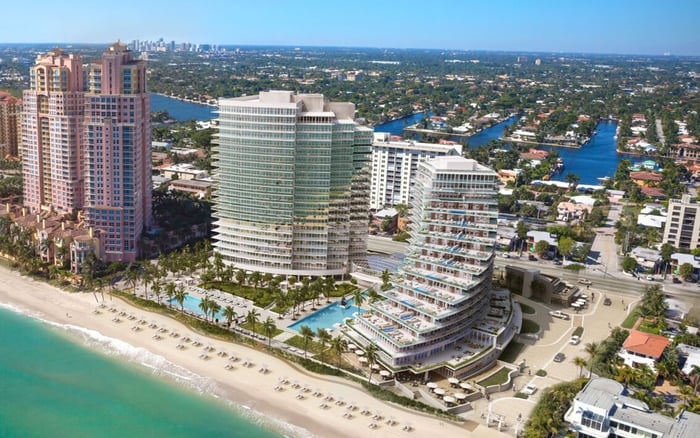
A buyer-focused guide to evaluating Auberge Beach Residences & Spa Fort Lauderdale through beach, bayfront, and city-center lifestyle priorities for 2026.
For South Florida buyers evaluating Auberge Beach Residences & Spa Fort Lauderdale, the most important question is not simply whether the residence is luxurious. It is whether the buyer wants daily life to feel beach-led, bay-calmed, or city-centered.
Those three lifestyle choices can look similar in marketing language, but they behave differently in real life. A beach-first routine is built around sand, light, salt air, and a more resort-like cadence. A bayfront routine often feels more sheltered and contemplative. A city routine emphasizes restaurants, offices, cultural access, and the convenience of a denser urban setting.
For 2026 buyers, the best comparison is therefore behavioral. The right residence is the one that supports how the buyer actually expects to spend mornings, evenings, weekends, and seasonal stays.
Auberge Beach Residences & Spa Fort Lauderdale naturally belongs in a beach-oriented conversation because of its name, Fort Lauderdale Beach context, and buyer perception. That does not mean every buyer should treat it as interchangeable with other waterfront options. A beach-first choice should be evaluated for how it supports immediate coastal living, privacy, arrival experience, building atmosphere, and the level of service the buyer expects.
This is especially important for buyers comparing South Florida residences across Miami-Dade, Broward, and Palm Beach. The same buyer may be drawn to several prestigious names, yet the actual day-to-day rhythm can be completely different. A residence that feels perfect for a seasonal beach routine may not satisfy a buyer who wants city density. Likewise, an urban tower may not satisfy someone whose priority is quiet coastal time.
The most useful exercise is to describe the desired day before choosing the building. If the imagined day begins and ends around the beach, Auberge deserves close attention. If the imagined day revolves around protected water views, marina access, or city movement, the search should widen accordingly.
Bayfront living appeals to buyers who want water without the same beach-facing energy. It can feel quieter, more inward, and more protected. For some buyers, that mood is the point. They may prefer a terrace view over calmer water, a more residential pace, or a location that connects easily to boating and inland destinations.
In Fort Lauderdale, Riva Residenze Fort Lauderdale can serve as a useful comparison for buyers who want to study a different residential rhythm in the same broader market. The purpose of that comparison is not to declare one lifestyle superior. It is to understand whether the buyer is emotionally choosing the beach or simply choosing water.
A beach-led buyer usually wants the coastal setting to shape the entire day. A bay-led buyer may want water views and calm without the same emphasis on sand and beach routines. That distinction becomes clearer after a buyer thinks through weekday habits, guest use, seasonal occupancy, and how often the beach itself will be used.
City-centered luxury has a separate appeal. In a market such as Brickell, the value proposition is often access: restaurants, offices, hospitality, nightlife, and the ability to live within a dense vertical neighborhood. A buyer considering Baccarat Residences Brickell is usually weighing a different kind of daily convenience than a buyer focused on Fort Lauderdale Beach.
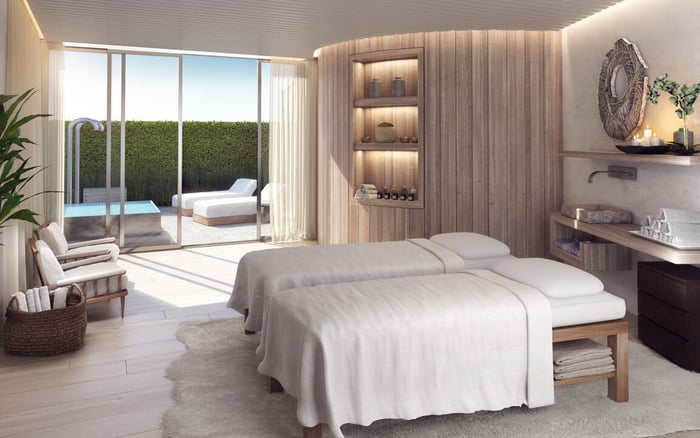
Auberge asks whether the home should be restorative rather than kinetic. Some buyers want to enjoy city dining, airports, and cultural life without living in the middle of that energy. Others want the city to be part of the residence’s identity. Neither answer is universal, but the difference should be explicit before a purchase decision is made.
For 2026 buyers, this distinction may matter more than finishes or amenity lists. A residence can be impressive and still be wrong for the buyer’s preferred rhythm. The best fit is the one that supports private time, guest patterns, commuting needs, and the emotional reason the buyer is choosing South Florida in the first place.
Many buyers considering Fort Lauderdale Beach are evaluating more than a primary address. They may be thinking about a seasonal base, a family gathering point, a long-term South Florida foothold, or a transition from a more urban residence into something calmer. In each case, the question is how the property will actually be used.
A second-home buyer should think carefully about arrival and departure. Does the residence need to feel effortless after a flight? Will guests expect a beach-focused stay? Is the buyer seeking quiet personal recovery time or a lively social base? The answers can make the difference between a residence that is admired and one that is genuinely used.
Privacy also matters. Beach, bay, and city environments each create different forms of exposure and convenience. A buyer who values calm should assess circulation, lobby feel, amenity use, valet experience, and the way the building feels during peak seasonal periods. Those observations are often more revealing than a brochure description.
Auberge should be compared by lifestyle thesis first and by specifications second. If the thesis is beach-led living in Fort Lauderdale, the comparison set should stay close to that idea. If the buyer is still open to broader coastal alternatives, the search can extend into other Broward, Miami-Dade, and Palm Beach settings.
For example, Rosewood Residences Hillsboro Beach may enter the discussion for buyers considering a quieter coastal environment north of Fort Lauderdale. That comparison helps clarify whether the buyer wants the Fort Lauderdale Beach context specifically or simply wants a refined coastal address somewhere in South Florida.
The strongest comparisons are not always the most similar projects. Sometimes a city project, a bay-oriented residence, and a beach-focused property should all be viewed because each reveals something about the buyer’s real priorities. After those priorities are clear, the right choice usually becomes more obvious.
The best-fit Auberge buyer is likely to be someone who wants the beach to be central to the residential decision. This buyer may still care about dining, airports, culture, and access to the rest of South Florida, but those factors are secondary to the atmosphere of the home itself.
That buyer should also be practical. Before making a decision, they should review current availability, building rules, association materials, residence condition, service expectations, carrying costs, and any rental or usage limitations that may apply. Those details should be verified through proper due diligence rather than assumed from reputation or marketing language.
In 2026, the most disciplined buyers will avoid choosing by prestige alone. They will choose by fit. For Auberge Beach Residences & Spa Fort Lauderdale, the core question is whether beach-oriented living is the buyer’s true priority or merely one attractive option among several.
What is the main lifestyle question for Auberge buyers in 2026? Buyers should decide whether they want a beach-led, bay-calmed, or city-centered routine before comparing individual residences.
Is this guide claiming specific prices or availability for Auberge? No. Buyers should verify current pricing, availability, and residence details through direct diligence at the time of inquiry.
Why compare beach living with bayfront living? The two can feel very different in daily use, especially for buyers deciding between sand-focused routines and calmer protected-water settings.
Why compare Auberge with city projects such as Brickell residences? City projects help buyers test whether they value urban convenience more than a restorative beach-oriented home environment.
Who is the clearest fit for Auberge? The clearest fit is a buyer who wants Fort Lauderdale Beach to be central to daily life rather than an occasional amenity.
Can Auberge work as a second-home consideration? It may, depending on how the buyer plans to use the residence, host guests, arrive seasonally, and prioritize beach time.
What should buyers verify before making a decision? Buyers should review current residence details, association materials, rules, carrying costs, and any usage limitations with qualified advisors.
Should buyers compare Auberge only with Fort Lauderdale properties? Not necessarily. Some buyers may also compare Broward, Miami-Dade, and Palm Beach options to clarify their preferred lifestyle rhythm.
What makes lifestyle fit more important than branding? Branding can attract attention, but daily comfort depends on location, pace, privacy, access, and how the residence will actually be used.
What is the central takeaway for 2026 buyers? Auberge should be evaluated as a beach-oriented lifestyle choice, with bayfront and city alternatives used to test the buyer’s true priorities.
For a confidential assessment and a building-by-building shortlist, connect with MILLION.
If branded residences are on your mind — as a home or as an allocation — we would be glad to share what we are seeing, privately.
Begin a quiet conversation