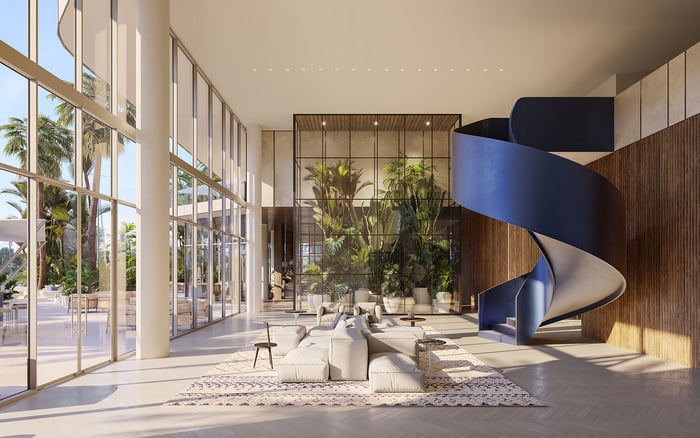
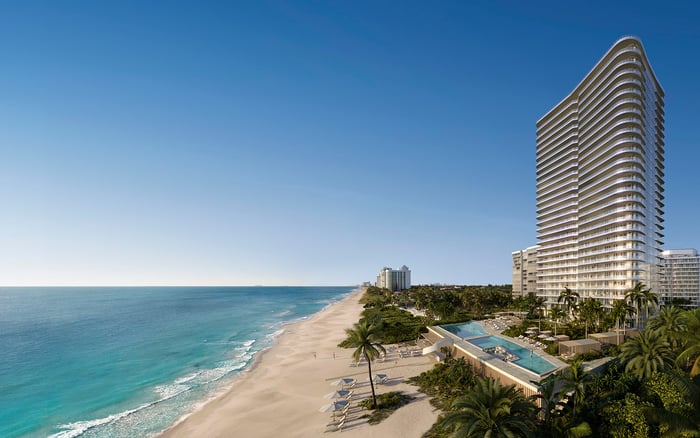
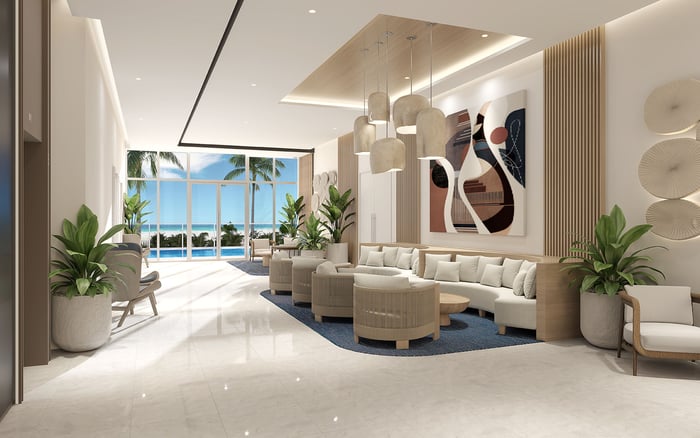
A buyer-oriented comparison of hospitality expectations and service models at two Pompano Beach waterfront residential options, framed for primary and second-home owners.
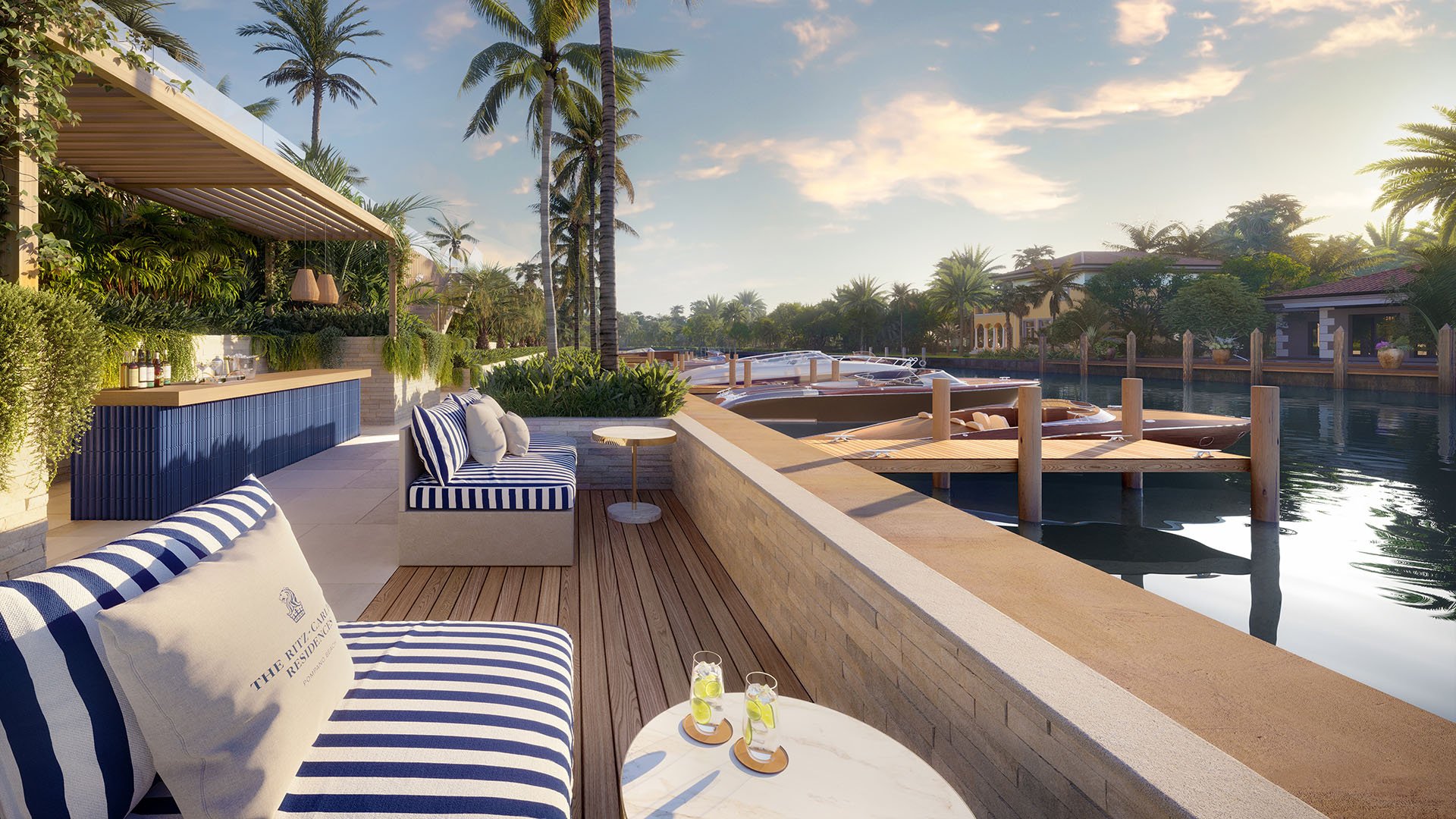
In the ultra-premium tier, buyers rarely debate whether a home is beautiful. The real differentiator is how effortlessly life runs once the door closes. Hospitality standards are the invisible architecture of comfort: the cadence of arrivals, the discretion of staff, the reliability of building care, and the consistency of the resident experience-when you are here and when you are away.
This becomes especially pointed when weighing a globally branded service culture like The Ritz-Carlton Residences® Pompano Beach against a modern oceanfront alternative such as Ocean 580 Pompano Beach. Both appeal to a sophisticated waterfront buyer, yet the hospitality promise can feel fundamentally different once marketing language is translated into day-to-day operations.
For this editorial, “hospitality” is not shorthand for glamour. It is a practical standard: how the building anticipates needs, reduces friction, protects privacy, and supports ownership across seasons.
A branded residence typically aims to deliver a recognizable service signature across markets. The advantage is predictability. The expectation is that the resident experience is curated, staff training is aligned to a defined culture, and the building’s operational posture feels like a private extension of a hotel-without turning your home into a hotel room.
A non-branded luxury condominium can read as quieter and more self-directed. That is not lesser hospitality; it is often a different model where standards are shaped by the board, management decisions, and the community’s appetite for staffing intensity. In that context, hospitality becomes adjustable: tighter, more private, more minimalist, or more amenity-forward, depending on how ownership aligns.
When comparing The Ritz-Carlton Residences® Pompano Beach and Ocean 580 Pompano Beach, the most intelligent approach is to separate (1) what is structurally embedded in the building’s service model from (2) what can be layered in through personal staff, preferred vendors, or a household manager. Buyers who take this approach avoid a common mistake: paying for a lifestyle they will not use-or underestimating the complexity of maintaining a second home without a service backbone.
The most revealing test is not the pool deck. It is arrival-especially after hours.
Branded standard cues
Tend to show up as a more formalized front-of-house presence: greeting, controlled access, package handling, visitor management, and a choreography that signals you are expected. The result is curated continuity, which matters when you travel frequently or prefer the building to “hold the line” on protocols.
Boutique condominium cues
Often emphasize seamless entry and resident autonomy. That can translate into fewer interactions and a cleaner sense of privacy, but it puts more weight on the strength of access controls, the clarity of rules, and how exceptions are handled when something unexpected occurs.
For either property, ask to observe shift changes, weekend traffic, and how the building manages deliveries, ride-share pickups, and vendor arrivals. Hospitality is not the smile. It is the system behind the smile.
Luxury buyers should translate every service claim into one of three categories:
On-site and staffed daily (consistent, predictable).
On-call through management (useful, but dependent on responsiveness).
Owner-arranged (excellent when you control it, but not a building standard).
In a brand-aligned environment, residents may expect a deeper bench of service-minded personnel and a clearer escalation path when things go wrong. In a non-branded environment, outcomes can still be excellent, but they may hinge more directly on the quality of property management and the culture set by ownership.
The diligence move is straightforward: request a written service matrix. If a service is important to your lifestyle, confirm whether it is guaranteed, optional, or simply permissible.
Many buyers in Pompano Beach are effectively managing a luxury asset that sits idle for stretches. Hospitality standards should be judged, in part, by how well the building supports “closed-house living.”
Consider:
Preventive care: How are HVAC checks, humidity risks, and routine inspections handled if you are away?
Vendor management: Can your preferred vendors be coordinated smoothly, or are there friction points that require you to be present?
Unit entry protocols: What is the chain of custody for keys, fobs, and access permissions?
Issue escalation: When a minor leak becomes urgent, who owns the next decision?
A branded residence can feel like an operational partner in these moments, which is a real form of luxury for an owner who values time above all. A boutique condominium can be equally effective with strong building engineering and disciplined management-but the playbook should be confirmed, not assumed.
Amenities are often marketed as square footage and finishes. Hospitality standards are revealed in how those spaces are run.
High-touch hospitality typically means the amenity experience is curated: towel protocols, quiet zones, guest policies, furniture condition, and the subtle authority that keeps spaces from feeling overused. Lower-touch models can feel more private and resident-led, but they depend on a community that naturally self-regulates.
Buyers should also evaluate “social calibration.” Some buildings cultivate an energetic, club-like vibe. Others prefer a quieter rhythm. Neither is superior, but each functions as hospitality because it determines whether the building feels like a retreat or a social stage.
For comparative context along South Florida’s branded and design-led corridor, it is worth noting how hospitality operates as a differentiator in projects beyond Pompano Beach, from W Pompano Beach Hotel & Residences to design-forward, service-conscious towers such as Four Seasons Hotel & Private Residences Fort Lauderdale. The point is not to compare amenities directly, but to recognize the spectrum of staffing intensity and resident expectations buyers bring with them.
Ultra-premium hospitality is discreet. The best buildings achieve a paradox: staff recognize residents and their preferences, yet the environment never feels intrusive.
Evaluate:
Visibility: Do staff stations face inward toward resident movement, or are they positioned to manage access without watching life?
Guest handling: Are guests processed with care, or with friction?
Noise and observation: Are amenity areas designed to protect privacy, or to display it?
Branded environments often excel at the “known but not exposed” feeling because it is built into cultural training. Boutique environments can be even more private by design, but they must be equally disciplined to avoid inconsistency-especially as the building matures and turnover occurs.
Hospitality standards are not free. Staffing, training, uniforms, back-of-house infrastructure, and a service culture carry real costs. The buyer’s question is not whether fees exist-it is whether those fees align with your personal usage.
If you are a full-time resident who prefers minimal interaction, you may value quiet efficiency over a broader service menu. If you travel often, you may value a building that can “hold” your home with confidence. If you entertain frequently, you may value predictable guest handling and polished amenity operations.
The smartest buyers define their personal luxury equation first, then choose the building whose operational posture matches it.
Use these questions to turn “hospitality” into verifiable standards:
Front-of-house coverage: What are the staffed hours, and what changes on holidays?
After-hours response: Who answers, what is the SLA, and what triggers escalation?
Package and delivery protocols: Cold storage, oversized deliveries, and vendor access.
Resident communication: How are incidents, maintenance shutdowns, and policy updates handled?
Unit care while away: Is there an established program, and what is included vs optional?
Amenity rules and enforcement: Guest limits, noise policies, and reservation systems.
Privacy practices: How are resident names, unit numbers, and guest logs protected?
Management continuity: How long has the current leadership been in place, and how is quality measured?
This diligence is particularly important in Pompano Beach, where many buyers balance lifestyle with asset stewardship. When hospitality is aligned, ownership feels light. When it is not, even a beautiful oceanfront residence can feel operationally heavy.
For a buyer who prioritizes consistency, formality, and a defined luxury service culture, The Ritz-Carlton Residences® Pompano Beach is naturally positioned to appeal. The brand promise, when executed well, functions as a form of lifestyle insurance: you are not reinventing standards; you are buying into them.
For a buyer who prioritizes a more self-directed experience, potentially quieter social dynamics, and a luxury environment where hospitality is expressed through simplicity and strong building operations, Ocean 580 Pompano Beach can be compelling. In these settings, owners often curate their own circle of trusted vendors and personal staff, achieving an equally high standard through customization.
The conclusion is not that one is “better.” It is that hospitality is a design decision. Your job is to choose the philosophy that best matches your life.
Is a branded residence always more service-oriented than a non-branded tower? Not always, but branded residences typically aim for more standardized service delivery.
What is the fastest way to judge hospitality quality during a tour? Watch arrivals, deliveries, and staff responsiveness rather than focusing on finishes.
Does higher staffing automatically mean better privacy? No. Privacy depends on protocols and discretion, not just headcount.
How should second-home owners weigh hospitality standards? Prioritize unit-care procedures, after-hours response, and vendor coordination.
Are amenities a reliable proxy for hospitality? Only if operations are strong; management and enforcement shape the experience.
What should I ask about packages and deliveries? Confirm handling rules, storage options, and how access is controlled for couriers.
How do guest policies affect day-to-day luxury? Clear, consistently enforced policies keep common areas calm and predictable.
Can I recreate hotel-level hospitality with private staff in any condo? You can replicate much of it, but building policies and access controls still matter.
What is the key risk when hospitality expectations are unclear? You may pay for services you do not use or lack support when you need it most.
How do I compare two buildings without getting lost in marketing language? Request a written service scope and verify what is staffed, optional, and outsourced.
For a confidential assessment and a building-by-building shortlist, connect with MILLION Luxury.
If branded residences are on your mind — as a home or as an allocation — we would be glad to share what we are seeing, privately.
Begin a quiet conversation