For Aspen owners considering Coral Gables as a Florida base, domicile is a legal conclusion built from intent, records, time, homestead choices, and consistent conduct.

For many ultra-high-net-worth households, a move from Aspen to Coral Gables is not simply a seasonal preference. It is a legal, tax, and lifestyle repositioning that requires discipline. Florida’s constitution prohibits a state income tax on residents and also prohibits estate or inheritance taxes, giving the state clear appeal for families seeking a long-term planning base.
Colorado, by contrast, taxes individual income. An Aspen-based buyer who remains Colorado-domiciled may still face Colorado state income-tax exposure, even after purchasing a Florida residence. The central question, then, is not whether a buyer owns in Coral Gables, but whether Florida has become the buyer’s true permanent home.
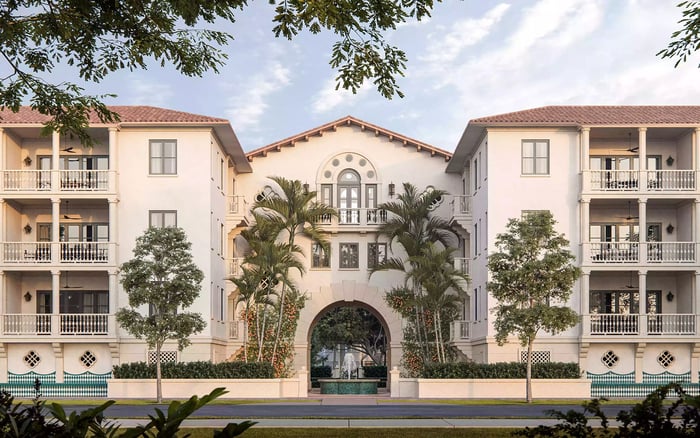
Coral Gables is a compelling setting for that decision. The city’s planned development, Mediterranean Revival identity, and historic design language offer a softer, more residential alternative to the vertical intensity of Miami’s waterfront towers. New residences such as Cora Merrick Park and Ponce Park Coral Gables can support a lifestyle shift, but the legal analysis depends on much more than architecture.
A buyer may own multiple residences: a ski home in Aspen, a pied-a-terre in New York, a yacht-access property in South Florida, and a primary apartment near family. Domicile is narrower. It is the permanent legal home, the place a person intends to return to and treat as the principal establishment.
Florida law allows a person to file a Declaration of Domicile stating that Florida is their permanent home and principal establishment. That filing can be useful evidence, but it is not a magic instrument. Domicile is generally judged through both intent and facts. If the Aspen home remains the practical center of life, if official records point elsewhere, or if family and financial ties still cluster in Colorado, a Florida declaration may not be enough on its own.
This is where Coral Gables can matter in practical terms. A home at The Village at Coral Gables, for example, may become the base for family routines, advisors, medical care, civic participation, and year-round living. The stronger the day-to-day evidence, the stronger the domicile narrative.
For a Florida domicile plan, consistency is the quiet luxury. New Florida residents must obtain a Florida driver license within 30 days of becoming employed, enrolling children in public school, or establishing residency. They must also title and register vehicles in Florida within 30 days of establishing residency, accepting employment, or placing children in public school.
Voter registration should also align with the Florida address. Tax filings, property records, homestead applications, estate-planning documents, business records, club memberships, and financial accounts should tell the same story. A buyer who says Coral Gables is home should avoid leaving a paper trail that points to Aspen as the permanent center of life.
The best approach is not theatrical. It is documentary. Keep calendars, travel records, closing statements, address changes, license records, voter information, vehicle registrations, and professional-advisor communications consistent with the claimed move. Buyers retaining an Aspen residence should expect domicile to be evaluated through facts such as time spent, official records, family ties, and whether Florida is treated as the permanent home.
Florida homestead can be a major part of the planning conversation. A qualifying permanent residence may receive a homestead exemption that generally reduces taxable value by up to $50,000, with the first $25,000 applying to all property taxes and the second $25,000 excluding school taxes. Coral Gables residents are within Miami-Dade County, so applications, exemptions, and assessments run through the county property-tax system.
The Save Our Homes assessment cap can also limit annual increases in assessed value for qualifying homestead property, subject to constitutional rules. For long-term owners, that cap can become meaningful as values rise. In the luxury segment, the homestead conversation is often less about the initial exemption amount and more about the assessment cap, creditor protection, and estate implications.
Florida homestead creditor protection can shield qualifying homestead property from forced sale, subject to constitutional acreage limits: up to 160 acres outside a municipality or one-half acre inside a municipality. For a Coral Gables buyer, the municipal acreage limit is especially relevant.
Yet homestead is not only a shield. It can also reduce estate-planning flexibility. Florida homestead cannot be freely devised if the owner is survived by a spouse or minor child. If a homestead owner dies leaving a spouse and descendants, Florida law may give the surviving spouse a life estate or, by election, a one-half tenancy-in-common interest. Married buyers, blended families, and households with minor children should treat homestead planning as a core estate matter, not a closing checklist item.
Keeping the Aspen residence is possible, but it raises the evidentiary burden. A second home can remain a cherished retreat without remaining the legal center of gravity. The question is whether conduct supports Florida as the permanent home.
Practical steps may include reducing Colorado indicia where appropriate, moving principal banking and advisory relationships to Florida, updating mailing addresses, shifting family routines, and ensuring tax filings reflect the intended domicile. If the Aspen property remains heavily used, if local professional ties remain dominant, or if records remain Colorado-centered, the buyer should address those facts before assuming the domicile transition is complete.
South Florida buyers often compare Coral Gables with Coconut Grove and Brickell when choosing the physical anchor for a Florida life. A buyer drawn to a lower-density, village-like setting may favor Coral Gables, while another may consider Four Seasons Residences Coconut Grove or The Residences at 1428 Brickell for different lifestyle reasons. The key is that the chosen residence should match actual living patterns, not merely tax-planning aspirations.
First, select a Florida home that can genuinely function as the household’s principal establishment. Second, coordinate legal, tax, and estate advice before filing documents or making public claims about domicile. Third, file a Declaration of Domicile if appropriate. Fourth, update driver license, vehicle registration, voter records, tax filings, estate documents, insurance, and mailing addresses. Fifth, evaluate homestead carefully, including both benefits and restrictions.
The most successful moves tend to be calm, complete, and internally consistent. Labels such as Investment, Second-home, or Estates & Single-Family may describe how a property search began, but they do not answer the legal question. Domicile follows the facts.
This article is general editorial information, not legal or tax advice. Florida domicile, Colorado tax exposure, homestead protection, and estate planning should be coordinated with Florida, Colorado, tax, and estate-planning counsel.
Can buying in Coral Gables establish Florida domicile? Not by itself. The purchase can support the case, but intent and conduct must show Florida is the permanent home.
Why do Aspen buyers consider Florida domicile? Florida prohibits a state income tax on residents and also prohibits estate or inheritance taxes. Those features can be important for high-net-worth planning.
Can I keep my Aspen residence after becoming Florida-domiciled? Yes, but the Aspen home should not remain the practical center of life. Time spent, records, family ties, and official documents all matter.
What is a Florida Declaration of Domicile? It is a filing stating that Florida is the person’s permanent home and principal establishment. It is useful evidence, not a standalone guarantee.
When must a new Florida resident get a Florida driver license? The 30-day rule can apply after establishing residency, becoming employed, or enrolling children in public school. Buyers should coordinate timing carefully.
Do vehicles need to be registered in Florida? New residents generally must title and register vehicles in Florida within 30 days of establishing residency, accepting employment, or placing children in public school.
What does Florida homestead exemption do? It can reduce the taxable value of a qualifying permanent residence by up to $50,000. The treatment differs between school and non-school taxes.
What is Save Our Homes? It is Florida’s assessment cap for qualifying homestead property. It can limit annual increases in assessed value, subject to constitutional rules.
Does homestead help with creditor protection? Florida homestead can protect qualifying property from forced sale, subject to acreage limits. In a municipality, the constitutional limit is one-half acre.
Can homestead complicate estate planning? Yes. If the owner is survived by a spouse or minor child, Florida homestead may restrict how the property can be devised.
For a confidential assessment and a building-by-building shortlist, connect with MILLION.
If branded residences are on your mind — as a home or as an allocation — we would be glad to share what we are seeing, privately.
Begin a quiet conversation