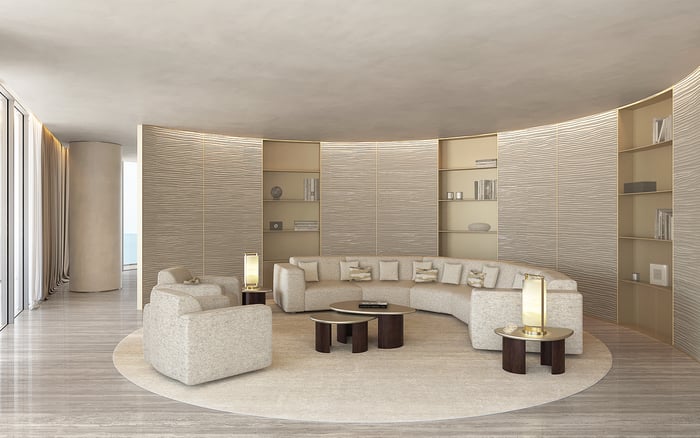
A family-focused guide to evaluating turnkey-furnished value at Armani Casa Residences Pompano Beach, from package inclusions and durability to pricing, delivery, warranties, and resale appeal.
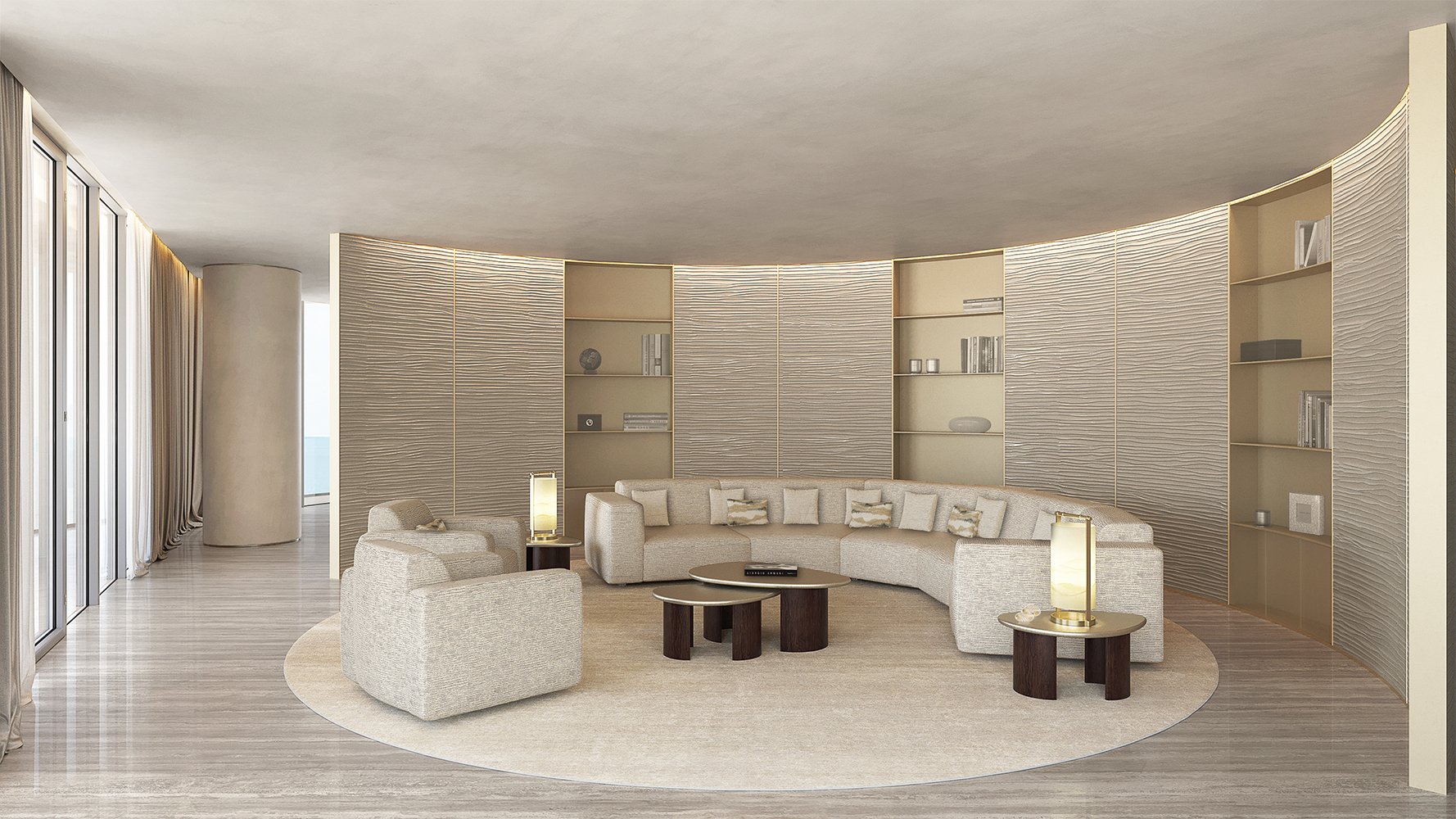
At Armani Casa Residences Pompano Beach, the family buyer’s question is not simply whether a residence can look complete on day one. The more precise question is whether a turnkey-furnished package delivers enough convenience, design cohesion, practical durability, and future resale appeal to justify any premium attached to it.
That distinction matters. A beautifully furnished residence may solve the immediate challenge of moving in, especially for out-of-state families, seasonal owners, or buyers balancing school calendars, travel schedules, and household logistics. Yet family life is not staged life. Children spill, guests arrive, grandparents stay over, balconies are used, and furniture is tested every day in ways a model residence never fully reveals.
For families tracking the Pompano Beach luxury market, turnkey value should be evaluated with the same discipline as floor plan, exposure, finishes, and building services. It is not just a design feature. It is a financial, operational, and lifestyle decision.
The first question should be direct: what, precisely, is included in the turnkey package? Families should ask for a detailed inventory covering furniture, lighting, rugs, window treatments, artwork, accessories, linens, kitchenware, and outdoor furnishings.
A vague promise of a furnished residence is not enough. The difference between a home that is truly ready for family use and one that is merely visually complete can be significant. Are mattresses included? Are children’s bedrooms furnished with practical storage? Are dining pieces sized for everyday meals as well as entertaining? Are terrace furnishings included, and are they appropriate for outdoor exposure?
A full schedule also helps buyers identify what remains their responsibility after closing. If linens, kitchenware, or balcony pieces are excluded, the family may still need to coordinate purchases, deliveries, installation, and replacements, eroding the convenience turnkey living is meant to provide.
Because the project name carries design weight, buyers should ask whether the furnishings are designed, selected, or branded by Armani/Casa, or whether the package is a separate developer or vendor furnishing program. The answer can influence perceived value, future marketability, and the buyer’s expectations for cohesion.
This is especially important for resale. A future buyer may respond differently to a residence furnished with a clearly defined Armani/Casa package than to a home furnished through an unrelated third-party program. Families should understand what will be represented in purchase documents, what can be transferred with the unit, and what language may be used later if the home is marketed as move-in ready.
The point is not to diminish the value of a separate furnishing program. A well-executed vendor package can still be elegant, practical, and efficient. The issue is clarity. In the ultra-premium market, words such as branded, selected, inspired, and included should never be treated as interchangeable.
Families should request a room-by-room furniture schedule before assigning value to any turnkey option. This schedule should identify bed sizes, seating counts, dining capacity, storage pieces, desk or study areas, and any furnishings intended for flexible rooms.
The reason is simple: family use is highly specific. A couple with two young children may need twin beds, washable fabrics, and toy storage. A multigenerational household may prioritize guest comfort, larger dining capacity, and seating that works for longer stays. A second-home owner may want lock-and-leave simplicity while still needing enough sleeping capacity for holiday weeks and visiting relatives.
The furniture schedule should be tested against real life. Can a child’s room accommodate both sleeping and study? Does the living room seat the household plus guests? Are bedside tables, dressers, and closets sufficient for extended stays? Does the dining layout support casual breakfast as well as formal entertaining?
Turnkey only has value if it serves the way a family actually lives.
Luxury buyers sometimes hesitate to ask practical questions because they can feel ordinary. They are not. For families, durability is central to long-term enjoyment and cost control.
Buyers with children should ask about fabric durability, stain resistance, replaceability, sharp edges, glass surfaces, balcony-safe furnishings, and day-to-day wear. A pale sofa may be beautiful in a sales gallery, but the right question is whether it can withstand sunscreen, snacks, pets, visiting cousins, and humid coastal use.
Families should also ask whether alternate colorways, performance fabrics, child-friendly materials, or substitutions are available within the package. The best turnkey programs balance visual discipline with selective flexibility. If every item is fixed, the buyer may face an expensive choice later: live with impractical pieces or replace designer furnishings shortly after closing.
This is where new-construction glamour meets household reality. A finished residence should feel serene, not fragile.
The financial structure of the furnishing package deserves close review. Buyers should confirm whether turnkey pricing is included in the residence price, offered as an upgrade, financed separately, or paid through a separate contract.
That answer can affect comparisons, negotiations, and expectations at closing. If the package is separate, families should understand deposit requirements, cancellation rights, delivery timing, taxes, and whether any financing treatment differs from the residence itself.
The sales team should also be asked whether the package affects closing timing, delivery obligations, punch-list rights, warranties, and remedies if items are delayed, damaged, discontinued, or substituted. A residence can close before every furnishing item is perfectly resolved, so buyers need to know what happens if a key sofa, bed, table, or outdoor piece arrives late.
This is particularly relevant in pre-construction purchasing, where renderings, model residences, and sample boards may be reviewed long before final installation. Buyers should ask whether the furnished model, renderings, or sample boards accurately represent the final deliverables for their specific floor plan.
A disciplined buyer should compare the developer’s turnkey package against an independent interior designer’s budget for equivalent quality, procurement, installation, timeline, and service accountability.
This comparison should not focus only on line-item cost. Independent design may allow greater personalization, better adaptation for children, and more control over materials. Turnkey, by contrast, may offer speed, convenience, visual cohesion, and a single coordinated path to immediate occupancy.
For a busy family, the value of not managing designers, vendors, deliveries, freight, installation, and punch-list issues from another city can be substantial. But that convenience has to be weighed against uniformity. A turnkey package may not reflect a child’s needs, a family’s entertaining style, or the specific way a household uses storage, terraces, guest rooms, and media spaces.
The best decision is rarely emotional. It is comparative.
Family buyers should ask who is responsible for post-closing maintenance, repair, replacement, and sourcing if furniture is damaged or discontinued. This is not a minor afterthought. Designer furnishings can be difficult to replace quickly, and discontinued pieces may complicate the effort to preserve a cohesive interior.
Ask whether vendors, item numbers, fabric specifications, warranty contacts, and care instructions will be provided. Ask how to source replacement cushions, hardware, upholstery, or outdoor covers. Ask whether a service pathway exists after closing or whether the family must manage every future issue independently.
Turnkey value is highest when the package remains manageable after the first season of use.
A furnished residence can be compelling to future buyers if it reads as complete, well maintained, and easy to occupy. For seasonal families, international buyers, or parents relocating under time pressure, move-in readiness can reduce friction.
Still, resale value depends on condition and relevance. If furnishings are worn, too delicate, or poorly matched to family living, the package may lose its appeal. Buyers should ask whether the furnishings are expected to transfer with the unit and whether the package may help future buyers perceive the home as turnkey rather than merely furnished.
At Armani Casa Residences Pompano Beach, the stronger family argument for turnkey is not that design has been handled. It is that design, durability, timing, contract clarity, and future presentation have been aligned.
What should families ask first about a turnkey package? Ask for a complete written inventory of all included furniture, lighting, rugs, window treatments, accessories, linens, kitchenware, and outdoor pieces.
Is every residence necessarily turnkey-furnished? Buyers should not assume that. They should confirm whether the specific residence and contract include a turnkey package or offer it as an upgrade.
Why does the Armani/Casa distinction matter? Families should clarify whether furnishings are Armani/Casa designed, selected, or branded, or part of a separate developer or vendor program.
What is a room-by-room schedule? It is a detailed list of furnishings by room, including bed sizes, seating capacity, storage, dining layouts, and flexible-use pieces.
What durability questions matter most for children? Ask about performance fabrics, stain resistance, sharp edges, glass surfaces, replaceability, and balcony-safe outdoor furnishings.
Can families request substitutions? They should ask whether alternate colorways, child-friendly materials, performance fabrics, or custom substitutions are available.
How should pricing be reviewed? Confirm whether the package is included, an upgrade, separately financed, or handled through a separate contract.
What happens if furnishings are delayed? Buyers should ask about delivery obligations, punch-list rights, warranties, substitutions, and remedies for delayed or damaged items.
Does turnkey furnishing help resale? It can, if the package transfers with the unit and helps future buyers view the residence as move-in ready.
Should buyers compare an independent designer? Yes. Compare cost, quality, timeline, installation, personalization, and service accountability before assigning value to turnkey convenience.
To compare the best-fit options with clarity, connect with MILLION.
If branded residences are on your mind — as a home or as an allocation — we would be glad to share what we are seeing, privately.
Begin a quiet conversation