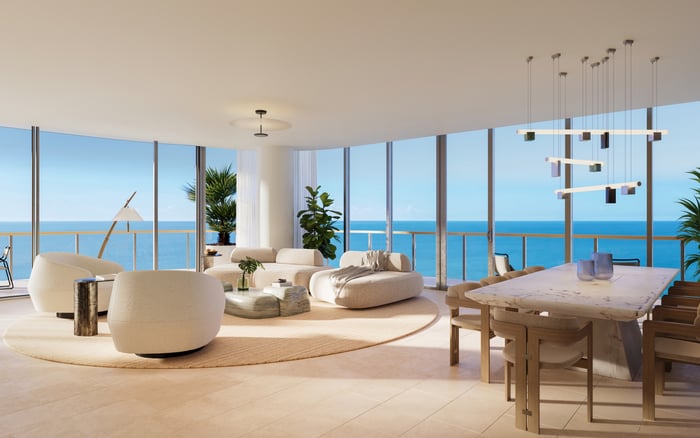
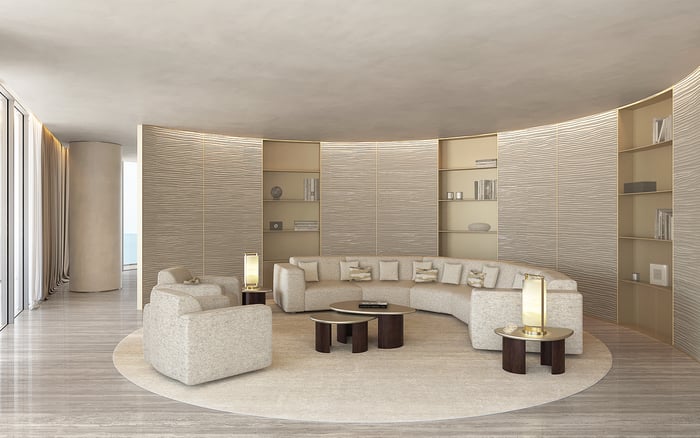
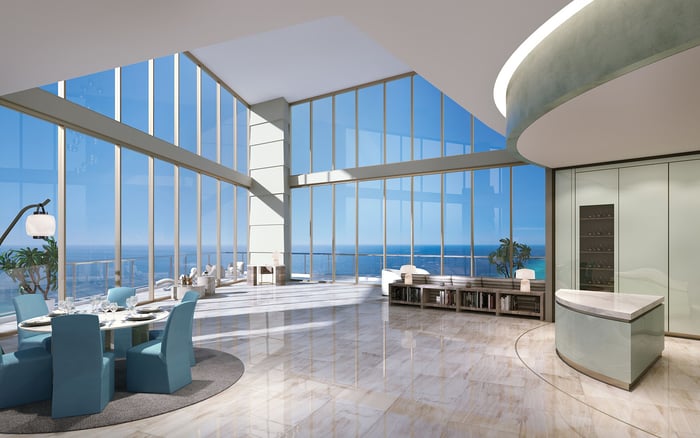
For collectors comparing Pompano Beach residences, the decisive questions extend beyond aesthetics to conservation, display, security, access, and long-term building operations.
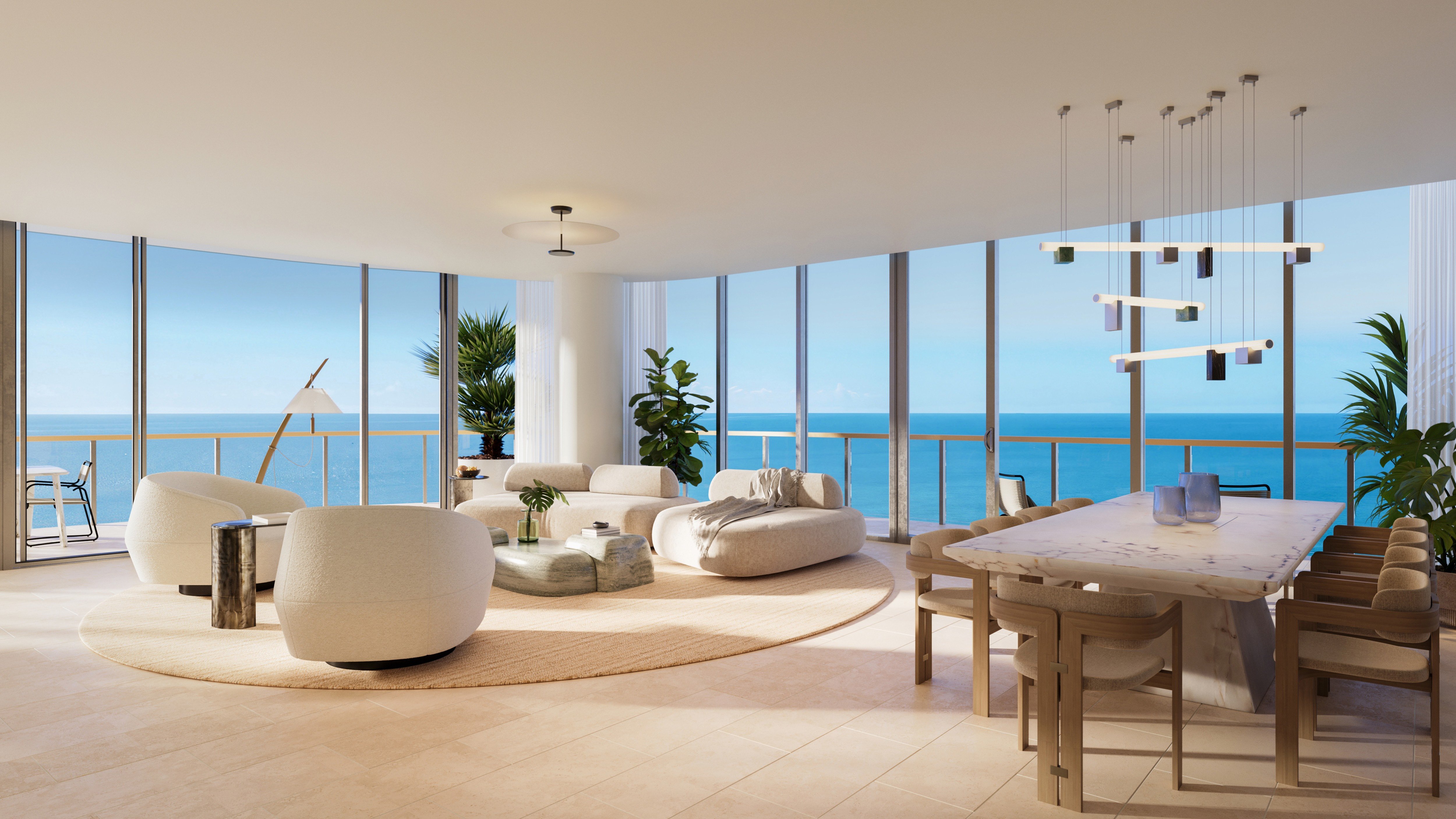
For an art collector, a coastal condominium is more than a backdrop. It is a long-term environment for objects of cultural, personal, and financial significance. That distinction reshapes the buying brief. Views, finishes, and amenities remain important, but so do light exposure, climate stability, controlled access, installation logistics, and ongoing property oversight.
That is the appropriate lens for comparing Armani Casa Residences Pompano Beach, Casamar, and Waldorf Astoria Residences Pompano Beach. Buyers can evaluate each as a potential setting for collecting, displaying, preserving, and privately enjoying art without assuming that a project name or brand confirms specific technical capabilities.
When considering Armani Casa Residences Pompano Beach, collectors should determine whether the proposed interior language supports their works or competes with them. Furniture, materials, decorative elements, sightlines, and lighting should be reviewed against the collection rather than assessed in isolation.
For Waldorf Astoria Residences Pompano Beach, buyers should request written details about residential operations. Relevant questions include how access is controlled, how outside specialists are admitted, and whether applicable procedures can accommodate the collection’s security and handling profile.
Casamar belongs in the same buyer conversation, but collectors should base their decision on current plans, governing documents, and direct written confirmations. Rather than assume technical capabilities, ask how a specific residence and its operating framework would support the collection in practice.
Branding may suggest a design or service philosophy, but it cannot replace object-specific due diligence.
Coastal living presents a beautiful but demanding context. Collectors should examine how local conditions interact with a residence’s building systems and the requirements of individual works. Paintings, works on paper, photography, textiles, wood, and mixed-media pieces may have different tolerances, making a single whole-home assumption insufficient.
Request precise information about HVAC zoning, humidity management, ultraviolet protection, backup power, and which portions of the residence remain supported during an interruption. Ask whether conditions can be monitored independently and whether the proposed placement of sensitive works is compatible with glazing and daylight exposure.
A conservator can translate those answers into collection-specific guidance. This is particularly valuable before selecting a floor plan, approving lighting, or committing to a prominent sun-facing installation.
The strongest collector residences establish visual rhythm without treating every wall as display space. Before purchase, map likely sightlines, wall dimensions, ceiling conditions, circulation paths, and the relationship between the art and exterior views. Consider where contemplative viewing is possible and where reflections, direct light, or daily traffic may distract.
Design and architecture decisions should begin with an inventory of priority works. Large pieces may require clear installation routes and appropriately planned support, while sculpture may demand spatial clearance and deliberate lighting. A coordinated aesthetic can provide coherence, but the collection should retain authority within the room.
Buyers expanding their Pompano Beach tour may also consider The Ritz-Carlton Residences® Pompano Beach as a local point of comparison. The useful exercise is not to rank brand names, but to compare how each candidate addresses the owner’s display and operational needs based on verified documentation.
Security should be examined as a sequence, from arrival at the property through final placement inside the residence. Ask how vendors are credentialed, whether installers require advance approval, which routes can accommodate oversized works, and how temporary access is supervised. Confirm elevator dimensions, loading procedures, delivery hours, insurance requirements, and renovation rules before closing.
The same discipline applies after installation. Collectors should understand who may enter the residence, how service visits are documented, and whether property personnel can coordinate with conservators, art handlers, insurers, or private security teams. Preservation and security should be assessed together with design compatibility.
Before committing, obtain written answers on environmental controls, backup power, glazing, freight access, private storage, installation policies, vendor procedures, and insurance documentation. Review the unit’s proposed art walls with both an interior designer and an art professional. If a work is unusually large, fragile, or valuable, test its entire route into the residence rather than relying on nominal room dimensions.
Finally, distinguish what is included from what must be privately designed. Specialized lighting, monitoring, shades, reinforced mounting locations, or supplemental controls may fall within the owner’s scope. The best choice is the residence that can support the collection discreetly and consistently without compromising the pleasures of coastal life.
What makes a residence suitable for an art collector? It should support display, environmental stability, secure access, careful handling, and reliable long-term oversight.
Is a coastal residence inherently unsuitable for sensitive art? No. Suitability depends on the works, their placement, and the verified performance of the residence and building systems.
What should buyers verify about HVAC? Confirm zoning, operating ranges, monitoring options, maintenance responsibility, and system performance during power interruptions.
Why does glazing matter to a collection? Glazing and window treatments influence daylight and ultraviolet exposure, which may affect where sensitive works can be displayed.
How should collectors assess Armani Casa’s design identity? Consider whether the proposed aesthetic complements the collection and allows important works to remain visually dominant.
What should buyers examine at Waldorf Astoria Residences Pompano Beach? Request documentation addressing controlled access, property oversight, vendor coordination, and relevant residential procedures.
How should Casamar be evaluated for art ownership? Review current plans and policies, then obtain written confirmation of systems, access procedures, and installation requirements.
Should an art conservator participate before closing? Yes, particularly when the collection includes light-sensitive, humidity-sensitive, oversized, or materially complex works.
Which logistics should be tested in advance? Verify loading access, elevator dimensions, turning clearances, delivery hours, approvals, and the route into the chosen room.
What is the best way to shortlist comparable options for touring? Start with location fit, delivery status, and daily lifestyle priorities, then compare stacks and elevations to validate views and privacy.
If you'd like a private walkthrough and a curated shortlist, connect with MILLION.
If branded residences are on your mind — as a home or as an allocation — we would be glad to share what we are seeing, privately.
Begin a quiet conversation