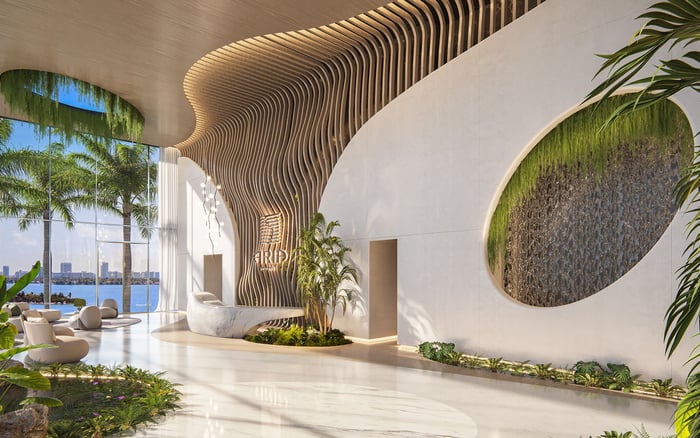
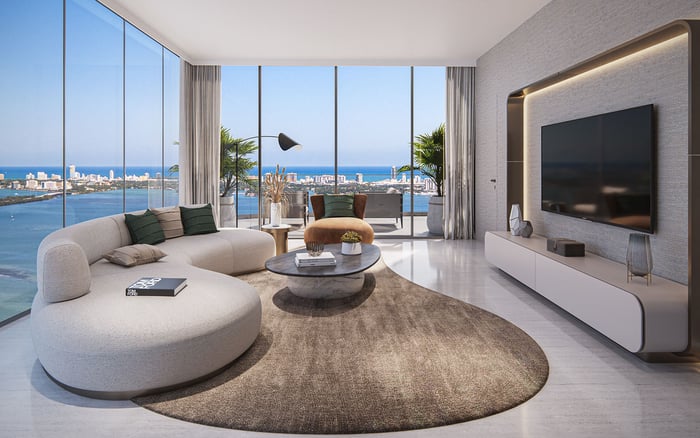
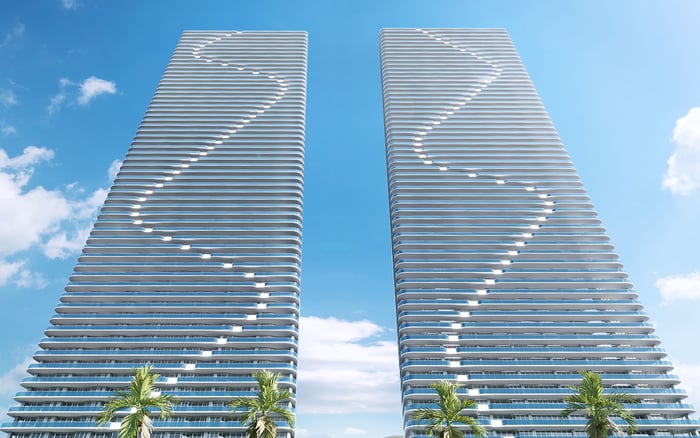
A buyer-focused look at why seawall condition belongs at the center of Aria Reserve Miami due diligence, where Biscayne Bay views, resilience, and long-term liquidity meet.
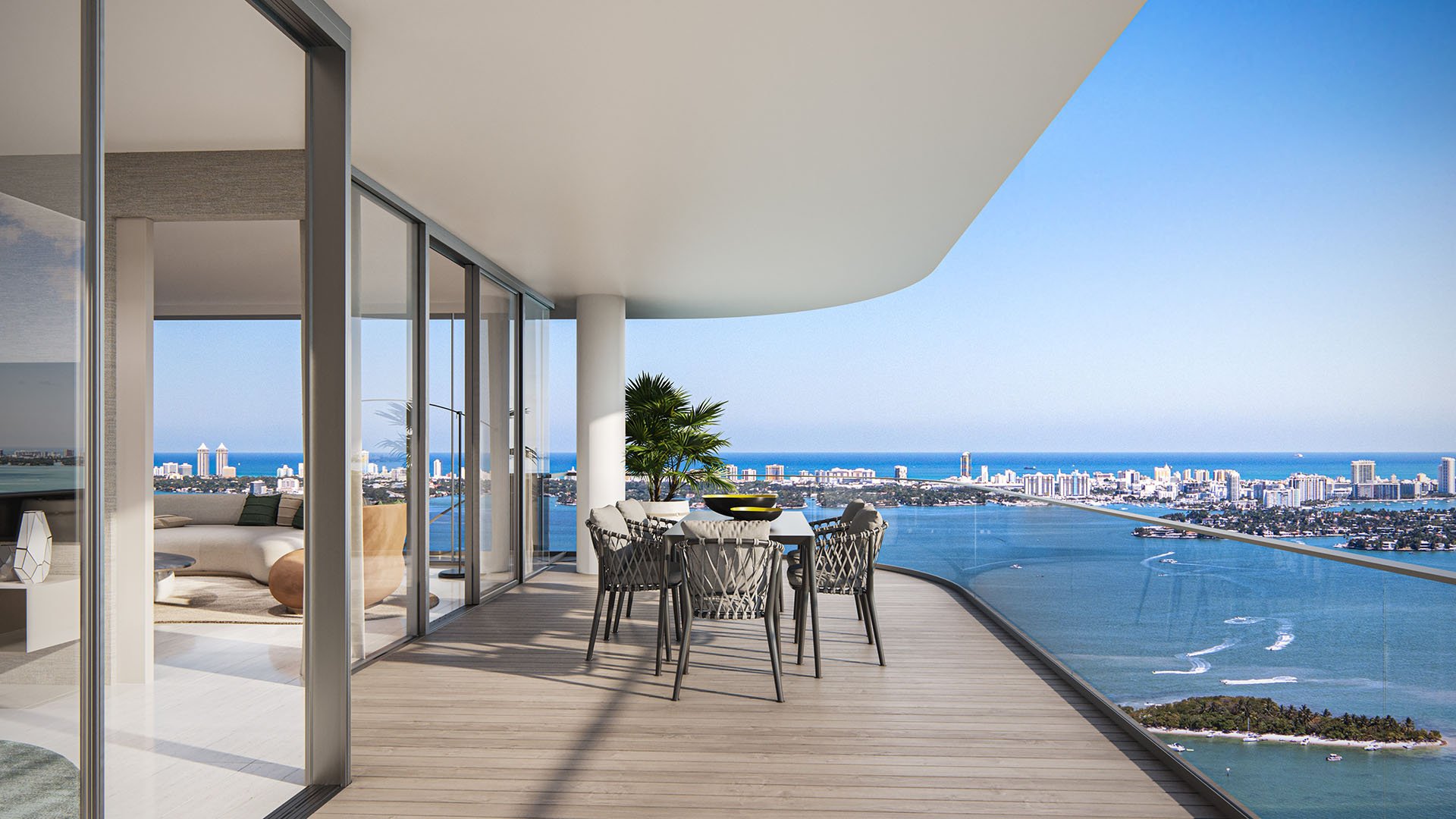
Aria Reserve Miami is best understood as a direct Biscayne Bay proposition. Its appeal is tied to Edgewater’s waterfront identity, panoramic outlooks, and the emotional clarity of living close to the water. Yet for the most careful buyer, the bay view is only the visible half of the story. The other half is quieter, more technical, and often more consequential: the condition of the waterfront edge.
In Miami, luxury has long been associated with arrival, finishes, service, and architecture. For direct bayfront assets, that definition is evolving. Quiet luxury now includes infrastructure that performs without calling attention to itself. A seawall that is properly maintained, supported by thoughtful drainage, and compatible with future resilience needs can matter as much to a sophisticated buyer as marble, millwork, or a private terrace.
That does not mean buyers should assume a problem. It means they should ask sharper questions. Aria Reserve Miami sits within an Edgewater context where new waterfront development exists near older bayfront parcels, each with its own infrastructure history. The prudent approach is to distinguish the tower’s lifestyle offering from the site’s underlying waterfront engineering profile.
For many buyers, seawall review comes late, after floor plan selection, view analysis, and amenity comparison. For a direct Biscayne Bay condominium, that sequence deserves reconsideration. The seawall is not merely a technical feature at the perimeter. It is part of the property’s long-term relationship with tides, surge, drainage, maintenance, and confidence.
A strong waterfront edge can support the perception of stability. A weak or uncertain one can introduce questions that ripple through ownership experience, future assessments, insurance conversations, and resale psychology. In the ultra-premium segment, uncertainty itself has a cost. Buyers are not only purchasing a residence. They are purchasing the expectation that the asset will remain composed over time.
For Aria Reserve Miami, the quiet-luxury case is therefore practical. Seawall quality can affect perceived durability as much as views, finishes, and amenities. The best waterfront assets tend to protect value discreetly: not through drama or visible engineering, but through the absence of recurring surprises.
Edgewater has become one of Miami’s most compelling waterfront neighborhoods because it places high-rise living directly against Biscayne Bay while remaining close to the city’s cultural, design, and business corridors. That combination gives Aria Reserve Miami a lifestyle profile rooted in both convenience and openness. The water is not incidental. It is central to the daily experience.
That same setting makes infrastructure more important, not less. Bayfront living introduces exposure to salt air, seasonal weather, water movement, and long-term wear along the shoreline. A buyer evaluating Aria Reserve Miami should look beyond the serenity of the view and consider how the property is designed to manage the edge beneath it.
This is especially relevant for buyers comparing Edgewater with other waterfront submarkets. A water-view residence may deliver immediate beauty, but the long-term ownership experience depends on what supports that beauty. In a new-construction context, buyers often focus on amenity innovation and architectural freshness. They should also ask whether the waterfront condition, drainage logic, and maintenance planning align with the same standard of quality.
The right questions are not accusatory. They are disciplined. A buyer should seek clarity on seawall elevation, material condition, permitting history, drainage design, and future upgrade capacity. Each point helps frame how the asset may perform over a long holding period.
Elevation matters because the relationship between the bay and the property edge is dynamic. Material condition matters because even robust systems require inspection and maintenance. Permitting history can reveal whether prior improvements, repairs, or planned upgrades were handled through proper channels. Drainage design is essential because water management is not only about the bay side. It also concerns how rain, runoff, and site systems behave during intense weather.
Future upgrade capacity may be the most overlooked question. Luxury buyers increasingly think in generational terms. They want to know whether a property has the flexibility to adapt as expectations for waterfront resilience continue to rise. The most desirable answer is rarely theatrical. It is measured, documented, and aligned with competent long-term stewardship.
Quiet luxury is often described as restraint: fewer logos, better materials, subtler design. In waterfront Miami real estate, it also means lower drama. A well-considered seawall does not need to announce itself. Its value is revealed through fewer repair surprises, stronger buyer confidence, and a more composed ownership narrative.
This is where Aria Reserve Miami becomes especially interesting for legacy-minded buyers. The project’s lifestyle promise is connected to its bayfront setting, but its long-term appeal should be judged through both pleasure and resilience. The balcony, the view, the morning light, and the waterline all belong to the same experience. If the edge is credible, the view feels more permanent. If the edge is uncertain, the view becomes a question rather than a certainty.
For investment-minded purchasers, seawall condition is also a liquidity issue. Future buyers may scrutinize infrastructure more closely than previous generations did. A property that can answer those questions cleanly may enjoy a stronger resale conversation than one that relies only on aesthetics.
A sophisticated Aria Reserve Miami buyer should read the waterfront in layers. The first layer is emotional: the openness of Biscayne Bay, the sense of distance from urban intensity, and the daily ritual of light over water. The second layer is functional: how the site handles water, weather, access, and maintenance. The third layer is financial: how these conditions may influence future confidence, ownership costs, and liquidity.
None of this diminishes the project’s lifestyle appeal. It refines it. The most compelling bayfront condominiums are not merely beautiful from the residence outward. They are coherent from the ground plane to the skyline. Their infrastructure supports the calm that the architecture promises.
For buyers who value discretion, this is the point. The highest form of luxury is often what does not interrupt life. A resilient waterfront edge allows the residence to remain what it was intended to be: a place of quiet, view, and ease.
Buyers should make seawall and drainage questions part of the early advisory process, not a late-stage technical addendum. The conversation should include counsel, inspection professionals where appropriate, and a careful review of available property documents. The goal is not to turn a lifestyle purchase into an engineering seminar. The goal is to ensure that the lifestyle is supported by an infrastructure narrative as refined as the residence itself.
In the best scenarios, these questions produce reassurance. They clarify responsibilities, future planning, and the asset’s readiness for long-term ownership. In less clear scenarios, they reveal where further review is warranted before a buyer commits.
That discipline is the essence of modern Miami luxury. Aria Reserve Miami offers the draw of direct Biscayne Bay living in Edgewater. The most informed buyers will pair that draw with a precise understanding of the waterfront edge that makes the experience possible.
Why does seawall condition matter at Aria Reserve Miami? Because the project’s value proposition is closely tied to direct Biscayne Bay living, the waterfront edge becomes part of long-term confidence.
Is seawall review only relevant for single-family homes? No. Condominium buyers on direct bayfront sites should also understand how the property manages waterfront exposure and maintenance.
What should buyers ask about first? Buyers should ask about seawall elevation, material condition, permitting history, drainage design, and future upgrade capacity.
Does a luxury tower eliminate waterfront infrastructure risk? Not automatically. The residence and amenity package should be evaluated separately from the site’s underlying waterfront engineering profile.
How does Edgewater affect the due-diligence lens? Edgewater includes significant new waterfront development near older bayfront parcels, so infrastructure context is especially important.
Is this mainly about storms? Storms are part of the conversation, but tides, salt exposure, drainage, maintenance, and long-term wear also matter.
Can seawall condition affect resale? Yes. Clear infrastructure answers can support buyer confidence, while uncertainty may complicate future liquidity discussions.
Should buyers assume there is a seawall issue? No. The point is not to assume a defect, but to verify the condition and planning behind the waterfront edge.
How does this relate to quiet luxury? Quiet luxury in waterfront Miami includes invisible systems that reduce surprises and preserve the calm of ownership.
What is the best way to shortlist comparable options for touring? Start with location fit, delivery status, and daily lifestyle priorities, then compare stacks and elevations to validate views and privacy.
For a discreet conversation and a curated building-by-building shortlist, connect with MILLION.
If branded residences are on your mind — as a home or as an allocation — we would be glad to share what we are seeing, privately.
Begin a quiet conversation