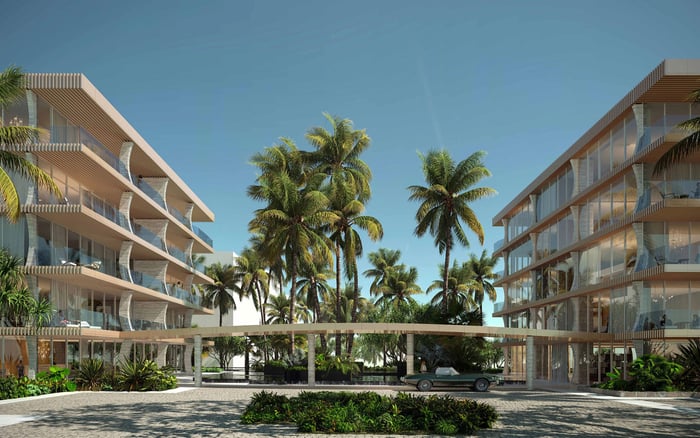
A discreet buyer’s guide to evaluating private-pool maintenance, legal classification, waterproofing, insurance, utilities, and long-term obligations at Aria Reserve Miami before contract.
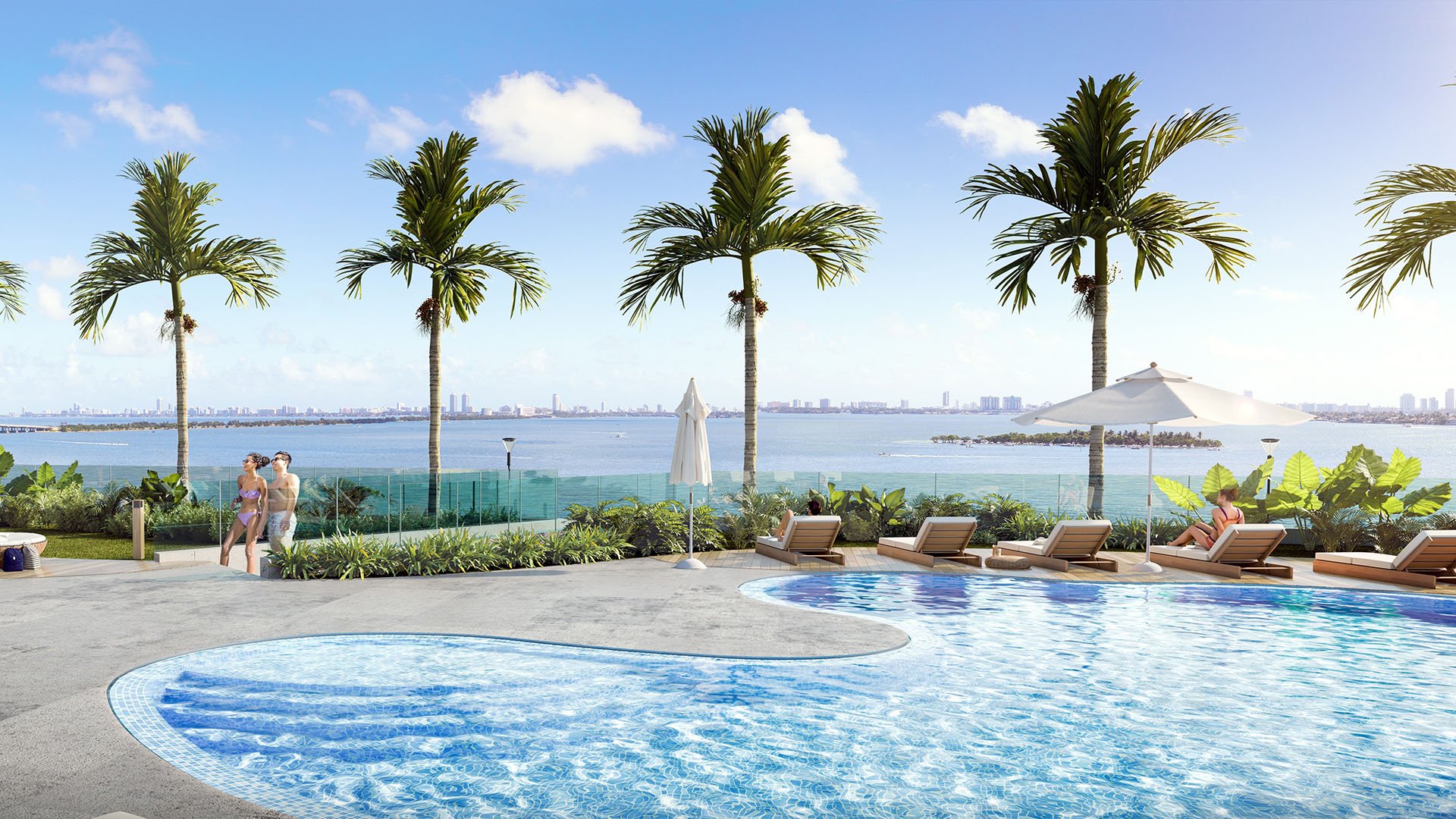
At Aria Reserve Miami, the appeal begins with water: a luxury waterfront condominium setting in Edgewater where bay views, private outdoor space, and elevated living define the first impression. For some residences, a private pool makes that impression more personal, transforming a terrace into a self-contained retreat above the city and Biscayne Bay.
Sophisticated buyers, however, do not evaluate a private pool solely as an amenity. They evaluate it as a long-term maintenance obligation, a legal classification question, an insurance issue, and a building-systems matter. In a high-rise condominium, a pool is not comparable to one behind a detached home. It is integrated into a shared structure, surrounded by private residences, common systems, waterproofing assemblies, drainage paths, and association rules.
That is why private-pool maintenance belongs in the pre-contract review, not in the post-closing file. The objective is not to dilute the pleasure of ownership. It is to protect it.
Aria Reserve Miami sits within the broader Edgewater story: bayfront condominium living, skyline proximity, and a lifestyle shaped by light, outlook, and private outdoor space. A water-view residence with a private pool may offer an unusually compelling daily rhythm, especially for buyers who value open-air living without leaving home.
The more distinctive the amenity, the more exacting the due diligence should be. Private water on a high-rise terrace raises practical questions: Who maintains it? Who pays if equipment fails? Who inspects waterproofing? Who has access in an emergency? How are utilities metered? Which documents control the answers?
For new-construction buyers, the contract period is the cleanest time to align those answers with counsel, an engineer, an insurance advisor, and the condominium team. A beautiful private pool can strengthen the ownership experience, but only if the obligations attached to it are visible, written, and understood.
The first issue is legal classification. Before contract execution, buyers should clarify whether the private pool is part of the unit, a limited common element, or subject to another condominium-document classification. This distinction can influence responsibility for maintenance, repair, replacement, access, insurance, and cost allocation.
The review should include the condominium declaration, bylaws, rules and regulations, maintenance matrix, warranty materials, and any private-pool addenda. Buyers should not rely on verbal summaries when the pool is physically connected to the building envelope. The written documents should identify who controls routine care and who is responsible for future work.
A private pool may feel visually inseparable from the residence, but its legal treatment may be more nuanced. If the pool is a limited common element, for example, the owner may have exclusive use while certain structural or building-related responsibilities remain governed by association documents. If it is treated differently, the obligations may shift. The answer should be confirmed in writing.
A private terrace with a pool is not simply outdoor square footage. It is a managed environment that may involve drainage, waterproofing, pumps, equipment, chemicals, and periodic inspection. Buyers should ask whether routine cleaning, chemical treatment, and equipment servicing are handled by the owner, the association, or an approved vendor.
The contract review should also determine whether the association can mandate approved pool contractors. In a high-rise condominium, a preferred or required vendor may be intended to protect waterproofing, drainage, mechanical systems, or neighboring residences. That consistency may be beneficial, but buyers should understand the cost structure and scheduling implications.
Access rights deserve equal attention. The association may need to reach the residence or terrace for inspection, maintenance, or emergency repairs. Buyers should ask how much notice is required, what happens in urgent conditions, and whether access protocols differ when the owner is away. For a second-home buyer, this can be especially important.
Private-pool maintenance is not a single expense. It is a collection of recurring and eventual obligations. Buyers should request details on who pays for chemical treatment, cleaning, pump and equipment servicing, leak investigation, waterproofing work, resurfacing, and any future replacement or repair of components.
The operating-cost question should also include utilities. Buyers should verify whether pool equipment is individually metered or tied into common building systems. If power or water usage flows through the unit account, the owner may experience the cost directly. If systems are shared, costs may appear through assessments or operating budgets, depending on the documents.
Reserve funding is another point for counsel and the association to clarify. If future waterproofing or major repairs are treated as association obligations, buyers should understand how those costs are anticipated. If the owner bears them, the buyer should budget accordingly from the first year of ownership.
The goal is not to predict every future repair. It is to determine whether the documents create a clear framework for paying for the known categories of care.
A private pool can create added water-intrusion exposure, so buyers should request waterproofing specifications and warranty terms before signing. This is especially important in Miami, where humidity, salt air, wind-driven rain, and hurricane-season conditions place additional stress on exterior components.
An engineer can help buyers interpret technical materials, including structural-load considerations, waterproofing assemblies, drainage design, and equipment location. The question is not whether a private pool is inherently problematic. It is whether the building documentation provides enough clarity for a buyer to understand how the pool is designed, protected, inspected, and repaired over time.
Drainage should be evaluated as a system, not treated as an afterthought. Buyers should ask where pool overflow, terrace runoff, and stormwater are directed, and whether any maintenance responsibilities attach to drains or related components. In a coastal high-rise, water management is central to the quality of the residence.
Insurance review is essential because private pools may affect liability, water-damage exposure, and owner coverage requirements. A buyer should speak with an insurance advisor before contract execution, not merely before closing, so any policy implications can be considered while there is still time to negotiate or request clarification.
Questions should include whether the owner needs additional liability coverage, whether water damage arising from the private pool is treated differently, and how the master policy interacts with the owner’s policy. Buyers should also ask whether guests, service vendors, and temporary absence from the residence create any special coverage considerations.
In ultra-luxury ownership, risk management is part of discretion. The best outcome is a private pool that feels effortless because its legal, technical, and insurance framework has been addressed in advance.
A private pool can enhance resale appeal in the ultra-luxury segment. It is visually powerful, emotionally resonant, and aligned with the South Florida preference for indoor-outdoor living. At Aria Reserve Miami, where bayfront living is central to the value proposition, private water can make a residence feel more complete.
Resale confidence, however, depends on clarity. Future buyers will ask the same questions: who maintains the pool, who pays for repairs, how waterproofing is warranted, what the insurance requirements are, and whether the association controls vendors or access. If the current buyer resolves those issues before contract, the residence may be easier to explain later.
The most compelling private-pool residences are not merely rare. They are well documented.
Before signing, buyers should create a concise due-diligence file. It should include the condominium declaration, bylaws, rules, maintenance matrix, warranty documents, private-pool addenda, insurance guidance, metering information, access protocols, equipment location, waterproofing details, drainage information, structural-load considerations, and reserve-funding questions.
Each item should be assigned to the right advisor. Counsel should interpret legal responsibility. An engineer should review technical design. An insurance advisor should address liability and water-damage exposure. The association or developer representative should clarify operating protocols and required vendors where applicable.
This is the difference between buying a dramatic amenity and buying a well-understood ownership structure. The private pool should elevate the residence, not introduce uncertainty.
Is a private pool at Aria Reserve Miami only a lifestyle amenity? No. Buyers should also treat it as a long-term maintenance, insurance, and condominium-governance obligation.
What is the first document question to ask? Clarify whether the pool is part of the unit, a limited common element, or governed by another condominium classification.
Who should confirm maintenance responsibility? Counsel should review the documents, while the association or project team should confirm procedures in writing.
Which recurring costs should buyers review? Ask about chemical treatment, cleaning, equipment servicing, utilities, inspections, and any required vendor arrangements.
Why does waterproofing matter so much? A private pool is integrated into the building structure, so waterproofing and drainage are central to risk management.
Can the association require specific pool contractors? Buyers should ask whether approved vendors are mandatory and how that affects cost, scheduling, and access.
Should insurance be reviewed before contract? Yes. Private pools may affect liability, water-damage exposure, and owner coverage requirements.
Does Miami’s coastal environment change the analysis? Yes. Humidity, salt air, wind-driven rain, and hurricane-season conditions can increase exposure for exterior components.
Can a private pool help resale value? It may strengthen appeal in the ultra-luxury segment, but unclear obligations can reduce buyer confidence.
What should a buyer do before signing? Build a due-diligence checklist covering documents, waterproofing, drainage, equipment, access, insurance, and maintenance governance.
To compare the best-fit options with clarity, connect with MILLION.
If branded residences are on your mind — as a home or as an allocation — we would be glad to share what we are seeing, privately.
Begin a quiet conversation