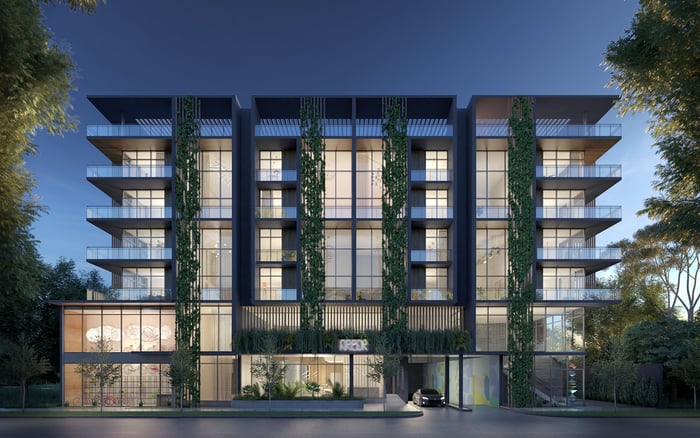
Arbor and Mr. C Tigertail share a reported six-month lease minimum, yet their public pet summaries leave important details unresolved. Buyers should reconcile association documents, accommodation procedures, and unit-specific terms before treating either residence as a seasonal or pet-compatible purchase.
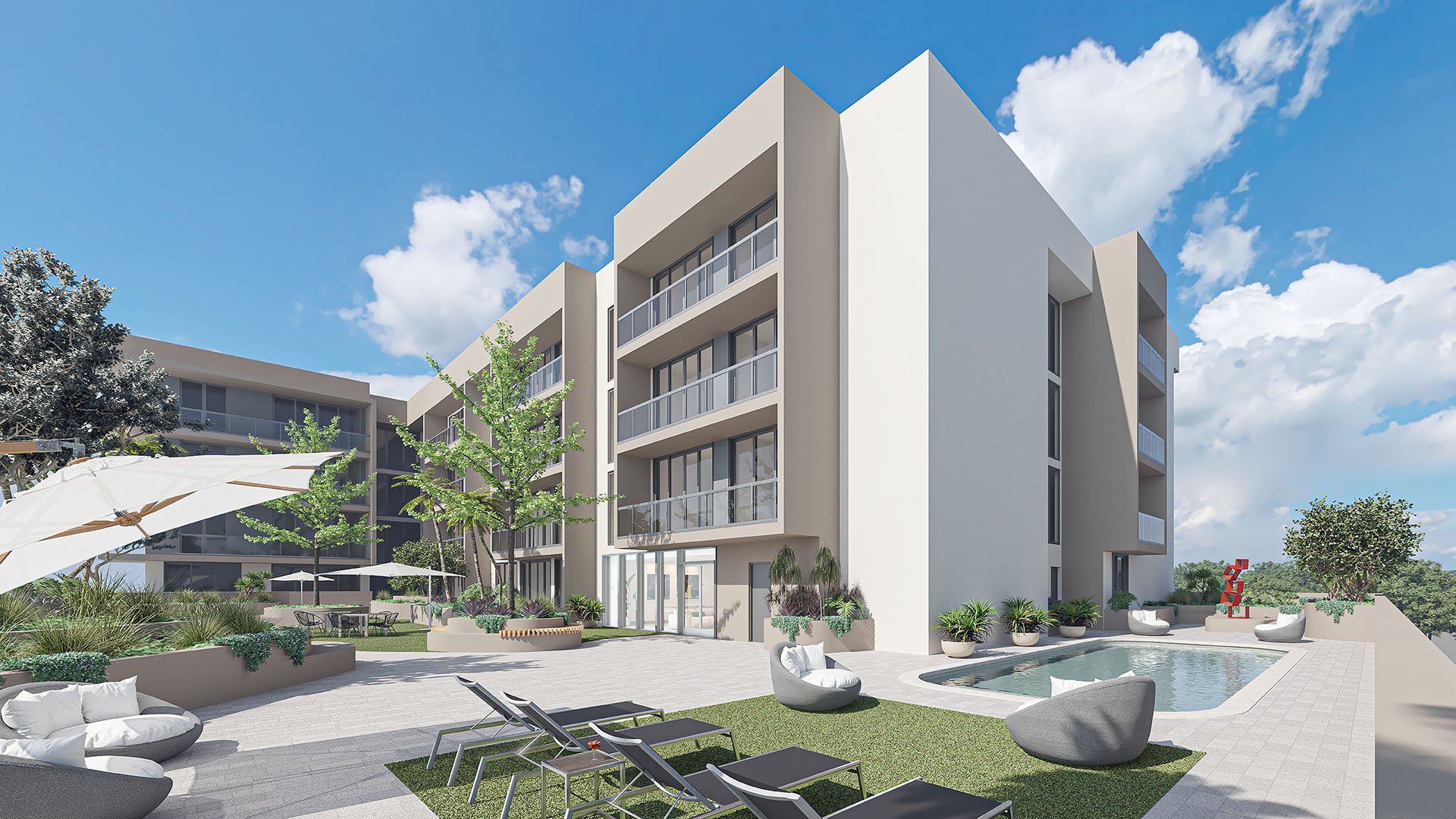
For buyers comparing Arbor Coconut Grove with Mr. C Tigertail Coconut Grove, the decisive questions may be less visual than operational. Both properties occupy the Coconut Grove residential market, and both carry a reported six-month minimum lease term. Their pet policies, however, leave unresolved several issues that matter to an owner arriving with an animal, requesting an accommodation, or planning to spend only part of the year in Miami.
That distinction deserves attention before signing a contract. A building may be broadly described as pet friendly while retaining limits on breed, number, weight, registration, access, or conduct. A unit owner may also impose lease conditions stricter than the association’s baseline. A prudent buyer therefore examines three layers separately: association rules, accommodation procedures, and the terms attached to the particular residence.
A pet-friendly description is an invitation to investigate, not a substitute for governing documents.
Arbor is positioned as a boutique residential condominium rather than a transient-stay property. Its pet policy is listed as “Pets over 20lb,” language that suggests some accommodation for larger animals. A rental offering at the property has also stated that dogs are allowed.
Neither point constitutes a complete operating rule. The policy language does not specify the number of animals permitted, a maximum weight, breed restrictions, fees, species limits, or procedures for moving through common areas. The unusual “over 20lb” phrasing should not be treated as a comprehensive threshold without reviewing the current declaration, rules, amendments, application materials, and any guidance issued by the association.
For an owner with a large dog, multiple animals, or a household that changes seasonally, the useful question is not simply whether pets are accepted. It is whether the specific animal and intended occupancy pattern comply with the current documents-and whether registration or approval must occur before arrival.
Mr. C Tigertail’s building-level policy permits pets for owners and renters but does not define weight, breed, species, or animal-count limits. Individual rental offerings demonstrate why that broad permission merits closer scrutiny.
Some units have been marketed with pets allowed subject to possible restrictions, including breed restrictions. Other offerings have stated that dogs and cats are allowed without disclosing limits or fees. At least one unit has been offered with a no-pet condition. These positions are not necessarily contradictory. They illustrate the difference between what an association may allow and what an individual landlord may accept under a lease.
A purchaser who expects future rental flexibility should verify both sides of that equation. Association permission establishes the outer framework; a lease can be more restrictive. The same review discipline is useful when comparing nearby Grove residences such as Park Grove Coconut Grove, though no policy comparison should be inferred without examining that property’s current documents.
A service-animal or emotional-support-animal request should not be evaluated solely through a standard pet summary. The available information does not establish either association’s written accommodation process, submission contact, required forms, permissible documentation, review timeline, renewal practice, or arrival protocol.
Before purchase, buyers should request the current written procedure through the appropriate transaction and association channels. The request should clarify where materials are submitted, who communicates the decision, whether building registration remains necessary after approval, and which common-area expectations apply. Buyers should also ask whether the procedure differs for an owner, tenant, occupant, or guest.
This is an area for precision, not assumption. A listing’s “no pets” statement does not, by itself, explain accommodation handling. Conversely, broad pet-friendly language does not disclose how an accommodation request will be processed. Buyers with time-sensitive needs may wish to coordinate document review with qualified legal counsel before waiving relevant contract protections.
Both Arbor and Mr. C Tigertail have a reported six-month minimum lease policy. Nightly, weekly, and other sub-six-month rental strategies are therefore inconsistent with the stated building frameworks. Buyers seeking hospitality-style turnover should not treat either property as a short-stay vehicle based solely on location, services, or furnished presentation.
The building minimum is not necessarily the lease term a particular landlord will offer. One Arbor residence has been marketed with a one-year lease and renewal option, demonstrating that unit-level terms can exceed the reported six-month floor. At Mr. C, unit-specific pet conditions similarly show how a landlord’s lease can narrow flexibility that appears available at the building level.
For investment underwriting, the conservative approach is to model the lease a buyer expects to offer alongside current association requirements. Do not assume that a six-month minimum guarantees two leases annually, approval of every applicant, or any particular turnover procedure. Those operational details remain unresolved.
Seasonal ownership can mean two distinct things. An owner may personally occupy a residence for part of the year and leave it vacant during other months, or lease it to someone else while away. The reported six-month restrictions address leases; they do not establish a minimum period for an owner’s personal occupancy.
That distinction is central for a second-home buyer. A household planning winter use with a dog has a different diligence profile from an investor intending to place tenants for part of each year. The former should prioritize owner pet rules, accommodation procedures, access logistics, and any requirements that apply after a long absence. The latter must add rental duration, tenant pet rules, unit-specific lease language, and application materials to the review.
Those exploring a broader luxury set might also consider Four Seasons Residences Coconut Grove or Vita at Grove Isle, but each alternative warrants a fresh document analysis rather than assumptions carried over from Arbor or Mr. C.
For either property, request the declaration, bylaws, current rules, amendments, purchase and lease application packages, and any unit-specific riders. Confirm the minimum lease term, any frequency limits, and whether a landlord may impose stricter conditions. For animals, obtain written answers concerning count, size, breed, species, fees, registration, common-area movement, and tenant eligibility.
If an accommodation may be needed, request the distinct procedure and timeline rather than relying on the ordinary pet section. Finally, align the documents with the intended lifestyle: full-time residence, personal seasonal use, long-duration leasing, or a combination. The most elegant purchase is one whose governance fits the household as comfortably as its architecture.
For discreet guidance on Coconut Grove residences and document-focused buyer strategy, connect with MILLION.
If branded residences are on your mind — as a home or as an allocation — we would be glad to share what we are seeing, privately.
Begin a quiet conversationArbor has a reported six-month minimum lease term, which excludes nightly, weekly, and other shorter leases.
Mr. C Tigertail has a reported six-month minimum for owners leasing their residences.
Its public summary uses the phrase “Pets over 20lb,” suggesting some larger-animal accommodation, but detailed limits are not specified.
Building-level information describes pets as permitted for owners and renters, although detailed limits are not publicly defined.
Yes. A unit lease may be more restrictive than the building-level policy, and at least one rental offering has stated no pets.
Some individual rental offerings flag breed restrictions, but the complete building-level parameters are not publicly specified.
No written procedure is established by the available information. Buyers should request current forms, contacts, documentation standards, and timelines.
The reported restriction concerns leases to others, not necessarily the length of an owner’s personal occupancy.
Yes. One Arbor residence has been offered with a one-year lease and renewal option, exceeding the reported building minimum.
Review the declaration, bylaws, rules, amendments, application packages, accommodation procedures, and any unit-specific lease riders.