A buyer-focused comparison of Apogee and Continuum through the lens that matters most in South Beach ultra-luxury living: privacy, resident isolation, and the everyday reality of elevator flow.
In the ultra-prime end of Miami Beach, buyers rarely debate privacy in abstract terms. They are asking a more practical question: how private does a building feel at 8:30 a.m., at 6:00 p.m., on a holiday weekend, or when guests, staff, and service activity are all moving at once?
That is why the contrast between Apogee South Beach and Continuum on South Beach remains so relevant. Both represent trophy waterfront living. Both sit within the upper tier of the South of Fifth residential conversation. Yet their appeal is meaningfully different.
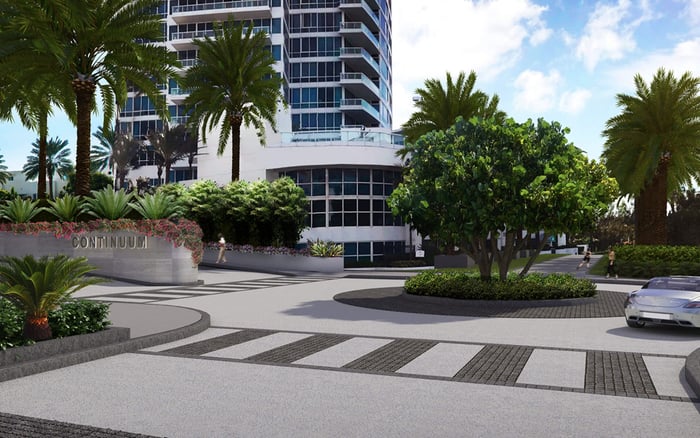
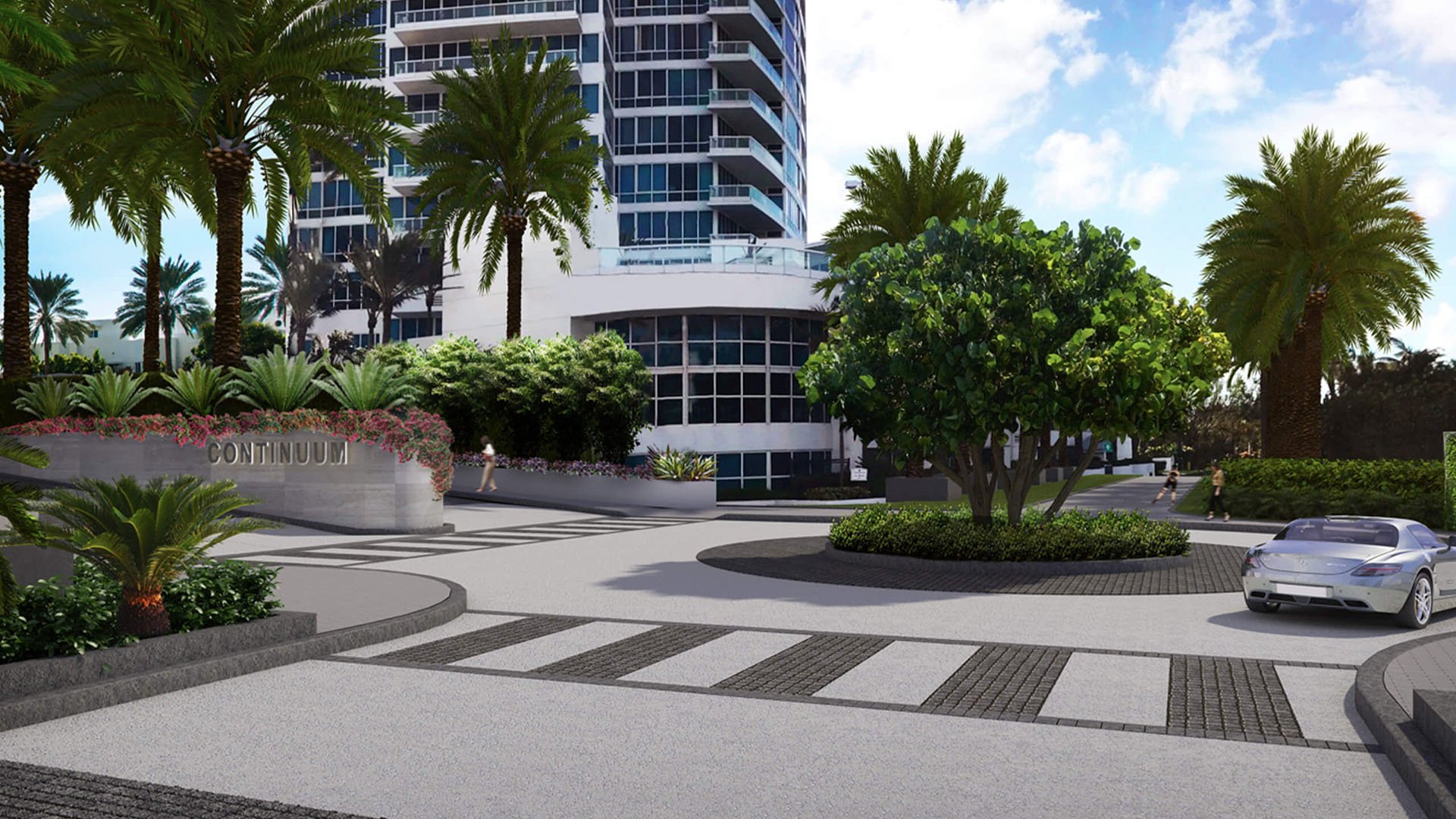
Apogee is best understood as the more boutique expression of luxury: lower-density in spirit, more resident-insulated in feel, and especially appealing to buyers who place a premium on controlled access, quiet hallways, and minimal shared-space friction. Continuum, by contrast, presents as a larger oceanfront compound with two towers, a broader sense of arrival, and a more active, service-rich environment that many owners see as part of the value proposition.
For readers also comparing newer Miami Beach addresses such as The Perigon Miami Beach or Shore Club Private Collections Miami Beach, this is a useful distinction: privacy is not just about square footage or terraces. It is about how many people share the vertical and social ecosystem around you.
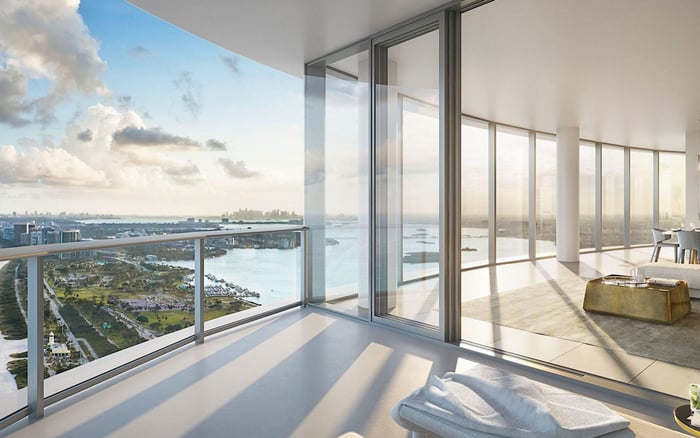
On privacy alone, Apogee generally holds the stronger conceptual edge. Large-format residences and expansive outdoor space support an ownership experience with less dependence on common amenity zones. That matters because true privacy in a luxury tower is often won before a resident ever reaches the pool deck. It begins with fewer daily encounters, fewer transition points, and fewer moments when arrival, departure, and service overlap.
This is where the boutique proposition becomes persuasive. A lower-density luxury building tends to create a more controlled rhythm. Corridors feel calmer. Elevator waits are less likely to feel theatrical. Shared spaces can read as extensions of the home rather than semi-public hospitality environments. For many buyers, especially those using a residence as a retreat rather than a social base, that distinction is decisive.
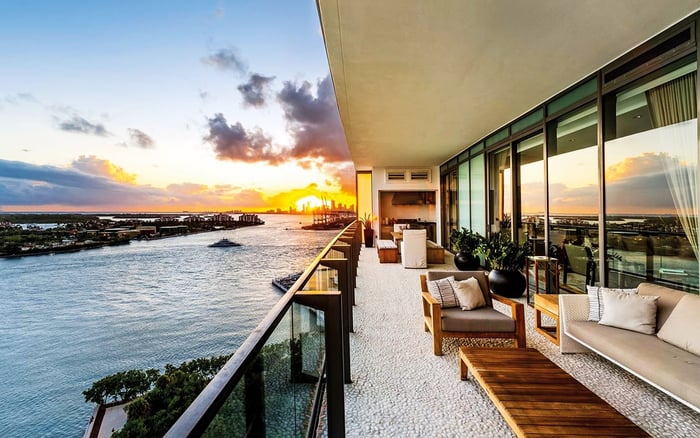
Continuum still performs strongly on privacy, just in a different register. Residences are known for large terraces and dramatic water or city outlooks, which create a strong sense of separation once inside the home. In-residence privacy can therefore be excellent. The trade-off is more visible at the ground plane. Continuum occupies a highly prominent oceanfront setting at the southern tip of Miami Beach, and that location naturally brings more ambient activity around the property than a more discreetly sited building would.
So if your definition of privacy is what happens after your front door closes, Continuum remains compelling. If your definition begins at the porte cochere and includes the emotional tone of every shared transition, Apogee is usually the more persuasive answer.
Elevator flow is one of the least glamorous topics in luxury real estate and one of the most important. In this category, buyers often chase technical details when the more meaningful question is simpler: does the building feel frictionless?
Continuum’s scale suggests a system designed for a larger volume of movement. As a major two-tower oceanfront development, it inherently carries more vertical-circulation complexity and more shared-space use than a smaller boutique property. That does not mean poor flow. In fact, many large luxury compounds are designed specifically to handle heavier resident, guest, and service traffic. It does mean, however, that the elevator experience is part of a larger operating environment.
Apogee’s likely advantage is different. A lower-density setting generally creates calmer flow because there are simply fewer moving parts. Even without relying on unsupported technical specifications, the buyer logic is straightforward: fewer residences and less overall throughput often translate to a more private-feeling trip from lobby to front door.
For comparison, buyers who admire the intensely private vertical-living model at Arte Surfside or the highly curated arrival sequence at The Ritz-Carlton Residences® South Beach are typically responding to this same principle. Elevator flow is not merely mechanical. It is psychological. The best buildings remove the sense of waiting, crossing paths, and being observed.
Continuum’s appeal is not diminished by its larger scale. For many owners, that scale is the point.
A two-tower oceanfront compound can offer a broader lifestyle ecosystem, a stronger sense of full-service presence, and a more dynamic relationship to South Beach itself. Buyers who want a recognizable oceanfront address, immediate access to the energy of South of Fifth, and the reassurance of a major established property often prefer this model. They may accept a busier ground-plane atmosphere because the trade-off is an expansive, amenity-rich, visibly prestigious residential environment.
There is also a practical truth in high-end ownership: some buyers interpret activity as proof of operational depth. A building that moves more people can also project confidence, staffing intensity, and a more robust daily service culture. In that reading, elevator flow is not about emptiness. It is about competence under demand.
That same mindset often appears in cross-shopping with properties such as 57 Ocean Miami Beach, where privacy and service must coexist rather than compete.
Within South of Fifth, even subtle differences in siting and scale can change a building’s social temperature. This is one of the most coveted enclaves in Miami Beach, but it is also one where public-facing glamour and private residential life frequently sit close together.
Continuum embraces that visibility more naturally. Its southern-tip setting gives it stature and presence, but it also places it closer to the rhythms of a celebrated beachfront district. Apogee aligns more closely with the buyer who wants South of Fifth prestige with a more insulated residential mood.
That distinction matters because luxury buyers are increasingly precise. Some want to feel connected to the neighborhood at every moment. Others want to disengage from it the instant they arrive home. Neither is inherently better. They are simply different forms of exclusivity.
If privacy is the dominant filter, Apogee is the more convincing choice. Its market position is closely tied to exclusivity, lower-density living, and the kind of resident isolation that sophisticated buyers tend to recognize immediately. It is the selection for someone who values discretion over spectacle and prefers a building that feels edited rather than expansive.
If the goal is a fully realized oceanfront compound with strong in-residence privacy, larger-scale circulation, and a more animated luxury environment, Continuum is the better fit. It offers prestige, presence, and a fuller South of Fifth lifestyle expression, even if that means a less secluded atmosphere at the base of the property.
The most elegant way to frame the choice is this: Apogee favors privacy as an operating principle. Continuum favors prestige, service, and oceanfront immersion, with privacy delivered more through residence design than through boutique isolation.
Is Apogee more private than Continuum? In broad buyer terms, yes. Apogee is more closely associated with lower-density, resident-isolated living.
Is Continuum less luxurious because it is larger? No. Its luxury expression is simply different, with a larger compound feel and more visible daily activity.
Which building likely feels calmer day to day? Apogee generally reads as calmer because the lifestyle proposition is more boutique in character.
Does Continuum still offer strong privacy inside the residence? Yes. Large residences and substantial terraces help preserve a strong sense of in-home separation.
Can elevator flow be judged purely by elevator counts? No. The lived experience depends on building scale, traffic patterns, staffing, and how circulation is organized.
Why is elevator flow such a major luxury buying issue? Because it shapes daily convenience, discretion, and the emotional tone of arrival and departure.
Is Continuum better for buyers who like an active South Beach atmosphere? Yes. Its prominent oceanfront setting aligns well with buyers who enjoy a more connected, energetic environment.
Is Apogee the stronger option for a second-home retreat? Often, yes. Buyers seeking a quieter, more private retreat typically gravitate toward that profile.
Do both buildings compete in the South of Fifth conversation? Absolutely. Both are relevant to high-end buyers focused on premier waterfront living in SoFi.
What is the simplest way to choose between them? Choose Apogee if you want boutique privacy first. Choose Continuum if you want a grander, service-rich compound.
If you'd like a private walkthrough and a curated shortlist, connect with MILLION Luxury.
If branded residences are on your mind — as a home or as an allocation — we would be glad to share what we are seeing, privately.
Begin a quiet conversation