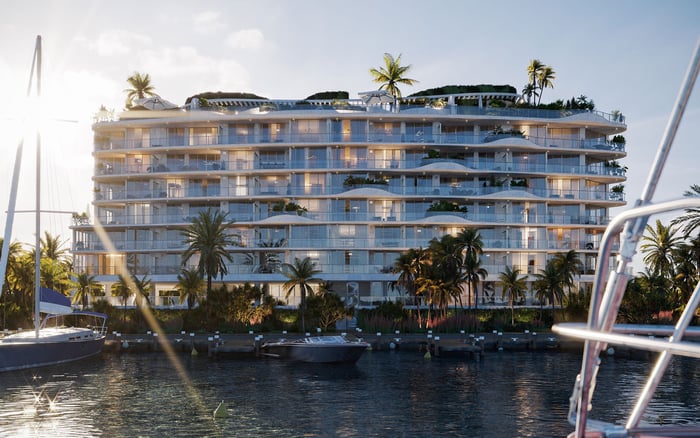
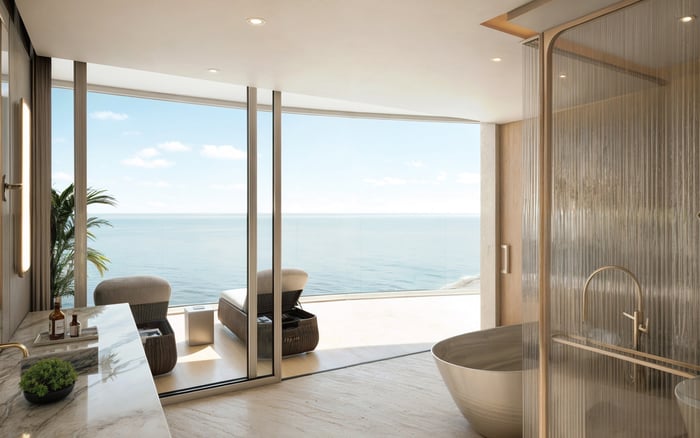
A buyer-focused audit of Oceana Key Biscayne’s glazing responsibilities, warranty documentation, replacement specifications, and special-order costs, designed to turn an attractive residence into a clearer ownership decision.
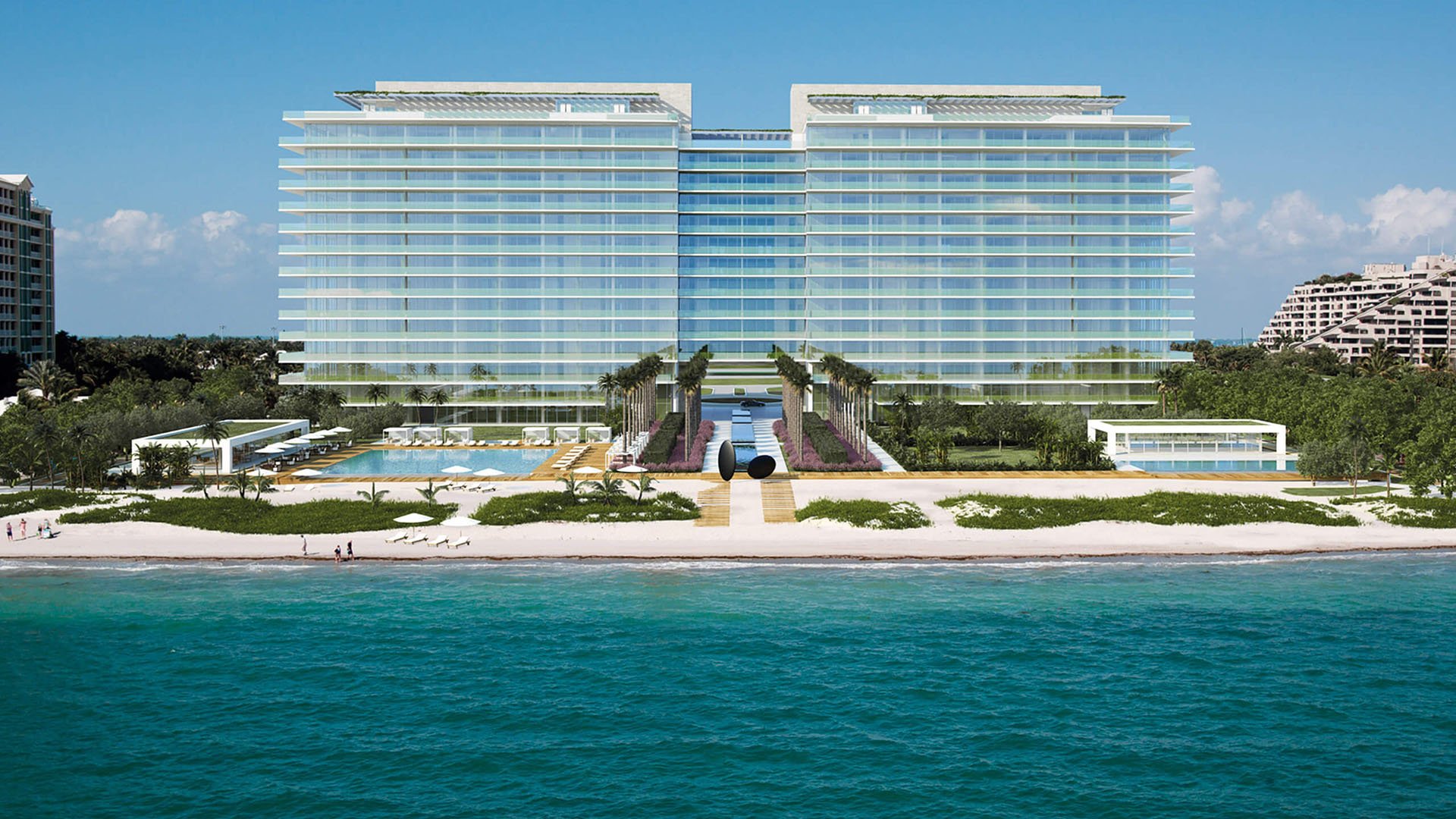
At Oceana Key Biscayne, floor-to-ceiling windows and spacious balconies are central to the residences. Glass balconies wrapping around the building reinforce that architectural emphasis. For a buyer, the question is not simply whether the glazing looks impeccable, but whether the obligations behind it are equally clear.
An ownership-readiness audit should establish who maintains each component, what warranty protection remains, how an approved replacement would be obtained, and which expenses would fall to the owner. A marketing brochure does not establish unit-specific warranty duration, replacement timing, or special-order reimbursement.
The goal is not to presume a defect. It is to make the purchase decision with a documented understanding of repair responsibility and potential disruption. In Key Biscayne, the pleasure of an expansive view deserves an equally considered plan for maintaining it.
Treat the window wall as a set of components, not a single covered item. Request the developer, manufacturer, and installer warranties alongside the declaration, maintenance matrix, alteration rules, and any warranty-transfer documents. Have the relevant professionals reconcile those documents rather than accepting a general assurance that the windows are covered.
For each relevant component, request a written answer identifying:
The party responsible for maintenance, repair, and replacement.
The warranty issuer, covered condition, and expiration date.
Any transfer requirements applicable to the purchasing owner.
The claim procedure and supporting documentation required.
Whether the remedy includes labor or only a replacement component.
Florida Statutes §718.203 addresses condominium warranties, but applicability depends on the improvement, responsible party, and statutory period. It does not establish that a particular Oceana component remains covered. Counsel should assess any claimed statutory protection separately from contractual warranties.
The useful deliverable is a component-by-component record, not a blanket statement about the building.
Responsibility for frames, glass, and operating hardware can differ under condominium documents. Generic South Florida practice does not determine Oceana’s allocation, and a balcony panel should not automatically be grouped with a sliding door or fixed window.
Commission a pre-closing inspection covering glass, seals, frames, hardware, and sliding doors. Request relevant maintenance records, engineering assessments, claims, and prior-replacement records. Ask the inspector to identify conditions requiring further evaluation without treating every visible issue as evidence that an entire assembly needs replacement.
Glass-only repair can sometimes address cracked, chipped, or fogged panes without replacing the whole window. Whether that approach suits a particular opening requires a qualified assessment.
For any proposed replacement, request opening identifiers, dimensions, manufacturer and series, impact approval, glass makeup, tint or coating, and frame finish. Obtain written confirmation of approved substitutions. The purchase file should identify what can be ordered, not merely what the existing glass resembles.
Replacement timing depends first on scope. One benchmark for custom window units is a factory lead time of six to ten weeks, with installation usually taking one to three days depending on the number of openings. These are separate stages, not an Oceana delivery commitment.
A separate benchmark for ordinary double-pane insulated-glass units is two to four business days to cut them to order and install them. That service is not equivalent to a custom factory-window replacement. Laminated and specialty glass can take longer than standard-glass orders. Neither benchmark establishes the timing for an Oceana opening.
Ask for a current, unit-specific schedule that distinguishes measurement, specification approval, ordering, fabrication, freight, site access, installation, and final inspection. Clarify when the quoted lead time begins and which prerequisites must be completed first.
Association approval and permitting can add steps beyond fabrication. Product-approval documentation, resident communication, and staging also warrant explicit planning. A short installation window should never be mistaken for the full period needed to resolve the repair.
“Covered replacement” is not precise enough for a purchase decision. Ask whether coverage pays for the defective component alone or the work required to put an approved replacement into service.
Request written clarification of coverage for measurement, engineering, freight, rigging or access equipment, removal, disposal, installation labor, permits, and interior restoration. These are coverage questions, not assertions that every item will be necessary or reimbursable at Oceana.
The quotation should separate included work, excluded work, and unresolved allowances. Ask who authorizes a special order, who pays any required deposit, and whether reimbursement requires advance approval. If a proposed substitute changes the specification, seek approval before authorizing the purchase.
A buyer also considering Oceana Bal Harbour should apply the same questions independently. A shared name does not justify transferring assumptions about warranty terms, component availability, or association responsibility from one property to another.
For an owner who will not always be in residence, clarity about execution matters as much as coverage. Ask the seller or association to identify who coordinates emergency board-up, temporary weather protection, ordering, approvals, permitting, installation, and final inspection.
The protocol should distinguish the party arranging the work from the party ultimately paying for it. Request a designated contact for access coordination and a clear procedure for authorizing work while the owner is away.
Before closing, organize the answers into a concise ownership file: inspection findings, governing responsibilities, warranty instruments, approved replacement specifications, current quotations, and the proposed schedule. Keep unresolved items explicit rather than folding them into a reassuring summary.
Where an active replacement or claim exists, have the buyer’s advisers assess its implications for the contract and closing arrangements. A promise to address an issue later is not the same as an agreed scope, funding arrangement, and responsible party.
When weighing Oceana against a residence at 57 Ocean Miami Beach, use the audit as a common framework rather than assuming comparable glazing systems or protections. Compare the quality of the answers: identifiable responsibility, readable warranty terms, approved specifications, and a credible route from inspection to completed work.
For Oceana, the final request is straightforward: obtain written identification of the responsible party, any applicable warranty expiration, the approved replacement specification, uncovered costs, and the current unit-specific lead time. Have the appropriate adviser review each answer within their expertise.
The most reassuring ownership position is not a claim that glass will never require attention. It is knowing what happens if it does, who will act, and what the owner may need to fund.
For a considered approach to South Florida luxury ownership, connect with MILLION.
If branded residences are on your mind — as a home or as an allocation — we would be glad to share what we are seeing, privately.
Begin a quiet conversationNo. Marketing descriptions do not establish unit-specific warranty duration, component coverage, replacement timing, or special-order reimbursement.
Request developer, manufacturer, and installer warranties, together with warranty-transfer documents. Review them alongside the declaration, maintenance matrix, and alteration rules.
No. Applicability depends on the covered improvement, responsible party, and statutory warranty period, so any claimed protection requires a specific review.
Condominium documents can allocate these responsibilities differently. Oceana’s applicable documents must establish the allocation rather than assumptions based on other buildings.
Glass-only repair can sometimes address cracked, chipped, or fogged panes. A qualified professional should determine whether that scope is suitable for the particular opening.
No. It is a contractor benchmark for custom window-unit fabrication, not an Oceana commitment or a complete replacement schedule.
That advertised benchmark concerns ordinary double-pane insulated-glass units, not an Oceana-specific service. It should not be applied to custom window assemblies or specialty glass.
Request the opening identifier, dimensions, manufacturer and series, impact approval, glass makeup, tint or coating, and frame finish. Any substitutions should receive written approval.
Ask about measurement, engineering, freight, access equipment, removal, disposal, labor, permits, and interior restoration. Coverage of a component does not establish reimbursement for all associated work.
Obtain the responsible party, any applicable warranty expiration, approved replacement specification, uncovered costs, and current unit-specific lead time. Also clarify who coordinates temporary protection and the replacement process.