A practical buyer framework for comparing Alma Bay Harbor Islands and Origin Bay Harbor Islands through building scale, lobby privacy, amenity circulation, and resident familiarity rather than unsupported claims of superiority.
For a certain South Florida buyer, the difference between two condominiums is not always measured first by views, finishes, or amenity names. It is measured in the quiet minutes before the elevator arrives, the number of familiar faces in the lobby, the ease of receiving guests without feeling exposed, and the rhythm of a building once season begins. That is the practical question behind Alma Bay Harbor Islands and Origin Bay Harbor Islands.
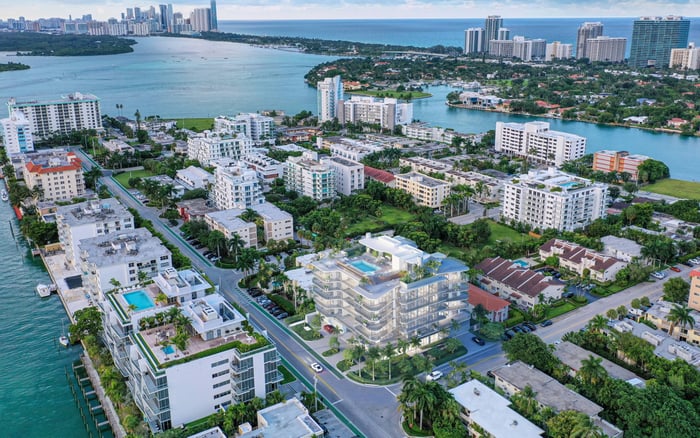
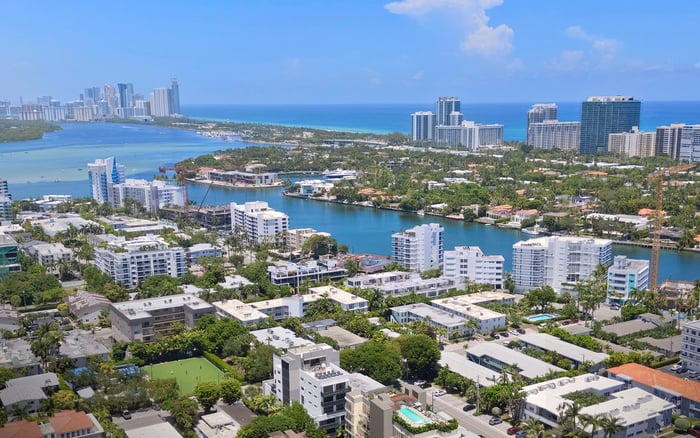
Both are set within Bay Harbor Islands, which makes the comparison unusually direct. The buyer is not choosing between different cities, school corridors, or lifestyle geographies. The decision sits inside a more precise set of questions: how much building scale feels right, how private the arrival sequence feels, and whether the resident environment is likely to become familiar over time.
That nuance matters in Bay Harbor, where buyers often want the sophistication of a new address without the anonymity of a resort tower. The right answer is not automatically the smaller, quieter, or more amenitized building. The right answer is the building whose circulation pattern, access protocol, and social atmosphere match the way the buyer actually lives.
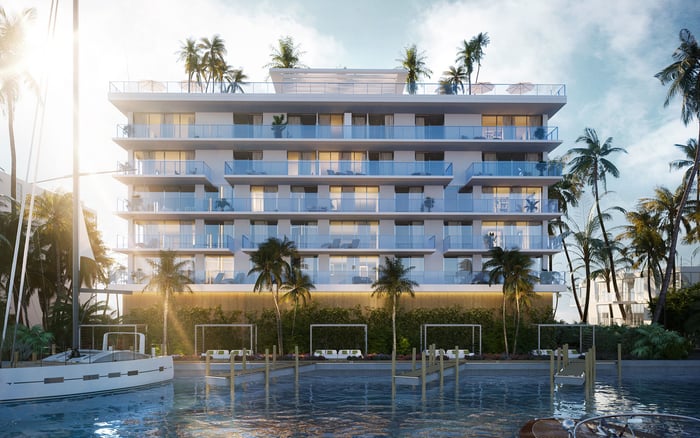
Building scale is often discussed casually, but serious buyers should make it specific. Ask for the disclosed residence count, floor count, elevator configuration, amenity footprint, parking arrangement, and expected daily staff pattern. These facts shape the lived experience far more than adjectives such as intimate, exclusive, or boutique.
If Alma and Origin are being compared side by side, the question is not simply which one is larger. It is whether the scale of each building supports the buyer’s preferred level of recognition and quiet. A buyer who spends long seasonal stretches in residence may value a building where routines become familiar. Another buyer may prefer a broader resident population, more daily movement, and a livelier amenity cadence.
Scale also affects the small frictions of ownership. How many households are likely to use the lobby during peak hours? How often will elevators be shared with guests, staff, deliveries, and service providers? Are amenity spaces designed for retreat, gathering, or both? These questions are especially important in new-construction settings, where lifestyle expectations are formed before the building’s daily culture has fully settled.
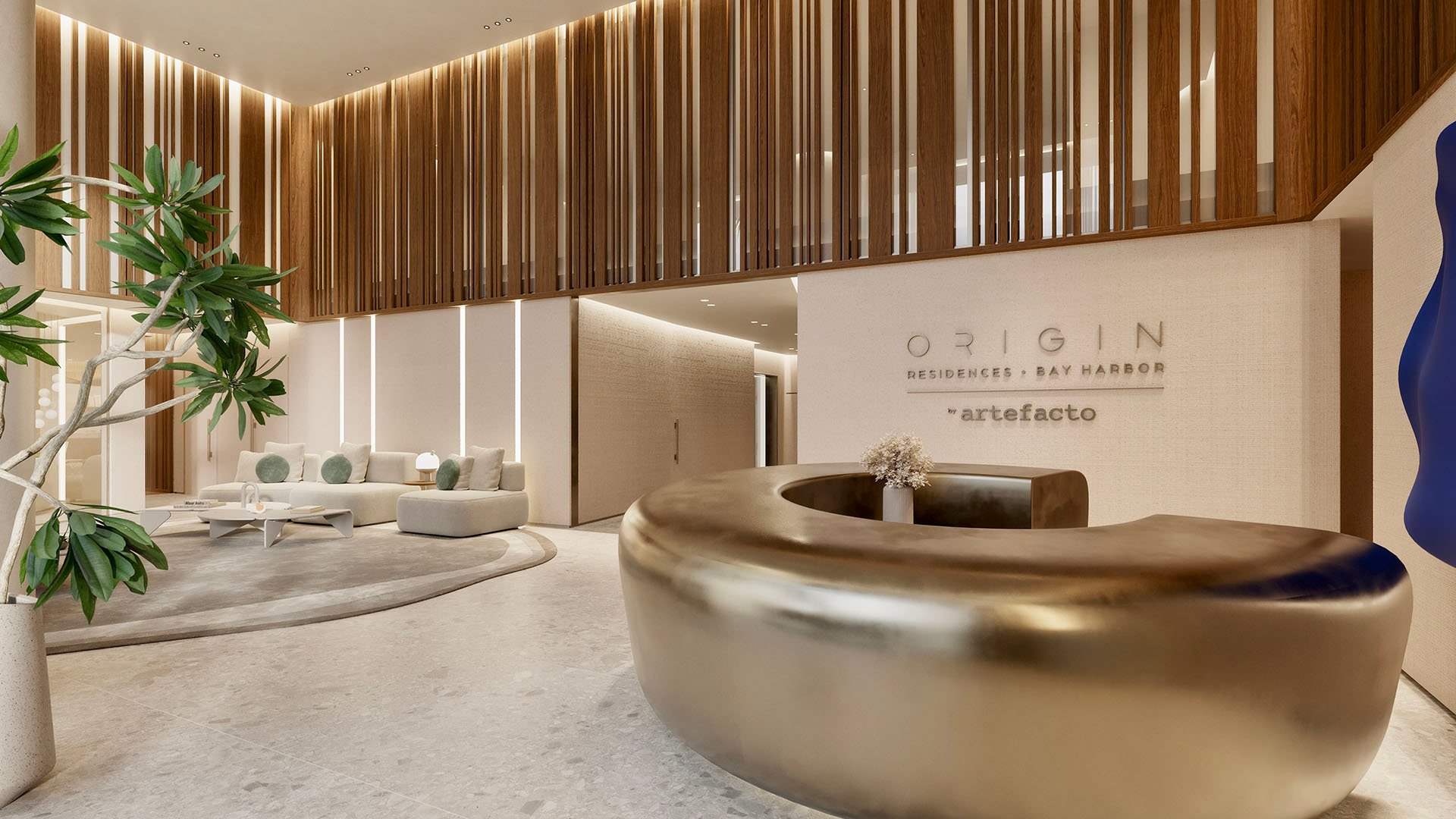
A private lobby is not defined by one design feature. It is a sequence of decisions: where the car arrives, how guests are announced, how residents move from arrival to elevator, where packages and deliveries are handled, and whether service circulation overlaps with owner circulation.
For Alma and Origin, buyers should review these items carefully in current sales materials and during in-person discussions. Does the lobby feel like a residential salon or a public threshold? Are there separate paths for guests and service providers? Is access controlled in a way that feels calm rather than theatrical? Is the front desk positioned for discretion, or does every arrival become part of the room?
In the Bay Harbor Islands context, privacy is often less about hiding and more about reducing needless exposure. A buyer may welcome a warm greeting from staff and neighbors while still wanting a quiet route home after dinner. Another may prefer a more social lobby where familiar conversation is part of the address. Neither preference is inherently superior, but they lead to different building choices.
Nearby projects such as Alana Bay Harbor Islands have helped sharpen buyer expectations in this submarket, because purchasers increasingly compare not only unit plans but also the tone of arrival.
Resident familiarity is one of the least quantified and most important forms of luxury. It is the difference between feeling like a guest in one’s own building and feeling recognized without being observed. In smaller residential environments, familiarity may develop more quickly, but it is not guaranteed. In larger environments, anonymity may be welcome, but it can also feel impersonal if the building’s culture is not well managed.
When comparing Alma and Origin, the buyer should consider the likely profile of ownership. Will residents be primarily seasonal, full-time, investment-oriented, or a mix? Will amenity spaces encourage repeat interaction, or will residents mostly move from car to elevator to residence? How frequently will short visits, guests, or service appointments bring nonresidents through the property?
The most useful question is simple: after six months of ownership, do you want the lobby team and a meaningful share of neighbors to know your rhythm, or do you prefer a more anonymous arrival? For some buyers, recognition is a comfort. For others, it is a compromise.
This is where comparable Bay Harbor Islands addresses, including La Maré Bay Harbor Islands, become useful reference points. Not because one building should be copied, but because each project helps buyers articulate how much social texture they want at home.
Amenities can elevate a building, but they also create traffic. A wellness room, pool deck, lounge, package area, and valet sequence each adds a pattern of movement. The issue is not whether a building has more or fewer amenities. The issue is whether the amenity program fits the number of residences and the privacy expectations of owners.
A buyer comparing Alma and Origin should ask how amenity access is organized. Are spaces clustered near the lobby, creating more crossover, or set apart to preserve arrival calm? Are guest policies likely to change the feel of the building during peak weekends? Are service providers moving through the same areas residents use at the same times?
This is also why projects such as The Well Bay Harbor Islands are part of the broader conversation. Wellness-driven buildings can appeal powerfully to buyers, but the operational question remains: does the daily flow feel restorative, social, or busy?
The best tour is not only visual. Walk the arrival path slowly. Notice what can be seen from the lobby seating area. Ask where guests wait. Ask where deliveries enter. Ask how move-ins are scheduled. Ask whether private elevator access, if offered, changes the feeling of the residence arrival. Ask how many staff members a resident is likely to encounter between the curb and the front door.
Then compare the answers with your life. If you travel with family, staff, pets, or frequent guests, circulation may matter as much as the residence plan. If you entertain often, guest arrival can become part of the home’s identity. If you are buying for quiet seasonal use, the building’s off-peak personality may matter more than its launch presentation.
For the practical buyer, Alma versus Origin is not a contest of labels. It is a test of fit: scale, privacy, familiarity, and the subtle dignity of returning home.
Is Alma Bay Harbor Islands automatically more private than Origin Bay Harbor Islands? Not automatically. Privacy should be evaluated through disclosed access, lobby, elevator, guest, and service circulation details.
Is Origin Bay Harbor Islands automatically more social than Alma Bay Harbor Islands? Not automatically. Resident familiarity depends on scale, ownership patterns, amenity use, staffing, and daily building routines.
What should buyers compare first between Alma and Origin? Start with building scale, lobby traffic, elevator configuration, guest arrival, service routes, amenity placement, and staff interaction.
Why does lobby privacy matter so much in Bay Harbor Islands? Many buyers value a calm residential threshold where arrivals feel discreet, controlled, and separate from unnecessary building traffic.
Does a smaller building always feel more familiar? No. Smaller scale may encourage recognition, but resident turnover, seasonal use, and amenity behavior can change the atmosphere.
Can a larger building still feel private? Yes. A larger building can feel private if access control, circulation, staff training, and amenity planning are handled carefully.
Should amenities drive the decision? Amenities matter, but buyers should evaluate how often they will use them and how much traffic those spaces may create.
What is the best way to judge resident familiarity before buying? Ask about ownership profile, guest policies, staff structure, seasonal patterns, and how common areas are expected to function.
Is Bay Harbor Islands a good setting for discreet luxury living? It can be, particularly for buyers seeking a residential island environment with proximity to surrounding coastal neighborhoods.
What is the practical takeaway for Alma versus Origin? Choose the building whose scale, lobby sequence, and resident culture best match your daily life, not the strongest marketing phrase.
For a discreet conversation and a curated building-by-building shortlist, connect with MILLION.
If branded residences are on your mind — as a home or as an allocation — we would be glad to share what we are seeing, privately.
Begin a quiet conversation