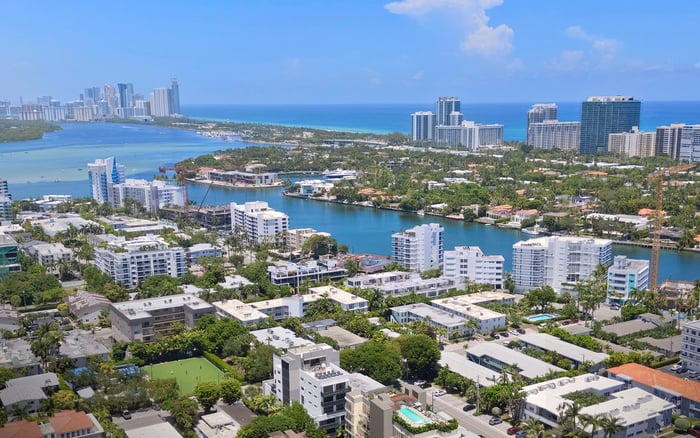
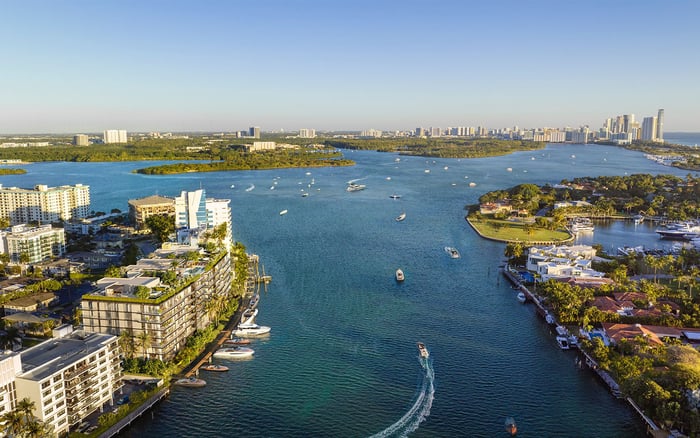
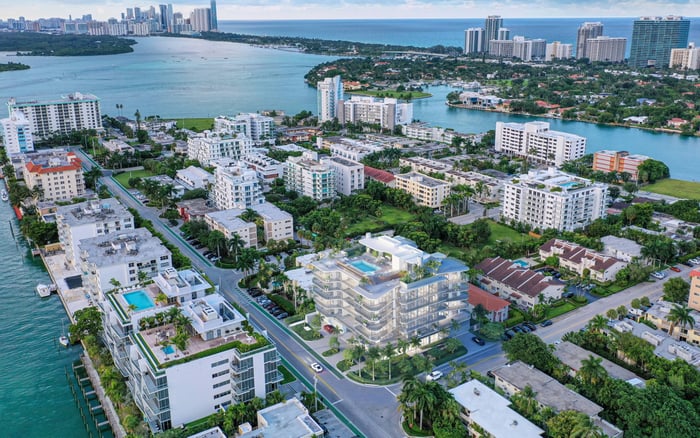
A discreet buyer’s guide to comparing Alma Bay Harbor Islands and Mila Bay Harbor Islands when verified public details remain limited. Rather than forcing an unsupported head-to-head, this MILLION editorial frames what can be responsibly said now, what still needs confirmation, and how sophisticated buyers can benchmark each project against the broader Bay Harbor Islands landscape.
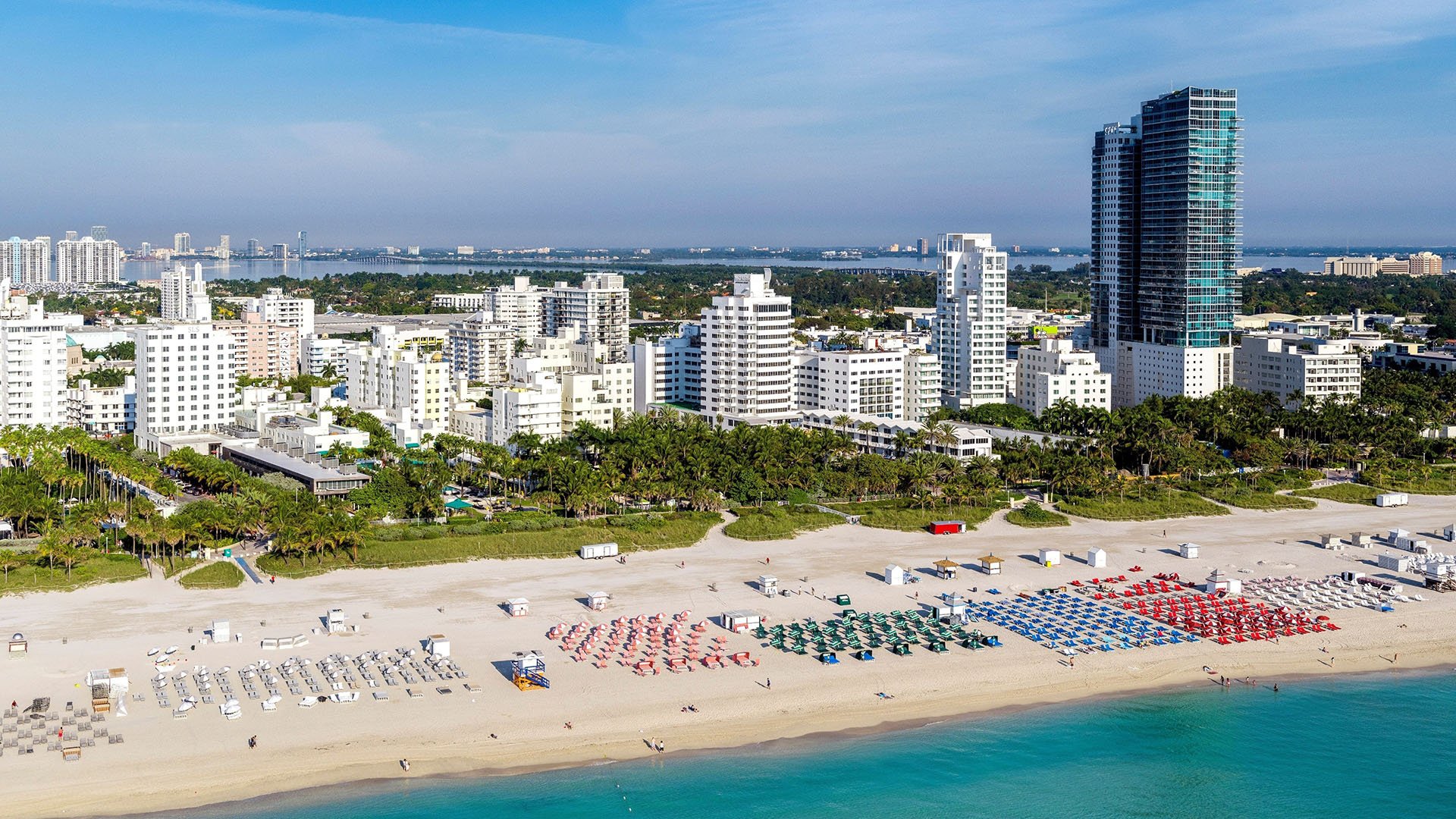
Bay Harbor Islands rewards nuance. For buyers who prefer boutique scale over spectacle, the address has become shorthand for a more intimate expression of South Florida luxury: residential, polished, and quietly connected to Bal Harbour, Surfside, and Miami Beach. It is no surprise, then, that Alma Bay Harbor Islands and Mila Bay Harbor Islands invite a natural comparison.
The challenge is that the market narrative is moving faster than the public record. At this stage, neither project can be responsibly framed with a definitive identity around wellness minimalism or neighborhood warmth, because the comparative details needed to support that distinction have not been publicly clarified in a reliable way. That does not diminish interest. If anything, it heightens the importance of disciplined evaluation.
For a MILLION audience, the right question is not which narrative sounds more appealing. It is which project can substantiate its positioning with confirmed information on developer identity, parcel control, design intent, amenity programming, and residence mix. Until those elements are clearly established, the wiser lens is informed restraint.
Both Alma Bay Harbor Islands and Mila Bay Harbor Islands appear to fall into the category of very new, minimally documented, or still-emerging launches. In Bay Harbor Islands, that can happen when a project is introduced under a marketing name before the broader market has fully absorbed the legal development identity or parcel specifics.
That distinction matters. Sophisticated buyers understand that branding can arrive before clarity, especially in boutique submarkets where inventory is limited and pre-construction visibility can be selective. Before evaluating finish palettes, lifestyle narratives, or future resale appeal, the first task is straightforward: confirm the exact official project name, confirm the developer behind it, and confirm the exact property or properties involved.
Once those basics are established, the rest of the comparison becomes more meaningful. Until then, any firm claim about which building is more wellness-driven, more social, more family-oriented, or more investment-worthy risks sounding more like mood than fact.
This is especially relevant in Bay Harbor, where buyers often shop a small cluster of refined buildings at once. In that context, a lightly documented launch is rarely judged in isolation. It is judged against what buyers can already see, visit, and compare nearby, including Alana Bay Harbor Islands, La Maré Bay Harbor Islands, and Onda Bay Harbor.
It is an elegant editorial frame. One project suggests a serene, pared-back, wellness-coded aesthetic. The other implies a softer social register, perhaps tied to the lived fabric of the islands. Yet at present, that contrast remains unproven.
No verified comparative metrics have been publicly clarified on wellness amenities, unit mix, pricing, or neighborhood character for Alma Bay versus Mila Bay. That means buyers should resist reading too much into branding language alone. In the current environment, names can imply a lifestyle, but they do not substitute for confirmed programming.
If wellness is central to your purchase decision, the benchmark should be tangible and specific. Buyers in this category typically look for evidence such as dedicated treatment or fitness spaces, recovery-oriented amenities, spa partnerships, outdoor movement programming, material choices, and a broader architectural philosophy that supports calm, privacy, and ease. In Bay Harbor Islands, the market already understands the language of wellness through projects such as The Well Bay Harbor Islands, which gives the local conversation a recognizable frame.
If neighborhood warmth is your priority, the criteria are different. Buyers usually care more about walkability, scale, family rhythm, ease of daily life, adjacency to schools and dining, and whether the building feels woven into the cadence of the islands rather than set apart from it. That sensibility can be subtle. It is often less about a branded amenity deck and more about how the project sits within the residential texture of Bay Harbor.
Until fuller project materials are publicly disclosed, the best comparison between Alma Bay and Mila Bay is a structured one.
Start with identity. Verify the official project names and the developer tied to each building. Then confirm the exact address and parcel relationship. In boutique island markets, ambiguity at the naming stage can create unnecessary confusion later, particularly when comparing sales language with legal documentation.
Next, assess status. Determine whether each project is fully launched, selectively marketed, or still in a preliminary phase. The degree of market readiness often shapes what has actually been finalized, from floor plans to amenity promises to pricing posture.
Then move to competitive context. Even without a full head-to-head, buyers can judge probable positioning by studying nearby product that is already easier to read. Buildings such as Origin Bay Harbor Islands and Bay Harbor Towers help clarify the broader boutique and new-construction conversation on the islands. They are not substitutes for Alma or Mila, but they do sharpen expectations around what a Bay Harbor Islands luxury buyer may prioritize.
Finally, keep your comparison grounded in outcomes rather than adjectives. Which project can clearly articulate its amenity package? Which one presents a more legible residence mix? Which one better aligns with your intended holding period, whether that is a primary residence, a polished pied-à-terre, or a long-horizon family purchase? These are the distinctions that matter once the facts are in hand.
Even with incomplete public detail around specific launches, the underlying appeal of Bay Harbor Islands remains unusually strong. The enclave offers a calmer residential temperament than many headline districts while preserving access to world-class retail, dining, beaches, and private everyday convenience. That equilibrium is rare.
For buyers who feel overserved by the theatricality of larger towers, Bay Harbor often reads as more personal. Projects here are typically discussed in terms of discretion, proportion, and livability rather than pure vertical drama. That is precisely why even lightly documented names can generate immediate curiosity. The audience is already there.
It also explains why themes like wellness, intimacy, and neighborhood character resonate so strongly in this pocket of the market. They are not abstract luxury buzzwords here. They are central to why buyers choose the islands in the first place.
At this moment, Alma Bay Harbor Islands versus Mila Bay Harbor Islands is best understood as a promising comparison that has not yet matured into a verified one. Both names carry enough intrigue to merit attention, but not enough confirmed public detail to support a firm editorial verdict on design philosophy, lifestyle orientation, pricing strategy, or buyer fit.
For the discerning purchaser, that is not a dead end. It is simply the phase in which discipline matters most. Confirm the official identity of each project. Confirm the developer. Confirm the address. Then compare amenity substance, not atmosphere; residential planning, not branding; and long-term fit, not first-impression language.
In a market as refined and supply-constrained as Bay Harbor Islands, the most elegant move is often patience paired with precision.
Is Alma Bay Harbor Islands more wellness-oriented than Mila Bay Harbor Islands? That has not been publicly established with enough clarity to support a definitive conclusion.
Is Mila Bay Harbor Islands better for buyers seeking neighborhood warmth? That positioning may be suggested by branding, but it is not yet confirmed by verifiable comparative detail.
Are Alma Bay and Mila Bay fully documented luxury developments? Both appear to be lightly documented in the public domain at this stage, which calls for added diligence.
What should buyers verify first? The official project name, developer identity, and exact address should come before any deeper lifestyle comparison.
Can branding names differ from legal development names? Yes. In pre-construction and boutique markets, marketing identity and legal naming do not always align.
Does the current public record confirm pricing for Alma Bay or Mila Bay? No reliable public comparison on pricing has been clearly established in the available material.
Are there verified differences in amenities between the two projects? Not yet in a way that supports a precise head-to-head assessment.
Why does exact parcel information matter so much? It anchors the project to a real site, clarifies ownership and status, and reduces ambiguity for buyers.
How should buyers benchmark these projects while details remain limited? Compare them against established Bay Harbor Islands product and focus on confirmed planning, scale, and lifestyle fit.
Is Bay Harbor Islands still a compelling luxury submarket despite limited project detail? Yes. Its appeal remains strong because it combines boutique luxury, discretion, and excellent proximity to the coast and urban convenience.
For a tailored shortlist and next-step guidance, connect with MILLION.
If branded residences are on your mind — as a home or as an allocation — we would be glad to share what we are seeing, privately.
Begin a quiet conversation