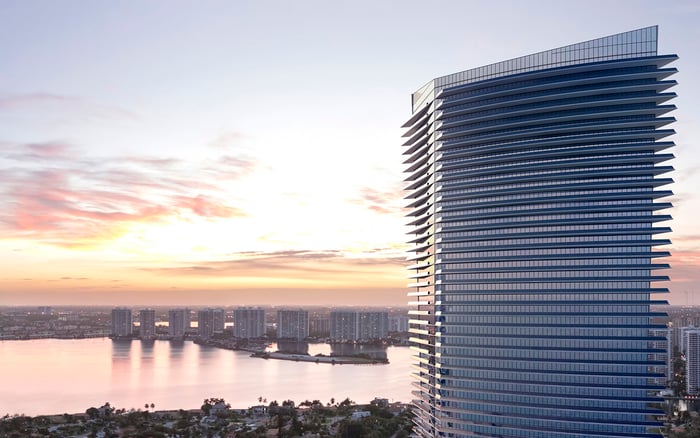
For an executive purchasing a Florida condominium as a primary residence, reserve-study diligence should connect building needs, approved funding, future assessments, and contractual responsibility at closing.

A South Florida primary residence should offer more than an exceptional arrival experience. For an executive buyer, it should also come with a clear understanding of future ownership costs. In a condominium, that understanding depends partly on the association’s capital obligations: what needs attention, how the work will be funded, and when owners will pay.
The essential question is not simply whether a structural integrity reserve study, or SIRS, exists. It is whether the latest study reflects the association’s actual funding decisions and aligns with its budget. Financing changes the timing of payment, not the underlying cost.
For a buyer considering Brickell residences such as Una Residences Brickell, this is a diligence framework-not a statement about any particular project’s reserves, assessments, or borrowing. The same distinction applies to every residence mentioned here.
SIRS requirements generally apply to Florida condominium and cooperative buildings that are three stories or higher. A SIRS must generally be completed at least once every 10 years after the condominium’s creation. It evaluates association-maintained components, existing reserves, anticipated expenses, and the funding needed for future repair or replacement.
Associations existing on or before July 1, 2022 generally faced a December 31, 2025 completion deadline, subject to statutory transition provisions and milestone-inspection coordination rules. For a purchase today, the relevant question is whether the association’s documentation satisfies its applicable obligations, including any exceptions.
This article’s assessment and financing discussion concerns condominium associations. Chapter 718 requirements should not automatically be applied to a detached residence governed by a Chapter 720 homeowners association. Have Florida condominium counsel establish the governing framework before drawing conclusions from a document package.
A study prepared before a major funding decision may describe anticipated work without capturing how owners will ultimately pay for it. Its preparation date matters as much as its presence in the diligence file.
If a SIRS predates an approved special assessment or a secured loan or line of credit, it must be updated to reflect the selected funding method and its effect on the reserve funding schedule. The update must also reflect anticipated changes in regular assessments resulting from that decision.
Request the original study and subsequent updates, then arrange them chronologically alongside the funding approvals. Confirm whether the latest version incorporates each relevant decision. If it does not, request the update and a written explanation of how the current funding schedule connects to the approved plan.
For a Miami Beach search that includes 57 Ocean Miami Beach, this approach keeps financial review separate from aesthetic preference. An attractive residence does not establish whether the association’s reserve assumptions remain current.
The next step is reconciliation, not merely document collection. Compare the latest SIRS with the approved annual budget and, when available, the next proposed budget. Identify the reserve allocations or documented financing intended to support the covered work.
Ask your advisers to trace each significant obligation from the study to its funding mechanism, then to its expected owner-payment schedule. Distinguish existing reserve balances, future reserve contributions, special-assessment proceeds, and borrowing. These are distinct parts of the funding picture, not interchangeable evidence that an obligation has disappeared.
Where documents appear inconsistent, request clarification before treating current monthly dues as a reliable measure of future costs. Evaluate a proposed budget as a proposal, not an adopted obligation. Florida condominium law generally requires delivery of the proposed annual budget to owners at least 14 days before the budget meeting.
Florida’s condominium statute recognizes loans and lines of credit as funding mechanisms for qualifying capital work, subject to statutory requirements. Borrowing may change when owners contribute, but it does not erase the expense and can affect future regular assessments.
Request the loan amount, interest rate, maturity, repayment schedule, lender restrictions, and anticipated assessment impact. Ask how repayment connects to both the updated reserve schedule and the association’s budget. A statement that work is financed begins this inquiry; it does not resolve it.
When comparing Sunny Isles Beach options, including Jade Signature Sunny Isles Beach, apply the same discipline to the ownership-cost analysis: distinguish the residence’s purchase price from the association’s capital funding and any resulting payment burden.
A special assessment is an assessment levied against a unit owner other than the assessment required by the annually adopted budget. Its authorization and communication warrant separate review.
Notice of a meeting considering a nonemergency special assessment generally must be mailed, delivered, or electronically transmitted to owners and conspicuously posted on the property at least 14 days beforehand. Written notice of an approved special assessment must also be sent or delivered to each unit owner. These notices address distinct stages: consideration and approval.
As a diligence recommendation, request the meeting notice, agenda, minutes, approval resolution, applicable voting records, and written assessment notice. Use them to establish what was considered, what was approved, and how owners were informed. Do not assume that every requested item is a mandatory resale disclosure or that receiving a notice alone establishes compliance with every applicable requirement.
Resale negotiations should address assessment responsibility expressly. Ask Florida condominium counsel to distinguish assessments approved before contract, approvals occurring between contract and closing, and installments payable after closing. A payment date alone should not substitute for a negotiated allocation of responsibility.
Counsel should address the intended treatment in the purchase agreement and closing arrangements, rather than leave the parties to rely on different assumptions. If a new approval or financing decision emerges during the transaction, revisit both the allocation and the ownership-cost analysis before closing.
For buyers weighing Coconut Grove residences such as Park Grove Coconut Grove, this contractual precision belongs alongside the lifestyle decision. The aim is not to avoid every capital obligation, but to understand which obligations the buyer is accepting.
Finally, review milestone-inspection materials alongside the SIRS. Building-condition findings and reserve funding plans serve different purposes; neither should replace the other.
Underwrite regular dues, reserve contributions, approved assessments, financing-related increases, insurance changes, and scheduled capital work together, without double-counting amounts already included in the budget. The strongest purchase decision connects physical needs, funding choices, owner communication, and contractual responsibility in one coherent picture. Have counsel confirm applicable law and exceptions at the time of purchase; proposed legislation should not be treated as enacted law.
For a discreet South Florida residence search informed by ownership considerations, explore MILLION.
If branded residences are on your mind — as a home or as an allocation — we would be glad to share what we are seeing, privately.
Begin a quiet conversationSIRS requirements generally apply to condominium and cooperative buildings that are three stories or higher. Counsel should verify the requirements and exceptions applicable to the specific property.
A SIRS must generally be completed at least once every 10 years after the condominium’s creation. Subsequent funding decisions can also require updates.
If a SIRS predates an approved special assessment or a secured loan or line of credit, it must be updated to reflect that funding method, its effect on the reserve schedule, and anticipated changes in regular assessments.
No. Financing changes how capital work is paid for and can affect future regular assessments; it does not eliminate the underlying expense.
Request the loan amount, interest rate, maturity, repayment schedule, lender restrictions, and anticipated assessment impact. Compare those terms with the updated reserve schedule and budget.
Compare the latest SIRS with the adopted budget and the next proposed budget when available. Identify reserve allocations or documented financing supporting the covered work.
Notice generally must be mailed, delivered, or electronically transmitted to owners and conspicuously posted on the property at least 14 days beforehand. Written notice of the approved assessment is a separate requirement.
Have Florida condominium counsel address responsibility expressly in the transaction documents. Distinguish pre-contract approvals, approvals between contract and closing, and installments payable afterward.
No. Building-condition findings and reserve funding plans serve different diligence purposes and should be reviewed together.
No. Chapter 718 condominium requirements should not automatically be applied to a detached residence governed by a Chapter 720 homeowners association.