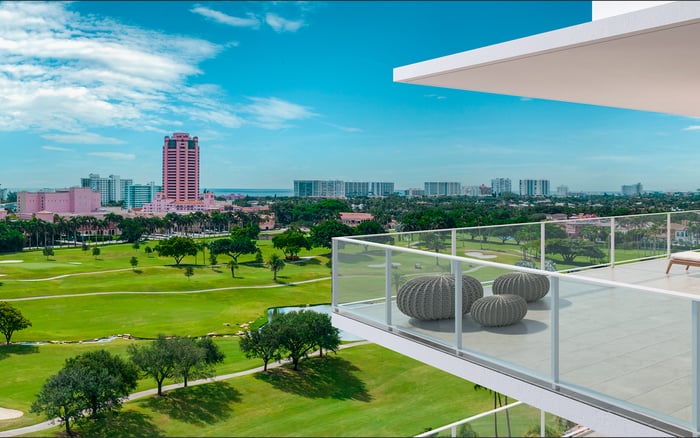
A discreet buyer’s guide to comparing Alina Residences Boca Raton and Arbor Coconut Grove through parking rights, EV charging readiness, and private-driver arrival logistics before committing emotionally in the sales gallery.
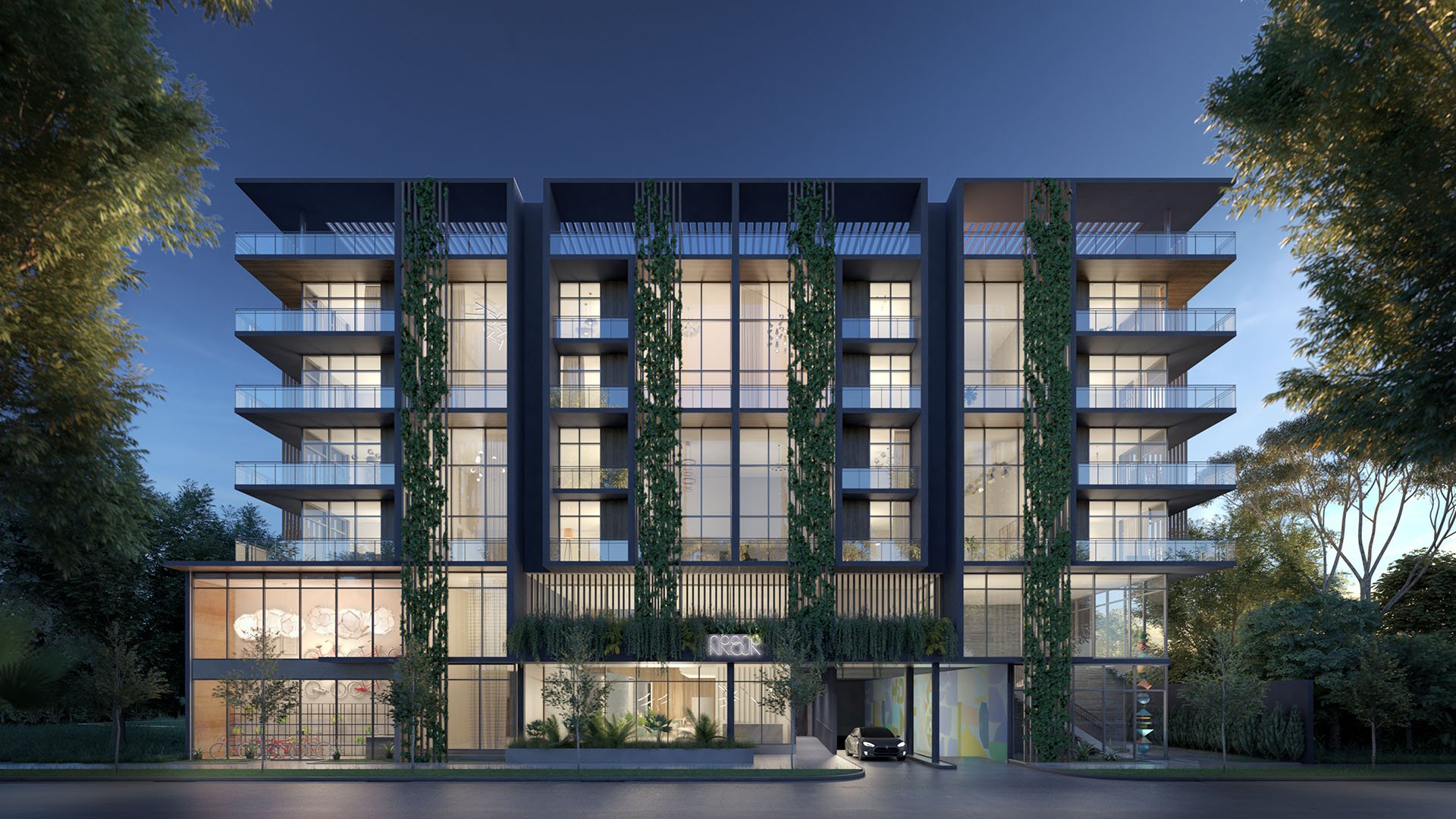
In South Florida’s luxury market, the most consequential details are often the least photogenic. A residence may be remembered for its terrace, material palette, pool deck, or lobby atmosphere, but it is lived through repetition: arriving after dinner, charging a second vehicle, asking a driver to wait discreetly, or allowing family and guests to come and go without friction. That is why the comparison between Alina Residences Boca Raton and Arbor Coconut Grove should not begin only with finishes, views, or lifestyle language. It should begin with rights, access, and operational ease.
The topic is especially relevant for buyers whose household routines include multiple cars, chauffeurs, visiting family, household staff, or seasonal occupancy. In that context, parking is not a commodity. It is a private infrastructure question. EV charging is not a future convenience. It is part of the building’s daily utility profile. Private-driver logistics are not simply valet service. They determine how discreet, efficient, and calm the residence feels with every arrival.
For many international and bi-coastal buyers, the shorthand may be Boca-ratón or Coconut-grove, yet the more serious question is how each building supports the life that unfolds beyond the unit door. The same discipline applies whether the purchase is an Investment, a Second-home, or a primary residence.
The first question is not whether parking exists. It is what kind of parking right is being conveyed. Buyers should distinguish between assigned spaces, deeded spaces, licensed spaces, limited common elements, valet-controlled parking, guest parking, and any rights that may be changed through association documents. The distinction can affect resale value, daily convenience, financing analysis, and the household’s ability to absorb future lifestyle changes.
In a comparison involving Alina Residences Boca Raton and Arbor Coconut Grove, the disciplined buyer should request the governing documents, parking exhibits, purchase agreement language, rules and regulations, and any amendments that define the parking program. Sales-gallery phrasing can be elegant, but it is not a substitute for legal clarity. If a space is described as included, the next question is included how. If it is described as assigned, the next question is whether that assignment is permanent, transferable, or subject to reassignment.
Configuration matters as well. A single generous space may be more useful than two spaces that are difficult to access. A tandem arrangement may suit a household with staff or predictable routines, but it can irritate independent drivers. Lift systems, valet-only systems, and shared circulation lanes each have their own rhythm. A buyer should understand not just the number of spaces, but the choreography required to use them.
EV charging should be evaluated at the infrastructure level, not simply at the outlet level. The relevant questions are whether charging is permitted, where chargers may be installed, whether installation requires association approval, how electrical capacity is allocated, who pays for upgrades, and whether the system can accommodate increasing demand over time.
A luxury buyer may own one EV today and two later. Guests may arrive in EVs. A driver may need predictable overnight access. For this reason, charging policy can become a genuine quality-of-life issue. It is not enough to hear that a building is EV-ready. Buyers should ask what that phrase means in practice: dedicated capacity, approved vendors, metering protocol, billing structure, conduit access, fire-safety requirements, and whether approvals are handled case by case.
The most elegant outcome is not necessarily the most visible one. It is a charging system that feels uneventful. The car is parked, charged, billed properly, and available when needed. In ultra-premium ownership, the absence of friction is the luxury.
Private-driver logistics are where the residence meets the city. A building can have gracious interiors and still feel awkward if the arrival court is tight, waiting areas are unclear, or drivers are forced into improvised patterns. Buyers who use a chauffeur, car service, security driver, or family office support should evaluate arrival and departure with particular care.
The questions are practical. Can a driver wait without blocking circulation? Is there a clear passenger drop-off zone? How does the building handle simultaneous arrivals? Is the valet stand positioned for discretion? Can household staff coordinate vehicle retrieval without creating lobby congestion? Are ride-service vehicles treated differently from private cars? Is there a protocol for school runs, airport transfers, medical visits, or event evenings?
This is where Boca Raton and Coconut Grove may produce different ownership rhythms. One buyer may prize calm access and a more composed residential pattern. Another may prefer a setting closer to the cultural and social texture of the Grove. Neither instinct is automatically superior. The question is whether the building’s operational design supports the buyer’s actual routines.
The sales gallery is designed to communicate possibility. The buyer’s responsibility is to test reality. Before allowing presentation rooms, models, and renderings to dominate the decision, request a parking and access walk-through focused only on mobility. Treat it as a separate due-diligence meeting, not a casual add-on after a lifestyle tour.
Ask to review the arrival sequence from the street to the lobby. Ask where guests, deliveries, private drivers, valet staff, and residents move during ordinary use. Ask what happens at peak hours. Ask how the building intends to handle a full house during holidays or high season. If the purchase is being made pre-completion, ask for diagrams and written policies rather than verbal assurances.
For a New-construction buyer, the most valuable questions often sound unglamorous. Where does a second vehicle go? What if a charger is requested later? How are disputes over guest parking handled? What is the rule for oversized vehicles? Who controls updates to the parking policy? A Boutique building can feel intimate and highly serviced, but intimacy also requires precise rules when multiple households need the same circulation points at the same time.
Parking and access terms should be addressed before emotional momentum becomes too strong. Buyers should identify their non-negotiables early: number of spaces, type of rights, charger pathway, valet expectations, driver waiting protocols, guest parking, storage adjacency, and any accommodation for staff or security.
If a household has a specific vehicle profile, including large SUVs, collectible cars, EVs, or cars that require special handling, the buyer should confirm dimensional suitability and operational rules. If a driver will be used frequently, the buyer should ask for written guidance on waiting, staging, and communications. If family members will use the residence independently, parking access should be simple enough to function without constant coordination.
The most refined purchase is not the one with the longest amenity list. It is the one whose rules match the buyer’s life. Alina Residences Boca Raton and Arbor Coconut Grove may attract different emotional responses, but the final decision should rest on documented rights and operational confidence. The residence that feels best on day one should also work on the hundredth arrival.
Why compare parking rights before finishes? Parking rights can affect daily convenience, resale positioning, and long-term ownership flexibility. Finishes create desire, but access determines how smoothly the residence lives.
Are assigned parking and deeded parking the same thing? Not necessarily. Buyers should review the governing documents to understand whether a space is owned, assigned, licensed, or otherwise controlled.
What should EV buyers ask before reserving? Ask whether charging is permitted, how capacity is allocated, who pays for installation, and whether approvals are governed by written policy.
Is valet service enough for a private-driver household? Valet service may help, but it does not replace a clear plan for driver waiting, drop-off sequencing, guest arrivals, and peak-hour circulation.
Should buyers test arrival logistics in person? Yes. A focused mobility walk-through can reveal issues that are not obvious in a sales presentation or residence tour.
What matters most for a second-home owner? Predictability is critical. The building should support easy arrivals, guest access, vehicle readiness, and low-friction use after long periods away.
Can parking rules change after purchase? Some rules may be governed by association documents and policies. Buyers should have counsel review how rights are created, amended, and enforced.
How should oversized vehicles be handled in due diligence? Confirm dimensions, clearance, turning radius, valet policies, and any restrictions before assuming a preferred vehicle will be convenient to use.
Is EV readiness a resale consideration? It can be. As luxury households adopt more electric vehicles, clear charging pathways may become increasingly relevant to future buyers.
What is the best way to compare Alina and Arbor? Compare documented parking rights, charging policy, and arrival logistics alongside design and neighborhood preference, rather than treating operations as an afterthought.
For a tailored shortlist and next-step guidance, connect with MILLION.
If branded residences are on your mind — as a home or as an allocation — we would be glad to share what we are seeing, privately.
Begin a quiet conversation