A buyer-focused comparison of Alba West Palm Beach and Rivage Bal Harbour, framed through lifestyle, prestige, governance discipline, and long-term resale logic.
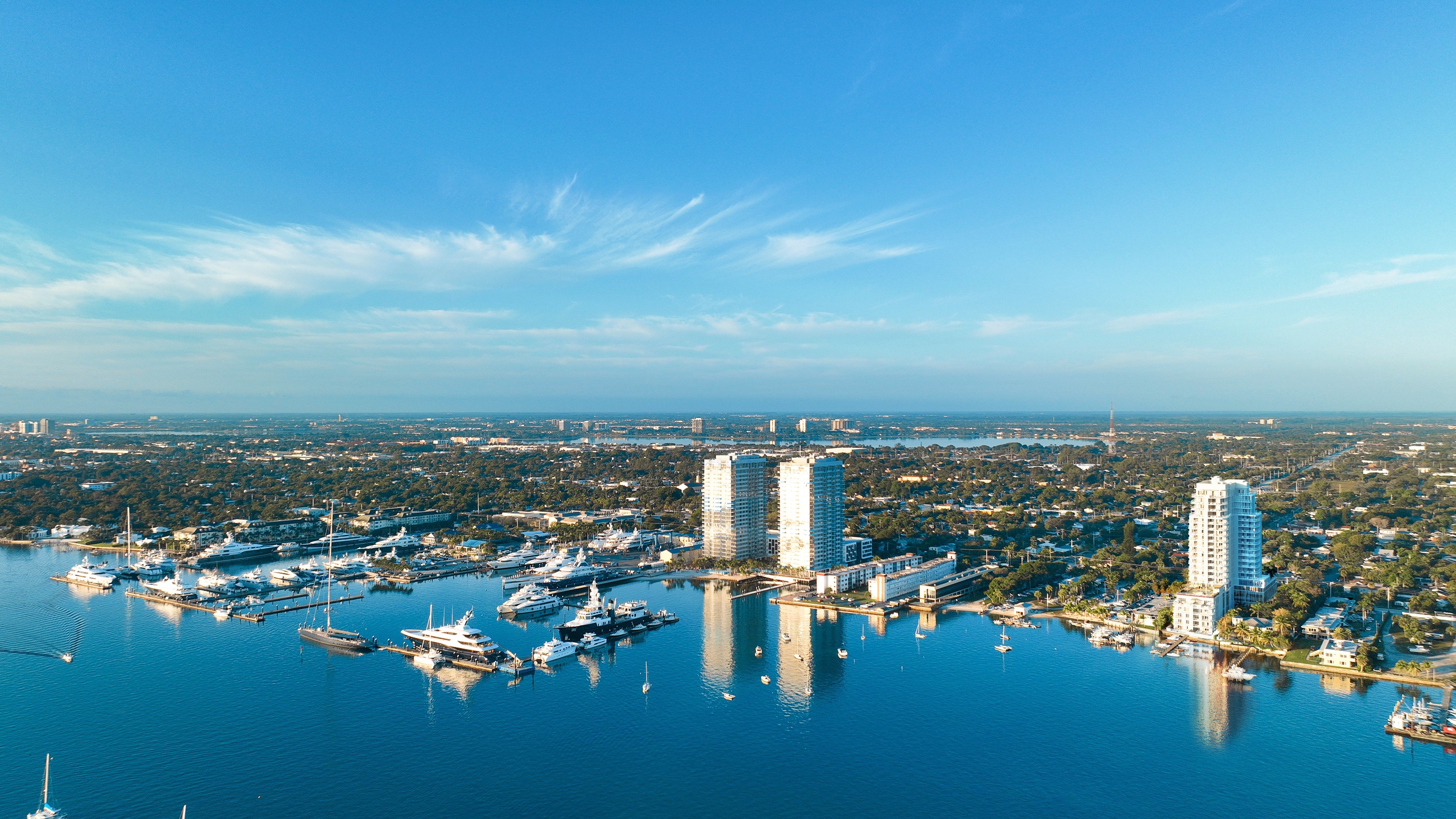
Alba West Palm Beach and Rivage Bal Harbour represent two distinct forms of South Florida prestige. One is tied to a mainland Intracoastal setting, the rise of West Palm Beach as a luxury residential and business market, and the appeal of living close to Palm Beach Island without living directly on it. The other is anchored in Bal Harbour’s long-established oceanfront identity, where scarcity, beachfront living, and village-like refinement define the purchase logic.
For a buyer comparing Alba West Palm Beach with Rivage Bal Harbour, the question is not which building is more luxurious in the abstract. The sharper question is which lifestyle thesis fits the household, the capital strategy, and the desired ownership culture. This is a comparison between urban-waterfront growth and legacy-enclave preservation, between calm-water adjacency and direct Atlantic frontage, between an emerging hub narrative and an already established luxury address.
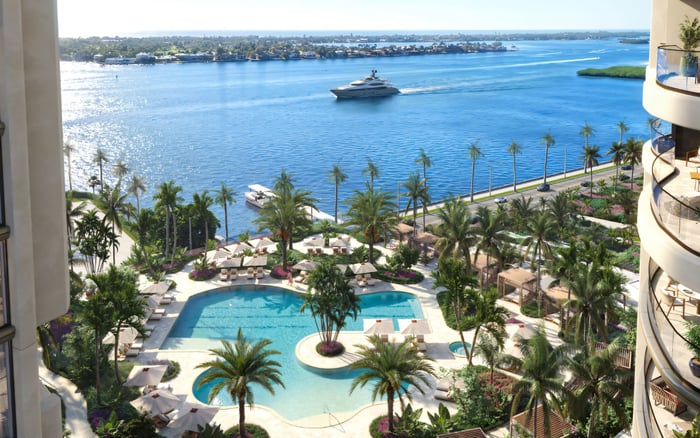
Alba West Palm Beach is best understood as waterfront living on the West Palm Beach side of the water. Its setting is tied to the Intracoastal rather than direct Atlantic beachfront, making the lifestyle more calm-water and boating-oriented than resort-oceanfront. The appeal is not about stepping directly from the property onto the sand. It is about views, water proximity, and the convenience of a mainland luxury corridor that has become increasingly relevant to finance, family-office, and professional-services buyers.
This “across-the-bridge” identity matters. Alba allows a buyer to remain connected to the aura of Palm Beach Island while participating more directly in the West Palm Beach growth story. That distinction can be powerful for residents who want a luxury base with business access, restaurants, cultural energy, and evolving neighborhood momentum. In portfolio shorthand, this is the West Palm Beach thesis: prestige built through market evolution rather than inherited resort mythology.
The lifestyle is therefore more urban-waterfront than vacation-oceanfront. It may suit buyers who want the water to be part of daily life, but not the only story. A morning on the Intracoastal, a short crossing toward Palm Beach, and an afternoon tied to the city’s professional ecosystem can all belong to the same ownership pattern.
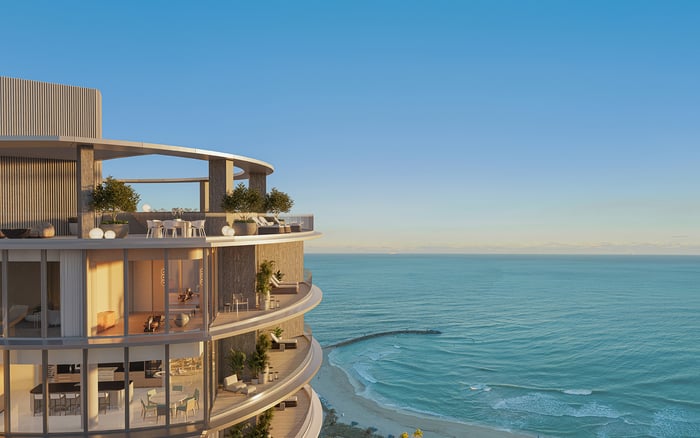
Rivage Bal Harbour sits within a very different frame. Bal Harbour is already a long-established oceanfront enclave north of Miami Beach, and Rivage’s proposition is defined by direct oceanfront living rather than downtown-adjacent or Intracoastal living. Here, prestige is not primarily about capturing a rising market narrative. It is about entering a scarce coastal setting with an existing luxury identity.
For many buyers, Bal Harbour’s value lies in its composure. The village character, beachfront positioning, and limited sense of availability support a blue-chip ownership psychology. Rivage Bal Harbour fits the buyer who wants the Atlantic to be central to the experience and who places a premium on established recognition. In this lens, Bal Harbour is less a discovery market than a known luxury enclave.
That does not make it more appropriate for every buyer. It means the ownership logic is different. Rivage is more likely to attract those who prioritize direct oceanfront living, long-standing prestige, and capital preservation through scarcity. The entry basis may reflect that established positioning, but the appeal is the confidence of buying into a market whose identity is already formed.
Prestige at Alba is linked to the rising profile of West Palm Beach as a place where luxury residential demand intersects with professional migration, family-office presence, and waterfront development. Its brand logic is forward-looking. Buyers are not simply buying a residence. They are taking a position in a mainland market that continues to define itself at a higher level.
Prestige at Rivage is more inherited. Bal Harbour already carries luxury recognition, and direct oceanfront positioning amplifies that recognition. The buyer is not betting on the area becoming prestigious. The buyer is paying for a place where prestige is already embedded in the location.
This is the essential contrast: Alba is prestige through trajectory, while Rivage is prestige through scarcity. One speaks to a buyer who values proximity to a growing business and residential hub. The other speaks to a buyer who wants the emotional permanence of an established beachfront enclave.
In ultra-luxury condominium ownership, governance discipline is rarely glamorous, but it often determines whether a building ages gracefully. Without relying on promises, a buyer should evaluate governance through practical questions: How does the resident culture treat privacy? How carefully will common areas be maintained? Does the ownership base appear aligned around long-term quality rather than short-term convenience? Are use patterns likely to support a quiet, consistent building experience?
At Alba, governance expectations may be shaped by a buyer pool drawn to new luxury product along the West Palm Beach waterfront corridor. The building’s long-term character will depend on how residents balance urban access with private residential discretion. A finance-adjacent buyer base may value efficiency, service quality, and low-friction living, but the association culture must still protect the building’s residential tone over time.
At Rivage, governance discipline is likely to be judged against the expectations of a legacy oceanfront enclave. Buyers entering Bal Harbour often expect discretion, controlled common-area presentation, and a residential environment that reflects the area’s established luxury character. The standard is not merely whether the building is beautiful at delivery, but whether the ownership culture can preserve its composure across cycles.
Resale at Alba depends partly on continued demand for new luxury product along the West Palm Beach waterfront. If the city’s role as a luxury residential and professional hub continues to deepen, Alba’s across-the-bridge position may remain compelling to buyers who want water, convenience, and access without choosing direct Palm Beach Island living. Its resale logic is therefore connected to market evolution.
Rivage’s resale logic is different. It is anchored in established oceanfront scarcity. The Bal Harbour buyer is typically not asking whether the area can become luxury, but whether the specific residence represents a disciplined entry into a scarce beachfront environment. That can support capital preservation, although the higher entry basis must be respected.
Neither thesis is automatically superior. Alba may offer a more direct connection to growth-market upside. Rivage may offer a more classical blue-chip framework. The right answer depends on whether the buyer wants to participate in an ascending mainland luxury market or secure a position in an established beachfront enclave.
Alba is likely to resonate with buyers who want waterfront living without committing to a resort-oceanfront rhythm. It fits households that value water views, a calm-water lifestyle, proximity to Palm Beach, and the practical advantages of West Palm Beach’s expanding business ecosystem. It is less about retreating from the city and more about living beside the water while remaining connected to a rising urban center.
Rivage is for the buyer who wants the ocean to define the day. It fits those who value established scarcity, a recognized enclave, and the psychological comfort of owning in a place where luxury identity is already mature. The lifestyle is quieter in its thesis: beachfront, curated, scarce, and less dependent on future market reinvention.
For some buyers, the decision will be emotional. For others, it will be strategic. The best comparison is to ask where the residence should sit within the broader life plan: close to business momentum and Intracoastal ease, or within a legacy beachfront address designed around permanence.
Is Alba West Palm Beach directly on the ocean? No. Alba is positioned around West Palm Beach waterfront living on the Intracoastal side rather than direct Atlantic beachfront.
Is Rivage Bal Harbour an oceanfront lifestyle play? Yes. Rivage’s appeal is defined by Bal Harbour’s direct oceanfront setting and established luxury enclave character.
Which building has the stronger growth-market narrative? Alba fits the growth-market thesis more directly because its appeal is tied to West Palm Beach’s continued evolution.
Which building has the stronger scarcity narrative? Rivage fits the scarcity thesis more directly because Bal Harbour is already a recognized oceanfront luxury enclave.
How should buyers think about governance discipline? They should focus on ownership culture, long-term maintenance expectations, privacy norms, and how the building is likely to age.
Does Alba compete with Palm Beach Island? It is better viewed as an across-the-bridge alternative, offering water proximity and access without the same island premise.
Does Rivage require a different capital mindset? Yes. Rivage is more about established prestige and capital preservation through beachfront scarcity, often with a higher entry basis.
Which lifestyle is more urban? Alba is more urban-waterfront, with its appeal tied to West Palm Beach’s downtown-adjacent growth and professional ecosystem.
Which lifestyle is more resort-like? Rivage is more resort-like because its identity centers on direct oceanfront living in Bal Harbour.
What is the simplest way to compare them? Alba is Intracoastal growth-market prestige, while Rivage is legacy oceanfront prestige with scarcity at the center.
For a confidential assessment and a building-by-building shortlist, connect with MILLION.
If branded residences are on your mind — as a home or as an allocation — we would be glad to share what we are seeing, privately.
Begin a quiet conversation