A buyer-focused comparison of Alba West Palm Beach and Mr. C Residences West Palm Beach, examining scale, pricing, amenity strategy, service model, timing, and which ownership profile each tower best suits in the evolving West Palm Beach luxury market.
In West Palm Beach, luxury buyers are increasingly choosing between two very different forms of vertical living. One is a classic new-construction residential tower shaped around privacy, architecture, and owner independence. The other is a branded residential-hospitality address where service is not simply an amenity, but the central operating principle. That distinction defines the comparison between Alba West Palm Beach and Mr. C Residences West Palm Beach.
Alba rises as a 47-story residential tower at 101 N Clematis Street in downtown West Palm Beach. Developed by Shoma Development and designed by Atis Architects, it is planned with more than 200 residences above approximately 15,000 square feet of retail and restaurant space. Mr. C, by contrast, is a 23-story tower at 101 S Narcissus Avenue developed by Related Companies and Lightstone Group, combining more than 100 residences with a 150-room boutique hotel.
For MILLION Luxury readers, the most useful lens is not which project appears more glamorous at first glance. It is how each building defines daily life. Alba is built around the idea of a primary residential tower. Mr. C is built around the idea of fully serviced living, with owners stepping into a hospitality environment from the moment they arrive.
Scale matters because it shapes atmosphere. Alba’s 200-plus residences place it in the category of a larger downtown tower, designed to support a broad amenity base and a more expansive resident population. It is also a pure residential proposition, which means the building’s identity is centered on ownership rather than hotel operations.
Mr. C is intentionally smaller on the residential side, yet more layered operationally. Its 100-plus residences are paired with a 150-room hotel, creating a mixed-use environment that blends private ownership with boutique hospitality. For some buyers, that hybrid structure feels elevated and efficient. For others, it introduces a different rhythm, with more transient activity and a stronger service culture.
This is where buyer psychology becomes decisive. A purchaser looking for residential continuity may be more naturally drawn to Alba. A purchaser who wants an arrival experience closer to a luxury hotel may find Mr. C more persuasive. In the broader South Florida context, that difference echoes the contrast between purely residential addresses such as Forté on Flagler West Palm Beach and branded, service-led properties that fold hospitality into everyday ownership.
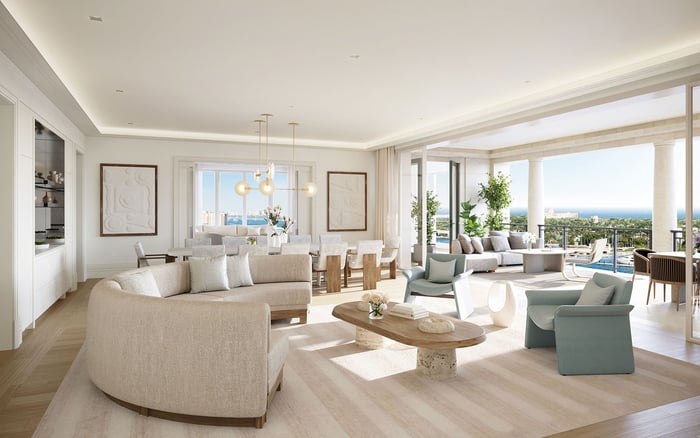
Alba’s identity is rooted in modern architecture, floor-to-ceiling glass, smart-home integration, and minimalist interiors. Its layouts emphasize open plans and technology-forward living, aligning with buyers who prefer clean lines and a more edited, contemporary domestic environment. The proposition is distinctly ultra-modern, but not theatrical. The emphasis is on ease, light, and urban functionality.
Mr. C approaches luxury from a different angle. The draw is not simply interior finish or skyline exposure, but the feeling of living within an established service culture. Furnished and unfurnished residences are offered, and the building’s value proposition rests on a hospitality framework that extends beyond the unit itself. It is a condo-hotel-inflected experience without asking every owner to behave like a hotel guest. Instead, it offers the option.
For buyers who have followed other branded or service-oriented residences in the region, the appeal will feel familiar. The logic is similar to what attracts certain purchasers to The Ritz-Carlton Residences® West Palm Beach, where the promise of staffing, programming, and polished operations carries real weight in the ownership decision.
Both towers present robust amenities, but they do not deliver the same lifestyle.
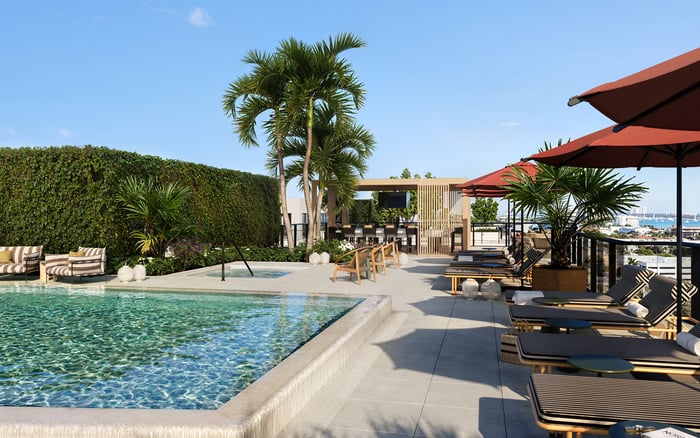
Alba includes a resort-style pool deck, fitness center, spa, co-working spaces, and a private club lounge. These are the amenities of an ambitious downtown residential building: social, practical, and well suited to owners who want wellness, work flexibility, and entertaining space within a self-directed daily routine. The presence of retail and restaurant space at the base also suggests a more porous urban relationship with the surrounding neighborhood.
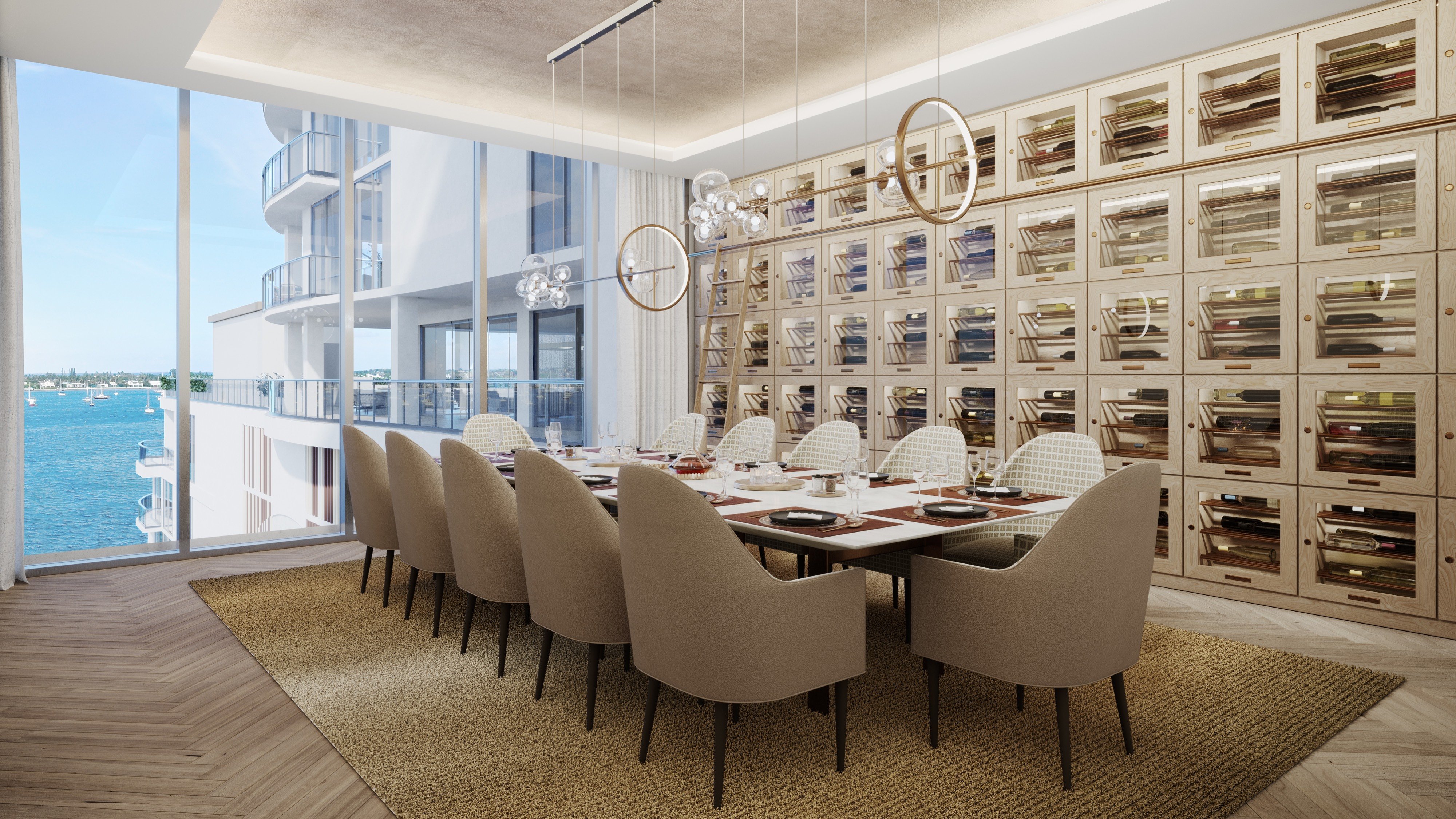
Mr. C offers a rooftop infinity pool, fitness center, wine cellar, cinema, and co-working lounge. On paper, that lineup is impressive. In practice, however, the more important distinction is the operating model around it. Mr. C includes 24/7 concierge, housekeeping, room service, spa access, and on-property dining connected to the brand’s hospitality ecosystem. It also centers part of its culinary identity around Spago by Wolfgang Puck.
That is why this comparison should not be reduced to amenity counts. Alba gives owners a residential toolkit. Mr. C gives them hospitality touchpoints woven into daily life. One model supports privacy and independence. The other reduces friction through staffing and service.
Pricing also reveals the two towers’ respective lanes. Alba launched sales in 2022, with residences ranging from studios to four-bedroom homes priced from about $400,000 to more than $3 million. Mr. C’s residences, spanning one-bedroom layouts to four-bedroom-plus-office homes, have been cited from about $800,000 to $2.5 million.
The headline takeaway is straightforward: Alba enters the conversation at a lower starting point, while Mr. C starts higher despite a smaller residential count. That does not automatically make Alba the value choice or Mr. C the premium choice in every scenario. It simply shows what each developer is selling. Alba is selling access to modern urban ownership across a broader range. Mr. C is selling a hospitality-embedded lifestyle with a higher initial threshold.
Timing matters too. Alba remains in development, with completion previously projected in the 2024 to 2025 window. Mr. C opened and began welcoming residents in 2024, which gives it a meaningful operational advantage for buyers who want a finished environment today. In a new-construction market, that distinction is not cosmetic. It affects certainty, immediate use, and buyer comfort with execution risk.
Alba is best understood as a fit for primary residents, younger professionals, and urban luxury buyers who want a polished vertical home base without the overt choreography of hotel living. Its appeal is strongest for owners who value contemporary design, smart-home functionality, open-plan layouts, and the freedom to engage the building on their own terms. For this buyer, privacy feels luxurious.
Mr. C is better suited to those who place a premium on daily service and operational ease. Buyers seeking concierge support, housekeeping access, room service, and a more managed residential experience will likely see the building as a more complete answer. The condo-hotel structure also introduces an investment angle, since owners can opt into a hotel rental program, though detailed economics are not publicly spelled out in the available materials.
This does not make Mr. C purely a second-home play, nor does it prevent Alba from attracting investors. But the center of gravity differs. Alba leans residential first. Mr. C leans serviced living first. That distinction is likely to shape resale psychology, leasing interest, and owner satisfaction over time.
For buyers surveying the larger local landscape, comparable instincts may also lead them toward nearby luxury developments such as Shorecrest Flagler Drive West Palm Beach, where the decision often comes down to whether one prefers a pure residential identity or a more branded, lifestyle-specific proposition.
Alba and Mr. C are not rivals in the simplistic sense of two towers chasing the same buyer. They are parallel answers to different questions. Alba asks whether modern downtown ownership can feel refined, flexible, and design-forward. Mr. C asks whether home can operate with the ease and polish of a boutique hotel.
In West Palm Beach, that is a meaningful divide. If you want a residence that foregrounds independence, contemporary planning, and a broader entry point, Alba is the clearer fit. If you want hospitality embedded into the ownership experience, with a completed 2024 opening and service at the center, Mr. C is the more compelling address.
Which tower is taller, Alba or Mr. C Residences West Palm Beach? Alba is taller at 47 stories, while Mr. C rises 23 stories.
Is Alba West Palm Beach a hotel-branded residence? No. Alba is positioned as a pure residential tower rather than a residential-hospitality hybrid.
Does Mr. C Residences West Palm Beach include a hotel component? Yes. The property combines private residences with a 150-room boutique hotel.
Which project has the lower reported entry price? Alba has the lower reported starting point, at about $400,000 versus about $800,000 for Mr. C.
Which building is already open? Mr. C opened in 2024 and began welcoming residents, while Alba remains in development.
What type of buyer is Alba best suited for? Alba is generally better aligned with buyers seeking modern residential living, privacy, and design-led independence.
What type of buyer is Mr. C best suited for? Mr. C is more directly suited to buyers who value hotel-style service and a hospitality-oriented lifestyle.
Does Mr. C offer a rental program for owners? Yes. Owners can opt into a hotel rental program, though detailed economics are not broadly disclosed.
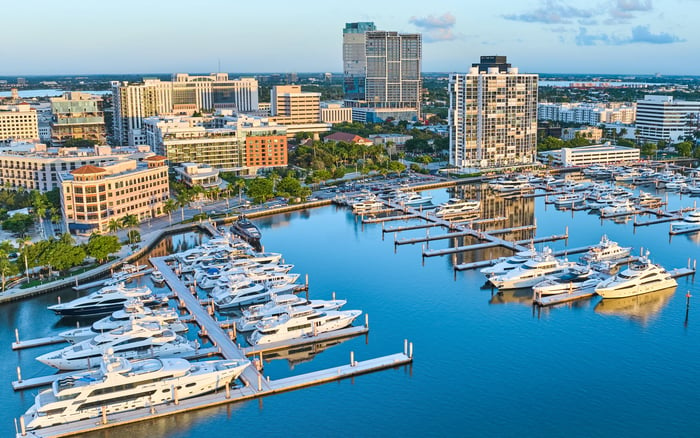
Are both projects located in Downtown? Yes. Both towers are located in downtown West Palm Beach at different addresses.
What is the core difference between the two? Alba emphasizes amenity-led residential ownership, while Mr. C emphasizes serviced living with embedded hospitality operations.
For a tailored shortlist and next-step guidance, connect with MILLION Luxury.
If branded residences are on your mind — as a home or as an allocation — we would be glad to share what we are seeing, privately.
Begin a quiet conversation