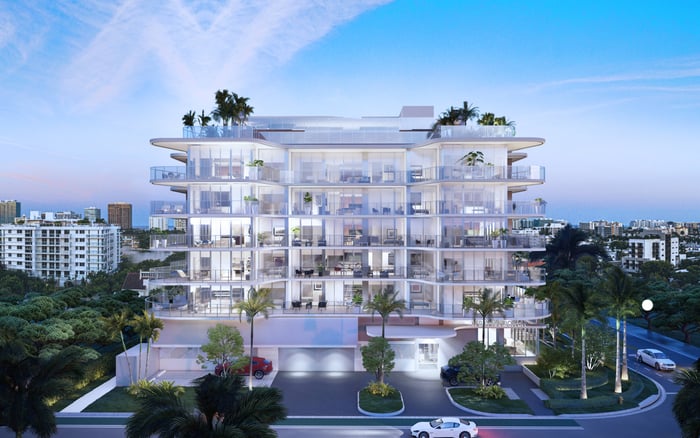
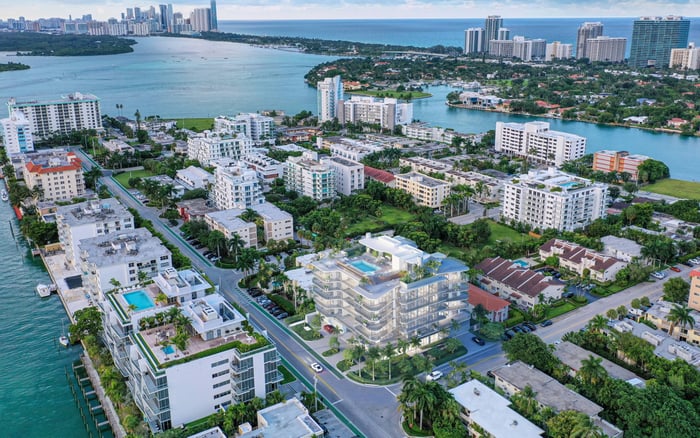
A buyer-focused due-diligence guide for families evaluating school-bag storage at Alana Bay Harbor Islands, from entry layouts and built-ins to corridor rules and written confirmations.
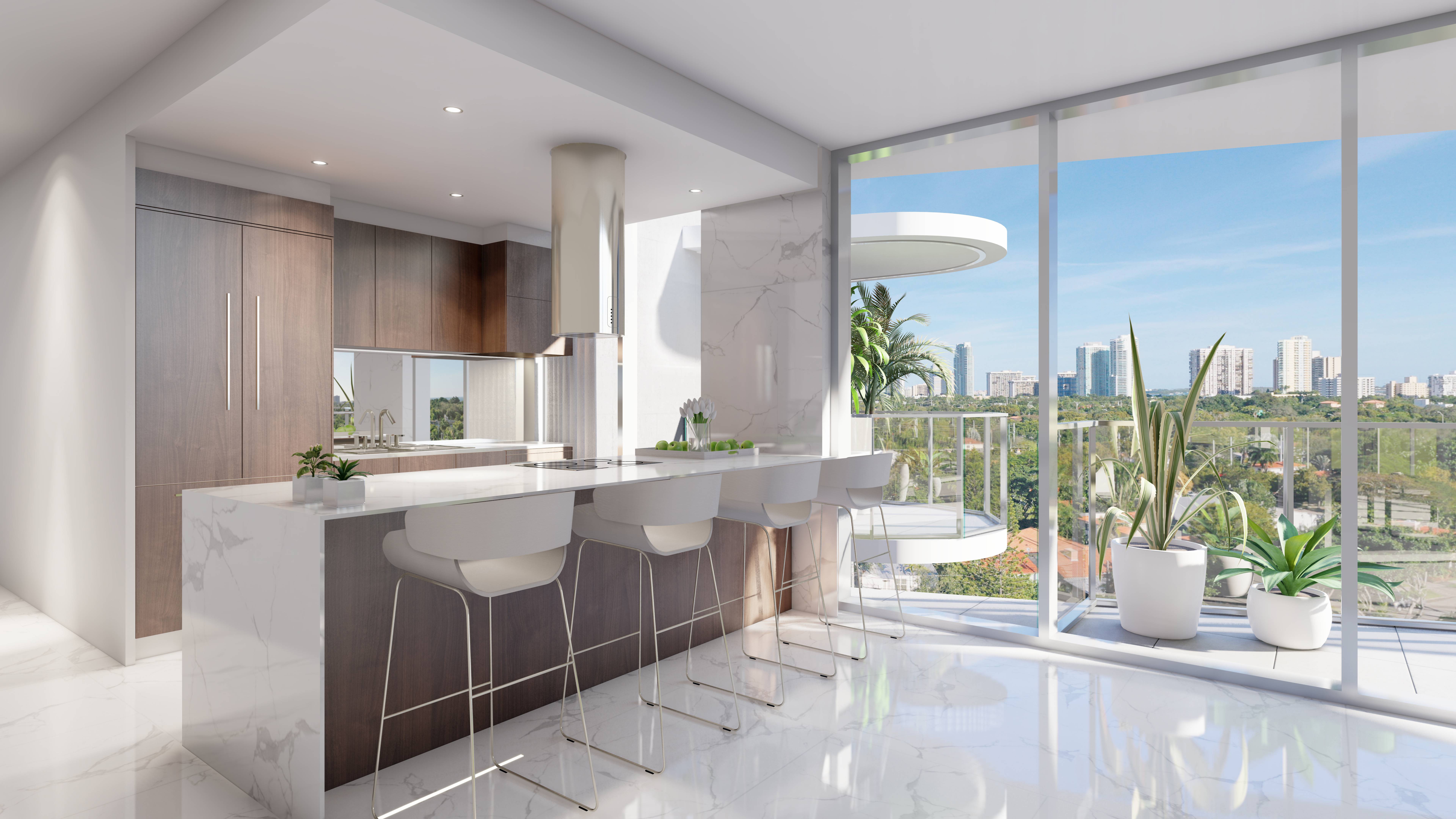
At Alana Bay Harbor Islands, the question of where school bags land each afternoon is not a minor decorating preference. It is a daily operating issue, shaping the first five minutes after the elevator opens and the first ten minutes before a family leaves in the morning.
That distinction matters in a boutique condominium environment, where the appeal is often tied to scale, privacy and refined design. Even the most elegant entry can fail a family if backpacks, sports bags, lunch boxes, shoes and tablets have no natural place to go. A beautiful rendering may show a calm foyer, a bench, a styled basket or a slender console. The buyer’s task is to determine whether that scene reflects a contractual deliverable, an optional enhancement or simply lifestyle staging.
For families comparing Alana Bay Harbor Islands with other Bay Harbor residences, storage deserves the same discipline applied to finishes, appliance packages and views. The right question is not whether a rendering looks organized. The right question is whether the residence can remain organized on a Tuesday at 7:35 a.m.
The first due-diligence step is to move from imagery to documents. Floor plans, finish schedules and condominium documents are more useful than a styled visual when the issue is school-bag storage. A rendering can suggest a drop zone, but the plan reveals dimensions, door swings, wall lengths and the actual circulation path.
In the entry area, buyers should focus on four items: front-door clearance, hallway width, closet placement and usable wall surface. A shallow niche may be enough for hooks and a slim bench. A wider foyer may support built-in cubbies or a more substantial millwork installation. A narrow entry, by contrast, can create friction among backpacks, grocery bags, stroller movement, shoes and the arc of the front door.
This is where the distinction between design atmosphere and functional capacity becomes critical. A bench in an image may be loose furniture. Hooks may be styling. A storage wall may be illustrative. Unless the item appears in the relevant specifications or is confirmed in writing, it should not be treated as included.
A school-bag zone can be deceptively simple. It may involve a bench, cubbies, hooks, closed cabinetry, charging drawers, shoe storage and wall protection. Yet each element can fall into a different category: included in the base specification, available as an upgrade, permitted as a buyer customization or left for post-closing installation.
At Alana Bay Harbor Islands, buyers should ask direct questions before relying on any mudroom-style feature. Is the bench built in or staged? Are cubbies part of the millwork package? Are hook rails included? Is the wall reinforced for future hooks or cabinetry? Are there planned outlets near the likely bag-drop location for tablets, laptops, phones and school devices?
Those questions are not fussy. They are practical. Private-school routines, after-school activities and device charging habits can turn an under-planned foyer into a recurring source of clutter. In a luxury residence, the best storage solutions are not improvised after move-in. They are anticipated early, coordinated with dimensions and confirmed before expectations harden.
The ideal school-bag location is not always the formal entry. If the laundry room, utility closet or secondary storage area sits near the front door, it may serve as a more discreet management zone. That possibility should be checked on the actual plan rather than assumed from a marketing view.
A laundry-adjacent solution may work well if it allows bags, uniforms or sports items to be handled away from the main living area. A nearby closet may work if it is deep enough and does not compete with guest coats or household supplies. A utility space may be useful if it can accommodate hooks, shelves or labeled baskets without obstructing mechanical access.
The key is sequence. Where does a child naturally enter? Where do shoes come off? Where does a parent place groceries? Where does a stroller turn? If the proposed bag zone requires several extra steps or blocks a primary path, it may look elegant in theory but fail in daily use.
School-bag storage is as much about movement as it is about cabinetry. Families should imagine the residence during the highest-pressure moments of the day: the morning departure and the afternoon return. In those moments, a narrow foyer can become crowded quickly.
Door swing deserves particular attention. A bag placed beside the entry can interfere with the front door or closet door. Shoes can migrate into the walking path. A stroller, scooter or sports bag can turn a gracious hallway into a bottleneck. Even when square footage is generous elsewhere, the entry sequence may be where daily life compresses.
For new-construction and pre-construction buyers, this is the moment to request precise plan review. A tape measure, scaled plan and written response can be more valuable than another perspective rendering. The buyer is not challenging the design. The buyer is translating the design into family use.
The best in-unit storage plan still depends on the building’s shared circulation. Corridor width, elevator flow and the distance from elevator to residence all matter when families are moving with backpacks, scooters, sports equipment, strollers and parcels.
A calm corridor in a rendering may not reveal what happens during peak morning and afternoon periods. Buyers should consider whether the path from elevator to door allows two-way movement comfortably. They should also ask how the building expects residents to handle items that cannot be left inside the unit momentarily, such as wet shoes, sports equipment or folded scooters.
Equally important are the building rules. Many condominium buildings restrict leaving personal items outside the unit door or in shared corridors. Families should review whether backpacks, shoes, scooters or sports gear may be placed in hallways, even briefly. In a well-run building, shared spaces are protected for appearance, access and safety. That can be entirely appropriate, but it means the residence itself must solve the storage problem.
If the base plan does not fully answer the school-bag question, customization may. Buyers should ask whether built-in benches, cubbies, millwork, hook rails, charging drawers or reinforced wall blocking can be coordinated before closing. The earlier this conversation happens, the easier it may be to integrate the solution cleanly.
A refined family entry is often a layered composition. Closed storage hides visual clutter. Open hooks make daily use easier. A bench creates a natural place for shoes. Charging drawers prevent devices from spreading across the kitchen. Durable wall finishes protect against repeated contact from bags and equipment.
The most important step is documentation. Families considering Alana should request written confirmation of what storage-related elements are included, what can be upgraded, what can be customized and what must be handled after closing. Verbal impressions are not enough when the issue affects every school day.
South Florida luxury buyers often evaluate residences through views, architecture, amenities and finish quality. Those remain essential, but family livability is found in repetition. A home succeeds when the routine feels effortless, not only when the photography feels serene.
For Alana Bay Harbor Islands, the school-bag question is a useful lens because it reveals how carefully a residence supports daily life. It asks whether beauty has been translated into storage, circulation and operational clarity. It asks whether the private residence, the floor corridor and the building rules work together.
The most sophisticated buyers will not dismiss these details as small. They will understand that a foyer with the right storage, outlet placement and clearance can make a home feel composed every day. In that sense, school-bag storage is not about backpacks. It is about whether the residence performs with the same grace it presents.
Before making assumptions from imagery, buyers should review the actual plan and identify the likely school-bag location. They should verify whether any depicted bench, cubby, hook rail, storage wall or drop zone is included, optional or illustrative. They should check whether the entry has enough width for bags, shoes, stroller movement, groceries and the front-door swing.
They should also ask whether nearby laundry, utility or secondary storage can serve the routine. Electrical outlets or charging locations near the bag area should be confirmed if school devices are part of the household rhythm. Building rules should be reviewed for corridor restrictions. Finally, any desired customization should be clarified early and documented in writing.
That is the practical standard for Bay Harbor family buyers considering Alana Bay Harbor Islands. The rendering can inspire the conversation. The documents should decide it.
Is school-bag storage really a luxury real estate issue? Yes. It affects repeated morning and afternoon routines, making it a core livability issue rather than a decorative afterthought.
Can I assume a bench or cubbies in a rendering are included? No. Any bench, cubby, hook rail or storage wall should be verified against specifications or confirmed in writing.
What documents should I review first? Start with the floor plan, finish schedule and condominium documents, then ask specific storage-related questions.
Which part of the residence matters most? The front entry is the priority because it controls door swing, circulation, closet access and the first drop zone.
What if the foyer is narrow? A narrow foyer can create conflicts among backpacks, shoes, groceries, strollers and the front door, so dimensions matter.
Can a laundry room solve the storage issue? It can if it is near the entry and practical on the actual plan, but that should be confirmed rather than assumed.
Should I ask about charging locations? Yes. Tablets, laptops, phones and school devices often need power near the place where bags are stored.
Do corridor rules matter? Yes. Building rules may limit leaving backpacks, scooters, shoes or sports equipment outside the unit door.
Can storage be customized before closing? Buyers should ask whether built-ins, hooks, millwork, charging drawers or wall blocking can be coordinated early.
What should I get in writing? Confirm what is included, what is optional, what can be upgraded and what must be installed after closing.
For a confidential assessment and a building-by-building shortlist, connect with MILLION.
If branded residences are on your mind — as a home or as an allocation — we would be glad to share what we are seeing, privately.
Begin a quiet conversation