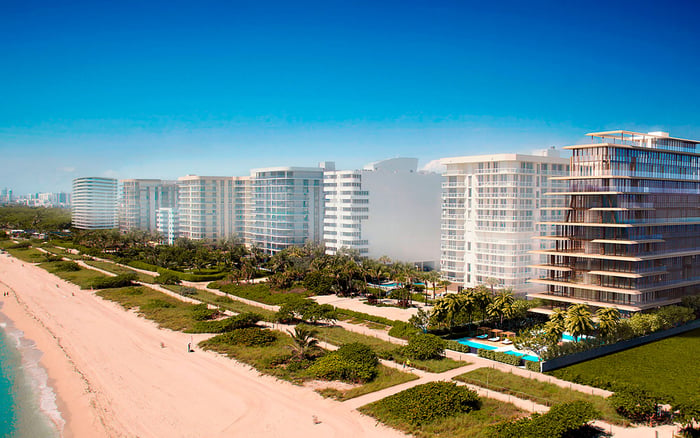
For a Boston buyer considering a Surfside second home, the essential review connects condominium documents, structural findings, reserve funding and insurance history before the purchase becomes a commitment.

For a Boston household considering a Surfside second home, the appeal may begin with a terrace and an easier winter rhythm. The purchase decision should also rest on something less visible: how the condominium association understands, finances and manages its building. An elegant residence and a well-documented ownership proposition are distinct qualities.
The essential review connects four subjects: condominium documents, structural inspections, reserve funding and insurance history. Read together, they help distinguish predictable commitments from unresolved questions. A low monthly assessment alone does not demonstrate adequate funding.
If Arte Surfside is on your shortlist, apply the same documentary discipline you would to any candidate. A project’s presentation is not evidence of its inspection status, reserve adequacy or insurance terms. Those conclusions require building-specific records and qualified review.
Ask your Florida real-estate attorney to organize the document review around the contract’s applicable deadlines. Request the declaration, bylaws, rules, current budget, financial statements, reserve balances, recent board minutes and information about approved or contemplated special assessments. For seasonal ownership, ask counsel to identify provisions affecting occupancy, guests, leasing and access during your absence.
Inspection reports and reserve studies are association records that must be available to prospective purchasers. If an expected document is absent, request written clarification of whether it exists, whether the building is subject to the requirement, and what deadline or exception applies. Do not treat an empty file as proof that no obligation exists.
Broader requests may require coordination through the seller, association or advisers. Not every item suggested here is necessarily a legally mandated purchaser disclosure or directly obtainable by a buyer. The goal is a coherent file, not simply a large one.
Florida’s milestone-inspection requirements generally cover residential condominium and cooperative buildings with three or more habitable stories. The usual starting point is an initial inspection at 30 years, followed by inspections every 10 years. A local enforcement agency can require the first inspection at 25 years when local conditions warrant it.
For a Surfside purchase, confirm the building-specific deadline rather than assuming either age applies automatically. Ask counsel to verify the governing requirements and any relevant local determination.
Request the complete milestone inspection report, any subsequent inspection phases and engineering recommendations. A statement that the building “passed” is no substitute for understanding the findings. Crucially, a completed inspection does not establish that recommended repairs have been completed.
Where work is identified, request the board’s response, the proposed scope, scheduling information and available evidence of completion. Have a qualified engineer interpret technical uncertainties. The question is not merely whether the structure was inspected, but what the findings require and how the association is responding.
A milestone inspection evaluates structural conditions. A Structural Integrity Reserve Study, or SIRS, estimates the timing and funding needs of major common-element repairs and replacements. Qualifying condominium buildings must undergo a SIRS at least every 10 years. The two documents serve different purposes and should be read together.
SIRS-covered components include the roof, load-bearing structure, fireproofing and fire-protection systems, plumbing, electrical systems, waterproofing and exterior painting, windows, and exterior doors. Review each component’s condition, remaining useful life, estimated repair or replacement costs, and recommended reserve funding. Confirming that a study exists is only the beginning.
For existing owner-controlled associations subject to the initial requirement, the general SIRS deadline was December 31, 2025, subject to statutory exceptions. Eligible associations with milestone inspections due on or before December 31, 2026, may coordinate the SIRS with that inspection, but this provision does not allow SIRS completion after December 31, 2026. Have counsel verify eligibility and current exceptions rather than assuming an extension.
When evaluating Fendi Château Residences Surfside, assess the ownership proposition through the applicable documents, not assumptions drawn from the name. No inspection finding or reserve position should be inferred from this comparison.
Compare the current budget and reserve balances with the SIRS recommendations. Ask the association to explain differences in timing, amounts or funding approach. The central question is whether the adopted plan addresses identified obligations, not whether the monthly assessment looks attractive beside another building’s charge.
For budgets adopted after December 31, 2024, qualifying owner-controlled associations generally cannot waive or underfund required SIRS-component reserves. Statutory exceptions make building-specific legal review important. A limited provision allows reserve funding to be paused or reduced for no more than two consecutive annual budgets to fund milestone-recommended repairs; it does not apply when the inspection identifies no repairs.
If an association relies on that provision, request an explanation of its eligibility, the repair funding and the plan for subsequent budgets. Identifying necessary work and financing it are separate responsibilities. Ask your advisers to distinguish money already collected from proposed assessments, borrowing or other funding still awaiting action.
Rising insurance premiums and structural compliance obligations can place simultaneous pressure on condominium finances. Neither establishes a particular building’s premiums, policy terms, deductibles or claims history. Those details require a separate review.
Through the appropriate parties, request current association policy information, available prior renewal information, deductible schedules, coverage changes and available claims history or loss runs. Where relevant, seek clarification about open claims, unresolved repairs and renewal conditions. These are due-diligence requests, not assurances that every record will be available directly to a prospective purchaser.
Have an insurance adviser explain how the association’s coverage relates to the protection proposed for your residence, including intended seasonal occupancy. Do not turn a verbal assurance into a carrying-cost assumption.
For a residence at The Surf Club Four Seasons Surfside, the insurance questions remain equally specific. The project’s identity does not establish what a policy covers or how future renewal costs might affect the association budget.
Before committing, consolidate the review into one decision sheet: applicable deadlines, outstanding engineering recommendations, repair status, reserve funding, assessment exposure and insurance questions. Separate documented facts from estimates and unresolved items. Ask your attorney which uncertainties should be resolved within the contractual review period and what protections may be appropriate.
If you are keeping a Boston base, ask who will communicate future board decisions, repair schedules and insurance changes while you are away. A considered second home should support the life you intend to enjoy, with its financial and operational obligations understood rather than merely assumed.
Explore a considered approach to Surfside second-home ownership with MILLION.
If branded residences are on your mind — as a home or as an allocation — we would be glad to share what we are seeing, privately.
Begin a quiet conversationThe requirements generally cover residential condominium and cooperative buildings with three or more habitable stories. Confirm applicability for the specific building.
The usual initial inspection is at 30 years, with subsequent inspections every 10 years. A local enforcement agency can require the first inspection at 25 years when local conditions warrant it.
A milestone inspection evaluates structural conditions. A Structural Integrity Reserve Study estimates the timing and funding needs of major common-element repairs and replacements.
Qualifying condominium buildings must undergo a SIRS at least every 10 years. Buyers should also verify the applicable initial deadline and any statutory exception.
Eligible associations with milestone inspections due on or before December 31, 2026, may coordinate the studies. That provision does not permit SIRS completion after December 31, 2026.
No. Review the findings separately from the board’s repair response and available evidence that recommended work has been completed.
No. Compare the current budget and reserve balances with the SIRS funding recommendations and ask for explanations of material differences.
Qualifying owner-controlled associations generally cannot waive or underfund required SIRS reserves for budgets adopted after December 31, 2024. Exceptions require building-specific review, including a limited repair-related pause or reduction for no more than two consecutive annual budgets.
Seek current policy information, deductible schedules, available renewal history, coverage changes and available claims history or loss runs. Coordinate requests through the appropriate parties and have an insurance adviser assess the available information.
Request written clarification about whether the documents exist, whether the requirements apply and which deadlines or exceptions govern. Ask your attorney to address unresolved questions within the applicable contractual review period.