Five South Florida search options for family offices evaluating absentee ownership, with wind protection, post-storm access, and coastal maintenance treated as essential diligence criteria rather than assumed benefits.

For a family office, the most persuasive South Florida residence is not simply one that closes elegantly behind its owner. It is one whose physical protection, maintenance responsibilities, and return-to-service procedures withstand careful scrutiny. That distinction matters when a home sits unoccupied through part of hurricane season.
Strong wind protection, post-storm access, and documented coastal maintenance are selection criteria here-not verified attributes shared by every option. The five choices below establish a priority order for due diligence, not a certified resilience ranking. They span a condominium category, two named residences, and two waterfront search areas, each requiring property-specific review.
The central principle is straightforward: an undamaged apartment does not necessarily mean an accessible, fully functioning building. Impact-resistant windows address windborne debris; they do not resolve questions about flooded parking, elevator operation, or cooling restoration.
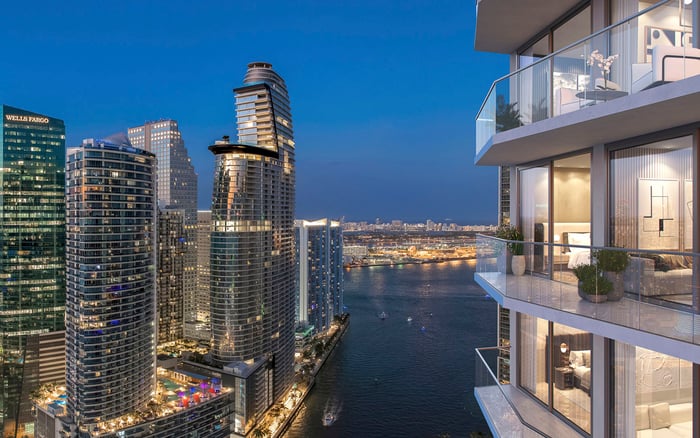
1. Newer luxury high-rise condominium: Brickell or Miami Beach
Begin with this category when the objective is to evaluate building-level storm coordination alongside impact-glazing protection. Its first position makes it a starting point for document review-not a conclusion that newer construction or greater height guarantees continuity.
Request the actual window and door specifications, then examine the systems below the residence. High-floor ownership does not eliminate exposure to flooded garages, disrupted elevators, or compromised building equipment. Covered parking warrants its own flood assessment. Management should also explain HVAC shutdown and restart procedures before the family office treats the property as genuinely lock-and-leave.
2. Faena House: Mid-Beach, Miami Beach
Faena House belongs on the shortlist as a managed-tower candidate, with neighborhood flooding and storm-surge exposure as the opening questions. Its inclusion is not proof of superior construction, backup power, or post-storm access.
Move from neighborhood screening to the building's engineering and operating documentation. Ask which essential systems must be inspected or restored before owners can return, who communicates that decision, and how coastal maintenance is recorded. Those answers should determine whether the residence advances beyond the initial shortlist.
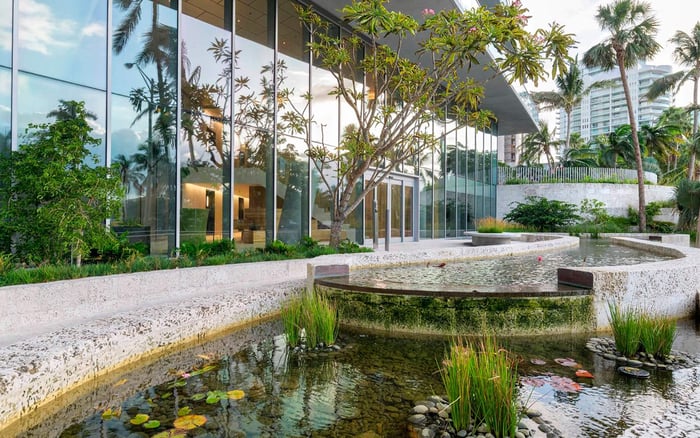
3. Mr. C Residences: Coconut Grove, Miami
Mr. C Residences offers a managed-residence alternative in Coconut Grove. Its suitability remains conditional on site-specific flood exposure and backup-power verification, not the expectations associated with its name.
Request a written account of exactly what backup power serves, supported by the relevant documentation. Pair that review with questions about elevators, HVAC, and post-event inspections. Neighborhood-level flood screening can guide the search, but it cannot certify the building or establish when a particular residence will become usable after a storm.
4. Harbor Beach waterfront residences: Fort Lauderdale
Harbor Beach is the private-waterfront-home option for buyers prepared to evaluate the house and its coastal site together. Elevation, seawall condition, and individual construction should lead the assessment; the neighborhood does not establish a uniform resilience standard.
Review impact-rated windows and doors, roof tie-downs, and the continuous load path with the appropriate technical advisers. Extend the inspection to docks, drainage, and seawalls. For an absentee owner, the operating arrangement deserves equal attention: identify who secures the exterior, inspects the property afterward, and coordinates required repairs.
5. Las Olas Isles / Rio Vista waterfront residences: Fort Lauderdale
These alternative search areas belong on the list for buyers weighing a waterfront house against a managed condominium. The decision should turn on the individual property's elevation, seawall condition, and construction-not the address alone.
Require documented maintenance and a clear operating arrangement before relying on the lock-and-leave premise. A home's interior condition is only part of the review; coastal-site components need their own inspection history. Neither neighborhood prestige nor a well-presented house guarantees post-storm access.
A disciplined condominium review should maintain two distinct files: physical protection and operational recovery. The first covers the building envelope and its specifications. The second covers garage access, elevators, essential systems, inspections, and the sequence for restoring service.
For a Brickell search that includes Una Residences Brickell, use those same two files rather than assuming any particular storm capability. Request property-specific evidence before drawing conclusions about protection or continuity.
In Miami Beach, a review of Faena House Miami Beach should likewise distinguish the apartment's condition from the entire building's readiness. Cooling may be shut down during a hurricane, and re-entry may depend on inspections and restoration of essential systems.
Ask management to describe the sequence, not promise a return date: who assesses damage, which systems need clearance, and how owners receive updates. A defined procedure is more useful to an absentee owner than an unsupported assurance of rapid reopening.
For waterfront houses, due diligence extends beyond the front door. Seawalls, docks, drainage, and other coastal-site components belong in the same review as glazing and roof connections. Assess each component's condition separately rather than allowing an attractive interior to stand in for the whole property.
Request dated inspection records, maintenance invoices, photographs, and evidence that identified work was completed. These are recommended diligence materials, not assumed features of any neighborhood or residence on this list. The objective is to distinguish a completed repair from an unresolved recommendation.
Apply the same discipline when considering Mr. C Tigertail Coconut Grove: request maintenance documentation relevant to that property rather than transferring assumptions from another managed residence. The name on the entrance cannot substitute for a documented record of care for the building and its systems.
Before acquisition, define the responsibilities that remain when the owner departs. A useful management brief should address pre-storm preparation, exterior securing, monitoring, post-event inspections, photographic documentation, and repair coordination. Moisture, HVAC, and preventive-maintenance oversight belong in the year-round scope, not only on the hurricane checklist.
Ask prospective managers to put service boundaries in writing. Clarify who may authorize work, how the family office receives condition updates, and what documentation is retained for insurance purposes. Treat advertised services as proposed capabilities until the engagement defines the actual responsibilities.
The final choice should follow the evidence: construction documentation for protection, operating procedures for return, and maintenance records for stewardship. Where those questions remain unresolved, retain the property as a candidate rather than treating its lock-and-leave suitability as established.
For a discreet conversation about aligning your South Florida residence search with these priorities, connect with MILLION.
If branded residences are on your mind — as a home or as an allocation — we would be glad to share what we are seeing, privately.
Begin a quiet conversationNo. They are a priority shortlist for property-specific diligence, with wind protection, access, and maintenance treated as selection criteria.
They are a starting point for evaluating building-level storm coordination and impact-glazing protection. Newness and height alone do not establish operational continuity.
No. They address windborne debris, while access may depend on inspections, elevators, garages, and restoration of essential building systems.
No. A high-floor owner can still face flooded garages, disrupted elevators, or compromised building equipment.
No. Covered parking should be assessed separately for flood exposure rather than assumed to protect vehicles during a storm.
Ask whether cooling is shut down during a hurricane and what procedures govern its restart. Include ongoing HVAC and moisture oversight in the absentee-management brief.
Both require property-specific engineering and operating documentation. Review flood exposure, backup-power arrangements, maintenance records, and post-event access procedures without assuming capabilities from the name.
Review elevation, seawalls, docks, and drainage alongside the house's construction. Wind-protection diligence should also address impact-rated openings, roof tie-downs, and continuous load paths.
Request dated inspections, invoices, photographs, and evidence of completed work. These materials help distinguish resolved maintenance items from outstanding recommendations.
Define pre-storm preparation, exterior securing, monitoring, post-event inspections, documentation, and repair coordination. Include year-round moisture, HVAC, and preventive-maintenance responsibilities.