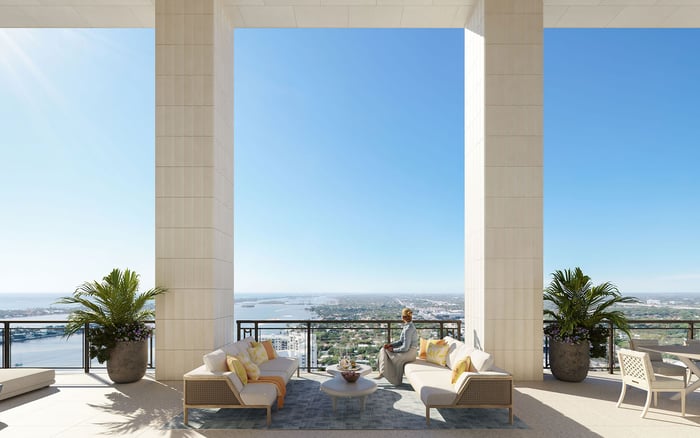
South Flagler House offers an unusually broad amenity program, but buyers should distinguish physical abundance from practical access. The decisive questions concern booking windows, guest priority, fees, time limits, cancellations, and holiday controls for the building’s most capacity-sensitive spaces.
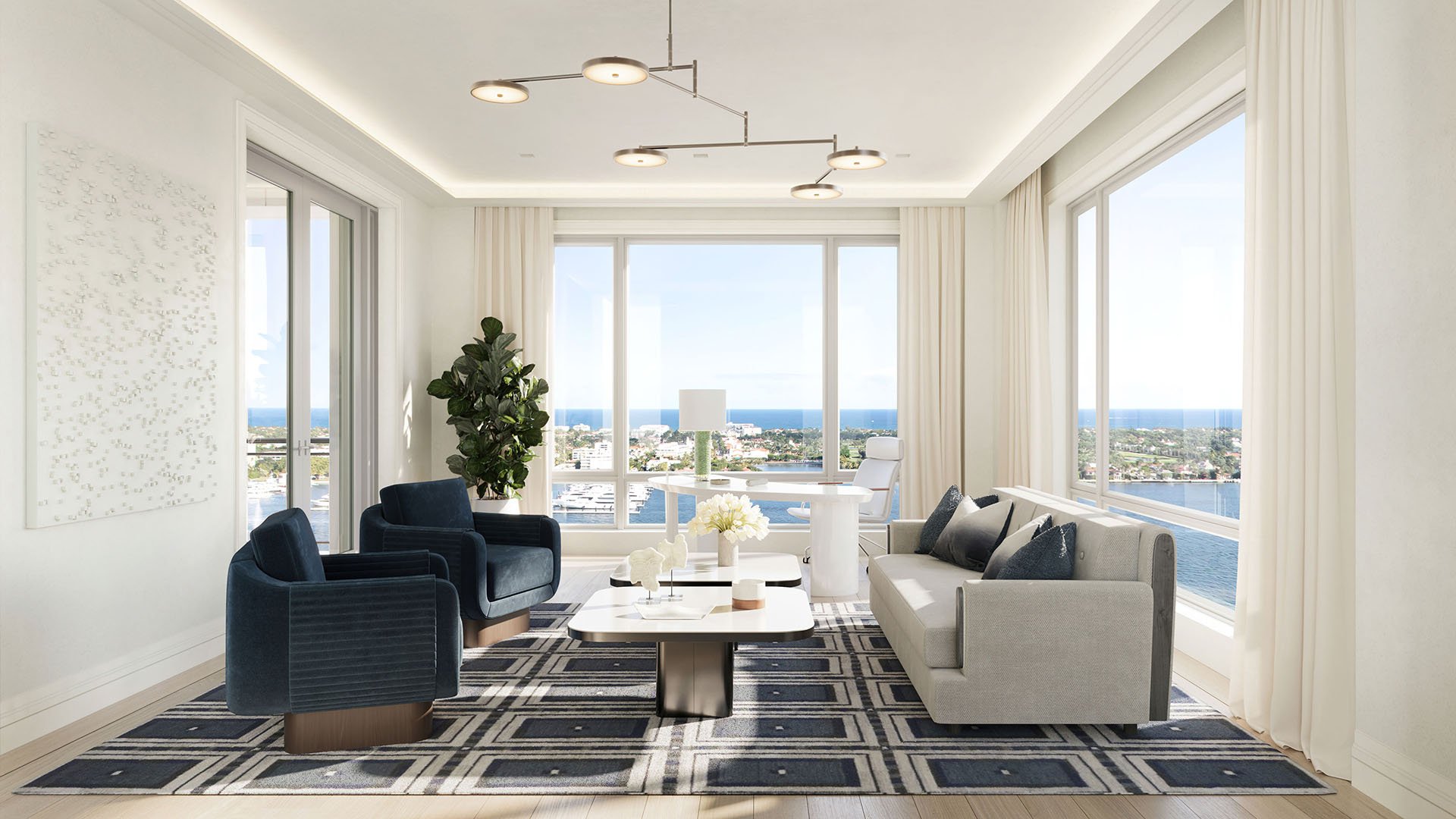
At South Flagler House West Palm Beach, the amenity proposition is substantial: three full floors devoted to sports, spa, fitness, social, business and children’s spaces. The approximately 40,443-square-foot program offers meaningful breadth, yet square footage alone cannot answer the question sophisticated buyers should ask before committing: How easily can residents use the most desirable facilities when seasonal occupancy peaks?
The distinction is between availability in a brochure and access in daily life. A fitness floor can accommodate many residents across multiple spaces. A single pickleball court, golf simulator lounge, treatment room or guest suite is inherently more capacity-sensitive. Reservation rules determine whether these amenities feel spontaneous, thoughtfully shared or persistently oversubscribed.
In a service-rich condominium, access rules are part of the luxury product.
For pre-construction buyers, this is not a minor operational detail. Amenity governance can shape routines, entertaining, family visits and the overall sense of ease. In West Palm Beach, where seasonal demand can concentrate usage, proposed house rules deserve scrutiny alongside plans, finishes and views.
South Flagler House’s range should help distribute residents across the property. The fitness offering includes a main fitness center, fitness lounge, private training studio, Pilates and yoga studios, an outdoor yoga lawn and a HIIT lawn. These options provide alternatives when one area is busy. Children’s facilities-including an indoor playroom, lounge, craft space and outdoor recreation areas-may similarly separate family activity from adult wellness zones.
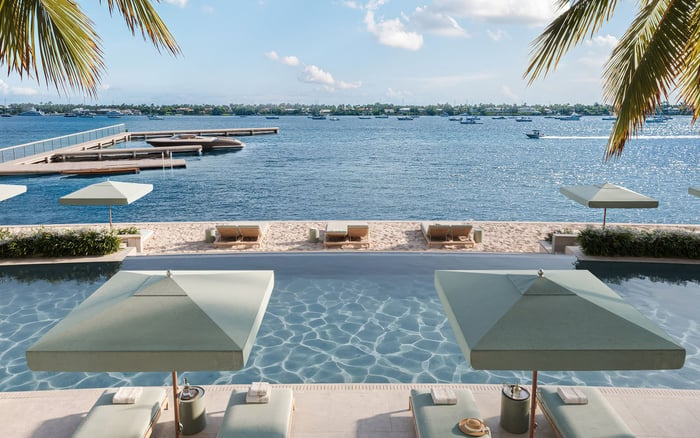
The aquatic program combines a 25-meter lap pool, sun shelf, hot tub, landscaped terrace and poolside cabanas. The pool itself may accommodate varied patterns of use, but the cabanas present a separate access question. Although described as private, it remains unclear whether they are assigned, separately purchased or reserved in time slots. A buyer who envisions predictable cabana use should request the governing arrangement in writing.
Spa circulation requires the same layered reading. Men’s and women’s facilities include vitality pools, ice plunges, steam rooms, saunas, changing areas and locker rooms. These differ from treatment rooms and the beauty salon, which provide appointment-based services. Booking lead times, service fees, cancellation terms and resident-versus-guest priority remain unspecified.
The clearest pressure points are facilities that cannot readily absorb simultaneous demand. South Flagler House includes a single pickleball court and lounge, a golf simulator lounge, putting facilities, and game and sports lounges. Buyers should ask whether reservations open by day, week or month; whether prime periods carry time limits; and whether no-shows incur penalties.
Private dining rooms warrant equal attention. The social program also includes resident dining areas, an outdoor dining patio, lounges, and catering or commercial kitchen facilities. It remains unclear how often a residence may reserve a private room, how long an event may run, whether fees apply and whether an event can restrict casual access to adjacent lounges.
Guest suites can materially improve the experience of hosting family during Palm Beach’s busiest periods. Yet their practical value depends on booking windows, nightly charges, cancellation policies, holiday restrictions and per-residence stay limits, all of which remain unspecified. A suite that is theoretically available but difficult to secure on sought-after dates should be evaluated differently from one governed by transparent rotation or equitable limits.
Wine storage raises a question of ownership rather than scheduling alone. Buyers should determine whether lockers are assigned, sold separately, licensed or shared by reservation. Private offices and conference rooms may also become seasonal pinch points, particularly for residents expecting to work full days rather than hold occasional meetings.
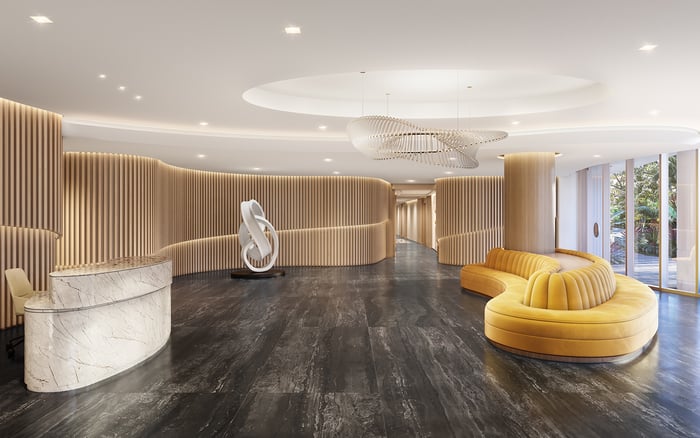
Physical capacity tells only half the story. Resident services include a 24-hour attended lobby with concierge, valet, on-site management, garage parking and house-car service. During periods of concentrated demand, staffing and scheduling technology can determine whether these offerings operate as seamless conveniences or require advance planning.
The house car is a useful example. Its scheduling process, usage caps and resident-versus-guest priority remain unspecified. Buyers should ask about the service radius, reservation timing, waitlist procedures and peak-period protocols, then confirm every answer in project documents rather than rely on assumptions.
Other features are less exposed to reservations. Private keyed elevators, filtered-air ventilation, building-wide Wi-Fi, bicycle storage and a dog-washing room are structural or routine-use conveniences. Their presence matters to lifestyle quality, but they do not create the same competition as a court, cabana, treatment appointment or overnight suite.
A serious review should include the draft condominium declaration, amenity-use provisions, proposed house rules, guest policies, fee schedules, cancellation terms and any holiday blackout calendar. Buyers should also request written clarification of reservation lead times, concurrent guest limits, residence-tier privileges and rules governing repeat bookings.
Ask practical, scenario-based questions. Can one household hold a cabana and private dining reservation on the same holiday weekend? Can guests use the spa independently? Is there a limit on consecutive guest-suite nights? How are waitlists prioritized? Can management revise fees or booking windows after opening, and through what governance process? The quality of the answers matters, but their inclusion in controlling documents matters more.
Staffing warrants a parallel inquiry. Proposed seasonal coverage for concierge, spa, valet and transportation can reveal whether the operating plan matches the architectural ambition. Buyers should also ask whether reservations will be managed through an app, the concierge desk or both, and how cancellations are released to residents on a waitlist.
The purpose of comparison is not to count amenities, but to evaluate how competing buildings translate them into usable time. Buyers considering Flagler Drive and the broader waterfront market can apply the same questions when reviewing Forté on Flagler West Palm Beach, The Ritz-Carlton Residences® West Palm Beach and Shorecrest Flagler Drive West Palm Beach. Mr. C Residences West Palm Beach also belongs in a broader review of service models and resident expectations.
A useful comparison matrix should identify which facilities are open-use, reservable, assigned or separately charged. It should also capture guest rules, holiday controls, advance windows, time limits and cancellation penalties. This approach offers a clearer picture than comparing amenity counts alone.
South Flagler House combines an expansive program with architecture by Robert A.M. Stern Architects, interiors by Pembrooke & Ives and a Related Ross waterfront setting. Its broad mix may naturally distribute demand across wellness, recreation, work and social spaces. Still, its most coveted limited-capacity offerings will be defined as much by policy as by design.
The prudent buyer should treat unpublished reservation terms as open diligence items, not as evidence of either restrictive or generous access. Obtain the proposed rules, test them against personal routines and secure written clarification wherever ownership, priority or cost remains ambiguous. That is how a compelling amenity narrative becomes a realistic picture of peak-season living.
For discreet guidance on South Florida luxury residences, connect with MILLION.
If branded residences are on your mind — as a home or as an allocation — we would be glad to share what we are seeing, privately.
Begin a quiet conversationIt spans approximately 40,443 square feet across three full floors dedicated to wellness, sports, social, business and children’s uses.
The single pickleball court, golf simulator, cabanas, treatment rooms, private dining rooms and guest suites are among the most capacity-sensitive spaces.
Public materials describe the cabanas as private but do not clarify whether they are assigned, separately purchased or reserved by time slot.
Public information does not specify booking windows, nightly charges, cancellation terms, holiday restrictions or per-residence stay limits.
Buyers should confirm advance-booking windows, time limits, guest access, repeat-booking restrictions, waitlists and no-show penalties.
No. Booking windows, fees and cancellation terms for treatment rooms and beauty services have not been publicly specified.
Confirm reservation frequency, event duration, fees, guest limits and whether private events can reduce access to neighboring resident lounges.
Request the draft declaration, amenity-use provisions, proposed house rules, guest policies, fee schedules, cancellation terms and any holiday blackout calendar.
Concierge, spa, valet and house-car staffing can affect practical access even when the underlying physical amenity program is extensive.
No. Features such as private keyed elevators, building-wide Wi-Fi, bicycle storage and the dog-washing room are less dependent on booking systems.