A Palm Beach condominium’s outlook deserves the same scrutiny as its interiors. Build an ownership file that separates enforceable view protections from neighboring development potential, temporary construction logistics, and activity-specific noise restrictions.
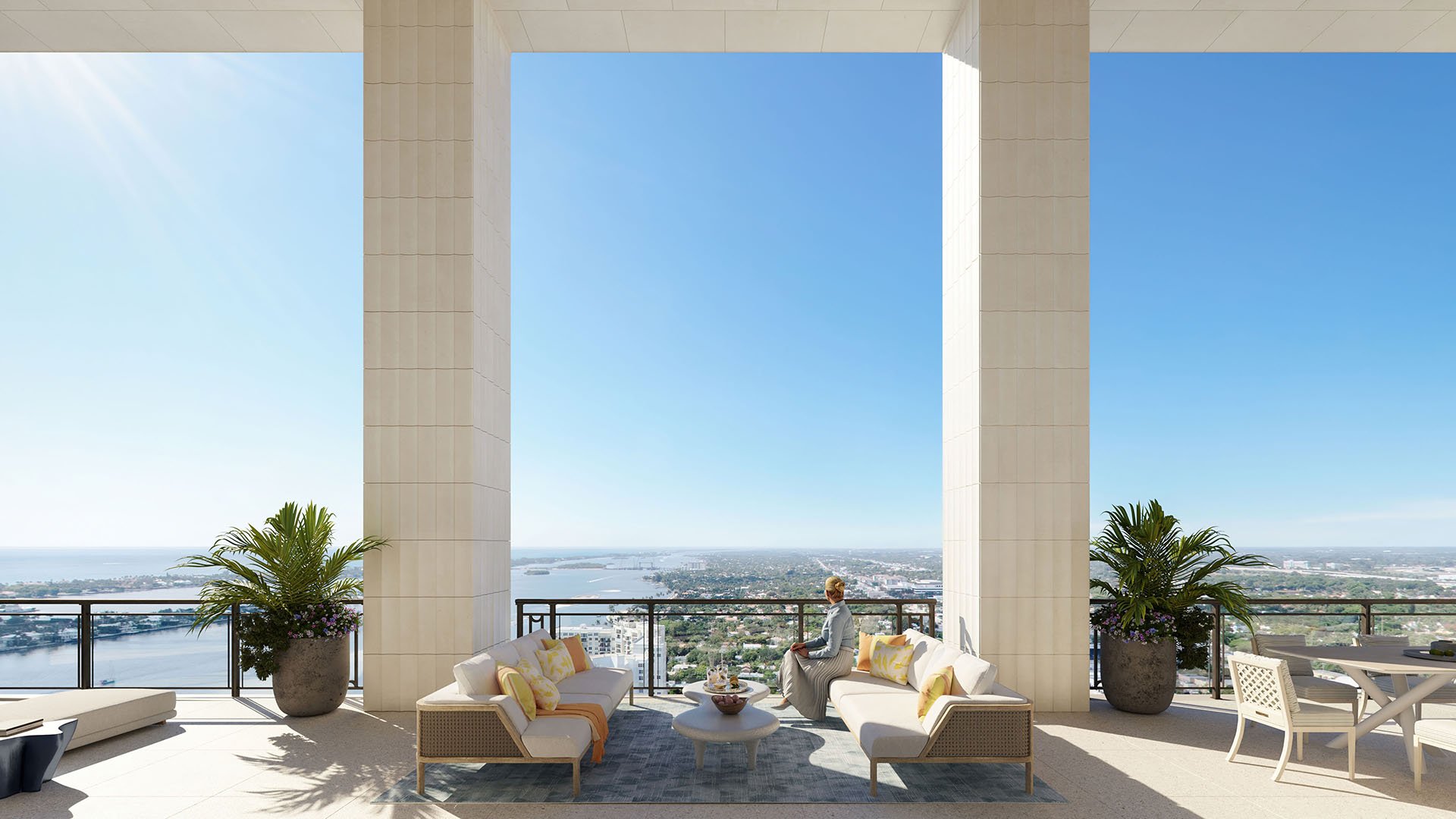
A Palm Beach condominium can offer an extraordinary outlook without establishing a legal right to keep it unchanged. For a buyer choosing a residence around a terrace, a water-facing salon, or a particular horizon, that distinction belongs at the beginning of the acquisition process-not at the final walkthrough.
The ownership file should answer four separate questions: what protects the view, what neighboring parcels may accommodate, how construction could be staged, and which noise restrictions apply. A reassuring answer in one category does not resolve the others. A height restriction, for example, does not by itself explain delivery access or crane placement.
Treat the file as a decision document. Its purpose is to distinguish enforceable protections, confirmed approvals, unresolved applications, and assumptions before the buyer commits to a view-dependent purchase.
Begin by requesting the condominium declaration and amendments, title commitment and exceptions, recorded plat, current survey, easements, covenants, and any air-rights or development agreements. This is a recommended review package, not a representation that every property has each document or any particular protection.
Ask a Florida land-use attorney to determine whether any instrument limits neighboring construction or preserves a defined corridor. The assessment should identify the affected parcels, the protected area, the parties entitled to enforce the restriction, and any amendment or termination provisions. A descriptive reference to views is not equivalent to an enforceable restriction.
Where the outlook materially drives the purchase, pair legal review with a surveyor’s elevation-based sightline analysis. The legal document and the physical geometry should describe the same protection. Neither an attractive photograph nor a parcel that is open today answers both questions.
Keep the Town of Palm Beach distinct from West Palm Beach. Projects across the Intracoastal may affect a particular outlook, but that requires a parcel-specific assessment-not an assumption based on a waterfront address.
For a neighborhood review that includes South Flagler House West Palm Beach, establish the parcel’s relationship to the residence before drawing conclusions about view exposure. A project description alone does not establish an obstruction or confirm current construction status.
For each potentially relevant parcel, request ownership information, zoning, permitted and approved heights, pending applications, approval expiration dates, permit numbers, and construction status. Keep these categories separate. An application, an approval, and a building under construction are not interchangeable evidence.
A useful sightline study starts with the specific residence and the rooms that matter to its buyer. Ask the surveyor to assess relevant elevations and the position of neighboring development rather than relying on floor labels or a broad neighborhood rendering.
Apply that discipline when reviewing Shorecrest Flagler Drive West Palm Beach. Verify current parcel records and relevant dimensions before assessing potential exposure from a Palm Beach residence.
Ask for an assessment that distinguishes the existing outlook from scenarios based on verified approvals and unresolved proposals. This gives the buyer a clearer basis for deciding which uncertainties are acceptable and which require further investigation before proceeding.
Future construction rights deserve their own section in the file. Ask counsel to distinguish what zoning may permit, what has received approval, and what additional decisions would be required. Request confirmation of any relevant development agreements or air-rights arrangements rather than assuming they exist.
Apply the same discipline to The Ritz-Carlton Residences® West Palm Beach. Its inclusion in a neighborhood review is a reason to investigate parcel relationships, not a conclusion about a particular buyer’s view or noise exposure.
Before relying on any project description, obtain an updated status check. Historical descriptions can orient the inquiry, but they should not substitute for current parcel records and professional interpretation.
The finished building and the construction operation require separate reviews. Request available plans identifying crane locations and swing radii, staging areas, delivery routes, concrete-pump locations, worker parking, and road or sidewalk closures. Ask which arrangements are approved and which remain preliminary.
For work affecting public roadways, sidewalks, or shoulder areas in the Town of Palm Beach, ask the relevant municipal office which right-of-way applications and permissions are required. Identify the requirements for the actual activity, whether deliveries, concrete pours, dewatering, utility work, or crane operations.
Confirm application lead times separately from any resident-notification requirements. Do not assume a filing deadline guarantees advance notice of disruptive work. Request applicable permits and conditions, and ask building management how it communicates scheduled activity. Keep temporary access and terrace-use concerns distinct from permanent view changes.
Do not reduce construction exposure to a single daily timetable. Ask which seasonal schedules and activity-specific restrictions apply to the work being reviewed, including heavy equipment and outdoor construction noise.
For the purchase file, request written clarification of permitted hours, exceptions, permit conditions, and the applicable enforcement process. Avoid treating a general construction schedule as authorization for every activity.
Confirm the appropriate municipal contact for complaints and the information needed to report a concern. A complaint route does not itself establish which restriction governs a specific operation.
Conclude with a concise schedule of confirmed protections, verified neighboring permissions, construction-logistics questions, and unresolved noise conditions. Assign each open issue to the appropriate adviser or municipal contact, and record the date of the answer.
The objective is not to predict every future building or guarantee silence. It is to understand which qualities of the residence are documented, which depend on current circumstances, and which uncertainties the buyer is prepared to accept.
For a considered approach to your next Palm Beach acquisition, connect with MILLION.
If branded residences are on your mind — as a home or as an allocation — we would be glad to share what we are seeing, privately.
Begin a quiet conversationNo. An attractive outlook does not establish an enforceable protection; the relevant recorded instruments and parcel relationships require review.
Request the declaration and amendments, title commitment and exceptions, recorded plat, survey, easements, covenants, and any air-rights or development agreements. This is a recommended checklist, not confirmation that every item exists.
A Florida land-use attorney can assess enforceability, while a surveyor can evaluate elevation-based sightlines. Their reviews address different parts of the same question.
Include ownership, zoning, permitted and approved heights, pending applications, approval expiration dates, permit numbers, and construction status. Distinguish proposals from approvals and active work.
No. The two municipalities must be kept distinct, and relevance depends on the particular parcel, residence, and sightline.
Request crane locations and swing radii, staging areas, delivery routes, concrete-pump locations, worker parking, and road or sidewalk closures. Clarify whether each arrangement is approved or preliminary.
Ask the relevant municipal office which applications and permissions apply to the proposed work. Request the permits and conditions for the specific activity and location.
Do not assume that an application deadline provides resident notice. Confirm any notification requirements separately and ask building management how scheduled work is communicated.
Request written clarification of the applicable seasonal schedule, activity restrictions, exceptions, and permit conditions. Do not rely on a single general timetable.
Confirm the appropriate municipal contact and the information needed to report the activity. Also verify which restriction applies to the specific operation.