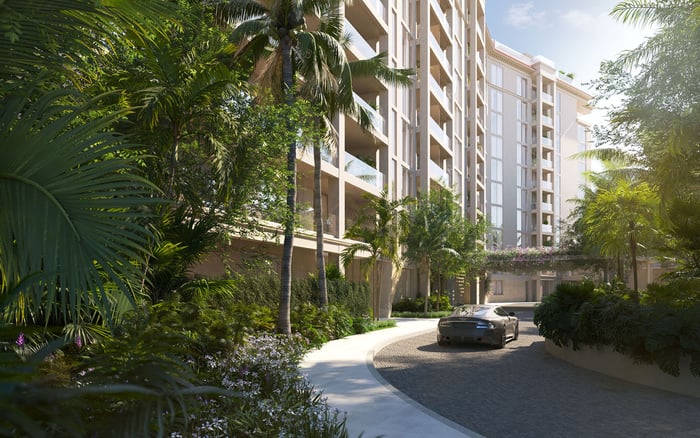
At Palazzo del Sol, financing history confirms lender participation, but not universal building approval. A current condominium questionnaire, tested against association records, is the essential instrument for evaluating lender appetite and future resale liquidity.

For buyers considering Palazzo del Sol, the condominium questionnaire can be as consequential as the residence itself. The luxury condominium stands at 7000 Fisher Island Drive, Miami Beach, in a market where individual sales can reach eight figures and financing is often tailored to a buyer’s broader banking relationship.
Within MILLION's Buyer's Guides, the central principle is simple: a questionnaire is a dated representation of association-level conditions. It helps a lender assess ownership concentration, owner occupancy, delinquencies, reserves, insurance, assessments, leasing rules and litigation. Yet no current, completed questionnaire or supporting package is publicly established here. A prudent buyer must obtain the latest version rather than infer present conditions from historical transactions.
That distinction matters for anyone researching Palazzo del Sol Fisher Island opportunities. The building was conceived alongside Palazzo della Luna as one of two new 10-story towers. Preconstruction prices ranged from approximately $5 million to just under $33 million, and more than one-third of Palazzo del Sol residences were under contract during the early sales cycle. Those figures establish the project’s ultra-luxury positioning, but they do not answer a lender’s current association questions.
Past financing proves participation, while current documents determine appetite.
Lenders have participated at Palazzo del Sol. In 2016, Jim Ferraro purchased a penthouse for $21.5 million and financed part of the acquisition with a $5 million mortgage from City National Bank of Florida. The sale exceeded $3,200 per square foot and set a Fisher Island condominium record at the time.
A separate listing for Unit 7043 identified acceptable terms as “All Cash, Conventional.” Together, the mortgage and listing language show that financing has been possible. Neither establishes that every conventional lender will approve the condominium today, nor does either confirm agency warrantability across the building.
Historical development capital belongs in a different analytical category. AIG and UBS supplied approximately $172 million in development loans for Palazzo del Sol and Palazzo della Luna. A 2014 bankruptcy-court consent order also separated an ownership dispute from the development, allowing the developer to secure title insurance and proceed with construction. These events provide relevant background on capitalization and title resolution, but they are not substitutes for current association-level underwriting.
Lender appetite can also vary by borrower, leverage, unit and institution. In the ultra-premium segment, a bank may evaluate liquidity, assets under management and its wider client relationship alongside the collateral. Buyers should therefore distinguish between a lender willing to make a single portfolio loan and a building accepted under a broadly available conventional program.
The strongest review begins by reconciling each questionnaire response with its underlying document. The annual budget should align with reserve information. Insurance answers should be checked against current policies and coverage summaries. Any assessment disclosure should be compared with notices, meeting minutes and the payment schedule. Leasing answers should match the declaration, amendments and rules.
Ownership and payment patterns deserve equal scrutiny. Concentrated ownership may affect an institution’s view of project risk, while delinquency data can influence both approval and pricing. The questionnaire should identify the period measured, because an undated percentage has limited value. A buyer should also ask whether any commercial or association-owned areas create obligations not apparent in the residence’s monthly charges.
Litigation requires careful, current interpretation. The Palazzo del Sol/Della Luna at Fisher Island Condominium Association appeared as a plaintiff in a federal case filed in the Southern District of Florida in 2022. That fact alone does not establish that the matter remains active, is material to underwriting or has an adverse financial effect. Counsel should review the association’s latest disclosure, docket status, insurance position and any potential exposure before a buyer or lender draws conclusions.
Resale liquidity at Palazzo del Sol should be measured at the unit level, not assumed from Fisher Island’s reputation. The available transaction history includes the $21.5 million penthouse acquisition in 2016 and the $20 million sale of another penthouse measuring approximately 10,120 square feet. A residence was also marketed for $22 million in 2020. These data points illustrate an exceptionally narrow and expensive segment, where a small number of transactions can shape perceived value.
In such a market, liquidity is not simply a question of whether a residence can sell. It also encompasses the likely marketing period, the depth of the qualified buyer pool, the financing options available to a successor purchaser and the discount required for certainty of execution. A clean questionnaire and coherent supporting package can reduce friction. Ambiguous answers concerning insurance, reserves, assessments or litigation can narrow the lender pool-and, in turn, the future buyer pool.
Penthouse comparisons demand particular discipline. Interior area, elevation, exposure, outdoor space, condition and included rights can materially distinguish two homes in the same tower. The strongest valuation set therefore begins with recent closed sales of genuinely comparable residences, treating older record-setting trades as context rather than an automatic pricing floor.
A buyer comparing island options may also examine The Links Estates at Fisher Island and The Residences at Six Fisher Island. These are not direct substitutes for Palazzo del Sol, but they can clarify preferences involving completed versus newer product, condominium governance, privacy, design and the timing of ownership.
The comparison should remain document-led. A newer offering may involve different deposit, completion and financing considerations, while an existing condominium permits review of operating history and actual association records. The relevant investment question is not which property carries the strongest narrative, but which ownership structure, residence and document profile best match the buyer’s capital plan and eventual exit strategy.
Before making the deposit nonrefundable, request the completed, dated questionnaire together with the current budget, reserve materials, insurance package, governing documents, recent meeting minutes, assessment information, leasing rules and litigation disclosure. The purchase agreement should provide sufficient time for legal, financial and physical review, with financing language calibrated to the buyer’s intended loan rather than generic approval.
A financing buyer should seek an early project review from the chosen institution and identify a credible alternative lender. A cash buyer should conduct the same association diligence. Cash can remove a closing contingency, but it does not eliminate the building-level factors that may affect carrying costs, insurability or the next buyer’s access to credit.
Finally, align the exit thesis with realistic market evidence. Ask which closed sales most closely resemble the subject residence, which active listings compete for the same buyer and whether the likely successor purchaser would require financing. At Palazzo del Sol, prestige commands attention, but clear documentation supports execution.
For discreet guidance on Palazzo del Sol due diligence, financing strategy and resale positioning, connect with MILLION.
If branded residences are on your mind — as a home or as an allocation — we would be glad to share what we are seeing, privately.
Begin a quiet conversationYes. A 2016 penthouse purchase included a $5 million mortgage from City National Bank of Florida.
No. A prior mortgage and cash-or-conventional listing terms do not establish building-wide approval by every lender.
Request the current budget, reserve materials, insurance package, governing documents, meeting minutes, assessment information, leasing rules and litigation disclosure.
Association finances, insurance, delinquencies, assessments and litigation can change. The date establishes the period represented by the answers.
No. Development loans provide capitalization context, but they do not replace current association-level underwriting.
It confirms that the association appeared as a plaintiff in a federal filing. It does not establish current status, materiality or financial harm.
Trading is thin at this price level, and differences in size, elevation, exposure, condition and outdoor space can be significant.
Yes. Paying cash removes lender approval from the closing but not risks involving insurance, assessments, reserves or future marketability.
A narrow buyer pool, limited comparable sales and unresolved association questions can reduce financing options and complicate execution.
Seek early project review, preserve adequate diligence time and identify an alternative lender before the deposit becomes nonrefundable.