A discreet acquisition framework for Key Biscayne buyers who need medical-access planning, reliable caregiver entry, and documented high-floor mobility arrangements to work as carefully as the residence itself.

For a family office purchasing on Key Biscayne, the acquisition brief should extend beyond architecture, privacy, and the view. A residence must also support the household when a caregiver arrives after midnight, an elevator is unavailable, or a medical emergency requires access to an upper floor. These are practical expressions of comfort, not secondary administrative details.
A rigorous purchase plan treats medical access, caregiver parking, and vertical mobility as three connected systems. Parking permission is incomplete if the caregiver cannot activate the elevator. An elevator specification is incomplete if nobody can explain how it operates during a power interruption.
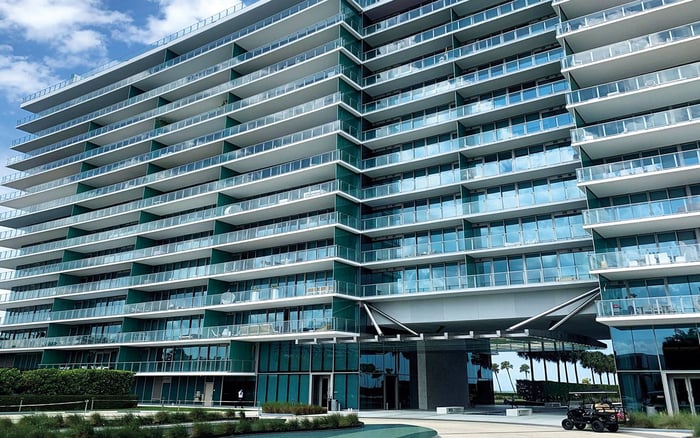
When evaluating Oceana Key Biscayne, apply that framework to the particular residence and its current building procedures. The project name should never substitute for written confirmation of household-specific access arrangements.
Key Biscayne has local Fire Rescue emergency response and an on-island urgent-care location. Baptist Health Urgent Care Express is listed at 240 Crandon Boulevard, Suite 110, Key Biscayne, FL 33149, with telephone number 786-595-8250. Keep those details in the household directory, and confirm current availability before relying on the location for non-emergency care.
Urgent care is not a substitute for a hospital emergency department. For a medical emergency, call 911. Chest pain, a possible heart attack, severe injury, or another life-threatening problem should not be routed through an ordinary urgent-care appointment.
Before committing to a residence, have the household's care coordinator confirm the relevant hospital emergency department and map the route from the exact address. Treat that map as an orientation tool, not a promised ambulance destination or transport time. Neither an island address nor the presence of local responders establishes how quickly help will reach a particular unit.
The purchase file should distinguish three questions: where non-emergency care is available, what the household should do in an emergency, and how responders gain building access. Keeping those questions separate prevents a convenient nearby clinic from being mistaken for a complete emergency plan.
The route from the building entrance to the resident deserves its own review. Ask management to walk through the designated responder entrance, security handoff, elevator access, floor identification, and final approach to the unit. Record who is responsible for each handoff and who covers that responsibility after hours.
Request clarification on locked doors, controlled elevator calls, and procedures requiring staff intervention. A historical example from February 2020 involved FOB-controlled elevator travel between the lobby and 12th floor in Buildings 1111 and 1121. It illustrates why access credentials matter; it does not establish current conditions at those buildings or elsewhere.
A buyer-authorized walkthrough should test ordinary access with management, not simulate an emergency or involve emergency services unnecessarily. Ask whether the intended mobility equipment can navigate the route, and have an appropriate professional assess any uncertain clearances. Keep private medical information out of broadly circulated building correspondence.
Do not assume that ownership includes an island-wide entitlement to caregiver parking. Obtain the prospective building's current rules, then request written answers tailored to the actual staffing pattern: daytime visits, overnight care, rotating personnel, and overlapping shifts.
The parking review should establish:
Where an authorized caregiver may park and whether approval is vehicle-specific.
Whether overnight stays, shift overlap, or replacement caregivers require separate permission.
What valet hours, charges, retrieval arrangements, and key-handling procedures apply.
How a caregiver enters when the usual desk or valet arrangement is unavailable.
Who can authorize an urgent staffing change and issue or revoke access credentials.
Keep unloading access separate from parking permission. A place to stop briefly does not confer permission to remain through a care shift, and a permitted parking space does not establish access to the residence.
For families also considering Coconut Grove, use the same written questionnaire at Park Grove Coconut Grove. Compare documented arrangements rather than assuming a different neighborhood resolves the staffing question. No caregiver-parking or access feature should be inferred from a project's positioning.
Begin with everyday movement. Verify which elevators serve the unit, whether credentials are required, and what happens when the usual car is out of service. Walk the complete path with the household's anticipated mobility needs in mind, including doors, transitions, and the route between parking and the lobby.
Next, examine power interruption. Ask for documentation identifying which elevators, if any, receive emergency power and what operating limitations apply. A general statement that the building has a generator does not establish whether a resident can reach or leave a particular floor.
Finally, request the documented emergency plan for people unable to use stairs. Specially designed evacuation elevators are distinct from ordinary passenger elevators; do not assume routine elevator service provides an evacuation solution. The appropriate procedure must be established for the particular building with qualified professionals, not borrowed from another jurisdiction's guidance.
For a mainland comparison in Brickell, put Una Residences Brickell through the same three-layer review. That comparison presumes no particular elevator or emergency-power capability. It tests whether each candidate can provide sufficiently clear answers for the household's needs.
A lower-floor alternative also deserves an individual assessment. Reducing elevation does not, by itself, establish step-free access or an assisted-evacuation arrangement.
Assign one family-office lead to consolidate the answers. The care coordinator can define household needs; management can explain current operations; technical advisers can assess the relevant systems; and counsel can review how material requirements should be addressed in the transaction.
Use a simple decision register with the requirement, supporting document, responsible contact, and unresolved action. Distinguish a current written permission from a verbal assurance, and an operating procedure from a proposed improvement. Ask counsel whether critical unresolved items can be addressed through appropriate contractual protections before the buyer commits.
A material gap should prompt further investigation, a revised operating plan, or consideration of another residence. It should not disappear into an amenities comparison.
Before occupancy, assemble a concise household access file: the exact address and unit, emergency instructions, management contacts, caregiver permissions, credential procedures, and the agreed mobility plan. Store sensitive care details separately, with access limited to appropriate people.
Reconfirm the arrangements when caregivers, household needs, or building procedures change. The objective is not to promise uninterrupted service or eliminate every contingency. It is to choose a home whose documented operations support the family's daily life, with responsibilities understood before they are needed.
For a considered approach to your next South Florida residence, connect with MILLION.
If branded residences are on your mind — as a home or as an allocation — we would be glad to share what we are seeing, privately.
Begin a quiet conversationNo. It is an urgent-care location, not a hospital emergency department; call 911 for a medical emergency.
Baptist Health Urgent Care Express is listed at 240 Crandon Boulevard, Suite 110, Key Biscayne, FL 33149. Its listed telephone number is 786-595-8250.
No tower-specific response or responder-to-unit time is established here. Review exact-address access procedures without treating them as a response-time guarantee.
Have the care coordinator confirm the relevant hospital emergency department and map the route from the exact residence. The map is not a guaranteed ambulance destination or transport time.
Do not assume it does. Obtain the building's current rules and written permissions for the household's staffing pattern.
Confirm overnight permission, shift overlap, vehicle registration, charges, and after-hours entry. Also establish who can approve a replacement caregiver.
Controlled elevator access can affect whether an authorized caregiver reaches the residence. Verify current credential issuance, replacement, and after-hours procedures with management.
A general generator statement does not establish elevator coverage. Request documentation identifying which elevators receive emergency power and any operating limitations.
No. Request the building-specific emergency plan for residents unable to use stairs rather than assuming ordinary elevator service provides an evacuation solution.
Include the exact address and unit, emergency instructions, management contacts, caregiver permissions, credential procedures, and agreed mobility plan. Keep sensitive medical details separately with appropriate access controls.