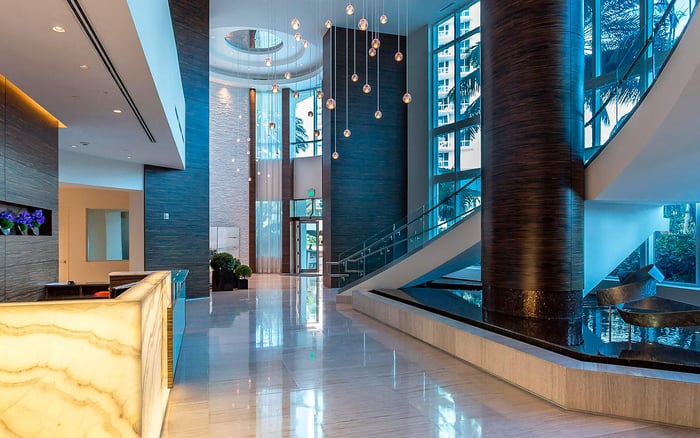
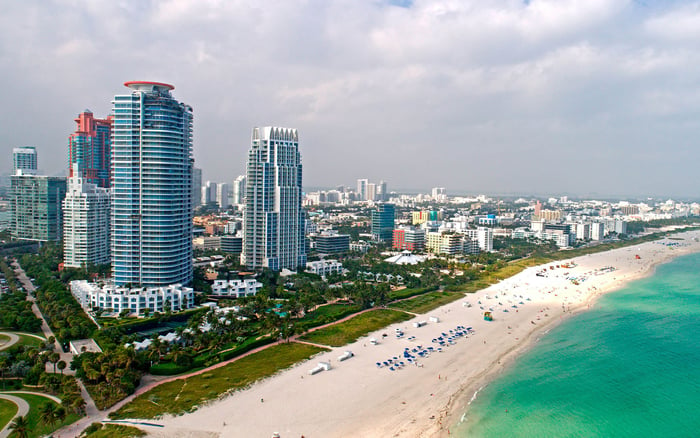
A practical South Beach buying framework for distinguishing advertised service from dependable absence management, with checks for staffing, digital access, vendor response, and financial continuity.
For a South Beach buyer, lock-and-leave convenience should mean more than a gracious arrival. The more consequential luxury is leaving with confidence: knowing who can enter the residence, who responds when equipment fails, and who confirms that the problem has been resolved. A beautiful lobby cannot answer those questions.
Across Miami Beach, advertised security, concierge, and valet services are useful starting points. They do not establish staffing depth, in-unit responsibilities, or response speed. The buyer’s task is to translate each service description into an operating commitment that remains clear when the owner is elsewhere.
Build the comparison around three questions: who is available, what can be controlled remotely, and how a request reaches completion. Test those answers against written absence procedures and the finances supporting them. This is a diligence map, not a ranking of buildings.
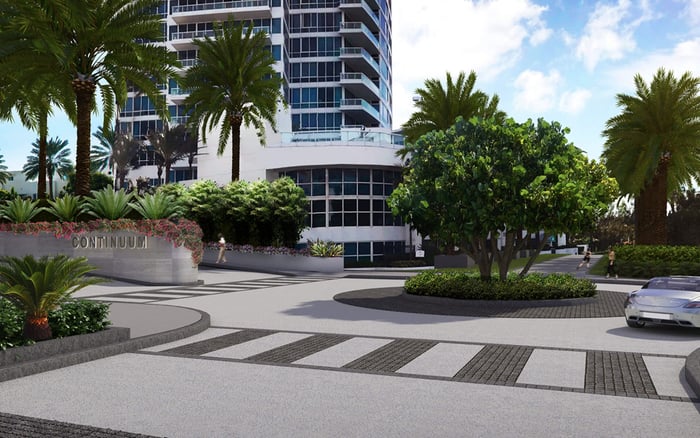
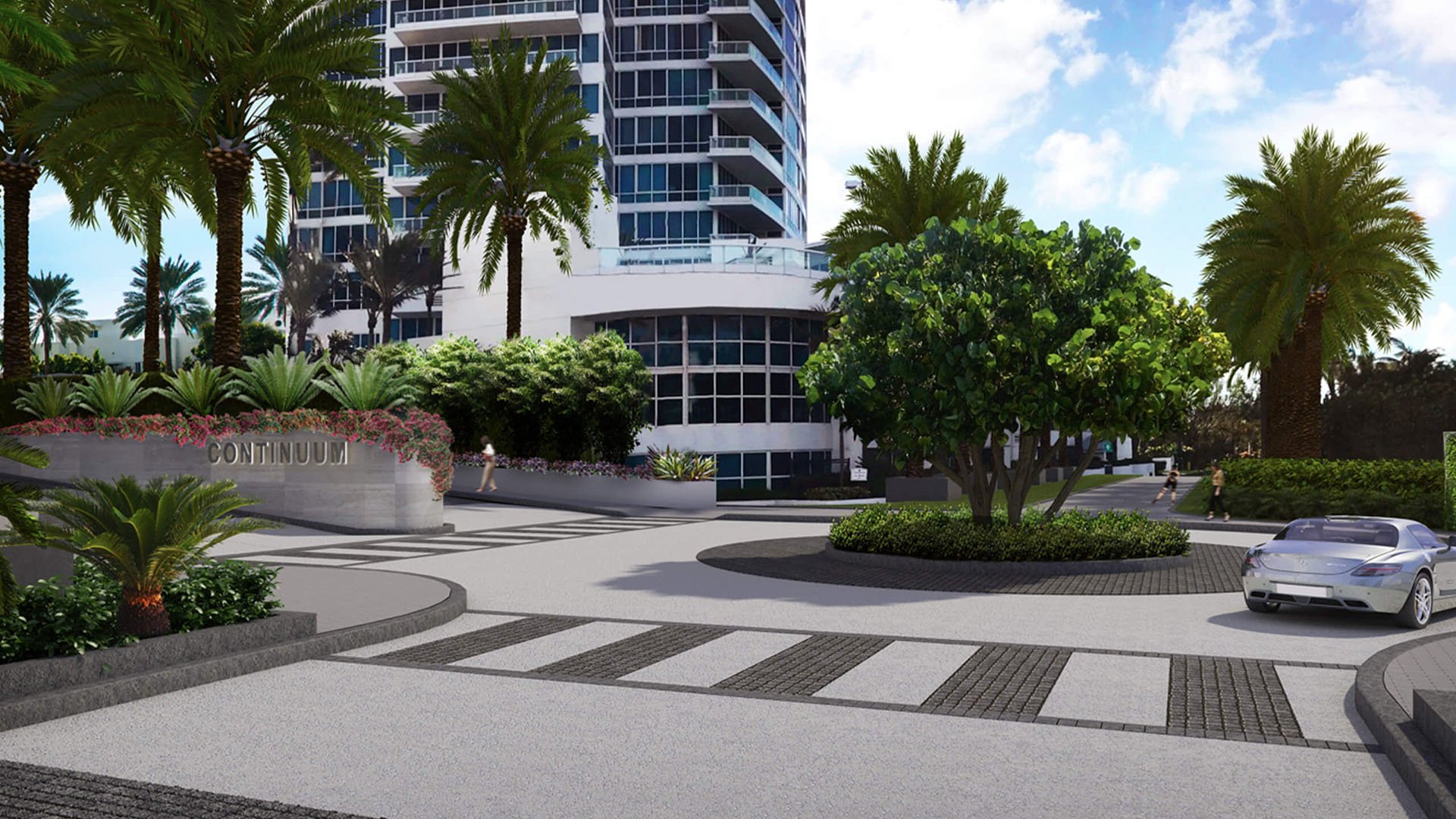
At Continuum on South Beach, South Tower’s advertised features include 24-hour security, 24-hour valet parking, and a concierge desk. The service footprint also encompasses a full-service beach club, tennis courts, an infinity-edge lap pool, and two oversized lagoon pools. These amenities make staffing allocation especially relevant; they do not establish any particular staffing ratio.
Request headcount by function and shift. Separate security, concierge, valet, engineering, and management; do not treat them as interchangeable. Ask whether overnight engineering is on site or on call, who covers absences, and who has authority to escalate a problem after management hours.
Review security post orders and valet coverage alongside the roster. The practical question is whether the person receiving an urgent request can act or must locate someone else with authority.
At Setai Residences Miami Beach, advertised residential services include 24-hour security, valet parking, and concierge services. Establish their residential scope in writing, including any distinction between hotel and residential operations, before treating continuous availability as comprehensive care.
One Ocean’s advertised offering includes covered parking with 24-hour valet and butler services, plus private concierge access through residents’ iPads. Continuum’s advertised technology includes smart-technology elevators and a wireless interface for smart-building services, alongside manned, gated security. Confirm how these offerings function now rather than assuming an earlier description reflects today’s system.
Ask management to demonstrate the current resident interface. A useful test follows a request from submission through acknowledgment, assignment, and closure. Can the owner authorize a vendor remotely, receive a delivery notification, request a vehicle, and see whether a work order remains open?
Access deserves its own demonstration. Establish who may issue permission, how long it remains valid, and how it is withdrawn. Ask what record is retained when someone enters an unoccupied residence.
Finally, test the fallback. If the interface, internet connection, or access system is unavailable, who accepts instructions and verifies authorization? Digital convenience is persuasive only when the non-digital alternative is equally explicit.
A concierge can receive a request without being responsible for completing it. Ask for recent, appropriately redacted work-order records covering elevators, HVAC, plumbing, garage equipment, and access controls. Distinguish acknowledgment time, technician attendance, and completion time. A prompt reply is valuable, but it is not a repair.
Compare similar incidents rather than combining routine requests with emergencies. Look for repeat calls, reopened tickets, unresolved items, and evidence that someone checked the outcome. Ask which vendors provide after-hours coverage and how management escalates a failure when the first contact does not respond.
Murano Grande’s advertised services include 24-hour security, concierge, and valet parking, with private or semi-private residential access. That access arrangement makes the vendor’s route especially worth tracing: authorization, arrival, admission, supervision, and departure.
Walk through the procedure for a hypothetical plumbing failure in an empty residence. Identify who may permit entry, authorize work, approve charges, and notify the owner. Request the governing instructions rather than relying on an informal assurance that someone will handle it.
W South Beach’s advertised services include concierge service, 24-hour security, and valet parking. Il Villaggio’s advertised offering includes a private beach club with attendants, security, valet, and concierge services. Portofino Tower’s advertised offering includes 24-hour security and valet parking alongside concierge service and recreational amenities. None of these descriptions alone establishes responsibility inside an owner’s residence.
Obtain a written schedule separating included services from separately charged requests. Clarify in-unit maintenance obligations and whether staff may supervise an outside contractor while the owner is away. Establish which authorization forms or spending permissions are required before work can begin.
For a South of Fifth search that also includes Apogee South Beach, request the same written service boundaries. Consistent questions make comparisons useful without presuming that buildings share an operating model.
The distinction is simple but important: arranging assistance, admitting a vendor, supervising work, and accepting its completion are separate responsibilities. Assign each one explicitly.
Ask for written procedures covering leak detection, temperature monitoring, storm preparation, emergency entry, package handling, and post-storm inspection. For each task, identify the responsible party, required owner consent, any separate charge, and the method of confirming completion. Do not assume that monitoring is installed or that a notification automatically triggers intervention.
Before departure, consider a documented walkthrough with management or the person authorized to care for the residence. Confirm emergency contacts and the escalation route if the owner cannot be reached. The objective is a workable chain of authority, not simply a contact list.
Financial diligence belongs in the same file. Review three years of budgets, available reserve studies, meeting minutes, insurance claims, and assessment notices. Look for matters that could affect service continuity or infrastructure maintenance, then ask management to explain how those obligations are funded. Evaluate amenities and service promises alongside the resources needed to sustain them.
For each finalist, assemble five items: a shift-level staffing picture, a demonstrated digital workflow, recent vendor-response records, written absence procedures, and a financial review. Mark each operating question as confirmed, requiring clarification, or dependent on a separate owner arrangement.
Avoid reducing the exercise to a single luxury score. A buyer who travels frequently may place greater weight on emergency entry and remote authorization than on recreational services. Another may prioritize the certainty of supervised maintenance. The stronger choice is the residence whose documented arrangements fit the owner’s actual pattern of absence.
For a discreet South Beach search shaped around the way you live and travel, connect with MILLION.
If branded residences are on your mind — as a home or as an allocation — we would be glad to share what we are seeing, privately.
Begin a quiet conversationIt should mean clear arrangements for remote authorization, emergency response, maintenance, and confirmation of completed work. Advertised amenities alone do not establish those arrangements.
No. Request staffing by function and shift, and confirm whether overnight engineering is on site or on call.
Advertised features include 24-hour security, 24-hour valet parking, and a concierge desk. Confirm current staffing and the scope of residential assistance with management.
Clarify the residential scope of the advertised 24-hour security, valet, and concierge services. Obtain written distinctions between hotel and residential services and any separate charges.
Ask for a live demonstration of the current resident interface. Confirm what requests it supports and how residents obtain assistance when it is unavailable.
Request recent, appropriately redacted work orders showing acknowledgment, attendance, completion, and repeat calls. Compare similar incidents and examine emergency escalation separately.
It makes vendor authorization and admission procedures particularly important. Confirm how entry is approved, recorded, supervised where applicable, and revoked.
Do not assume so from a concierge service description. Obtain written confirmation of authority, service scope, required permissions, and charges.
Request procedures for leak detection, temperature monitoring, storm preparation, emergency entry, packages, and post-storm inspections. Identify responsibility and confirmation requirements for each task.
Review three years of budgets, available reserve studies, meeting minutes, insurance claims, and assessment notices. Ask how identified maintenance and operating obligations could affect service continuity.