Five South Florida residences stand out for family-oriented amenities and residential positioning. The decisive distinction for buyers is between an inviting children's space and a documented system for supervision, caregiver access, and guest permissions.
For a family buying a South Florida residence, luxury lies partly in the ease of an ordinary afternoon: a child moving from creative play to the garden, a caregiver arriving without confusion, and visiting friends using amenities within clear boundaries. Beautiful rooms matter. So do the permissions that make them usable.
These five residences offer distinct starting points, from dedicated learning spaces in West Palm Beach to a standalone residential setting in Pompano Beach. The ranking reflects advertised family amenities and residential positioning-not verified child safety, supervision, or access controls. Here, “active” means marketed projects, not confirmed live inventory, completed facilities, or operating amenities.
For none of the five are drop-off childcare, licensed supervision, staffing ratios, background checks, or supervision hours verified here. A children's room is not, by itself, a childcare service. For buyers whose routines depend on a nanny or regularly visiting relatives, written operating rules deserve as much attention as the floor plan.
1. South Flagler House: 1355 S. Flagler Drive, West Palm Beach
South Flagler House takes first place for the clearest range of dedicated family spaces. Its advertised program includes a children's playroom, STEM learning lounge, creative arts-and-crafts studio, and outdoor children's garden. That breadth makes it a compelling starting point for households seeking more than a single multipurpose playroom.
The distinction is breadth, not confirmed staffing. Buyers should establish whether the learning and creative spaces accommodate independent family use, scheduled activities, or both. Caregiver admission, adult-accompaniment requirements, and any supervised programming remain unverified.
2. Waldorf Astoria Residences Pompano Beach: 1350 S. Ocean Boulevard, Pompano Beach
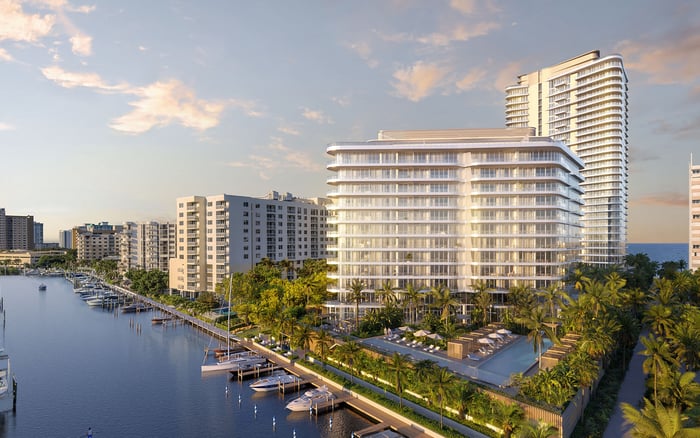
Positioned as a standalone residential development for 92 resident families, Waldorf Astoria offers amenities not shared with hotel guests. A children's entertainment room and multi-sport simulator sit alongside a 20,000-square-foot pool deck, private cabanas, private beach access, and a private marina.
Its marketed services include 24/7 resident services, concierge, valet, in-residence dining, and beach and poolside service. That residential framework earns it second place. Neither round-the-clock service nor the absence of hotel guests, however, establishes nanny access, visitor screening, or child supervision.
3. Kempinski Residences Miami: Miami Design District
Kempinski ranks third for its advertised combination of children's playrooms and splash pads, complemented by shaded outdoor areas, landscaped grounds, and a padel court. For families seeking indoor and outdoor recreation, this mix merits consideration beyond a conventional amenity lounge.
The essential questions concern operation, not appearance: age restrictions, supervision responsibilities, and access for registered caregivers. None of those arrangements is verified here. Evaluate splash-pad use through written rules rather than assuming a designated children's amenity includes attendant care.
4. Ritz-Carlton Residences West Palm Beach: West Palm Beach
A dedicated children's playroom, separate from the adult game room, gives this residence a defined family amenity within its broader program. Advertised facilities also include a resort-style pool, pool deck, spa, and virtual-reality golf simulator room with an outdoor terrace.
That designated children's space earns it fourth place. Monitored playroom access and recurring caregiver credentials remain unverified. Families should confirm whether a caregiver can accompany a child without the owner present and whether visiting children have the same amenity permissions as resident children.
5. Four Seasons Private Residences Fort Lauderdale: Fort Lauderdale Beach
This oceanfront option offers one- to four-bedroom homes, steps from Fort Lauderdale Beach and near the Intracoastal Waterway. Its place on the shortlist rests on its residential setting and range of home sizes, rather than an established children's amenity program.
Of these five residences, it has the least established child-specific detail. A dedicated children's facility, supervised care, and caregiver-access rules are not confirmed here. Buyers should treat these as open questions, not infer answers from the brand or beachfront address.
The central distinction is between hospitality service and responsibility for a child. Concierge availability can be valuable without including childcare. Likewise, an employee attending an amenity area should not be assumed to supervise the children using it.
At Waldorf Astoria Residences Pompano Beach, the absence of shared hotel amenities is a meaningful residential distinction. It does not establish whether residents' guests may enter children's areas, how visitors are screened, or whether caregivers receive independent credentials.
Request any supervision commitment in writing, including applicable hours, age bands, reservation requirements, staffing responsibilities, and emergency-contact procedures. If drop-off care is essential, obtain explicit confirmation that it exists and clarify its licensing and staffing arrangements before relying on it.
A registered caregiver and a social guest serve different roles. Buyers should ask whether management recognizes that distinction through recurring credentials, amenity permissions, elevator access, and procedures for substitute caregivers.
The range of family spaces at South Flagler House West Palm Beach makes room-by-room clarification particularly useful. Permission to enter the building should not be treated as permission to accompany a child into every family space.
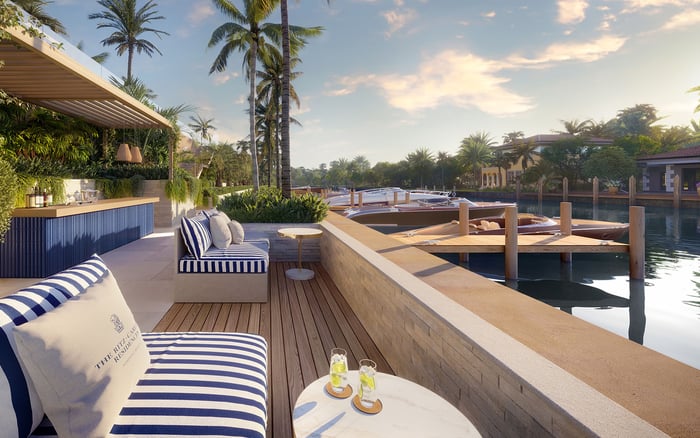
Similarly, at The Ritz-Carlton Residences® West Palm Beach, confirm whether children's-room permissions differ from pool or simulator rules. Request a practical walkthrough of arrival, check-in, amenity entry, and departure using the household's actual caregiving arrangement.
Outdoor amenities deserve their own review. At Kempinski Residences Miami Design District, the advertised splash pads and shaded grounds make adult-accompaniment requirements especially relevant. Ask about age restrictions, operating hours, and whether visiting children count toward guest limits.
For Four Seasons Hotel & Private Residences Fort Lauderdale, first establish which amenities are available to residents and the permissions attached to each. Oceanfront positioning alone does not answer questions about children's facilities or supervision.
Across the shortlist, request written pool and splash-pad rules where applicable, along with escort requirements and emergency procedures. Beach access, marina access, and a children's entertainment room involve different activities; each warrants a separate conversation.
The final comparison should consider each residence alongside its operating documents. Obtain children's-room rules, caregiver registration procedures, guest limits, and any reservation or accompaniment requirements. Confirm whether the association or branded operator controls those policies and whether a future board or management company can change them.
Current pricing, available inventory, closing dates, and amenity readiness also require direct confirmation. The strongest family fit is not necessarily the longest amenity list. It is the residence whose documented permissions support the household's daily life.
For a discreet conversation about your family's South Florida residence search, connect with MILLION.
If branded residences are on your mind — as a home or as an allocation — we would be glad to share what we are seeing, privately.
Begin a quiet conversationSouth Flagler House ranks first for its children's playroom, STEM learning lounge, arts-and-crafts studio, and outdoor children's garden. Its staffing and caregiver admission rules remain unverified.
No. It compares advertised family amenities and residential positioning, not verified child safety, supervision, or access controls.
It refers to marketed projects and does not confirm live inventory, completed facilities, or currently operating amenities.
It is positioned as a standalone residential development for 92 resident families, with amenities not shared with hotel guests. Residents' guest permissions and screening procedures still require confirmation.
No. Drop-off childcare, licensed supervision, staffing ratios, background checks, and supervision hours are not verified for any of the five.
The advertised program includes children's playrooms and splash pads, with shaded outdoor areas and landscaped grounds. Age restrictions, supervision, and caregiver credentials remain unverified.
Yes, its advertised amenities include a children's playroom separate from the adult game room. Monitored access and recurring caregiver credentials are not confirmed.
Its oceanfront setting and one- to four-bedroom homes support its inclusion. A dedicated children's facility, supervised care, and caregiver-access rules are not established here.
Request written registration procedures, recurring credential terms, elevator permissions, and child-area accompaniment rules. Confirm whether a caregiver may use amenities with a child when the owner is absent.
Buyers should confirm whether the association or branded operator controls the policies at each residence. They should also establish whether a future board or management company can change them.