For collectors buying in South Beach, a residence’s suitability extends beyond its walls. A disciplined review of delivery access, freight scheduling, environmental needs, and installation approvals can turn an attractive apartment into a workable home for a collection.
An exceptional South Beach residence should accommodate a collection as thoughtfully as it accommodates its owner. Yet the decisive questions often lie beyond the floor plan: where a truck can arrive, whether a crate can negotiate the service route, who authorizes installation, and whether the intended display environment suits the work.
For a buyer, these are pre-purchase diligence questions, not details to delegate after closing. Treat the journey from vehicle to final placement as one continuous plan, with a named decision-maker at each stage. A compelling wall is useful only if the artwork can reach it and be installed appropriately.
When considering Apogee South Beach, request the current delivery and alteration procedures for the specific residence under review. The project name should never substitute for written confirmation of access, permissions, or environmental capability.
Begin with the artwork’s transport requirements, not its framed dimensions alone. Ask the art handler to prepare a proposed route based on the crate’s dimensions, weight, handling clearances, and equipment needs. Then have management confirm which entrance, loading area, elevator, corridors, and apartment doorway may be used.
A measured walkthrough should test the entire route, including turns, thresholds, and the final approach to the display location. Ask whether protective coverings are required, where unpacking may occur, and whether temporary staging is permitted. Do not assume a lobby, corridor, or unoccupied room can serve as a holding area.
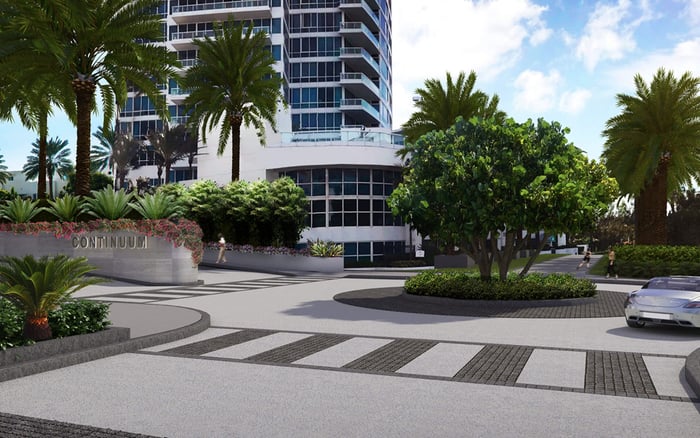
For a residence at Continuum on South Beach, apply the same unit-specific discipline: have the proposed handling route reviewed rather than inferring suitability from the property’s scale. Request confirmation of any applicable weight restrictions and how management expects the handler to demonstrate compliance.
If the proposed route fails, investigate alternatives before purchase or shipment. Any alternative involving building alterations requires a separate technical and approval review-not an improvised solution on delivery day.
Freight reservations are a management question. Ask about delivery hours, advance notice, exclusive-use arrangements, vendor documentation, protective measures, cancellation terms, and the contact authorized to release access on arrival. Obtain the applicable requirements in writing and align them with the handler’s booking.
Ask what happens if a delivery runs late, the designated elevator becomes unavailable, or another building activity interrupts the appointment. A workable fallback might require rescheduling or arranging suitable storage with the handling team. Confirm those arrangements rather than assuming management can accommodate a delay.
Reserving an existing elevator is distinct from installing, altering, or relocating one. In Miami Beach, the latter work requires a permit obtained by a registered elevator company through the municipal elevator authority. A public-use conveyance also requires a Certificate of Operation before operating. Neither requirement should be confused with a special municipal permit for an ordinary freight reservation.
Climate diligence should begin with the collection, not a generic thermostat setting. Ask a qualified conservator or collection specialist to define the environmental requirements for the particular works, including any handling or acclimatization instructions. No single temperature or humidity prescription is established here for every medium and condition.
Next, ask building management and the buyer’s mechanical professional what the residence can support. Which conditions can be controlled within the apartment? What depends on shared systems? Can performance be assessed at the intended display location, and what monitoring would the specialist recommend?
At Five Park Miami Beach, as with any property under consideration, resolve climate suitability for the specific home and collection rather than assuming it follows from luxury positioning.
If the proposed solution includes mechanical alterations, new electrical work, or concealed wiring, establish the approval and permit pathway before ordering equipment. Ask the relevant specialists to coordinate environmental requirements with the proposed installation scope.
The distinction between decorating and construction depends on the proposed work. Miami Beach requires permits before regulated construction, alterations, repairs, and electrical, mechanical, or plumbing installations begin. Where an installation’s status is uncertain, obtain a permit determination before proceeding.
That distinction matters when art plans involve structural alterations, new circuits, concealed wiring, or mechanical systems. Describe the actual work rather than labeling the entire project an art installation. Even work that falls within specified permit exemptions must comply with applicable codes.
Prepare a scope identifying the artwork, proposed supports, attachment locations, lighting, wiring, and any building-system changes. Have the appropriate professional assess structural or technical questions. Depending on complexity, the team may include a contractor, architect, engineer, surveyor, or inspector.
Association permission and municipal authorization are separate checkpoints. An association approval letter may be required among the documents submitted for permitting. Coordinate building consent with the application, but never treat it as a substitute for a required permit.
The typical municipal permit sequence has four stages: application, plan review, permit issuance, and inspections. Applications generally require a complete scope and a signed, notarized application; signed and sealed construction documents may also be required. Contractors must be registered with the city, with current licenses and insurance on file before permit issuance.
For a buyer considering Setai Residences Miami Beach, request a coordinated approval sequence for the proposed work. Ask who reviews the installation, which documents are needed, and when delivery can be scheduled relative to approvals and inspections. Do not assume the same sequence applies across buildings.
New construction and some major remodeling projects may also require a Certificate of Occupancy. Where a purchase includes substantial work, have the professional team establish whether that additional step applies before promising an installation date.
Before committing to an installation schedule, assemble a concise file containing the measured route, management’s written requirements, specialist environmental instructions, installation scope, approval status, and responsible contacts. Keep unresolved questions visible, with an owner assigned to each.
Use that file to distinguish an inconvenience from a genuine purchase constraint. A revised appointment may be manageable; an unresolved access problem or uncertain alteration permission deserves attention before the buyer relies on the proposed display plan. The objective is not unnecessary paperwork. It is confidence that the residence and collection can function together without last-minute compromises.
For a considered approach to finding a South Beach residence that fits your collection, explore MILLION.
If branded residences are on your mind — as a home or as an allocation — we would be glad to share what we are seeing, privately.
Begin a quiet conversationVerify the delivery route, management’s freight requirements, the collection’s environmental needs, and the approvals required for the proposed installation.
Ask the handler to plan around the crate’s dimensions, weight, equipment needs, and handling clearances, not just the framed artwork.
Treat freight hours, booking procedures, vendor documentation, and access restrictions as building-specific questions. Obtain current written requirements from management.
A reservation is distinct from elevator installation, alteration, or relocation. Those physical works require a permit obtained by a registered elevator company.
Have a qualified conservator or collection specialist define requirements for the particular works. Do not assume one setting is appropriate for every collection.
No. Association consent and municipal authorization are separate, and an association approval letter may be required as part of a permit submission.
Obtain a determination when permit status is uncertain, particularly where the scope involves structural alterations, new circuits, concealed wiring, or mechanical systems.
The typical sequence is application, plan review, permit issuance, and inspections. Build these checkpoints into the installation schedule.
Applications generally require a complete scope and a signed, notarized application. Signed and sealed construction documents may also be required depending on the work.
Yes. Work covered by the specified no-permit exemptions must still comply with applicable codes.