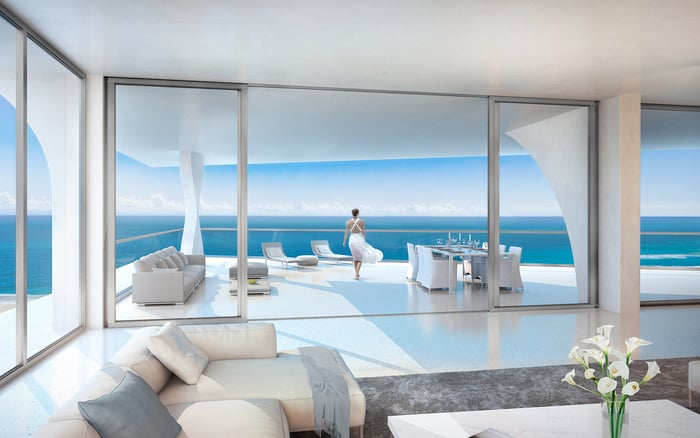
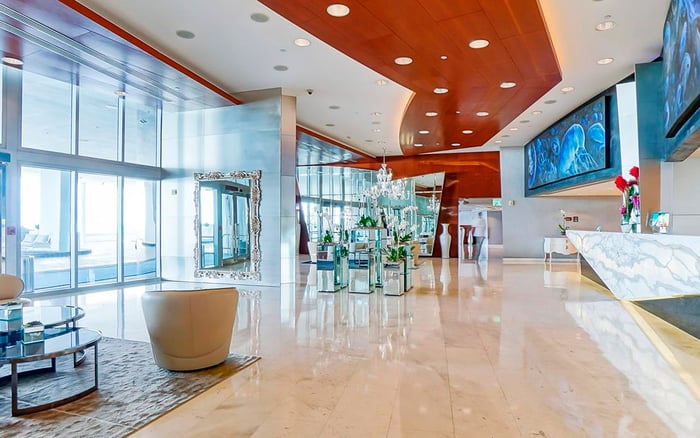
A buyer-oriented guide to reviewing Jade Ocean insurance documents, distinguishing storm deductible triggers, examining appraisal provisions, and understanding Florida’s minimum loss-assessment protection.
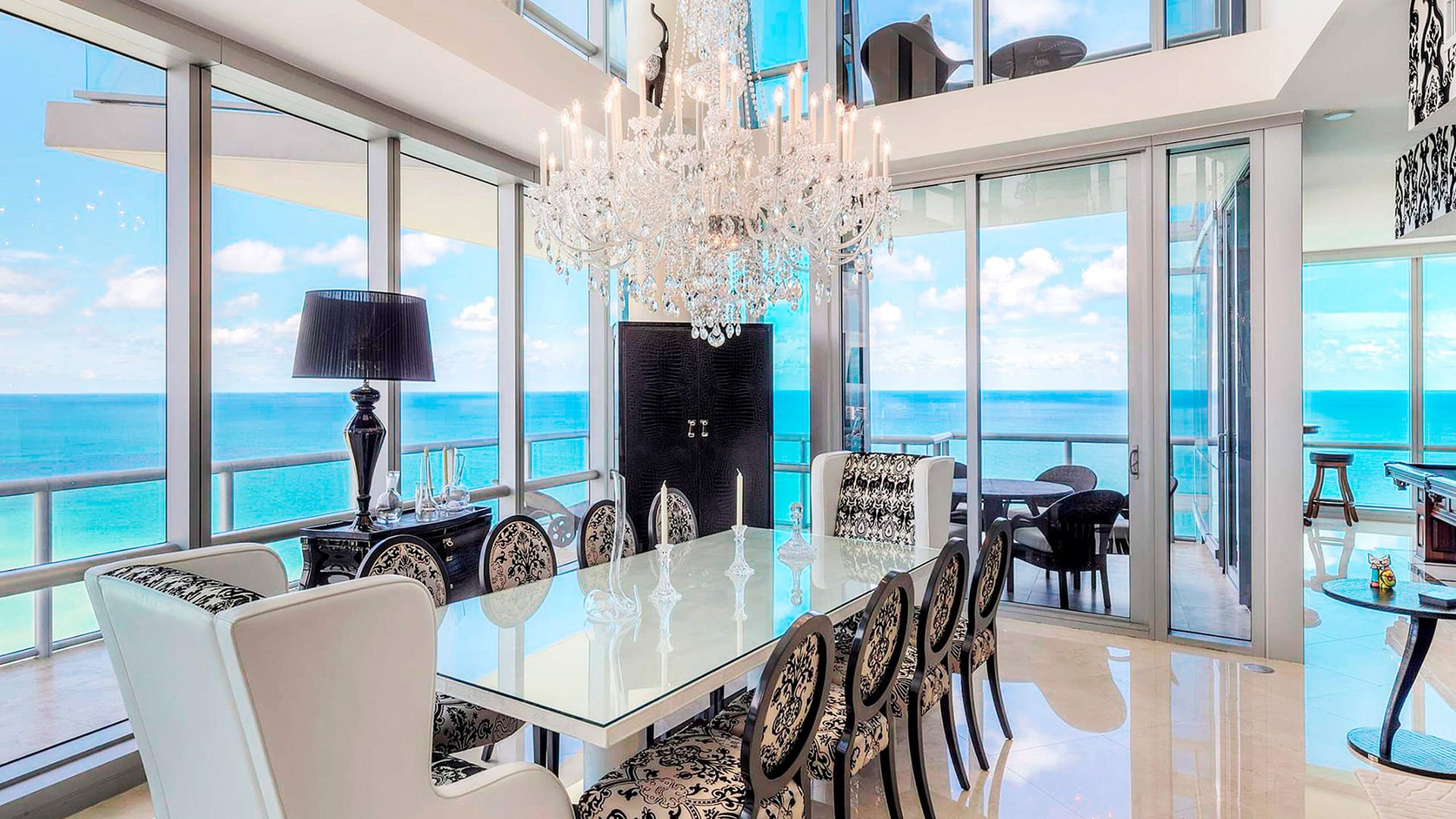
Preparing a high-value residence at Jade Ocean Sunny Isles Beach calls for the same precision as selecting its interiors. The objective is not simply to obtain an insurance certificate. It is to understand which policy responds, which expenses the owner may bear, and which contractual provisions govern a disagreement after damage.
Three subjects deserve particular attention: appraisal clauses, storm deductibles, and loss-assessment limits. Each addresses a different question; they are not interchangeable forms of protection. A deductible concerns retained expense; a loss-assessment provision concerns qualifying association assessments; appraisal wording requires its own contractual review.
For buyers in Sunny Isles Beach, the starting point is a coordinated reading of the association’s master policy, the proposed unit-owner policy, and the condominium governing documents. Neither the purchase price nor the association’s insurance expense answers these questions on its own.
Request the complete master policy and endorsements, not merely a summary of limits. Ask what value is insured and whether the contract provides full replacement-cost coverage. Resolve these questions before closing rather than proceeding on assumptions.
Master-policy insurance costs are reflected in condominium dues at Jade Ocean. A premium increase can therefore appear through association expenses rather than as a separate insurance invoice to the owner. Budget review and coverage review should proceed together, but remain distinct exercises.
Next, ask the insurance adviser and condominium counsel to identify the boundary between association and owner responsibilities. Questions about interior improvements, repair obligations, flood protection, and the allocation of deductible-related expenses require review of the actual documents. Do not assume that a beautifully finished residence has matching protection simply because the building carries insurance.
Apply the same document-first discipline when comparing Jade Signature Sunny Isles Beach. A neighboring address is no substitute for reviewing that property’s own contracts and governing documents.
Florida law separately addresses hurricane deductibles, but that does not establish the trigger or calculation in a particular Jade Ocean contract. Start with the exact terminology in each policy. Do not treat named-storm and hurricane wording as synonymous without reviewing their definitions.
For every relevant deductible, request a written explanation of the triggering event, the percentage or dollar amount, the insured-value base, and the application period. Confirm how the provision operates across events rather than assuming each storm creates an identical, separate obligation.
A percentage is not a usable household budget until it becomes a dollar figure. Ask the adviser to show the calculation using the value base specified in the policy-not the residence’s asking price or another convenient number. Keep the association-level calculation separate from the unit-owner calculation.
Finally, establish whether an association deductible could lead to an owner assessment and how the proposed unit policy would treat it. Neither an assessment nor the presence of loss-assessment coverage establishes that a particular charge will be paid.
An appraisal clause deserves attention before a disagreement, not only after one develops. Ask what the actual clause permits and requires rather than assuming a standard process applies to both the master policy and the owner’s policy.
Have the adviser or counsel explain whether the clause addresses valuation or amount-of-loss disagreements, who may invoke it, what conditions apply, and how participants and costs are handled. Ask separately how coverage disputes are treated. These are review questions, not representations about Jade Ocean’s policy terms.
Keep three concepts distinct: the value insured under the policy, any property valuation used to establish coverage, and any contractual appraisal procedure following a loss. Do not assume that one resolves the others.
For a buyer also considering Muse Residences Sunny Isles Beach, use the same questions but obtain property-specific answers. Evaluate an appraisal provision on its wording, not the prestige of the address.
Florida requires condominium unit-owner residential property policies issued or renewed on or after July 1, 2010, to include at least $2,000 in property loss-assessment coverage. That amount is a statutory minimum, not evidence of adequate protection for a high-value residence.
The required coverage concerns assessments arising from a direct property loss caused by a peril covered under the owner’s policy. An association’s decision to levy an assessment is not, by itself, a coverage determination. The underlying loss must satisfy the policy’s coverage requirements.
The statutory loss-assessment deductible cannot exceed $250 for each direct property loss. No additional loss-assessment deductible applies when the owner’s policy already applies a deductible to the owner’s other property damage from that same direct loss. Do not confuse this rule with the building’s storm deductible.
Timing is equally important. The applicable loss-assessment limit is the amount in effect one day before the occurrence causing the loss. Increasing the limit afterward does not increase protection for that event. Multiple assessments from the same direct loss do not multiply the coverage available; the applicable limit remains the insurer’s maximum liability.
An Oceanfront purchase warrants a written review that connects the documents rather than leaving each adviser with a separate fragment. Request a concise explanation of insured responsibilities, deductible calculations, relevant exclusions, loss-assessment conditions, and any appraisal provision being relied upon.
Ask which higher loss-assessment limits are available and appropriate for the residence. The statutory floor does not answer that question, and no particular higher limit should be treated as universally sufficient. Any recommendation should reflect the proposed policy and the association documents.
If Turnberry Ocean Club Sunny Isles is also on the shortlist, compare the completeness of the insurance answers rather than assuming similar residences carry equivalent protection. This is a due-diligence framework, not a comparison of the buildings’ insurance programs.
Before binding coverage or closing, retain the policies, endorsements, written deductible calculations, and explanations of association and owner responsibilities. Ask advisers to resolve ambiguities while coverage choices can still be evaluated, especially because a later limit increase cannot improve loss-assessment protection for an earlier occurrence.
The result should be a clear account of what is insured, which expenses may remain with the owner, and which provisions need professional interpretation. For a high-value residence, that clarity is more useful than a reassuring limit viewed in isolation.
For a considered approach to your next South Florida residence, explore MILLION.
If branded residences are on your mind — as a home or as an allocation — we would be glad to share what we are seeing, privately.
Begin a quiet conversationQualifying unit-owner residential property policies issued or renewed on or after July 1, 2010, must include at least $2,000 in property loss-assessment coverage.
No. It is a statutory minimum, not a determination that the amount adequately protects a particular residence.
No. The required coverage applies to assessments resulting from a direct property loss caused by a peril covered under the unit-owner policy.
The statutory deductible cannot exceed $250 per direct property loss. This is distinct from a building’s storm deductible.
No additional loss-assessment deductible applies when the owner’s policy already applies a deductible to the owner’s other property damage from the same direct loss.
A later increase does not improve coverage for that event. The applicable limit is the amount in effect one day before the occurrence causing the loss.
No. The insurer’s maximum liability remains the applicable loss-assessment limit for that direct loss.
Do not assume so. Review each policy’s definitions, triggering conditions, calculation base, and application period.
Ask what disputes it addresses, who may invoke it, what conditions apply, and how costs are handled. The answers must come from the actual policy wording.
Review the complete master policy, proposed unit-owner policy, endorsements, and condominium governing documents. Use them to clarify coverage, deductibles, assessment exposure, and repair responsibilities.