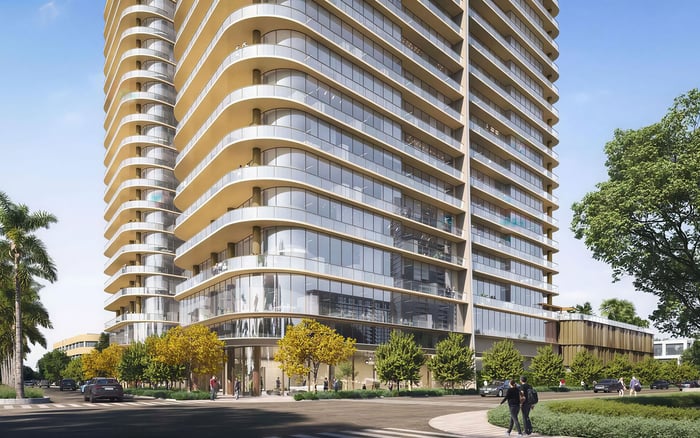
A Kempinski-focused diligence guide for buyers who want to distinguish private arrival space from exclusive elevator control, documented visitor approval, and genuinely separated service circulation.
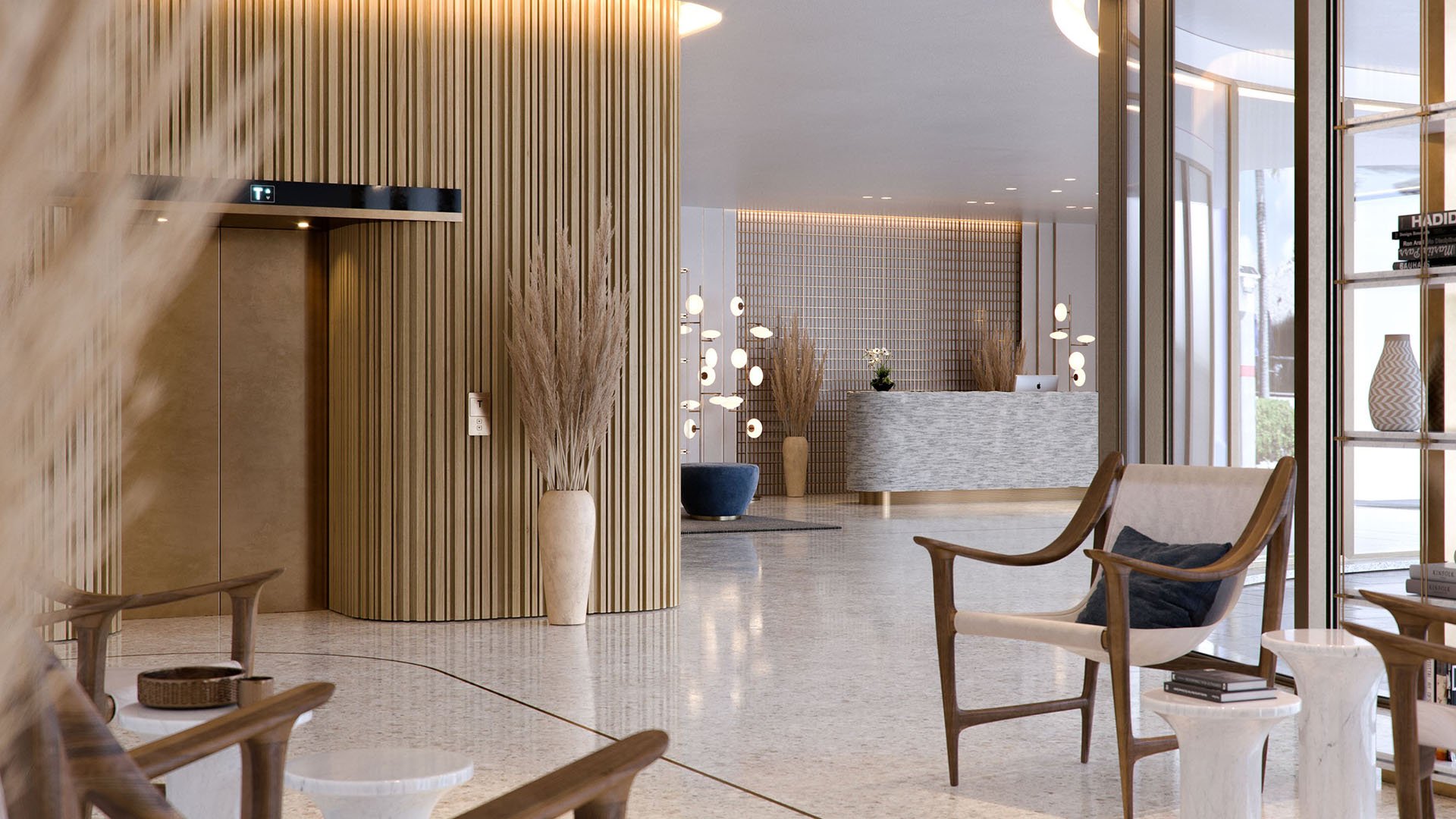
For a discerning buyer, privacy begins before the front door. It depends on who can call an elevator, where that car can travel, who authorizes a visitor, and whether a delivery crosses the residential arrival route. A beautifully finished vestibule addresses only part of that experience.
Kempinski Residences Miami Design District offers a useful case study. The project is marketed at 3801 and 3883 Biscayne Boulevard, at the gateway to the Design District, with 132 residences across two towers: 66 in each, with four residences per floor.
Those figures establish the advertised scale, not the access rights attached to a particular home. The buyer's task is to separate three questions: whether the arrival space is private, whether elevator permissions are restricted, and whether service circulation remains separate. Marketing claims do not confirm completed construction or operating procedures.
The residences are marketed as corner units, with layouts ranging from two bedrooms plus den to four bedrooms plus den. The elevator language warrants closer scrutiny: private elevator vestibules are promised alongside semi-private elevator access shared by two residences per floor, with private vestibules and direct residence entry.
A private vestibule is not an elevator dedicated to one household. Nor do four residences per floor establish how many cars serve a home, which other destinations they reach, or what happens when another household calls the same car.
Request the elevator-core plan for the exact residence under consideration. Have the sales team identify each car, every residence it serves, the vestibule boundaries, and the doors between shared and private space. Then request access-control specifications showing whether credentials restrict floor selection or merely permit elevator use.
A meaningful answer connects a specific home to a specific access arrangement. It does not simply repeat an amenity label.
The advertised “secure key access to spaces” does not identify the credential technology, the spaces covered, or the permissions assigned to residents, guests, and service personnel. It should not be read as a promise of biometrics, destination dispatch, or household-exclusive elevator control.
Ask for a written permissions schedule distinguishing resident, guest, and service access. For each category, confirm permitted entrances, elevator destinations, hours, and who can grant or revoke authorization. Ask whether a lost credential can be disabled and how temporary access is withdrawn.
If your search includes Villa Miami in Edgewater, take the same schedule into that review. Comparable language does not establish comparable controls. This is a diligence framework, not an assertion about another building's system.
Where the system is available, request an authorized demonstration using sample credentials. Observe whether permissions match the written description without attempting to bypass any control.
Visitor authentication is a sequence, not a lobby feature. The stated access provisions do not establish the complete workflow. Obtain written procedures covering registration, approval, admission, elevator authorization, and arrival at the residence.
Ask who can approve an unregistered visitor and how the resident's approval is recorded. Establish what happens when a guest arrives after hours, when the resident cannot be reached, or when someone accompanies an already approved visitor. Determine whether an escort is required and whether permissions can be limited by time or floor.
Keep social guests distinct from recurring household personnel. A dinner invitation, a housekeeping visit, and a contractor appointment may require different permissions. The question is whether the proposed procedures recognize those differences.
If you travel frequently, ask how approvals work while the home is unoccupied. Do not infer a staffed hotel-style admission process from the Kempinski name or from broader branded-residence language.
Dedicated service elevators are advertised, but that alone does not establish separate loading entrances, uninterrupted service routes, or a prohibition on vendors using resident elevators. Examine separation from entrance to destination.
Request garage, lobby, loading, and relevant service-floor plans. Trace packages, food deliveries, contractors, housekeeping, movers, and trash individually. Mark every point where a route intersects a resident lobby, elevator landing, or private vestibule. A separate elevator may resolve one circulation question while leaving others open.
Then review the operating rules. Ask where deliveries are received, whether personnel proceed upstairs, how appointments are authorized, and who manages movement between service and residential areas. Seek explicit answers about when movers or vendors may use resident elevators.
A buyer also considering The Residences at 1428 Brickell can apply the same route-tracing exercise in Brickell. Compare each property's plans and procedures rather than assuming similar positioning produces identical service separation.
The most revealing questions concern the days when normal routines change. Ask what happens during an elevator outage, a move, an event, or an emergency. Which routes change, who authorizes the change, and how are residents informed? Treat emergency procedures separately from everyday privacy expectations.
Request a live demonstration of resident, guest, and service credentials when available. Have the team show the approved admission sequence, authorized destinations, and expiration or cancellation of temporary permissions. If a demonstration is not yet possible, ask which specifications and written commitments describe the intended operation.
Do not confuse a proposed procedure with an observed result. Keep plans, written rules, and demonstrations distinct in the purchase file so that an attractive promise does not quietly become an assumed fact.
Before committing, assemble the residence-specific core plan, access specifications, visitor procedures, service-route drawings, and exception policies. Ask your advisers to identify which representations appear in purchase documents and which remain descriptive marketing language.
Confirm the legal property and tower addresses in the purchase documents, and ensure that the plans and access specifications correspond to the exact residence under consideration.
This Kempinski-focused review does not establish conditions across every condominium in the Design District. Its value lies in a disciplined set of questions. The strongest privacy proposition is one whose physical layout, permissions, and daily procedures support the same arrival experience-including the exceptions that matter to your household.
For a discreet conversation about aligning your next residence with your privacy priorities, connect with MILLION.
If branded residences are on your mind — as a home or as an allocation — we would be glad to share what we are seeing, privately.
Begin a quiet conversationNo. A private vestibule describes the arrival space, while exclusive elevator control requires separate confirmation of the car's service pattern and access permissions.
The marketed arrangement combines private elevator vestibules with semi-private elevator access shared by two residences per floor. That does not establish an elevator dedicated to one household.
The advertised scale is 132 residences across two towers, with 66 residences per tower and four residences per floor. These density figures do not establish exclusive elevator access.
Request residence-specific elevator-core plans and access-control specifications showing which homes each car serves and whether credentials restrict floor selection.
The phrase does not specify credential technology, guest approval procedures, or floor-level permissions. Obtain written procedures rather than assuming those capabilities.
Request procedures for registration, resident or concierge approval, after-hours admission, escorts, and time- or floor-limited permissions. Clarify what happens when the resident cannot be reached.
No. Dedicated service elevators do not establish separate loading entrances, end-to-end service routes, or a ban on vendors using resident elevators.
Ask about movers, vendors, outages, emergencies, and events. Establish who authorizes route changes and how residents are informed.
Confirm the legal property and tower addresses in the purchase documents. Ensure that the plans and access specifications correspond to the exact residence under consideration.
No. It is a Kempinski-focused diligence framework, not confirmation of as-built conditions or demonstrated operating procedures across the neighborhood.
.jpg&width=700&height=438&fit=cover)